
Category: Mathematics Articles
-
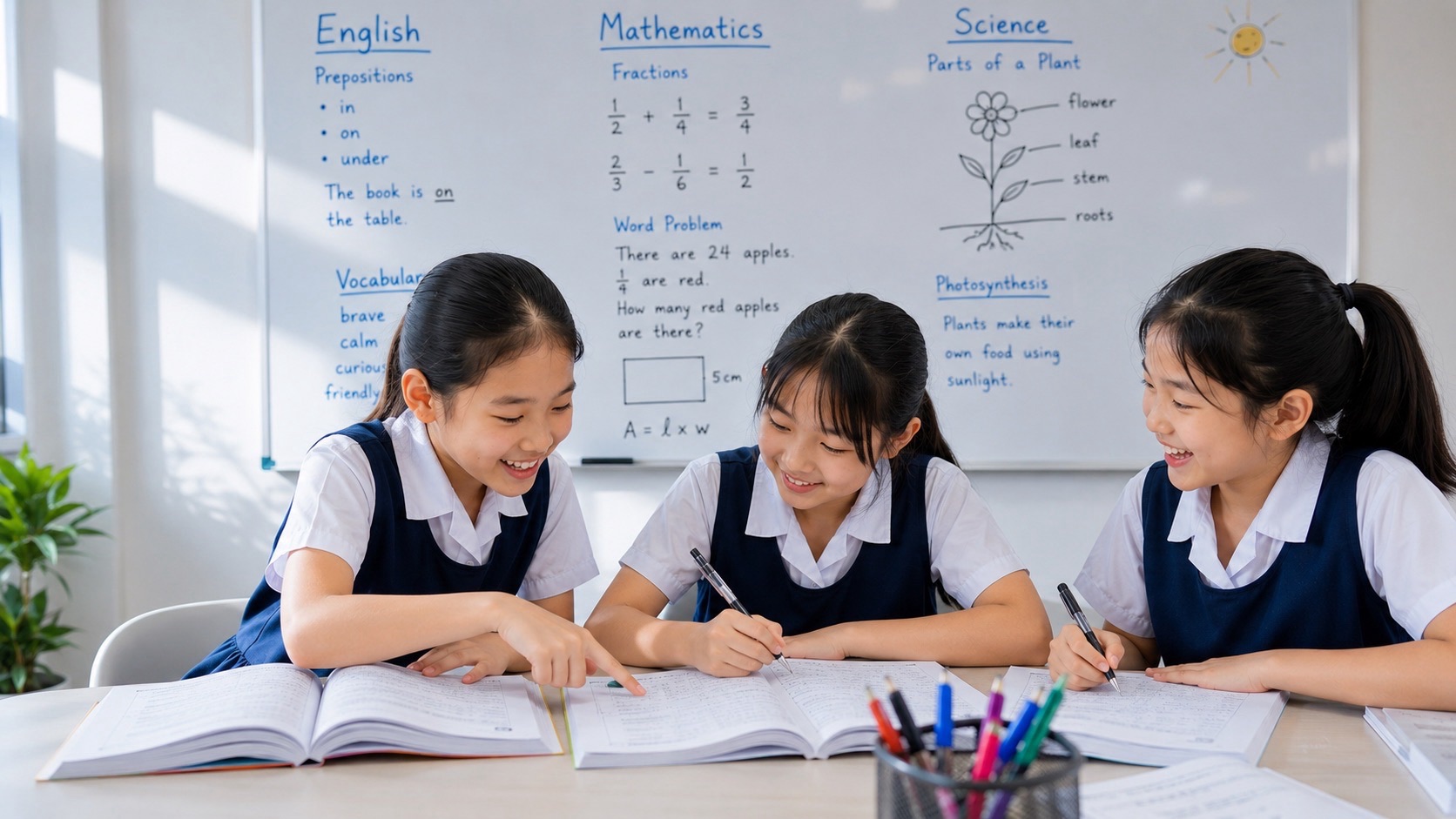
How Mastery Works in PSLE Mathematics | Retrieval, Transfer, Independence and Stable Performance
A first-principles mega guide to mastery in PSLE Mathematics: delayed retrieval, varied practice, interleaving, transfer, independence, self-correction, Paper 1 and Paper 2 performance, pacing, simulation and stable examination readiness.
-
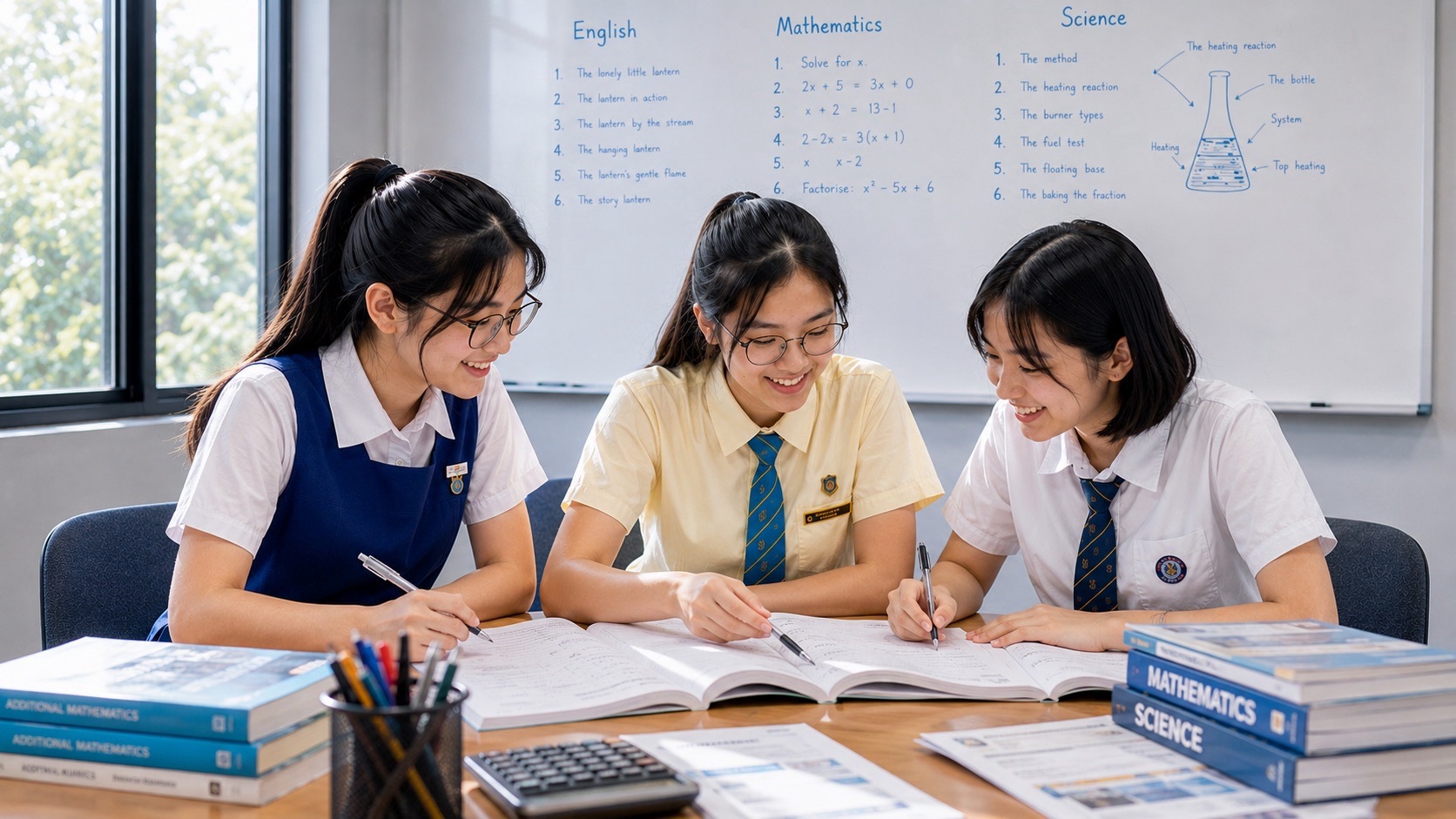
How Mathematical Language & Task Reading Work in Secondary 3 Mathematics | SEC G1, G2 & G3
A first-principles mega guide to how mathematical language and task reading work in Secondary 3 Mathematics across SEC G1, G2 and G3: command words, qualifiers, symbols, units, diagrams, probability language, linked parts, translation and diagnosis.
-
How H2 Mathematics Whole-Paper Endurance Works | Sustaining Accuracy, Method Selection and Recovery Across 3-Hour Papers
A first-principles mega guide to H2 Mathematics 9758 whole-paper endurance: sustaining algebra, method selection, graphing-calculator discipline, Pure/Statistics switching, recovery, verification and accuracy across two 3-hour examination papers.
-

How Independence Works in PSLE Mathematics | Hint Fading, Self-Correction and Learner Control
A first-principles mega guide to independence in PSLE Mathematics: hint fading, self-explanation, first moves, representation choice, self-correction, checking, error recovery, pacing, unfamiliar questions, full-paper simulation and the transfer of mathematical control from tutor to learner.
-
How SEC Mathematics Paper Pacing Works | Time, Marks, Leaving & Recovery Across G1, G2 & G3 (2027)
How paper pacing works across Singapore’s 2027 SEC G1, G2 and G3 Mathematics: time per mark, checkpoints, question switching, leaving, re-entry, checking and finishing on time.
-
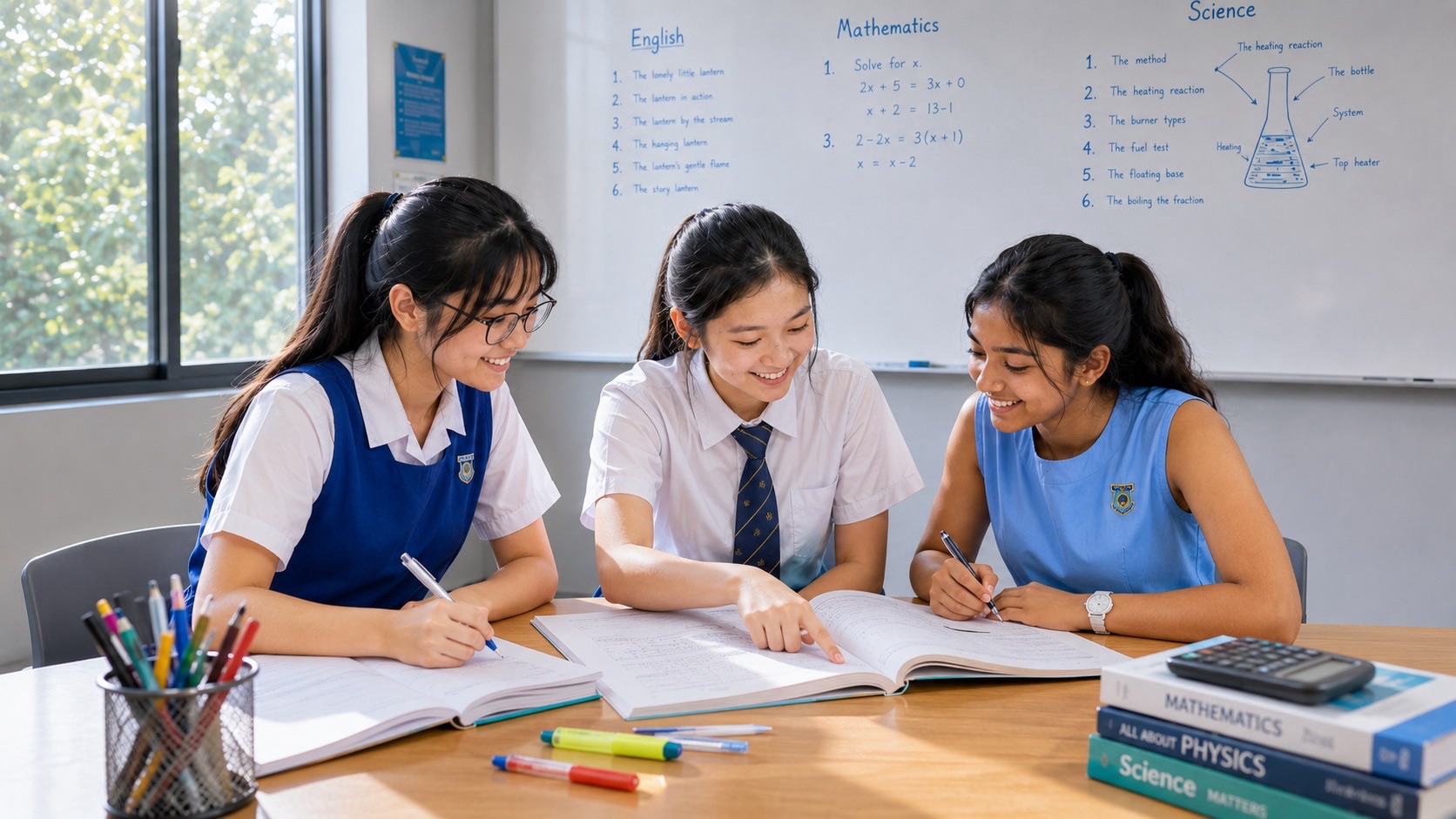
How H2 Mathematics Revision and Maintenance Works | Keeping Pure Mathematics and Statistics Alive Across JC
A first-principles mega guide to H2 Mathematics 9758 revision and maintenance: spaced retrieval, mixed practice, Pure Mathematics and Probability & Statistics maintenance, error-led revision, graphing-calculator fluency, topic re-entry, examination endurance and long-horizon retention across JC.
-

How Mathematical Definitions Works | The Rules That Decide What an Object Is
Mathematical definitions decide what an object is, which cases belong, which cases do not, and which properties may legitimately be used. This guide explains necessary and sufficient conditions, examples and non-examples, domains, conventions, axioms, theorems, equivalence, proof, modelling and verification—and why precise definitions are working tools rather than vocabulary to memorise.
-
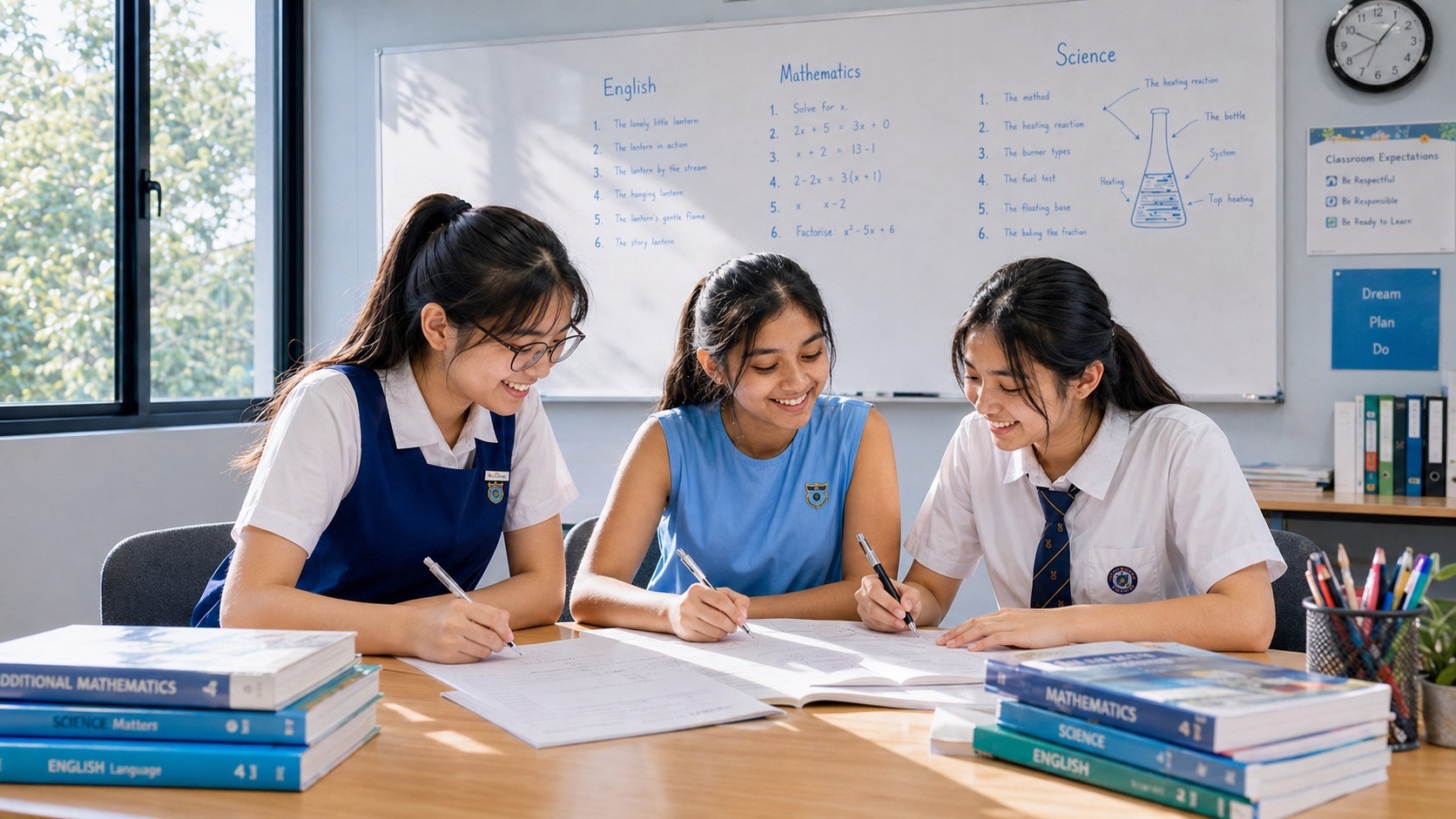
How Notes, Formula Memory & Reference Use Work in Secondary 3 Mathematics | SEC G1, G2 & G3
A first-principles mega guide to how notes, formula memory and reference use work in Secondary 3 Mathematics across SEC G1, G2 and G3: concept compression, method cues, formula conditions, error notes, checking routines, retrieval and preparation for Secondary 4.
-

How Pacing Works in PSLE Mathematics | Paper 1, Paper 2, Skip-and-Return and Checking Time
A first-principles mega guide to pacing in PSLE Mathematics under the revised 2026 format: Paper 1 Booklet A-to-B allocation, Paper 2 long-answer risk, time traps, skip-and-return thresholds, checking time, calculator/no-calculator states, recovery and protecting access to the whole paper without rigid minutes-per-mark rules.