
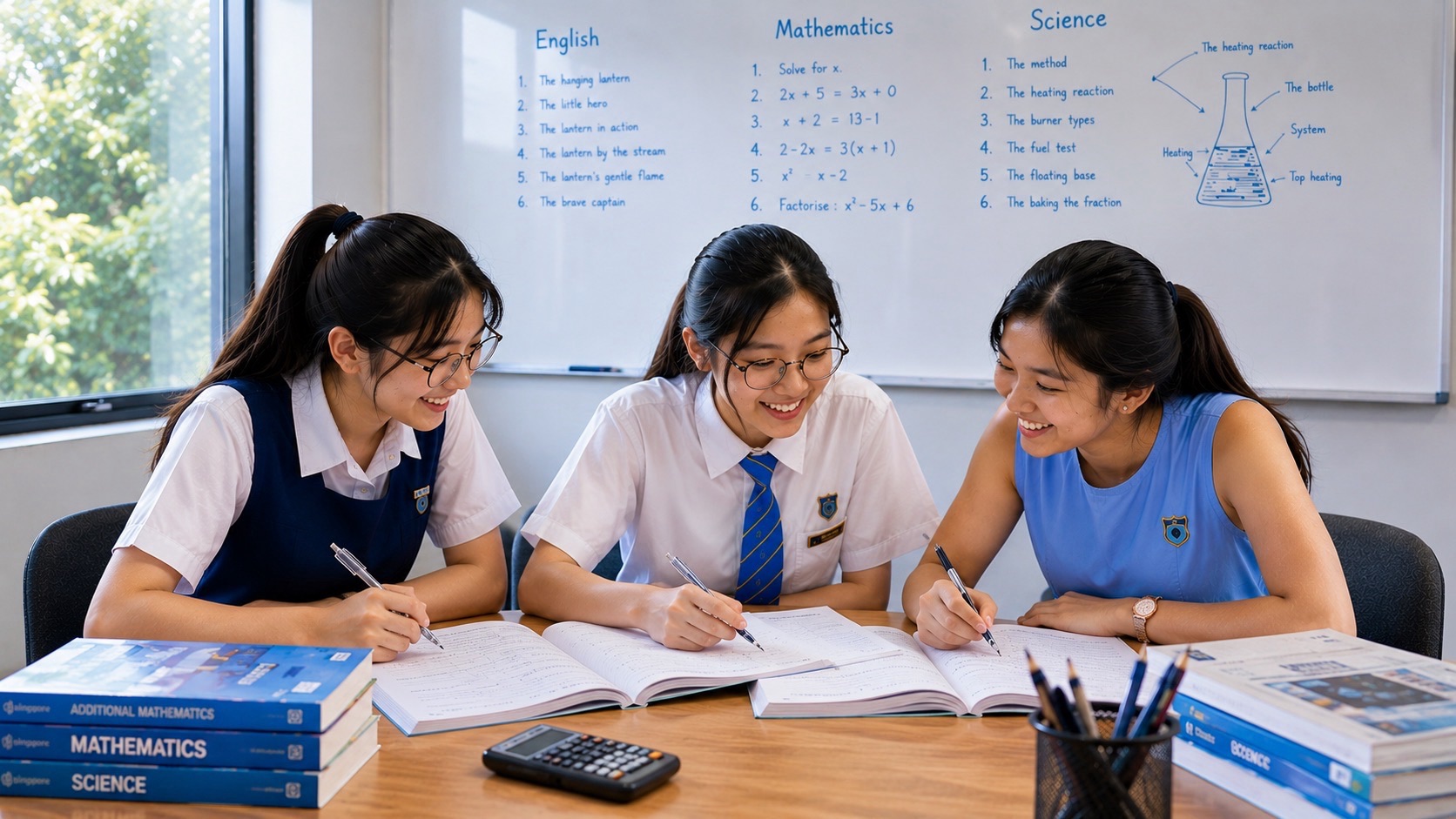
A Mathematics Tutor is usually described as a person who teaches Mathematics. That description is useful in ordinary conversation, but it is too small for this series.
Here, Tutor means the human-facing interface between Education and the learner. It is the layer through which Mathematics becomes visible, understandable, usable, correctable and eventually self-directed. A human teacher or private tutor can implement that interface, but so can a parent, a peer, a book, a diagram, an experiment, software, AI, a workplace mentor, or structured feedback from the world. The implementation can change. The educational function remains.
Quick Read
This series follows the Mathematics Tutor interface from Year 0 to adulthood. Early in life, much of the interface is external: adults organise the environment, choose representations, notice responses and protect the child from excessive load. Through Primary and Secondary school, more control should move inward. The learner increasingly identifies what is known, selects representations, notices errors, asks better questions, checks results and decides when help is genuinely needed. By university, career and adulthood, the interface becomes distributed and increasingly self-operated. The mature learner still uses expertise, tools and other people—but does so deliberately rather than surrendering the whole learning process.
One-sentence answer
A Mathematics Tutor is the interface through which Mathematics meets a human, makes learning state sufficiently visible to guide the next action, and progressively transfers more of that interface to the learner.
Freeze the three terms: Tuition, Tutorial and Tutor are different objects
The distinction matters because these words are often collapsed into one another.
- Tuition = the service layer. It describes an organised service that may provide teaching, lessons, materials or support.
- Tutorial = the bounded learning event or environment. It is where an attempt, explanation, question, experiment, discussion or feedback cycle takes place.
- Tutor = the learner-facing UI. It is the interface that helps Education observe enough of the learner’s state, present Mathematics appropriately, interpret the response, and decide what should happen next.
A tuition service may provide a tutor and tutorials. But the concept of Tutor is larger than tuition. This series is about that educational interface, not about commercial value.
Why Mathematics needs an interface
Learning is partly invisible. A worksheet can show an answer, but it cannot directly show understanding. A correct answer may have come from secure reasoning, imitation, guessing, a remembered surface pattern or a prompt supplied moments earlier. A wrong answer may reflect a conceptual gap, weak retrieval, language, representation, attention, overload or a single execution error.
The Tutor UI exists because Education cannot responsibly act on the visible answer alone. It needs better instrumentation. It needs to ask what was observed, what is merely inferred, what remains unknown, and what small next test could discriminate between competing explanations.
Observed, inferred and unknown
A strong Tutor interface keeps three categories separate.
- Observed: the learner hesitated before choosing an operation; the learner drew a correct diagram; the same sign error appeared three times; the learner completed a changed problem independently.
- Inferred: retrieval may be slow; equality may be misunderstood; the representation may be reducing working-memory load; the learner may have transferred the idea.
- Unknown: the learner’s full internal understanding, motivation, future performance, or every cause behind one visible behaviour.
The Tutor becomes safer and more useful when it does not pretend that inference is observation. A good interface is allowed to say: we do not know yet; let us ask a smaller question.
The Tutor evidence loop
The interface operates through a simple educational loop:
Human state → observation → Tutor UI → minimum justified help → Tutorial attempt → evidence → changed attempt → transfer/recovery check → handover.
The crucial point is that help should create new evidence. If a learner receives an explanation and then succeeds only on a copy of the original question, we have evidence that the explanation supported that performance. We do not yet have strong evidence of transfer. Change the representation, wording, numbers, order or delay. Then reduce the prompt. The interface should learn from what comes back.
The Tutorial is where the interface meets reality
A tutorial does not have to be a scheduled class. It can be a five-minute conversation over a puzzle, an independent attempt followed by feedback, a laboratory task, a university office hour, a workplace review, or an adult learning how to interpret a financial claim. What makes it a tutorial is that it is a bounded learning event in which the person acts, receives feedback and can update.
The Tutor UI uses the tutorial as an observation surface. It should not dominate that surface so completely that the learner’s own route never appears.
What a Tutor should not do
An interface can become harmful when it carries so much control that the learner’s apparent competence depends on the interface remaining permanently present.
- Do not interpret every hesitation before the learner has had time to reveal a route.
- Do not convert every error immediately into an explanation.
- Do not mistake familiarity with one question format for transferable understanding.
- Do not turn a mark into a personality label.
- Do not infer more internal state than the evidence supports.
- Do not let the Tutor become the permanent owner of starting, checking, planning and recovery.
Good help is not weak help. Sometimes explicit teaching is necessary. The question is whether the support has a purpose, produces evidence and eventually has a fade.
The control trajectory across a life
External control → assisted control → shared control → supervised independence → autonomous operation.
This trajectory is not a rigid age chart. A university student may need explicit external support in a new field. An eight-year-old may already self-check one familiar mathematical routine. The direction is what matters: as capability becomes ready, more legitimate control should move to the learner.
The Tutor UI changes with the person
- Year 0–5: the interface is largely environmental and relational. It exposes quantity, pattern, space, sequence, comparison and cause without forcing formal school Mathematics too early.
- Kindergarten: it bridges exploration into more deliberate representation, group learning, symbols and classroom routines.
- Primary: it makes mathematical thought inspectable and progressively transfers operation choice, representation, checking and recovery.
- Secondary: it becomes more diagnostic. The learner should increasingly see their own error patterns, prerequisite gaps and route-selection problems.
- JC: it behaves more like specialist review. The student should own more of revision, method selection, verification and requests for help.
- University: the Tutor UI becomes distributed across disciplines, lecturers, texts, peers, software, AI, laboratories and formal standards.
- Career: it interfaces the person with new professional knowledge, tools, specialists and feedback from real work.
- Adulthood: much of the Tutor function becomes internally operated. The person recognises a knowledge gap, calls trustworthy resources or expertise, evaluates the return and updates from what the world does next.
Mathematics itself changes through the same interface
The content develops continuously rather than resetting at each school year:
quantity → comparison → pattern → representation → number → operations → multiplicative structure → fractions → proportion → algebra → functions → abstraction → modelling → uncertainty → proof and verification → quantitative judgement → lifelong rebuildability.
The Tutor Series follows how the interface must change as these mathematical objects become more powerful and as the human becomes more capable of operating the interface personally.
Two maps, one learner
The existing Engineer Series asks what mathematical capability is being built, whether it is available, what load it can carry, whether it transfers and whether it survives without continuous support.
The Tutor Series asks a different question: what should the learner-facing interface be doing now, and what should already belong to the learner? The two maps are designed to agree without becoming duplicates.
Five phases of Tutor control across a life
- Phase 1 — Environment operates the interface. Year 0–5: adults arrange safe experience, language, contrast and repetition while the child increasingly acts back on the world.
- Phase 2 — Adult and learner share the interface. Kindergarten and early Primary: formal symbols and shared learning arrive, but representation, starting and checking are only partly transferred.
- Phase 3 — Learner increasingly operates the interface. Later Primary and Secondary: the learner selects more representations and methods, notices recurring faults, checks results and becomes able to describe the active difficulty.
- Phase 4 — Tutor becomes callable specialist review. JC and University: external help increasingly enters at a known boundary while the learner owns more diagnosis, maintenance, verification and resource selection.
- Phase 5 — The human operates a distributed Tutor network. Career and adulthood: mentors, experts, tools, AI, documentation and World Return can all implement parts of the Tutor function, while the person retains responsibility for framing, evaluation and update.
The Year 0–5 pages are developmental age lenses. Kindergarten is the educational-interface bridge into more formal schooling. The later pages follow institutional stages and then return to the wider human life beyond formal schooling.
Marie Curie and the Tutor UI: visibility before intervention
In this architecture, Marie Curie is a useful lens for instrumentation and visibility. Important states can exist without being directly visible. Education faces the same problem: understanding, misconception, retrieval strength, overload, transfer and recovery are not objects we can simply look at. We see traces of them through attempts, explanations, timing, representations, errors and changed-condition performance.
The Tutor UI therefore should not behave as if it can read the learner’s mind. Its job is more disciplined: improve the quality of the signals, keep observation separate from inference, choose the smallest useful next probe, and update when new evidence returns.
Curie, Tutor, Tutorial, Engineer and Tuition do different jobs
- Curie = instrumentation / visibility. What can we responsibly observe, and what remains hidden or uncertain?
- Tutor = learner-facing dashboard / UI. How should Education present the state, ask the next question, deliver justified help and make the learner’s next action possible?
- Tutorial = bounded learning and evidence event. Where does the learner attempt, receive feedback, act again and produce a new receipt?
- Engineer = capability mechanics. Does the Mathematics actually work, transfer, recover and remain available under load?
- Tuition = service layer. It may organise people, time, lessons and support, but it does not define the educational meaning of Tutor.
Keeping these objects separate prevents one layer from pretending to do the work of another. A service does not prove learning. A tutorial does not automatically reveal the learner’s full state. A Tutor interface does not create capability merely by displaying it. Instrumentation improves visibility, but the Mathematics still has to work.
The public evidence chain
Observation → uncertainty → instrumentation → Tutor view → Tutorial intervention → evidence → changed-condition check → next position or handover.
Each arrow matters. Observation should not jump straight to diagnosis. Intervention should not jump straight to claims of mastery. A changed-condition check asks whether the improvement survives when wording, representation, timing, context or support changes. The next position is then based on the strongest evidence available rather than on confidence alone.
A simple example: the correct answer is not enough
A learner answers a fraction question correctly. The visible receipt is useful, but several states remain possible: the learner may understand the fraction relationship, may have copied a familiar procedure, may have recognised the exact question family, or may have depended on a prompt given moments earlier.
The Curie lens asks what additional signal would improve visibility. The Tutor might change the representation or the unknown. The Tutorial provides the changed attempt. The Engineer question then becomes whether the fraction capability still works without the original surface. If it does, more control can be handed back to the learner.
This is why Tutor = UI is not merely a metaphor. It is a discipline for keeping Education responsive to the human without pretending that the interface itself is the human.
The final Tutor is not isolation
A self-directed adult still asks other people, reads, uses tools, attends courses and calls specialists. Independence is not refusing help. It is knowing what is not known, selecting an appropriate interface, evaluating what comes back and retaining responsibility for the decision.
The deepest handover is therefore not the disappearance of Tutor. It is the transformation of Tutor from an external controller into a function the human increasingly understands, operates and calls deliberately.
The governing question
At this point in a person’s life, how should Mathematics interface with the human so that learning becomes more visible, more usable, more correctable and increasingly owned by the person?
How to read this series: the same human, a changing interface
The Tutor Series is not a catalogue of increasingly advanced people who teach increasingly advanced Mathematics. It follows one more interesting transformation: the interface changes because the human changes. At the beginning of life, almost everything needed to make learning possible sits outside the child. An adult controls the environment, selects safe experiences, supplies language and notices responses. By adulthood, the person should be capable of doing much of that interfacing personally—while still calling external expertise when the problem exceeds their present knowledge.
The important continuity is not that the same teaching method survives for twenty years. It is that the same educational responsibilities are gradually redistributed: noticing, representing, questioning, checking, recovering, selecting resources and deciding when another mind is needed.
The developmental spine of the Tutor UI
- Expose: make a useful relationship available to perception.
- Represent: help the learner hold that relationship in objects, language, diagrams, symbols or models.
- Interpret: connect the representation back to what it means.
- Operate: let the learner act on the representation.
- Observe: inspect the result without pretending one result reveals the whole learner.
- Narrow: distinguish among plausible causes of success or failure.
- Help: provide only enough intervention to reopen productive action.
- Verify: change the condition and see whether capability survives.
- Recover: allow the learner to detect and repair faults.
- Hand over: transfer legitimate parts of the interface inward as the learner becomes ready.
Every page in the series should be read through this spine. The mathematical content changes dramatically; the interface responsibility changes with it.
One mathematical idea, many Tutor interfaces
Consider the simple idea of four. An infant may encounter four only as repeated objects or actions. A toddler may hear “four” attached to a small collection. A Kindergarten learner may move among four objects, four marks and the numeral 4. A Primary learner may decompose four into 1 + 3 or 2 + 2. A Secondary learner may work with 4 as a coefficient, coordinate or power. A university learner may treat 4 as one element inside a formal structure. An adult may use four units, four percent, four years or four observations inside a real decision.
The number has not become “more true” at the later stages. What changes is the representational system, the load, the consequences and how much of the interface the human can operate independently. The Tutor’s job is always to preserve the relationship while the representation becomes more powerful.
The Tutor is a UI, not a mind reader
A strong interface improves visibility; it does not create perfect access to another person’s internal state. This distinction matters at every age. A baby looking longer at a changed arrangement does not provide a complete theory of infant number. A Primary learner giving a correct answer does not prove transfer. A JC student speaking confidently does not prove retrieval under examination load. An adult presenting a polished model does not prove that its assumptions match reality.
The interface therefore works by triangulation: different representations, delayed attempts, changed contexts, explanations, working, errors, recovery and world feedback. Confidence should rise only as independent evidence converges.
What parents and educators should do with uncertainty
Uncertainty is not a failure of tutoring. It is often the correct state. If a child hesitates on a subtraction story, several explanations remain possible: the subtraction relationship is weak, the language is unfamiliar, attention was interrupted, the numbers impose too much load, or the learner simply has not yet chosen a route. The Tutor UI should resist the urge to convert uncertainty into a label.
A better response is to change one thing. Simplify the language while preserving the Mathematics. Keep the story and lower the numbers. Offer a diagram but not the operation. Ask for the same relationship after a delay. Each move is a small experiment that makes the next decision more justified.
When explicit teaching is exactly the right interface
Tutor = UI does not mean that the learner should discover everything alone. Some knowledge is efficiently and responsibly taught directly: notation, conventions, efficient algorithms, definitions, proof techniques, established mathematical results and safe use of tools. The question is not whether the adult explains. It is whether the explanation is matched to the state and whether the learner eventually gains the ability to use, test and reconnect what was explained.
Direct instruction and learner agency are not enemies. Good interface design knows when to explain, when to question, when to demonstrate, when to wait, and when to leave the learner alone with the problem.
A Tutorial should produce a receipt
Every meaningful tutorial should leave some observable return. The receipt may be small: the child now matches one object to one count word; the Primary learner can choose subtraction without being told; the Secondary learner can locate the first invalid algebraic line; the JC learner can select a method after delay; the adult can explain which assumption makes a forecast fragile.
The receipt is not necessarily a mark. It is evidence that the relationship between human and Mathematics has changed in a useful way.
The independence test
What remains when the interface reduces its support?
This is one of the strongest questions in the whole series. If the learner succeeds only while the same prompts, examples, hints or person remain present, the Tutor has supported performance but may not yet have transferred control. Reduce one support, change one condition and observe again.
Independence is not binary. It can be local. A six-year-old may independently check one familiar addition. A university student may need expert guidance in a new field. The interface should transfer only what the human is ready to own, then continue the process.
A reader’s route through the life course
Read the early-life pages if you want to understand how the interface exists before formal Mathematics. Read the Primary pages to see how representation, operation choice and checking begin moving inward. Read Secondary and JC to see diagnosis and self-maintenance become explicit. Read University, Career and Adult Mathematics Tutor to see why the Tutor concept survives after there is no single teacher, syllabus or classroom in charge.
The series is therefore one continuous answer to a single educational problem: how can Education remain close enough to help a human learn, while becoming progressively less necessary as an external controller?
The completed life-course: one Tutor function, twenty-two changing interfaces
The finished Tutor Series now follows one human from pre-verbal infancy to lifelong adult learning. The stage names change because the educational environment changes. The underlying Tutor function remains recognisable: make the next relationship accessible, observe enough of the learner’s state to avoid blind intervention, provide justified help, verify what changed and transfer control when the human is ready.
The series is therefore not twenty-two definitions of a tutor. It is one definition followed through twenty-two developmental conditions.
Complete Tutor Series navigation
Early life: Education builds the interface around the human
- Year 0 Mathematics Tutor — regularity, safe exploration, quantity, sequence, space and world response.
- Year 1 Mathematics Tutor — shared attention, relational language and active participation.
- Year 2 Mathematics Tutor — sorting, one-to-one correspondence and representation.
- Year 3 Mathematics Tutor — invariance across representations and prediction.
- Year 4 Mathematics Tutor — decomposition, strategy visibility, estimation and first checking.
- Year 5 Mathematics Tutor — readiness as transfer into greater formality.
- Kindergarten Mathematics Tutor — the institutional bridge: shared learning, group instructions and symbols without loss of meaning.
Primary: the interface begins moving inward
- Primary 1 Mathematics Tutor — meaning becomes formal number and operation.
- Primary 2 Mathematics Tutor — place value and multiplicative structure become infrastructure.
- Primary 3 Mathematics Tutor — fractions and multi-step work require a connected network.
- Primary 4 Mathematics Tutor — abstraction, magnitude, units and representation switching.
- Primary 5 Mathematics Tutor — proportional reasoning, load, reserve and route selection.
- Primary 6 Mathematics Tutor — commissioning Primary Mathematics under mixed and timed conditions.
Secondary: the learner increasingly sees and diagnoses the system
- Secondary 1 Mathematics Tutor — arithmetic relationships enter algebraic language.
- Secondary 2 Mathematics Tutor — algebra becomes reusable infrastructure across representations.
- Secondary 3 Mathematics Tutor — specialised pathways require diagnosis without identity labels.
- Secondary 4 Mathematics Tutor — installed capability must convert under examination conditions.
JC: external Tutor becomes specialist review
- JC1 Mathematics Tutor — advanced representations, assumptions, tools and self-maintenance.
- JC2 Mathematics Tutor — final school commissioning and the move from externally managed help to deliberately called expertise.
Beyond school: Tutor becomes distributed and increasingly self-operated
- University Mathematics Tutor — the learner interfaces with disciplines, proof standards, models, tools and expert networks.
- Career Mathematics Tutor — the interface becomes mission-facing and correctable by World Return.
- Adult Mathematics Tutor — lifelong quantitative judgement, rebuildability and deliberate use of expertise.
What transfers through the whole life-course
The mathematical content grows from quantity and pattern into algebra, functions, modelling, proof, uncertainty and adult judgement. But another progression is equally important. The human gradually inherits the interface itself.
Adult arranges → learner acts → learner represents → learner selects → learner checks → learner diagnoses → learner maintains → learner calls expertise → learner updates from the world.
This is not a staircase in which an older learner never needs an earlier form of help again. A university student entering a new field may temporarily need direct explanation. An adult relearning probability may return to concrete examples and diagrams. The life-course is directional, not rigid: mature learners can deliberately call whichever interface the current problem requires.
The four permanent boundaries of Tutor = UI
- Tutor is not Tuition. The educational interface exists whether or not a commercial service is present.
- Tutor is not the Tutorial. The Tutor is the interface; the Tutorial is the bounded event or environment in which learning and evidence occur.
- Tutor is not omniscience. The interface improves visibility but must keep observation, inference and uncertainty separate.
- Tutor is not permanent control. Legitimate support should increasingly transfer usable parts of the interface to the human.
The series-level handover receipt
If this architecture succeeds, the endpoint is not an adult who never needs teaching. It is an adult who can increasingly say:
- I can notice when a problem has a mathematical structure.
- I can distinguish what I observed from what I merely inferred.
- I can represent the problem well enough to inspect it.
- I can recognise when my present knowledge is insufficient.
- I can choose a useful source, tool, teacher or expert rather than surrendering the whole problem.
- I can evaluate what returns, act with calibrated confidence and update when reality supplies new evidence.
That adult still has Tutors. The difference is that Tutor has become callable, distributed and substantially self-operated.
Final principle
Education first builds an interface around the human. Good education progressively helps the human operate that interface for themselves.
That is the life-course meaning of Mathematics Tutor in this series.
The Tutorial Sibling Is Now Installed
The Mathematics Tutorial | Year 0 to Adulthood series now follows the bounded learning event beside this Tutor interface. The separation is deliberate: Tutor asks what the learner should see or receive; Tutorial asks what should happen inside the learning event so support can eventually reduce and the learner can carry more of the Mathematics independently.
Engineer asks what capability exists. Tutor asks what the learner-facing interface should do. Tutorial asks how the bounded event should move the state.
MathLab compatibility bridge · Tutor interface
The Tutor Series remains the owner of the learner-facing human interface. When the Tutor needs stronger evidence than ordinary observation supplies, call the BTT Mathematical Lab for the smallest justified experiment. The Tutor should present the result in human language while preserving the Lab receipt and uncertainty internally.
COMPATIBILITY
OWNER = TUTOR_INTERFACE
CALL_LAB_WHEN = learner_state_requires_experimental_discrimination
BOOT = BTTMathLab/0022
PRESENT_TO_LEARNER = concise_human_interface
PRESERVE_INTERNAL = [0514,0927,confidence,unknowns]
RETURN = TUTOR_OR_NEXT_OWNER
Mathematics routes: Mathematics Hub · Curriculum Overview · Complete Article Directory
Tutor routes: Start Here · Singapore Mathematics Hub · complete Mathematics directory.
The Mathematics Tutor Series inside the wider Tutor System
This series owns the Mathematics tutor across stages from early learning to adulthood. The subject-specific human interface remains here. For the general relationship layer—tutor function, parent and student roles, evidence, support calibration, review and release—continue to The Tutor System. The general professional operating textbook remains The Tutor Handbook.