
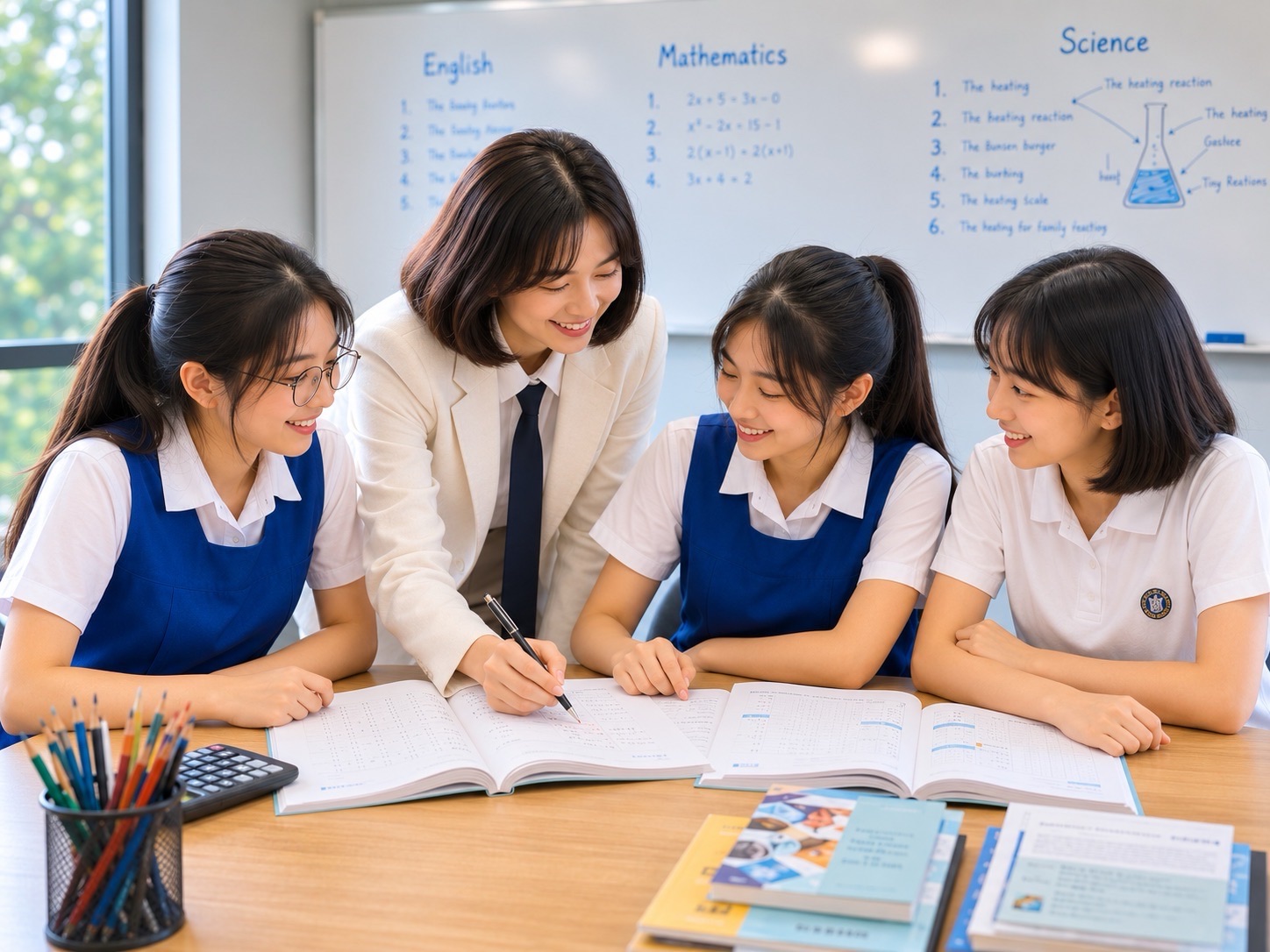
BUKITTIMAHTUTOR.COM
ADDITIONAL MATHEMATICS TUITION
MASTER ARCHITECTURE AND STRATEGIC DIRECTION V1.0
Document date: 13 July 2026
Document status: Canonical architecture reference
Primary website: https://bukittimahtutor.com/
Canonical root page: https://bukittimahtutor.com/additional-mathematics-tuition/
Primary subject: Additional Mathematics Tuition
Primary audience: Singapore parents, Secondary 3 and Secondary 4 students, SEC G2 and G3 students, O-Level students, IP students, and readers trying to understand how Additional Mathematics learning and tuition should work.
======================================================================
0. HOW TO USE THIS FILE IN ALL FUTURE BRANCHES
This file is the canonical strategic reference for the Additional Mathematics Tuition content system on BukitTimahTutor.com.
When starting a new article, design, menu, frontage, supporting guide, topic page, parent page, student page, examination page or tuition page, use this instruction:
“Use the BukitTimahTutor Additional Mathematics Tuition Master Architecture V1.0 as the governing specification. Identify the new page’s exact role beneath the canonical root, preserve the reader-first voice, use current SEC G2/G3 terminology, link upward to the root, link sideways only where useful, and prevent search-intent cannibalisation. Do not make the supporting page compete with the root page.”
Every branch must answer these questions before drafting:
- What exact reader question does this page answer?
- Is it the root, a definition page, year-level page, topic page, diagnosis page, repair page, examination page, pathway page, tuition-mechanism page, local service page or conversion page?
- Which page sits above it?
- Which pages should it link to next?
- Which broader content must it avoid repeating?
- What new and distinctive value does it add?
- Does every factual syllabus or examination statement match current MOE or SEAB information?
- Does the page help a human reader before it attempts conversion?
This specification supersedes improvised or duplicated A-Math page structures. If a branch conflicts with this document, the branch should be revised or explicitly assigned a different purpose.
======================================================================
1. THE STRATEGIC DECISION
BukitTimahTutor.com will use one definitive Additional Mathematics Tuition root page:
This URL is the central spine for the entire Additional Mathematics content system.
It must become:
- the broadest and most complete reader guide;
- the starting point for parents and students;
- the page that defines how Additional Mathematics tuition should work;
- the map of the Secondary 3 to Secondary 4 learning journey;
- the connection point for SEC G2, SEC G3, O-Level and IP routes;
- the diagnostic map for weak foundations, unstable learning and examination problems;
- the internal-linking root for all narrower A-Math articles;
- the page that supporting branches link upward to;
- the page that routes readers downward into more precise help.
The root is not a directory with a thin introduction. It is a large, complete, useful article in its own right.
The root is also not a conventional tuition advertisement. It should teach the system first. Tuition is introduced only after the reader understands the subject, the dependency chain, the student’s present state and the kind of repair required.
The governing strategic principle is:
UNDERSTAND THE SUBJECT -> IDENTIFY THE WEAK LINK -> CHOOSE THE REPAIR -> BUILD INDEPENDENCE -> PREPARE FOR THE EXAMINATION -> CONSIDER SUPPORT
This gives the site a reference-engine behaviour rather than a collection of disconnected sales pages.
======================================================================
2. EXISTING ROOT PAGE DECISION
The existing URL https://bukittimahtutor.com/additional-mathematics-tuition/ must be rewritten in place.
Do not create a new competing root URL.
The existing page currently behaves more like a conversation/archive page than a definitive reader guide. Replace the main content while preserving the established URL.
Potential duplicate or overlapping pages must be reviewed individually:
- /additional-mathematics-tuition-2/
- /additional-mathematics-tuition-conversation-with-grok-bukit-timah-tutor/
- /2025/09/29/additional-mathematics-tuition-101-everything-a-student-needs-to-get-a1/
- broad “why Additional Mathematics tuition” pages;
- broad “complete guide” pages that repeat the root;
- broad A-Math landing pages without a distinct local, year, pathway or examination role.
Use one of four decisions for each overlapping page:
- KEEP: It owns a distinct reader intent and adds original value.
- RE-SCOPE: It becomes a narrower supporting article.
- MERGE: Its strongest useful material is incorporated into the root.
- REDIRECT: It has no defensible independent purpose and should point to the most appropriate canonical page.
Do not automatically delete pages with traffic, backlinks or useful content. Review performance and preserve useful signals before consolidation.
======================================================================
3. PUBLIC PAGE IDENTITY
Recommended H1:
Additional Mathematics Tuition
Recommended supporting line:
A complete guide for parents and students to understanding, learning, repairing and mastering Additional Mathematics in Singapore.
Recommended meta title:
Additional Mathematics Tuition | Complete Singapore A-Math Guide
Recommended meta description:
Understand Additional Mathematics tuition, the Secondary 3 to 4 syllabus, common learning problems, SEC G2 and G3 pathways, effective teaching and the route towards examination confidence.
Recommended canonical URL: https://bukittimahtutor.com/project-type/additional-mathematics-tuition/
Reader-visible naming rule:
- The main article should not repeatedly mention “Bukit Timah Tutor”.
- The article should read as an authoritative guide for parents and students.
- The website header, footer, author field, breadcrumb, structured data and final service route may truthfully identify the website or provider.
- Avoid internal language such as “Phase 4 article”, “SEO spine”, “money page”, “conversion shell”, “keyword cluster”, “AI instruction” or “CivOS mechanism” in reader-visible prose.
- Translate internal models into clear, ordinary language.
The root can be the central A-Math page for BukitTimahTutor.com without sounding like an article about the company.
======================================================================
4. PRIMARY READER QUESTIONS
The root must answer these questions clearly:
- What is Additional Mathematics?
- How is Additional Mathematics different from E-Math or lower-secondary Mathematics?
- Why does Additional Mathematics become difficult so quickly?
- What topics are studied?
- How are the topics connected?
- What is the difference between SEC G2 and G3 Additional Mathematics?
- What happens to the current O-Level Additional Mathematics route?
- How is the IP route different?
- Why can a student understand lessons but still fail tests?
- Why do weak algebra skills affect later chapters?
- When is tuition useful?
- When might tuition not be necessary?
- What should effective Additional Mathematics tuition actually do?
- How should Secondary 3 support differ from Secondary 4 support?
- Can a student recover from failing grades?
- How does a student move from pass to distinction?
- What should improve first when tuition is working?
- How can parents judge whether support is helping?
- What class format may be suitable?
- What should a parent or student read next?
The page should give an early direct answer, then expand into the complete system.
======================================================================
5. THE CORE DEFINITION
Reader-facing definition:
Additional Mathematics tuition is structured support that helps a student understand advanced algebra, functions, trigonometry and calculus; repair weak mathematical foundations; connect topics; practise independently; and perform accurately under examination conditions.
Deeper definition:
Additional Mathematics is not simply more Mathematics. It is a transition into a more symbolic, connected and change-based mathematical system. Students must manipulate expressions, recognise structures, select routes, connect chapters and maintain accuracy over longer chains of working.
The subject trains:
- symbolic control;
- abstract reasoning;
- algebraic transformation;
- functional thinking;
- geometric and trigonometric reasoning;
- change and accumulation through calculus;
- multi-step decision-making;
- visible mathematical communication;
- accuracy under time pressure;
- readiness for later mathematical and scientific study.
The root must establish this definition before discussing the tuition service.
======================================================================
6. THE CENTRAL ADDITIONAL MATHEMATICS DEPENDENCY CHAIN
The conceptual spine of the article is:
ALGEBRAIC CONTROL
-> EQUATIONS, FUNCTIONS AND GRAPHS
-> GEOMETRY AND TRIGONOMETRY
-> CALCULUS
-> MIXED APPLICATION
-> EXAMINATION EXECUTION
This is a dependency chain, not merely a list of chapters.
The non-negotiable algebra gate:
If algebra is unstable, advanced-topic practice must pause long enough for the algebraic foundation to be repaired.
Algebraic instability includes:
- weak factorisation;
- unreliable expansion;
- sign errors;
- weak fraction manipulation;
- inability to change the subject of a formula;
- poor handling of indices, surds or logarithms;
- inability to solve equations cleanly;
- unclear notation;
- missing or compressed working;
- copying procedures without understanding the transformation.
Later topics do not remove these weaknesses. They multiply their effect.
Examples:
- Weak factorisation affects quadratics, identities, differentiation and integration.
- Weak function language affects graph interpretation and calculus.
- Weak trigonometric manipulation affects identities, equations and mixed questions.
- Weak algebra inside calculus makes a student appear weak in calculus even when the derivative or integral rule is understood.
This chain is the main original explanatory mechanism of the root page.
======================================================================
7. READER-FRIENDLY LEARNING PROGRESSION
The internal phase model must be translated into four clear reader states:
STAGE 1: UNDERSTAND
- The student recognises the concept.
- The student can follow a worked example.
- The student can explain the purpose of a method.
- Understanding is present but may still depend on guidance.
STAGE 2: STABILISE
- The student can reproduce the method accurately.
- Algebraic steps become more reliable.
- Repeated errors are identified and corrected.
- The student can complete familiar questions with less prompting.
STAGE 3: CONNECT
- The student recognises which topic or method is needed.
- The student combines earlier and later chapters.
- The student handles unfamiliar presentation.
- The student can compare solution routes.
STAGE 4: EXECUTE
- The student works independently.
- The student performs under time pressure.
- Working remains clear enough to earn method marks.
- The student detects and repairs mistakes.
- Performance remains stable across mixed papers.
Important principle:
A student can be at different stages in different topics.
Example:
- Quadratics: Execute
- Logarithms: Connect
- Trigonometric identities: Stabilise
- Integration: Understand
- Timed mixed paper: Stabilise
Do not label the whole student as simply “weak” or “strong”. Diagnose the state of each important capability.
======================================================================
8. CURRENT SINGAPORE PATHWAY AND TERMINOLOGY
The root must remain current and should not be written as though the old Express, Normal (Academic) and Normal (Technical) streams remain the permanent organising system.
Current transition facts to preserve:
- For the 2026 GCE O-Level examination, Additional Mathematics is listed by SEAB under subject code 4049.
- The Singapore-Cambridge Secondary Education Certificate begins in 2027 in line with Full Subject-Based Banding.
- For the 2027 SEC examination:
- G2 Additional Mathematics is listed under 2027 subject code K232, with 4051 shown by SEAB as the 2026-and-earlier reference code.
- G3 Additional Mathematics is listed under 2027 subject code K341, with 4049 shown by SEAB as the 2026-and-earlier reference code.
- The article should use “SEC G2” and “SEC G3” where discussing the future-facing pathway, while explaining the current O-Level 4049 route where relevant to present students.
- G1, G2 and G3 describe subject levels, not the total worth, intelligence or identity of the student.
Official references:
MOE secondary curriculum and Full Subject-Based Banding:
https://www.moe.gov.sg/secondary/schools-offering-full-sbb
MOE secondary syllabuses:
https://www.moe.gov.sg/secondary/schools-offering-full-sbb/syllabus
SEAB 2026 GCE O-Level syllabuses:
https://www.seab.gov.sg/gce-o-level/o-level-syllabuses-examined-for-school-candidates-2026/
SEAB 2027 SEC G2 syllabuses:
https://www.seab.gov.sg/secondary-education-certificate-sec/g2-syllabuses-for-school-candidates-2027/
SEAB 2027 SEC G3 syllabuses:
https://www.seab.gov.sg/secondary-education-certificate-sec/g3-syllabuses-for-school-candidates-2027/
Official factual claims must be rechecked when the page is updated because syllabuses, assessment structures and pathway requirements can change.
======================================================================
9. ROOT ARTICLE: COMPLETE READER-FACING STRUCTURE
The full root article should use this order.
SECTION 1. QUICK ANSWER
Purpose:
- match the broad query immediately;
- define Additional Mathematics tuition in two or three sentences;
- state who it is for;
- name the main outcomes without making guarantees.
Include a compact “Key topics covered” list:
- Algebra
- Quadratics
- Equations and inequalities
- Indices, surds and logarithms
- Functions and graphs
- Coordinate geometry
- Trigonometry
- Differentiation
- Integration
- Mixed examination application
SECTION 2. START WITH YOUR SITUATION
Use a reader selector or compact route list:
- Starting Secondary 3 A-Math
- Already falling behind
- Preparing for Secondary 4 examinations
- Passing but inconsistent
- Aiming for distinction
- Taking SEC G2 Additional Mathematics
- Taking SEC G3 Additional Mathematics
- Following an IP or international pathway
- Parent trying to decide whether tuition is needed
The selector should reduce cognitive load. It should not diagnose a child with alarmist labels.
SECTION 3. WHAT IS ADDITIONAL MATHEMATICS?
Explain:
- the purpose of the subject;
- symbolic and abstract reasoning;
- how it prepares students for more advanced mathematical learning;
- why it is not simply “more E-Math”;
- how chapters form a connected machine.
SECTION 4. WHY THE TRANSITION FEELS SO LARGE
Explain the Secondary 2 to Secondary 3 transition:
- faster sequencing;
- heavier algebra;
- more abstract notation;
- less tolerance for incomplete foundations;
- longer chains of reasoning;
- transfer from familiar examples to unfamiliar questions;
- simultaneous learning of new concepts and examination methods.
SECTION 5. THE CURRENT SINGAPORE ROUTES
Give a calm, brief overview of:
- current O-Level Additional Mathematics;
- 2027 SEC G2 Additional Mathematics;
- 2027 SEC G3 Additional Mathematics;
- IP variations;
- why parents must check the student’s actual school syllabus and assessment route.
Link to dedicated pathway pages for full detail.
SECTION 6. THE COMPLETE SYLLABUS MAP
Organise the subject into three large strands:
A. Algebra and functions
B. Geometry and trigonometry
C. Calculus
Show how topics interact rather than presenting a disconnected syllabus inventory.
SECTION 7. THE DEPENDENCY CHAIN
Introduce:
Algebraic control -> functions and graphs -> geometry and trigonometry -> calculus -> mixed application -> examination execution.
Explain the algebra integrity gate and why later practice cannot compensate for unresolved algebra forever.
SECTION 8. WHY STUDENTS STRUGGLE
Cover distinct failure modes:
- foundation gap;
- concept gap;
- procedure-only learning;
- route-recognition gap;
- transfer gap;
- notation and working gap;
- careless-error pattern;
- weak retrieval;
- insufficient practice spacing;
- inability to connect topics;
- school pace exceeding personal consolidation pace;
- late start and compressed recovery time;
- anxiety or examination-pressure collapse;
- excessive worksheet volume without correction;
- tuition that moves forward without repairing the actual break.
SECTION 9. FIND THE ACTUAL WEAK LINK
Use observable questions:
- Can the student begin without seeing an example?
- Can the student explain why a method applies?
- Can the student complete algebraic steps accurately?
- Does the same error repeat across chapters?
- Can the student identify the topic when the question is disguised?
- Can the student connect two or more chapters?
- Can the student finish under time?
- Can the student check whether an answer is reasonable?
- Can the student recover after getting stuck?
- Is performance stable across several papers or dependent on familiar questions?
SECTION 10. WHAT EFFECTIVE TUITION SHOULD DO
Effective tuition should:
- teach from first principles;
- teach missing content clearly;
- repair prerequisite knowledge;
- model complete mathematical working;
- move from worked examples to guided practice to independent practice;
- identify repeated error patterns;
- use spaced retrieval;
- interleave related topics;
- compare solution routes;
- build question-recognition skill;
- practise unfamiliar questions;
- introduce timing progressively;
- teach checking and recovery methods;
- prepare for the actual syllabus and assessment route;
- make the student progressively less dependent on the tutor.
Important statement:
Tuition should not only generate more work. It should improve the quality, sequence, feedback and independence of the student’s learning.
SECTION 11. HOW A-MATH SHOULD BE TAUGHT
Recommended teaching cycle:
- Explain from first principles.
- Show the structure of the topic.
- Demonstrate a complete worked example.
- Complete a similar question together.
- Let the student attempt independently.
- Identify the exact point of breakdown.
- Correct the cause, not only the answer.
- Reattempt after a delay.
- Connect the method to another topic.
- Apply it under mixed and timed conditions.
Methods that may support this cycle:
- scaffolding;
- active recall;
- spaced repetition;
- interleaved practice;
- retrieval practice;
- elaboration and teach-back;
- inquiry and guided questioning;
- problem-based learning;
- peer explanation in a very small group;
- visual representations where they genuinely clarify structure;
- error ledgers;
- timed drills and full-paper rehearsals.
Do not force every named method into every article. Use the method only when it improves the explanation.
SECTION 12. SECONDARY 3 ROUTE
Primary job:
Build the engine before the subject accelerates.
Focus:
- algebra integrity;
- functions and graphs;
- clean working;
- early route recognition;
- stable weekly practice;
- prevention of accumulated gaps;
- transition from following to independent starting.
Link to the canonical Secondary 3 Additional Mathematics Tuition page.
SECTION 13. SECONDARY 4 ROUTE
Primary job:
Consolidate, integrate and execute.
Focus:
- identify inherited gaps;
- complete syllabus coverage;
- connect chapters;
- mixed-question practice;
- error elimination;
- timing;
- paper strategy;
- prelim and SEC/O-Level preparation;
- realistic recovery planning based on time remaining.
Link to the canonical Secondary 4 Additional Mathematics Tuition page.
SECTION 14. G2, G3, IP AND OTHER ROUTES
The root should explain that the teaching route must match:
- syllabus level;
- school sequence;
- examination structure;
- depth of questions;
- pace;
- future pathway;
- current readiness.
Do not collapse G2, G3, O-Level, IP, IB or IGCSE into one interchangeable programme description.
Each route should have a dedicated supporting page.
SECTION 15. FROM FAILURE TO RECOVERY
Recovery sequence:
- Stop guessing from total marks alone.
- Sort errors by type and topic.
- locate the earliest broken prerequisite.
- Repair that prerequisite explicitly.
- Rebuild a small set of reliable methods.
- Practise independently.
- Reconnect the topic to later chapters.
- Reintroduce mixed questions.
- Add time pressure gradually.
- Monitor stability across several assessments.
Avoid claims that every student will improve by a fixed number of grades. Improvement depends on starting point, time, attendance, practice, syllabus coverage, learning needs and consistency.
SECTION 16. FROM PASS TO DISTINCTION
The distinction corridor requires more than topic completion.
It includes:
- fast and accurate algebra;
- recognition of hidden routes;
- flexible method selection;
- integration across topics;
- complete and legible working;
- error detection;
- checking discipline;
- time allocation;
- recovery from difficult questions;
- consistency across whole papers.
Link to A1 strategy, A1/A3/A5 comparison, paper strategy, time-management and common-error pages.
SECTION 17. HOW SMALL-GROUP TUITION IS STRUCTURED
Reader-visible programme principles may include:
- maximum 3 students per class;
- 1.5-hour lessons where current and accurate;
- teaching from scratch when required;
- clear syllabus sequencing;
- close correction;
- individual weak-link observation;
- progression from foundations to advanced questions;
- textbook and topical work before full past-paper integration;
- examination technique;
- mock or timed practice;
- appropriate support during examination periods;
- materials provided where current and accurate.
Do not publish unverified fees, schedules, addresses, available places, results or policy claims.
Use “consultation” as the preferred call to action. Do not lead with “trial lesson”. If trial lessons are mentioned, describe availability accurately because the 3-pax class cap limits space.
SECTION 18. WHO SMALL-GROUP TUITION MAY SUIT
Possible fit:
- student can still participate in a group;
- needs close correction but not continuous one-to-one rescue;
- benefits from peer explanation and momentum;
- is willing to practise;
- has identifiable gaps that can be repaired within a structured sequence;
- needs accountability and examination preparation.
Alternative support may be better when:
- the student has severe foundational gaps requiring a different pace;
- anxiety makes a group setting unworkable;
- learning needs require specialised support;
- the student is already progressing well independently;
- the main problem is not academic instruction;
- the timetable or syllabus does not match the class.
The root must be honest about fit.
SECTION 19. HOW TO KNOW WHETHER TUITION IS WORKING
Do not measure only whether tuition has started.
Look for:
- the student begins with less prompting;
- algebraic steps become cleaner;
- repeated errors reduce;
- explanations become clearer;
- the student can identify the method independently;
- homework becomes more purposeful;
- performance improves first on familiar questions, then mixed questions, then timed papers;
- recovery after mistakes becomes faster;
- marks become more stable across assessments;
- dependence on the tutor gradually decreases.
Use three calm routes:
BETTER – KEEP GOING
Mistakes are reducing, explanations are clearer and the student can begin with less prompting.
IMPROVING – KEEP PRACTISING
The student understands more, but the method is not yet reliable under pressure.
STILL STUCK – LOOK EARLIER
The same mistake, avoidance or confusion continues. Recheck the diagnosis, prerequisite, class fit, learning needs or support route.
SECTION 20. CHOOSING ADDITIONAL MATHEMATICS TUITION
Parents should examine:
- syllabus alignment;
- teacher’s ability to explain from first principles;
- class size;
- correction quality;
- whether the tutor observes the student’s working;
- topic sequence;
- treatment of foundational gaps;
- transition into independent practice;
- examination preparation;
- feedback to parents and students;
- timetable and travel sustainability;
- emotional fit;
- current fees and policies;
- whether progress is being measured honestly.
Avoid unsupported “best tuition” claims and manufactured urgency.
SECTION 21. FREQUENTLY ASKED QUESTIONS
Recommended visible FAQ questions:
- What is Additional Mathematics tuition?
- What is the difference between E-Math and Additional Mathematics?
- Is Additional Mathematics compulsory?
- What topics are studied in Additional Mathematics?
- What is the difference between G2 and G3 Additional Mathematics?
- When should a Secondary 3 student start tuition?
- Is Secondary 4 too late to repair weak A-Math foundations?
- Can a student improve after failing Additional Mathematics?
- How often should a student practise A-Math?
- Is small-group or one-to-one tuition better?
- What should effective A-Math tuition include?
- How can a parent tell whether tuition is working?
- How does Additional Mathematics support later study?
- What should a student do when algebra is the main weakness?
- How can a student move from a pass to a distinction?
Every schema FAQ answer must match a visible answer on the page.
SECTION 22. CONTINUE THROUGH THE A-MATH MAP
Provide a complete but organised reading map near the bottom.
Group links by reader job:
- Understand the subject
- Choose the correct pathway
- Start Secondary 3
- Prepare in Secondary 4
- Repair a weakness
- Learn a topic
- Prepare for the examination
- Understand tuition
- View local class information
- Request a consultation
SECTION 23. CALM CONCLUSION AND NEXT STEP
The closing message should be:
- A-Math difficulty is often diagnosable.
- The subject is connected, so repair must follow the dependency chain.
- Earlier repair usually leaves more time for integration and examination practice.
- The correct aim is not permanent dependence on tuition.
- The aim is a clearer, steadier and more independent student.
End with a consultation route, not a pressured enrolment command.
======================================================================
10. SUPPORTING CONTENT CLUSTERS
The following cluster architecture governs future branches.
CLUSTER A. DEFINITION AND ORIENTATION
Purpose: Explain the subject and its place in Singapore education.
Suggested pages:
- What Is Additional Mathematics?
- E-Math vs Additional Mathematics
- Why Study Additional Mathematics?
- What Additional Mathematics Prepares Students For
- MOE-SEAB Additional Mathematics Syllabus
- How Additional Mathematics Works
- The Additional Mathematics Dependency Chain
Root relationship:
These pages clarify one definition or mechanism in greater depth. They must link upward to the Additional Mathematics Tuition root.
CLUSTER B. PATHWAYS
Purpose: Separate routes that have different levels, pace or assessment structures.
Suggested pages:
- SEC G2 Additional Mathematics
- SEC G3 Additional Mathematics
- G2 vs G3 Additional Mathematics
- O-Level Additional Mathematics 4049
- IP Additional Mathematics
- IGCSE Additional Mathematics
- Secondary Mathematics Pathways After Full SBB
- Additional Mathematics and Future JC, Polytechnic, IB or STEM Routes
Rule:
Pathway claims must be checked against current official admissions and syllabus sources. Avoid overpromising that one subject automatically guarantees access to a future route.
CLUSTER C. YEAR-LEVEL ROUTES
Purpose: Separate foundation-building from final examination execution.
Suggested pages:
- Secondary 3 Additional Mathematics Tuition
- Starting Additional Mathematics in Secondary 3
- Secondary 3 Algebra Readiness
- Secondary 3 A-Math Study Plan
- Secondary 4 Additional Mathematics Tuition
- Secondary 4 A-Math Revision Plan
- Secondary 4 Prelim Recovery
- Final 30, 60 and 90 Days Before the Examination
Rule:
Secondary 3 pages own entry, foundation and early stabilisation. Secondary 4 pages own consolidation, repair, integration, time and examination execution.
CLUSTER D. TOPIC LEARNING
Purpose: Build a complete topic library beneath the subject root.
Suggested topic hubs and guides:
- Algebraic Manipulation
- Quadratic Equations and Functions
- Equations and Inequalities
- Indices
- Surds
- Logarithms
- Polynomials
- Binomial Theorem
- Functions and Graphs
- Linear Law
- Coordinate Geometry
- Circular Measure
- Trigonometric Functions
- Trigonometric Identities
- Trigonometric Equations
- Differentiation
- Applications of Differentiation
- Integration
- Applications of Integration
- Kinematics
- Proof and Mathematical Reasoning where applicable to the syllabus
- Mixed-Topic Questions
Topic-page contract:
- Define the topic.
- Explain why it matters.
- State prerequisites.
- Show the concept structure.
- Explain common mistakes.
- Give a repair method.
- Connect it to later topics.
- Explain examination use.
- Link upward to the root.
- Link sideways to only the most relevant prerequisite and next topic.
CLUSTER E. DIAGNOSIS AND FAILURE MODES
Purpose: Capture the actual questions parents and students ask when performance declines.
Suggested pages:
- Why Students Fail Additional Mathematics
- Why A-Math Results Drop in Secondary 3
- Weak Algebra in Additional Mathematics
- Why a Student Understands Lessons but Cannot Do Questions
- Why a Student Cannot Start Unfamiliar Questions
- Repeated Careless Mistakes in A-Math
- Slow Working and Incomplete Papers
- Memorising Without Understanding
- Topic Knowledge Without Mixed-Question Transfer
- Anxiety During Mathematics Examinations
- The A-Math Learning Plateau
- The Tilting Table
- The Inverted Table
- The Warped Table
- The Cost of Delayed Repair
Rule:
Do not turn every problem page into the same tuition pitch. Each page must isolate a different mechanism and give a useful first repair.
CLUSTER F. REPAIR PROTOCOLS
Purpose: Show what to do after diagnosis.
Suggested pages:
- How to Repair Weak Algebra
- Additional Mathematics From Fail to Pass
- Additional Mathematics From Pass to Distinction
- Rebuilding Secondary 3 A-Math Foundations
- Recovering Additional Mathematics in Secondary 4
- Error Ledger for Additional Mathematics
- Spaced Practice for A-Math
- Active Recall for A-Math
- Interleaved Practice for A-Math
- Teach-Back and Mathematical Explanation
- How to Reattempt Questions Properly
- How to Build Independent Starting Skill
- Timed Recovery Drills
Repair-page contract:
Baseline -> Diagnosis -> Repair sequence -> Practice -> Evidence of improvement -> Recheck -> Next route.
CLUSTER G. EXAMINATION PERFORMANCE
Purpose: Own the final-performance corridor without turning the entire site into generic “tips” content.
Suggested pages:
- How to Get A1 for Additional Mathematics
- A1 vs A3 vs A5 in Additional Mathematics
- Additional Mathematics Examination Techniques
- Paper Strategy
- Time Management
- Method Marks and Visible Working
- Common Examination Mistakes
- Past-Year Paper Practice
- Mock Examinations
- Preliminary Examination Recovery
- How to Check A-Math Answers
- How to Recover After a Difficult Question
- Full-Paper Post-Mortem Method
Rule:
Exam pages must connect performance to foundations, topic integration, method, time and error control. Avoid lists of shallow tips.
CLUSTER H. TUITION MECHANISMS
Purpose: Explain what support does, when it helps and what parents should evaluate.
Suggested pages:
- How Additional Mathematics Tuition Works
- When Should a Student Start A-Math Tuition?
- How to Know Whether Tuition Is Needed
- What Makes Additional Mathematics Tuition Effective?
- Teaching Additional Mathematics From First Principles
- Small-Group vs One-to-One A-Math Tuition
- Why 3-Pax Additional Mathematics Tuition Works
- How to Choose an Additional Mathematics Tutor
- How Parents Can Check Whether Tuition Is Working
- How to Make Additional Mathematics Tuition Worth It
- What Tuition Cannot Replace
Rule:
These pages explain mechanisms and fit. They should not all target the same broad “Additional Mathematics Tuition” query.
CLUSTER I. LOCAL SERVICE AND CONVERSION
Purpose: Own high-intent local and operational queries.
Suggested pages:
- Bukit Timah Additional Mathematics Tuition
- Bukit Timah A-Math Tutor
- Secondary 3 A-Math Tuition Bukit Timah
- Secondary 4 A-Math Tuition Bukit Timah
- 3-Pax Small-Group Additional Mathematics Tuition
- Additional Mathematics Tuition Fees
- Additional Mathematics Tuition Timetable
- Additional Mathematics Tuition Location
- Additional Mathematics Consultation
- Tutor and Teaching Approach
Rule:
Local pages may mention Bukit Timah, the provider, class structure, location and consultation information. The generic root should remain the broad educational authority page.
CLUSTER J. PROOF AND PROGRESS
Purpose: Show how improvement is evaluated without fabricated testimonials or guaranteed results.
Suggested pages:
- What Improves First in Additional Mathematics?
- How to Measure A-Math Progress
- A-Math Error Reduction Tracker
- From Prompted Work to Independent Work
- How Parents Can Read Test Corrections
- Anonymous Learning Case Studies where genuine evidence exists
- Before-and-After Work Samples where permission exists
- Tutor Explanation Samples
Rule:
Use authentic evidence only. Never invent results, reviews, students, quotations or credentials.
======================================================================
11. PAGE ROLE AND SEARCH-INTENT CONTROL
Each page must own one primary intent.
ROOT:
Additional Mathematics Tuition
LOCAL SERVICE:
Bukit Timah Additional Mathematics Tuition
YEAR LEVEL:
Secondary 3 Additional Mathematics Tuition
Secondary 4 Additional Mathematics Tuition
PATHWAY:
SEC G2 Additional Mathematics
SEC G3 Additional Mathematics
IP Additional Mathematics
TOPIC:
Trigonometric Identities in Additional Mathematics
Integration in Additional Mathematics
PROBLEM:
Why Students Fail Additional Mathematics
Why Students Cannot Start A-Math Questions
REPAIR:
How to Repair Weak Algebra for Additional Mathematics
EXAMINATION:
How to Get A1 for Additional Mathematics
Additional Mathematics Time Management
MECHANISM:
How Additional Mathematics Tuition Works
Do not let a supporting article become a second complete guide to everything.
Cannibalisation test:
If two pages have nearly the same H1, introduction, reader, explanation, supporting sections and call to action, they probably need re-scoping, merging or canonical consolidation.
Distinctiveness test:
A page earns its own URL when it has:
- a distinct reader question;
- a distinct answer;
- substantial original explanation;
- a clear place in the hierarchy;
- useful links upward and onward;
- a reason for a reader to choose it over the root.
======================================================================
12. INTERNAL-LINKING SYSTEM
The internal-linking system should behave as a learning map.
UPWARD LINKS
Every supporting page should link to the canonical Additional Mathematics Tuition root near the first natural broad-context reference or in a clear “Start here” line.
DOWNWARD LINKS
The root should link to the canonical supporting page inside the section where that topic is introduced.
SIDEWAYS LINKS
Supporting pages should link sideways only when the relationship helps the reader.
Examples:
- Weak Algebra -> Algebra Repair
- Algebra Repair -> Quadratics or Functions
- Secondary 3 -> Secondary 4
- Trigonometric Identities -> Trigonometric Equations
- Differentiation -> Applications of Differentiation
- Integration -> Applications of Integration
- G2 -> G3 comparison
- Exam Mistakes -> Error Ledger
ANCHOR-TEXT RULES
Use descriptive, concise, varied anchor text.
Good examples:
- Additional Mathematics tuition guide
- Secondary 3 Additional Mathematics tuition
- how to repair weak algebra
- SEC G2 Additional Mathematics pathway
- trigonometric identities guide
- A-Math examination time management
Avoid:
- click here
- read more
- this article
- repeated exact-match anchors placed unnaturally;
- long blocks of links with no explanation;
- invisible links;
- hidden keyword paragraphs.
ROOT LINKING RULE
The root should not link to every page at the top. It should:
- orient the reader;
- introduce links in context;
- provide a grouped reading map near the end.
SPOKE LINKING RULE
A supporting article should normally include:
- one clear upward link to the root;
- one to three highly relevant sideways or downward links;
- one calm next-step block near the end.
BREADCRUMB MODEL
Home -> Secondary Mathematics -> Additional Mathematics Tuition -> Specific Page
The visible breadcrumb and BreadcrumbList structured data must agree.
======================================================================
13. EDITORIAL VOICE
The voice should be:
- precise;
- premium but humane;
- calm;
- intelligent;
- parent-friendly;
- respectful to teenagers;
- mechanism-first;
- clear enough to read once;
- honest about limitations;
- hopeful without making promises.
Write for parents and students at the same time.
Parent lens:
- What is happening?
- Is this normal?
- What should improve first?
- When should I act?
- What support fits?
- Is the next step working?
Student lens:
- Why does this feel difficult?
- Where am I actually stuck?
- What should I do next?
- Can this be repaired?
- How do I become independent?
- How do I perform under examination conditions?
Preferred sentence behaviour:
- decisive headings;
- compact paragraphs;
- clear one-sentence definitions;
- concrete examples;
- visible cause and effect;
- tables only when they improve comparison;
- lists only when the items are genuinely distinct.
Avoid:
- fear-based selling;
- insulting weaker students;
- calling students lazy without evidence;
- empty superlatives;
- generic motivational filler;
- repeating the keyword in every paragraph;
- unsupported claims such as “guaranteed A1”;
- fabricated statistics;
- overloading the reader with internal system vocabulary;
- describing tuition as the automatic first solution.
Preferred brand ideas where relevant:
- Teach from scratch.
- Build fundamentals first.
- Move from basic to advanced questions.
- Catch up, keep up and move ahead.
- Properly taught students can become clearer, steadier and more independent.
- The goal is not more worksheets. The goal is better learning.
- The goal is not permanent tuition dependence. The goal is mathematical independence.
======================================================================
14. CONVERSION STRATEGY
The root follows this conversion sequence:
USEFUL ANSWER
-> SELF-RECOGNITION
-> DIAGNOSIS
-> REPAIR EXPLANATION
-> EVIDENCE OF FIT
-> PROGRAMME STRUCTURE
-> CONSULTATION
Do not place a strong sales pitch before the reader understands the problem.
Recommended calls to action:
- Explore the Secondary 3 route
- Explore the Secondary 4 route
- Check the G2 and G3 pathways
- Read the algebra repair guide
- See how 3-pax small-group tuition works
- View current fees and timetable
- Request a consultation
Use current, verified contact details only.
Preferred CTA wording:
“If you would like help identifying the nearest weak link and deciding whether small-group tuition is suitable, request a consultation.”
Avoid:
- artificial countdowns;
- fabricated scarcity;
- guaranteed results;
- pressure-heavy enrolment language;
- calling every enquiry an emergency;
- automatic trial-lesson promises when 3-pax classes may have limited space.
======================================================================
15. TECHNICAL AND WORDPRESS IMPLEMENTATION
PAGE ELEMENTS
- One clear H1.
- Logical H2 and H3 hierarchy.
- Short direct-answer introduction.
- Visible table of contents or reader route menu.
- Crawlable HTML links.
- Useful image alt text.
- Mobile content equivalent to desktop content.
- Reasonable paragraph width.
- No horizontal overflow.
- No important content hidden only behind JavaScript.
- Accessible buttons and links.
- Reduced-motion support for interactive elements.
- Stable IDs for all internal anchors.
STRUCTURED DATA
Use only truthful structured data supported by visible content:
- Article or WebPage
- BreadcrumbList
- FAQPage only when every FAQ is visible
- ItemList for a visible ordered reading map where appropriate
- Service only when accurate provider, area and service information is present
Do not use:
- fabricated reviews;
- hidden FAQ answers;
- misleading ratings;
- invisible keyword text;
- schema claims that are absent from the visible page;
- a canonical tag inside an ordinary WordPress body block.
CANONICAL HANDLING
The WordPress SEO layer should identify:
as the canonical URL for the master root.
Duplicate pages should be consolidated through content differentiation, canonical signals or redirects as appropriate. Redirects should be used only after identifying the correct destination and preserving useful material.
MEDIA
Images should add understanding, trust or orientation.
Useful image roles:
- student learning progression;
- algebra-to-calculus dependency map;
- Secondary 3 to Secondary 4 pathway;
- G2/G3 route overview;
- small-group learning environment;
- corrected mathematical work where permission exists.
Do not use decorative images that slow the page without helping the reader.
======================================================================
16. EVIDENCE, ACCURACY AND TRUST
Use first-party and official sources for changing factual claims.
Preferred source order:
- MOE
- SEAB
- Official examination or admissions authority
- Official curriculum documents
- Original internal programme information
- High-quality primary research for learning-science claims
Check before publication:
- syllabus code;
- examination name;
- G2/G3 terminology;
- assessment structure;
- calculator rules;
- examination duration;
- topic list;
- future pathway or admissions statement;
- fees;
- timetable;
- class size;
- address;
- tutor credentials;
- contact number;
- availability;
- claimed outcomes.
Never invent:
- student results;
- testimonials;
- reviews;
- tutor credentials;
- years of experience;
- class availability;
- fees;
- schedules;
- success rates;
- grade improvements;
- official endorsements.
Where uncertainty exists, use careful language or link to the current official page.
======================================================================
17. PUBLICATION ORDER
Recommended order:
PHASE A. LOCK THE ROOT
- Rewrite /additional-mathematics-tuition/.
- Add correct metadata and canonical settings.
- Add the reader route menu.
- Add official MOE/SEAB references.
- Add the grouped reading map.
- Add a calm consultation route.
PHASE B. LOCK THE MAIN CHILDREN
- What Is Additional Mathematics?
- E-Math vs Additional Mathematics
- SEC G2 Additional Mathematics
- SEC G3 Additional Mathematics
- Secondary 3 Additional Mathematics Tuition
- Secondary 4 Additional Mathematics Tuition
- Why Students Fail Additional Mathematics
- How Additional Mathematics Tuition Works
- How to Get A1 for Additional Mathematics
- Bukit Timah Additional Mathematics Tuition
PHASE C. BUILD DIAGNOSIS AND REPAIR
- Weak algebra
- Cannot start questions
- Careless mistakes
- Slow working
- Understands lessons but fails tests
- Fail-to-pass recovery
- Pass-to-distinction route
- Error ledger
- Spaced and interleaved practice
- Timed execution
PHASE D. BUILD TOPIC LIBRARY
Build by dependency order, not random keyword order:
Algebra -> quadratics -> functions -> indices/surds/logarithms -> coordinate geometry -> trigonometry -> differentiation -> integration -> kinematics -> mixed questions.
PHASE E. CONSOLIDATE OLD CONTENT
For every old A-Math page:
- assign a role;
- improve and link it;
- merge it;
- redirect it;
- or leave it only when it contributes unique value.
======================================================================
18. QUALITY ASSURANCE CHECKLIST FOR EVERY BRANCH
CONTENT ROLE
[ ] The page has one clear primary intent.
[ ] The page is not a second version of the root.
[ ] The reader and reader problem are explicit.
[ ] The article gives a direct answer early.
[ ] The page adds original explanation.
ACCURACY
[ ] Current SEC/O-Level terminology is correct.
[ ] Official claims have current sources.
[ ] No fees, timetable, results or credentials were invented.
[ ] G2, G3, IP and international pathways are not treated as identical.
LEARNING LOGIC
[ ] Prerequisites are stated.
[ ] Failure is explained through mechanisms.
[ ] Repair follows the earliest broken dependency.
[ ] Practice progresses toward independence.
[ ] Examination execution is not confused with basic understanding.
EDITORIAL QUALITY
[ ] The page is calm and readable.
[ ] Headings are decisive and useful.
[ ] Paragraphs are compact.
[ ] Internal system terms are translated for readers.
[ ] There is no empty marketing language.
[ ] There are no guarantees or fabricated claims.
LINKING
[ ] The page links upward to the Additional Mathematics Tuition root.
[ ] Sideways links are relevant.
[ ] Anchor text describes the destination.
[ ] The page offers one clear next route.
[ ] There are no invisible or manipulative links.
TECHNICAL
[ ] One H1 only.
[ ] Heading hierarchy is valid.
[ ] Internal IDs are unique.
[ ] Links are crawlable.
[ ] Mobile and desktop contain equivalent core content.
[ ] No horizontal overflow.
[ ] Structured data matches visible content.
[ ] The canonical URL is correct.
CONVERSION
[ ] The page helps before it sells.
[ ] The class fit is described honestly.
[ ] The CTA says consultation where appropriate.
[ ] Contact and availability information is current.
======================================================================
19. MASTER ALMOST-CODE SPECIFICATION
DOCUMENT_ID: BTT-ADDITIONAL-MATHEMATICS-TUITION-MASTER-ARCHITECTURE-V1.0
SYSTEM:
website: “BukitTimahTutor.com”
subject: “Additional Mathematics Tuition”
market: “Singapore”
public_language: “English (Singapore)”
CANONICAL_ROOT:
url: “https://bukittimahtutor.com/additional-mathematics-tuition/”
h1: “Additional Mathematics Tuition”
role:
– “master reader guide”
– “subject definition”
– “learning-system explanation”
– “diagnostic router”
– “repair router”
– “year-level router”
– “pathway router”
– “examination router”
– “internal-linking root”
not_role:
– “thin directory”
– “generic advertisement”
– “Grok transcript”
– “duplicate local landing page”
– “keyword wall”
PUBLIC_RULES:
mention_brand_repeatedly: false
mention_phase_4_internal_label: false
mention_seo_strategy: false
mention_civos_internal_language: false
teach_before_selling: true
parent_and_student_readable: true
current_sec_g2_g3_language: true
CORE_DEFINITION:
“Additional Mathematics tuition is structured support that helps a student understand advanced algebra, functions, trigonometry and calculus; repair weak foundations; connect topics; practise independently; and perform accurately under examination conditions.”
DEPENDENCY_CHAIN:
- “algebraic control”
- “equations, functions and graphs”
- “geometry and trigonometry”
- “calculus”
- “mixed application”
- “examination execution”
ALGEBRA_GATE:
rule: “If algebra is unstable, pause advanced-topic acceleration long enough to repair the algebraic foundation.”
objective: “prevent later topics from multiplying an earlier weakness”
LEARNING_STAGES:
understand:
can_follow: true
independent: false
stabilise:
can_reproduce: true
familiar_accuracy: “improving”
connect:
can_select_route: true
can_combine_topics: true
execute:
independent: true
timed: true
mixed_questions: true
error_recovery: true
STUDENT_STATE_RULE:
“A student may occupy different learning stages in different topics. Diagnose capabilities, not identity.”
REPAIR_PROTOCOL:
- “observe working”
- “classify errors”
- “locate earliest broken prerequisite”
- “teach missing concept”
- “model complete method”
- “guided attempt”
- “independent attempt”
- “delayed reattempt”
- “topic connection”
- “mixed practice”
- “timed execution”
- “measure stability”
TUITION_OBJECTIVE:
immediate:
– “clarity”
– “foundation repair”
– “accurate working”
– “topic connection”
intermediate:
– “independent starting”
– “mixed-question transfer”
– “error reduction”
– “timed performance”
final:
– “mathematical independence”
– “stable examination execution”
PROGRAMME_PRINCIPLES:
class_size_max: 3
duration: “verify current 1.5-hour format before publication”
sequence:
– “teach from scratch where required”
– “foundations”
– “standard methods”
– “advanced questions”
– “mixed topics”
– “past papers”
– “timed papers”
feedback:
– “close observation”
– “early correction”
– “error pattern tracking”
cta: “consultation”
PATHWAYS:
current_2026:
examination: “GCE O-Level”
additional_mathematics_reference_code: “4049”
sec_2027:
g2:
code_2027: “K232”
reference_code_2026_and_earlier: “4051”
g3:
code_2027: “K341”
reference_code_2026_and_earlier: “4049”
rule: “Verify changing syllabus, assessment and admissions facts against MOE and SEAB.”
CLUSTERS:
- “definition and orientation”
- “pathways”
- “year-level routes”
- “topic learning”
- “diagnosis and failure modes”
- “repair protocols”
- “examination performance”
- “tuition mechanisms”
- “local service and conversion”
- “proof and progress”
LINKING:
root_links_down_contextually: true
spokes_link_up_to_root: true
sideways_links: “only when useful”
anchor_text: “descriptive, concise, natural and varied”
hidden_links: false
keyword_stuffing: false
CANNIBALISATION_CONTROL:
one_primary_intent_per_page: true
root_owns: “Additional Mathematics Tuition”
local_page_owns: “Bukit Timah Additional Mathematics Tuition”
year_pages_own:
– “Secondary 3 Additional Mathematics Tuition”
– “Secondary 4 Additional Mathematics Tuition”
pathway_pages_own:
– “SEC G2 Additional Mathematics”
– “SEC G3 Additional Mathematics”
– “IP Additional Mathematics”
action_for_overlap:
– “re-scope”
– “merge”
– “canonicalise”
– “redirect”
STRUCTURED_DATA:
allowed_when_truthful:
– “Article”
– “WebPage”
– “BreadcrumbList”
– “FAQPage”
– “ItemList”
– “Service”
must_match_visible_content: true
fabricated_reviews: false
hidden_keyword_content: false
EVIDENCE_POLICY:
official_sources_first: true
invented_results: false
invented_credentials: false
invented_fees: false
invented_timetable: false
invented_availability: false
guaranteed_grade: false
CONVERSION_PATH:
- “useful answer”
- “reader self-recognition”
- “diagnosis”
- “repair explanation”
- “fit”
- “programme structure”
- “consultation”
SUCCESS_CONDITION:
“The reader understands what Additional Mathematics is, sees where the student is stuck, knows the next useful route, and can decide calmly whether tuition support is appropriate. Every supporting A-Math page has a distinct role and connects coherently to the canonical root.”
======================================================================
20. FINAL GOVERNING STATEMENT
The Additional Mathematics Tuition root is the centre of the BukitTimahTutor.com A-Math ecosystem.
It explains the whole before sending readers into the parts.
It teaches before it sells.
It shows that A-Math is a connected dependency system, not a pile of isolated chapters.
It identifies that many later failures begin in earlier algebraic instability.
It gives Secondary 3, Secondary 4, SEC G2, SEC G3, O-Level and IP readers distinct routes.
It turns diagnosis into repair, repair into connection, connection into independent practice, and practice into stable examination execution.
Every future branch must strengthen this architecture rather than compete with it.
END OF MASTER ARCHITECTURE AND STRATEGIC DIRECTION V1.0
Secondary 4 Additional Mathematics Tuition by Bukit Timah Tutor is a specialised SEC Mathematics preparation and academic-repair programme for upper-secondary students taking Additional Mathematics at the G2 or G3 subject level.
The programme helps Secondary 4 students complete the Additional Mathematics syllabus, repair weak foundations, connect previously separate topics, strengthen examination technique and prepare confidently for school preliminary examinations and the Singapore-Cambridge Secondary Education Certificate examinations.
Under Singapore’s Full Subject-Based Banding system, students may study subjects at G1, G2 or G3 according to their strengths, interests and learning needs. Additional Mathematics is offered at the G2 and G3 subject levels. For the 2027 SEC examinations, G2 Additional Mathematics and G3 Additional Mathematics appear as separate examinable syllabuses with their own subject standards and assessment requirements.
This means that Secondary 4 Additional Mathematics tuition should no longer be described only through the old Express, Normal Academic or O-Level labels.
The updated route is:
Secondary Mathematics → G1, G2 or G3 Mathematics
Upper-Secondary Additional Mathematics → G2 or G3 Additional Mathematics
Graduating examination → Singapore-Cambridge Secondary Education Certificate
Bukit Timah Tutor supports Secondary Mathematics students across G1, G2 and G3, while this Secondary 4 Additional Mathematics branch concentrates specifically on students offering Additional Mathematics at G2 or G3.
The wider SEC framework recognises that one student may study different subjects at different levels. A student’s Posting Group does not necessarily determine the level of every subject taken. The practical question is therefore not simply which stream the student belongs to, but:
What Additional Mathematics syllabus is the student taking?
What level of mathematical demand must the student meet?
Where is the student currently unstable?
What must be repaired before the SEC examination?
Secondary 4 is the convergence year
Secondary 3 is usually where Additional Mathematics begins.
Secondary 4 is where everything must come together.
The student is no longer learning chapters only for the next class test. Algebra, functions, graphs, trigonometry, coordinate geometry and calculus must now operate as one connected examination system.
Earlier weaknesses return inside later questions.
Weak algebra appears inside differentiation.
Weak factorisation affects equations and functions.
Weak indices affect logarithms and exponentials.
Weak trigonometric knowledge affects identities, equations and geometric applications.
Weak graph understanding affects functions, coordinate geometry and interpretation.
Weak differentiation affects stationary points, rates of change, optimisation and kinematics.
Weak integration affects areas, motion and multi-stage calculus questions.
This is why Secondary 4 Additional Mathematics often feels harder than the individual chapters suggest.
The student is not only facing more content.
The student is facing greater integration.
A question may begin in one topic, require a method from another and end with an interpretation that depends on a third. The student must recognise the structure quickly, select an appropriate method, perform the algebra accurately and present the reasoning clearly.
Secondary 4 is therefore the convergence year.
Knowledge must converge.
Methods must converge.
Speed and accuracy must converge.
School preparation and SEC examination preparation must converge.
Additional Mathematics is a chain
Additional Mathematics is not a collection of independent worksheets.
It is a chain.
Each new topic assumes that earlier mathematical operations are sufficiently secure. When an earlier link is weak, the student may continue following lessons while becoming increasingly unable to work independently.
The chain can be written as:
number fluency → algebraic manipulation → equations → functions → graphs → trigonometry → calculus → combined examination application
The visible breakdown may occur in calculus.
The actual weakness may have begun much earlier with algebra.
A student may say:
“I do not understand differentiation.”
But the real problem may be expanding brackets, simplifying expressions, working with indices or identifying the correct function.
Another student may say:
“I know the formulas but cannot do the examination questions.”
The difficulty may lie in recognising which topic is being tested, translating the question into mathematics or linking several methods in the correct order.
A third student may complete routine practices successfully but lose many marks during examinations because signs, brackets, notation and working are not controlled carefully.
The final answer shows where the chain ended.
Good tuition looks for where the chain first weakened.
Why students struggle in Secondary 4 Additional Mathematics
Many students do not struggle because they lack intelligence.
They struggle because Additional Mathematics accumulates.
A small misunderstanding in Secondary 3 can remain hidden while questions are straightforward. The weakness becomes visible in Secondary 4 when the same idea appears inside longer, less familiar and more integrated problems.
Common conditions include:
Weak algebraic manipulation
The student understands the main concept but cannot manipulate expressions reliably enough to complete the solution.
Partial understanding
The student can follow a worked example but cannot explain why each step was taken or transfer the method to a differently phrased question.
Topic isolation
The student has learnt chapters separately and does not recognise when several topics must be used together.
Formula dependence
The student remembers formulas but cannot identify when they apply, derive missing relationships or adapt them to unfamiliar conditions.
Careless execution
The student loses marks through signs, brackets, substitutions, copied values, notation, rounding or incomplete working.
Slow recognition
The student eventually understands the question but spends too much time deciding how to begin.
Examination instability
The student performs adequately during untimed practice but becomes unreliable when several questions, topics and time pressures arrive together.
Damaged confidence
Repeated failure causes the student to hesitate, avoid practice or assume that every unfamiliar question is beyond reach.
These conditions require more than additional worksheets.
They require diagnosis, explanation, correction, structured practice and repeated independent retrieval.
The Bukit Timah Tutor repair sequence
Bukit Timah Tutor teaches Additional Mathematics as a connected system.
The repair sequence is:
locate → explain → model → practise → correct → connect → retrieve → apply → time → review
Locate
Identify the first weak link rather than reacting only to the latest poor result.
Explain
Teach the underlying concept clearly and from first principles.
Model
Show how a strong mathematician reads the question, selects a method and organises the working.
Practise
Use carefully selected questions that strengthen the precise skill being repaired.
Correct
Stop repeated errors before they become permanent habits.
Connect
Show how the topic interacts with earlier and later chapters.
Retrieve
Require the student to recall and use the method without depending continuously on notes or worked examples.
Apply
Move from familiar exercises to unfamiliar and combined questions.
Time
Train the student to work accurately within examination conditions.
Review
Analyse mistakes, update the student’s weak-area map and decide what should be repaired next.
This creates a closed learning loop.
The student does not simply finish a worksheet and move on.
The lesson checks whether the student can now perform the method independently.
Teaching from first principles
Bukit Timah Tutor does not begin by assuming that a Secondary 4 student should already know everything taught in Secondary 3.
A student may have attended every lesson and completed every chapter while still carrying unstable foundations.
Teaching from first principles means returning to the actual mechanism.
Why does the method work?
What mathematical relationship is being used?
What does the notation mean?
Which earlier skill does this step depend upon?
How can the student check whether the answer is reasonable?
How does this question differ from the example?
This is particularly important in Additional Mathematics because memorised procedures become fragile when the question changes.
A student who remembers only the surface pattern may become lost.
A student who understands the structure can rebuild the route.
First-principles teaching does not mean making every lesson unnecessarily slow. It means ensuring that speed is built on understanding rather than imitation.
Once the foundation is clear, the student can move faster with greater confidence.
The three layers of SEC Additional Mathematics preparation
Secondary 4 Additional Mathematics preparation operates through three layers.
Layer One: Syllabus completion
The student must learn the required content and methods.
Incomplete syllabus coverage creates obvious examination risk. Every major topic must be taught, practised and revisited early enough for consolidation to occur.
Layer Two: Topic integration
The student must recognise connections between chapters.
SEC questions may require several mathematical ideas within one sequence. Topic mastery is therefore insufficient if knowledge remains isolated.
Layer Three: Examination execution
The student must convert understanding into marks under time pressure.
This requires question recognition, method selection, careful working, appropriate use of the calculator, time allocation, checking and recovery when a question initially appears unfamiliar.
Many students work mainly at Layer One.
They keep learning and relearning content.
Distinction-level preparation requires all three layers.
G2 and G3 Additional Mathematics
The SEC structure allows Additional Mathematics to be offered at both G2 and G3.
The subject level matters because it affects syllabus demand, assessment standard, grading and the pathway for which the student is preparing. The official 2027 SEC listings include G2 Additional Mathematics and G3 Additional Mathematics as separate subjects.
Bukit Timah Tutor therefore reads the student through the actual subject level rather than through outdated assumptions about streams.
G2 Additional Mathematics students
G2 Additional Mathematics students need teaching aligned to the correct G2 scope and assessment demand.
The aim is to build stable algebraic understanding, reliable methods, accurate working and confidence across the required Additional Mathematics content.
The tutor must avoid two mistakes:
teaching below the required level because the student is taking G2;
or teaching indiscriminately at G3 level without regard for the student’s actual syllabus, readiness or examination needs.
The correct programme is demanding enough to prepare the student properly, but precise enough to remain aligned with the G2 route.
G3 Additional Mathematics students
G3 Additional Mathematics students face the more academically demanding SEC subject level.
The 2027 G3 SEC syllabus listing identifies Additional Mathematics as a G3 subject, corresponding to the established 4049 reference syllabus.
Students require strong symbolic manipulation, conceptual understanding, mathematical reasoning, topic integration and examination accuracy.
G3 Additional Mathematics also supports progression into mathematically demanding post-secondary routes. MOE’s revised Junior College and Millennia Institute admission requirements recognise G3 Mathematics or G3 Additional Mathematics among the Mathematics subjects used to meet specific subject-grade requirements.
The goal is therefore not only to survive the Secondary 4 examination.
It is to build a mathematical foundation that remains usable after Secondary school.
Algebra as the operating language
Algebra is the operating language of Additional Mathematics.
Students who are weak in algebra often experience difficulty across almost every chapter.
They may understand the topic conceptually but lose control during:
factorisation;
expansion;
substitution;
changing the subject of a formula;
solving equations;
working with indices;
simplifying fractions;
manipulating trigonometric expressions;
differentiating composite expressions;
or integrating algebraic functions.
Bukit Timah Tutor therefore treats algebra repair as a continuing process rather than a single revision chapter.
Every lesson provides evidence.
If the student makes the same manipulation error in different topics, the tutor traces it back to the common algebraic weakness.
The student then practises the underlying operation until it becomes reliable enough to support the rest of the syllabus.
Functions, graphs and mathematical relationships
Functions require students to see Mathematics as relationships rather than isolated calculations.
The student must understand:
what changes;
what remains fixed;
how one quantity depends upon another;
how an equation relates to a graph;
how transformations alter the graph;
and how graphical behaviour reveals mathematical information.
A student who memorises graph shapes without understanding their structure may struggle when the equation is presented in a different form.
A student who understands the relationship between algebra and geometry can interpret the function more flexibly.
Bukit Timah Tutor connects symbolic, numerical and graphical representations so that the student sees one mathematical idea from several directions.
Trigonometry
Trigonometry becomes difficult when students treat identities, equations and formulas as disconnected facts.
The stronger approach is to build a connected trigonometric system.
The student should recognise relationships, select useful identities, manipulate expressions carefully and understand the conditions under which solutions are valid.
Trigonometry also tests discipline.
A small sign error, incorrect range, missed solution or weak algebraic step can change the entire answer.
Practice must therefore train both understanding and exact execution.
Calculus
Calculus is often the point at which students decide whether they are “good” or “bad” at Additional Mathematics.
That judgement is frequently misleading.
Differentiation and integration become manageable when the student possesses stable algebra, understands the meaning of the operations and has practised selecting the correct technique.
The student must move beyond mechanical rule application.
Differentiation describes change.
Integration describes accumulation and reverses differentiation under the appropriate conditions.
Graphs, gradients, stationary points, areas and motion questions become easier when the student understands the relationships connecting them.
Bukit Timah Tutor teaches calculus as a coherent system rather than a list of procedures.
The student learns:
what the operation means;
which rule applies;
how to carry it out accurately;
how it connects to the graph or physical situation;
and how to check the final result.
Examination technique
Knowing Additional Mathematics and scoring well in Additional Mathematics are related, but they are not identical.
The SEC examination requires students to demonstrate their knowledge under fixed conditions.
This introduces another chain:
read → recognise → select → execute → present → check → move on
A breakdown at any stage can cost marks.
The student may misread the condition.
The correct topic may not be recognised.
The selected method may be inefficient.
The algebra may be careless.
Essential working may be omitted.
Too much time may be spent on one question.
The answer may not be checked against the original condition.
Secondary 4 Additional Mathematics tuition therefore includes examination preparation as a separate skill layer.
Students learn to:
identify the topic and likely method quickly;
notice command words and important restrictions;
show complete and logically sequenced working;
avoid preventable notation and sign errors;
use the calculator intelligently;
allocate time according to the demands of the paper;
leave a difficult question temporarily without losing control of the examination;
return systematically;
and check high-risk steps before submission.
The goal is not frantic speed.
The goal is controlled speed.
From school tests to SEC readiness
School examinations and preliminary examinations provide useful information, but one result should not be treated as the student’s permanent level.
A poor result may reveal that:
the syllabus is incomplete;
earlier topics have been forgotten;
the student is too slow;
combined questions are unstable;
the student understands but does not show sufficient working;
or examination anxiety is affecting execution.
The result becomes valuable when it changes the preparation plan.
Bukit Timah Tutor uses examination performance diagnostically.
Which chapters lost the most marks?
Were the mistakes conceptual, procedural or careless?
Did the student know how to begin?
Was the selected method appropriate?
Did the student run out of time?
Could the student correct the problem after the paper?
Does the same error appear across several topics?
This transforms the examination from a verdict into a map.
3-pax small-group Additional Mathematics tuition
Bukit Timah Tutor provides focused Additional Mathematics tuition in small groups of up to three students.
The current Bukit Timah Tutor programme presents 1.5-hour lessons, experienced full-time tutors, small 3-pax classes and tutorial support for SEC Mathematics and SEC Additional Mathematics students.
The small-group model is particularly useful for Additional Mathematics because errors must be seen early.
In a large class, a student may copy the correct working while concealing the fact that they cannot produce it independently.
In a 3-pax class, the tutor can observe:
how the student begins;
which step causes hesitation;
whether the algebra is stable;
whether the student understands the method;
which errors repeat;
and whether improvement survives a new question.
Three students also create useful peer momentum.
Students hear different questions.
They compare methods.
They see that difficulty is normal and repairable.
They remain active without disappearing inside a large lecture group.
The class is small enough for close correction but large enough for discussion, accountability and shared progress.
Precision and encouragement
Additional Mathematics requires precision.
Students must be corrected when methods are incomplete, notation is weak or algebra is careless.
But precision does not require humiliation or unnecessary pressure.
Students learn more effectively when errors are treated as information.
A wrong answer can reveal:
a missing concept;
an unstable operation;
a misunderstood instruction;
a weak checking habit;
or a moment where confidence collapsed.
The tutor’s task is to read the error correctly.
Strong teaching is both demanding and humane.
The student is expected to work carefully, practise consistently and take responsibility.
At the same time, the student receives clear explanation, appropriate pacing and evidence that improvement is possible.
Confidence is not created through empty reassurance.
It is created through competence.
The student becomes confident because they can now do what previously felt impossible.
Catch up, keep up or move ahead
Secondary 4 Additional Mathematics students generally enter one of three routes.
Catch up
The student has substantial gaps, repeated failures or unstable foundations.
The immediate priority is to locate the earliest weak links, rebuild core algebra and recover enough syllabus control for meaningful examination preparation.
Keep up
The student generally understands current lessons but is inconsistent.
The priority is consolidation, regular retrieval, error correction and stronger connection between chapters.
Move ahead
The student is stable and aiming for a high SEC grade.
The priority is unfamiliar questions, combined-topic problems, efficiency, precision and distinction-level examination execution.
These routes may change during the year.
A student may begin with repair, move into consolidation and later enter distinction preparation.
The teaching plan should follow the student’s actual condition rather than fixing the student permanently inside one category.
Checking whether tuition is working
Starting Additional Mathematics tuition is not itself the outcome.
The important question is whether the student is becoming clearer, steadier and more independent.
Progress may be visible when:
the student begins questions with less hesitation;
algebraic working becomes cleaner;
repeated mistakes decrease;
the student can explain why a method works;
previously separate topics begin to connect;
timed performance becomes more stable;
school results improve;
and the student requires less prompting to complete difficult work.
The review loop is:
better → continue and extend
improving → consolidate and practise
still stuck → trace the chain further back
If the same problem remains after repeated practice, the solution is not automatically more of the same practice.
The tutor must look earlier.
The visible mistake may be downstream from a deeper weakness.
Preparing for what comes next
Additional Mathematics is valuable not only because it contributes to the SEC result.
It prepares students for later courses that use mathematical reasoning, algebra, functions, modelling, trigonometry and calculus.
These may include Mathematics, the sciences, computing, engineering, economics, finance and other quantitatively demanding fields.
The student does not need to know their entire future in Secondary 4.
But strong Additional Mathematics keeps more pathways usable.
The subject teaches students to:
work with abstraction;
maintain accuracy through long processes;
connect several ideas;
reason from conditions;
detect contradictions;
and persist when the solution is not immediately visible.
These are transferable intellectual habits.
The central thesis
The central thesis of Secondary 4 Additional Mathematics Tuition by Bukit Timah Tutor is simple:
Additional Mathematics becomes manageable when its hidden structure is made visible.
The student must see the chain.
The tutor must find the weak link.
The foundation must be repaired.
The chapters must be connected.
Understanding must become independent retrieval.
Retrieval must become examination application.
Application must become stable performance under time pressure.
Secondary 4 Additional Mathematics Tuition by Bukit Timah Tutor is a specialised small-group programme for students preparing for G2 or G3 Additional Mathematics under the Singapore-Cambridge SEC system.
It supports students who need to recover from weak results, stabilise algebra, complete the syllabus, improve calculus and trigonometry, reduce careless mistakes, strengthen examination technique or move from a pass toward a distinction.
As part of Bukit Timah Tutor’s wider Secondary Mathematics programme, it sits within the complete G1, G2 and G3 SEC Mathematics pathway.
G1, G2 and G3 describe the broader subject-level system.
G2 and G3 are the relevant Additional Mathematics routes.
The teaching remains specific to the student, the syllabus and the required examination standard.
Bukit Timah Tutor Secondary 4 Additional Mathematics Tuition helps students understand the subject from first principles, repair unstable foundations, connect topics across the syllabus and prepare for the SEC examinations with clearer methods, stronger confidence and more reliable mathematical control.
The aim is not merely to do more Additional Mathematics.
The aim is to become better at Additional Mathematics.
Clearer thinking.
Cleaner working.
Fewer repeated errors.
Stronger topic connections.
Greater examination confidence.
And a Secondary 4 student who can enter the Singapore-Cambridge SEC Additional Mathematics examination knowing not only what to do, but why the mathematics works.