
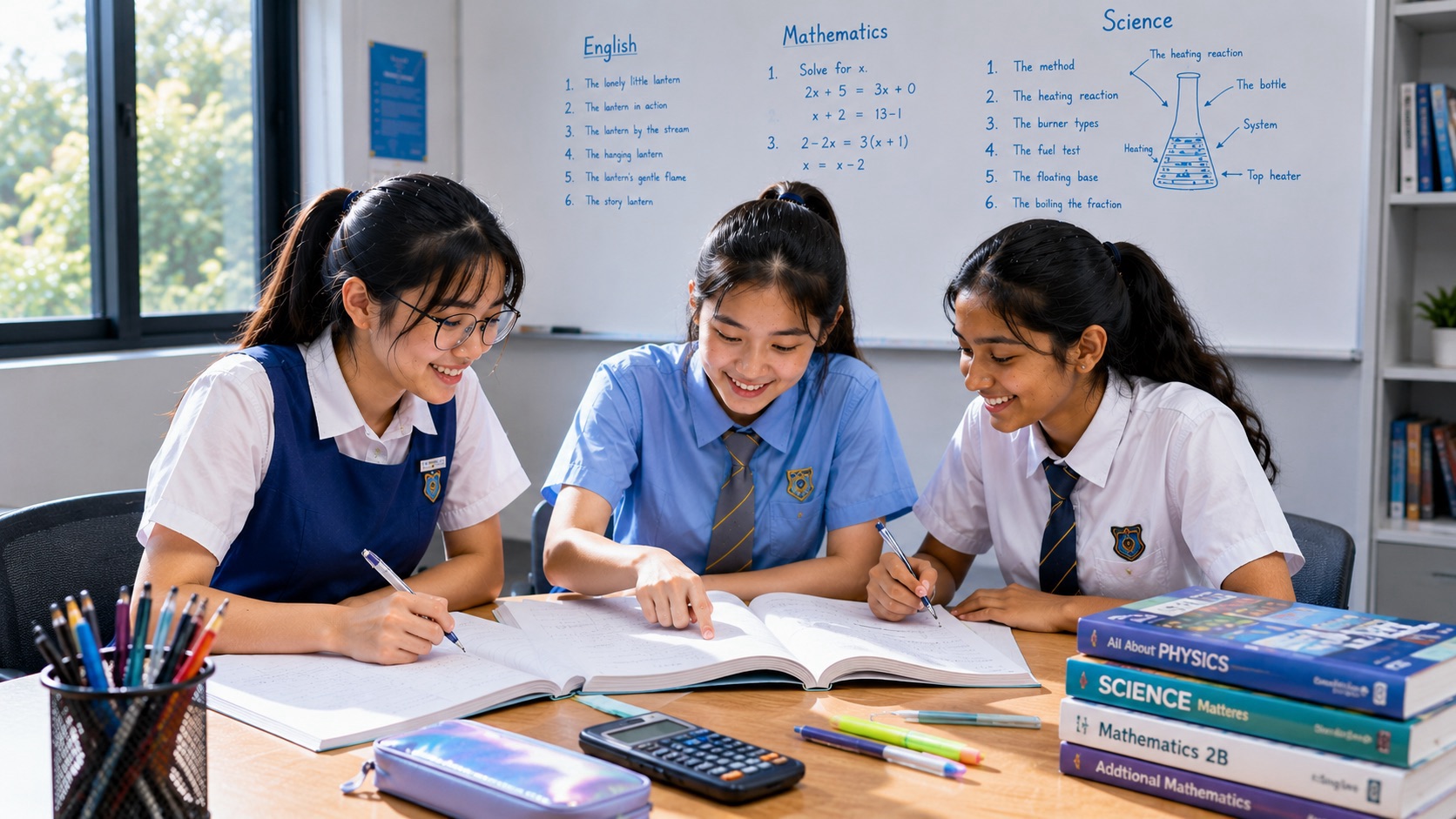
An H2 Mathematics revision plan should change as the examination horizon changes. Mid-year revision, prelim preparation and the final A-Level runway are not the same phase. Early revision repairs dependencies. Prelims require mixed-topic selection and timed control. The final runway protects retrieval, paper strategy, checking and recovery while avoiding frantic resource accumulation.
This page targets H2 maths revision plan, H2 maths prelims plan and the 2027 A-Level runway. It is phase-based rather than tied to one school calendar because internal assessment dates vary. The student should map these phases onto the actual JC schedule.
For 2027, SEAB lists H2 Mathematics as syllabus 9758. The current syllabus sets two three-hour papers worth 50% each. Paper 1 is Pure Mathematics; Paper 2 contains Pure Mathematics plus Probability & Statistics. Questions may integrate ideas from more than one topic and include real-world applications, so a revision system built only from isolated chapter drills is incomplete.
Use this guide with the H2 Mathematics topic map, H2 Mathematics Common Mistakes, and Score Change, Retention and Transfer in Mathematics.
1. Four operating modes
A mature revision year moves through four modes. Repair closes high-spread gaps. Connection mixes topics and strengthens recognition. Performance adds timing, paper movement and examination conditions. Consolidation protects what already works and reduces volatility. Problems arise when a student uses full papers to solve missing knowledge, or keeps reteaching foundations after the dominant problem has become execution under time.
2. Begin with a score map
Open recent school papers and classify losses as missing knowledge, weak prerequisite, representation, method selection, execution, calculator use, interpretation, communication or time control. The student should know which two or three mechanisms currently spread across the largest number of marks. Revision then becomes a queue rather than a mood.
3. Fifty revision actions
1. Build the topic inventory
Revision job. The immediate job is to classify every syllabus area as secure, fragile, unresolved or not recently tested. This action earns space in the plan only if it changes future mathematical behaviour. A revision calendar should be organised around capabilities and evidence, not around the satisfaction of filling boxes.
Why it matters. In H2 Mathematics, build the topic inventory affects more than the question currently in front of the student. The syllabus is connected, and the same capability can reappear inside a different topic, representation or paper. A weakness left untreated can therefore create repeated losses that look unrelated on the surface.
How to do it. Use a bounded task, a clear stopping rule and a fresh retest. For build the topic inventory, avoid endless repetition of the same page. Begin close to the identified weakness, then change the question surface so the student must retrieve and select rather than merely recognise.
Evidence. The plan should record whether classify every syllabus area as secure, fragile, unresolved or not recently tested with less prompting, fewer repeated errors and more reliable transfer after time has passed. Immediate success is useful, but revision becomes durable only when the student can carry the capability into mixed work and examination conditions.
When to reduce it. Do not repeat build the topic inventory indefinitely. Once the target becomes stable across several samples, move it into maintenance and redirect time to the next fragile layer. This prevents the common revision mistake of spending the final months polishing strong topics while high-value weaknesses remain active.
2. Separate Pure from Statistics
Revision job. The immediate job is to track the two domains independently even when total marks are combined. This action earns space in the plan only if it changes future mathematical behaviour. A revision calendar should be organised around capabilities and evidence, not around the satisfaction of filling boxes.
Why it matters. In H2 Mathematics, separate pure from statistics affects more than the question currently in front of the student. The syllabus is connected, and the same capability can reappear inside a different topic, representation or paper. A weakness left untreated can therefore create repeated losses that look unrelated on the surface.
How to do it. Use a bounded task, a clear stopping rule and a fresh retest. For separate pure from statistics, avoid endless repetition of the same page. Begin close to the identified weakness, then change the question surface so the student must retrieve and select rather than merely recognise.
Evidence. The plan should record whether track the two domains independently even when total marks are combined with less prompting, fewer repeated errors and more reliable transfer after time has passed. Immediate success is useful, but revision becomes durable only when the student can carry the capability into mixed work and examination conditions.
When to reduce it. Do not repeat separate pure from statistics indefinitely. Once the target becomes stable across several samples, move it into maintenance and redirect time to the next fragile layer. This prevents the common revision mistake of spending the final months polishing strong topics while high-value weaknesses remain active.
3. Find the highest-spread algebra weakness
Revision job. The immediate job is to repair symbolic errors that contaminate functions, calculus and vectors. This action earns space in the plan only if it changes future mathematical behaviour. A revision calendar should be organised around capabilities and evidence, not around the satisfaction of filling boxes.
Why it matters. In H2 Mathematics, find the highest-spread algebra weakness affects more than the question currently in front of the student. The syllabus is connected, and the same capability can reappear inside a different topic, representation or paper. A weakness left untreated can therefore create repeated losses that look unrelated on the surface.
How to do it. Use a bounded task, a clear stopping rule and a fresh retest. For find the highest-spread algebra weakness, avoid endless repetition of the same page. Begin close to the identified weakness, then change the question surface so the student must retrieve and select rather than merely recognise.
Evidence. The plan should record whether repair symbolic errors that contaminate functions, calculus and vectors with less prompting, fewer repeated errors and more reliable transfer after time has passed. Immediate success is useful, but revision becomes durable only when the student can carry the capability into mixed work and examination conditions.
When to reduce it. Do not repeat find the highest-spread algebra weakness indefinitely. Once the target becomes stable across several samples, move it into maintenance and redirect time to the next fragile layer. This prevents the common revision mistake of spending the final months polishing strong topics while high-value weaknesses remain active.
4. Stabilise functions
Revision job. The immediate job is to make notation, inverse/composite thinking and restrictions quick enough for mixed work. This action earns space in the plan only if it changes future mathematical behaviour. A revision calendar should be organised around capabilities and evidence, not around the satisfaction of filling boxes.
Why it matters. In H2 Mathematics, stabilise functions affects more than the question currently in front of the student. The syllabus is connected, and the same capability can reappear inside a different topic, representation or paper. A weakness left untreated can therefore create repeated losses that look unrelated on the surface.
How to do it. Use a bounded task, a clear stopping rule and a fresh retest. For stabilise functions, avoid endless repetition of the same page. Begin close to the identified weakness, then change the question surface so the student must retrieve and select rather than merely recognise.
Evidence. The plan should record whether make notation, inverse/composite thinking and restrictions quick enough for mixed work with less prompting, fewer repeated errors and more reliable transfer after time has passed. Immediate success is useful, but revision becomes durable only when the student can carry the capability into mixed work and examination conditions.
When to reduce it. Do not repeat stabilise functions indefinitely. Once the target becomes stable across several samples, move it into maintenance and redirect time to the next fragile layer. This prevents the common revision mistake of spending the final months polishing strong topics while high-value weaknesses remain active.
5. Rebuild graph transformations
Revision job. The immediate job is to connect formulas, points and qualitative shape before relying on the GC. This action earns space in the plan only if it changes future mathematical behaviour. A revision calendar should be organised around capabilities and evidence, not around the satisfaction of filling boxes.
Why it matters. In H2 Mathematics, rebuild graph transformations affects more than the question currently in front of the student. The syllabus is connected, and the same capability can reappear inside a different topic, representation or paper. A weakness left untreated can therefore create repeated losses that look unrelated on the surface.
How to do it. Use a bounded task, a clear stopping rule and a fresh retest. For rebuild graph transformations, avoid endless repetition of the same page. Begin close to the identified weakness, then change the question surface so the student must retrieve and select rather than merely recognise.
Evidence. The plan should record whether connect formulas, points and qualitative shape before relying on the GC with less prompting, fewer repeated errors and more reliable transfer after time has passed. Immediate success is useful, but revision becomes durable only when the student can carry the capability into mixed work and examination conditions.
When to reduce it. Do not repeat rebuild graph transformations indefinitely. Once the target becomes stable across several samples, move it into maintenance and redirect time to the next fragile layer. This prevents the common revision mistake of spending the final months polishing strong topics while high-value weaknesses remain active.
6. Reconnect equations
Revision job. The immediate job is to preserve equivalence and choose exact or numerical methods intelligently. This action earns space in the plan only if it changes future mathematical behaviour. A revision calendar should be organised around capabilities and evidence, not around the satisfaction of filling boxes.
Why it matters. In H2 Mathematics, reconnect equations affects more than the question currently in front of the student. The syllabus is connected, and the same capability can reappear inside a different topic, representation or paper. A weakness left untreated can therefore create repeated losses that look unrelated on the surface.
How to do it. Use a bounded task, a clear stopping rule and a fresh retest. For reconnect equations, avoid endless repetition of the same page. Begin close to the identified weakness, then change the question surface so the student must retrieve and select rather than merely recognise.
Evidence. The plan should record whether preserve equivalence and choose exact or numerical methods intelligently with less prompting, fewer repeated errors and more reliable transfer after time has passed. Immediate success is useful, but revision becomes durable only when the student can carry the capability into mixed work and examination conditions.
When to reduce it. Do not repeat reconnect equations indefinitely. Once the target becomes stable across several samples, move it into maintenance and redirect time to the next fragile layer. This prevents the common revision mistake of spending the final months polishing strong topics while high-value weaknesses remain active.
7. Reconnect inequalities
Revision job. The immediate job is to protect sign direction, interval reasoning and graphical interpretation. This action earns space in the plan only if it changes future mathematical behaviour. A revision calendar should be organised around capabilities and evidence, not around the satisfaction of filling boxes.
Why it matters. In H2 Mathematics, reconnect inequalities affects more than the question currently in front of the student. The syllabus is connected, and the same capability can reappear inside a different topic, representation or paper. A weakness left untreated can therefore create repeated losses that look unrelated on the surface.
How to do it. Use a bounded task, a clear stopping rule and a fresh retest. For reconnect inequalities, avoid endless repetition of the same page. Begin close to the identified weakness, then change the question surface so the student must retrieve and select rather than merely recognise.
Evidence. The plan should record whether protect sign direction, interval reasoning and graphical interpretation with less prompting, fewer repeated errors and more reliable transfer after time has passed. Immediate success is useful, but revision becomes durable only when the student can carry the capability into mixed work and examination conditions.
When to reduce it. Do not repeat reconnect inequalities indefinitely. Once the target becomes stable across several samples, move it into maintenance and redirect time to the next fragile layer. This prevents the common revision mistake of spending the final months polishing strong topics while high-value weaknesses remain active.
8. Refresh sequences
Revision job. The immediate job is to separate term structure from accumulated sums and convergence. This action earns space in the plan only if it changes future mathematical behaviour. A revision calendar should be organised around capabilities and evidence, not around the satisfaction of filling boxes.
Why it matters. In H2 Mathematics, refresh sequences affects more than the question currently in front of the student. The syllabus is connected, and the same capability can reappear inside a different topic, representation or paper. A weakness left untreated can therefore create repeated losses that look unrelated on the surface.
How to do it. Use a bounded task, a clear stopping rule and a fresh retest. For refresh sequences, avoid endless repetition of the same page. Begin close to the identified weakness, then change the question surface so the student must retrieve and select rather than merely recognise.
Evidence. The plan should record whether separate term structure from accumulated sums and convergence with less prompting, fewer repeated errors and more reliable transfer after time has passed. Immediate success is useful, but revision becomes durable only when the student can carry the capability into mixed work and examination conditions.
When to reduce it. Do not repeat refresh sequences indefinitely. Once the target becomes stable across several samples, move it into maintenance and redirect time to the next fragile layer. This prevents the common revision mistake of spending the final months polishing strong topics while high-value weaknesses remain active.
9. Refresh vectors
Revision job. The immediate job is to connect symbolic operations to geometry, direction and position. This action earns space in the plan only if it changes future mathematical behaviour. A revision calendar should be organised around capabilities and evidence, not around the satisfaction of filling boxes.
Why it matters. In H2 Mathematics, refresh vectors affects more than the question currently in front of the student. The syllabus is connected, and the same capability can reappear inside a different topic, representation or paper. A weakness left untreated can therefore create repeated losses that look unrelated on the surface.
How to do it. Use a bounded task, a clear stopping rule and a fresh retest. For refresh vectors, avoid endless repetition of the same page. Begin close to the identified weakness, then change the question surface so the student must retrieve and select rather than merely recognise.
Evidence. The plan should record whether connect symbolic operations to geometry, direction and position with less prompting, fewer repeated errors and more reliable transfer after time has passed. Immediate success is useful, but revision becomes durable only when the student can carry the capability into mixed work and examination conditions.
When to reduce it. Do not repeat refresh vectors indefinitely. Once the target becomes stable across several samples, move it into maintenance and redirect time to the next fragile layer. This prevents the common revision mistake of spending the final months polishing strong topics while high-value weaknesses remain active.
10. Audit scalar products
Revision job. The immediate job is to link dot-product calculation to angle and perpendicularity meaning. This action earns space in the plan only if it changes future mathematical behaviour. A revision calendar should be organised around capabilities and evidence, not around the satisfaction of filling boxes.
Why it matters. In H2 Mathematics, audit scalar products affects more than the question currently in front of the student. The syllabus is connected, and the same capability can reappear inside a different topic, representation or paper. A weakness left untreated can therefore create repeated losses that look unrelated on the surface.
How to do it. Use a bounded task, a clear stopping rule and a fresh retest. For audit scalar products, avoid endless repetition of the same page. Begin close to the identified weakness, then change the question surface so the student must retrieve and select rather than merely recognise.
Evidence. The plan should record whether link dot-product calculation to angle and perpendicularity meaning with less prompting, fewer repeated errors and more reliable transfer after time has passed. Immediate success is useful, but revision becomes durable only when the student can carry the capability into mixed work and examination conditions.
When to reduce it. Do not repeat audit scalar products indefinitely. Once the target becomes stable across several samples, move it into maintenance and redirect time to the next fragile layer. This prevents the common revision mistake of spending the final months polishing strong topics while high-value weaknesses remain active.
11. Audit vector products
Revision job. The immediate job is to connect cross products to orientation, perpendicularity and magnitude. This action earns space in the plan only if it changes future mathematical behaviour. A revision calendar should be organised around capabilities and evidence, not around the satisfaction of filling boxes.
Why it matters. In H2 Mathematics, audit vector products affects more than the question currently in front of the student. The syllabus is connected, and the same capability can reappear inside a different topic, representation or paper. A weakness left untreated can therefore create repeated losses that look unrelated on the surface.
How to do it. Use a bounded task, a clear stopping rule and a fresh retest. For audit vector products, avoid endless repetition of the same page. Begin close to the identified weakness, then change the question surface so the student must retrieve and select rather than merely recognise.
Evidence. The plan should record whether connect cross products to orientation, perpendicularity and magnitude with less prompting, fewer repeated errors and more reliable transfer after time has passed. Immediate success is useful, but revision becomes durable only when the student can carry the capability into mixed work and examination conditions.
When to reduce it. Do not repeat audit vector products indefinitely. Once the target becomes stable across several samples, move it into maintenance and redirect time to the next fragile layer. This prevents the common revision mistake of spending the final months polishing strong topics while high-value weaknesses remain active.
12. Refresh complex numbers
Revision job. The immediate job is to connect algebraic form to the Argand plane and quadrant judgement. This action earns space in the plan only if it changes future mathematical behaviour. A revision calendar should be organised around capabilities and evidence, not around the satisfaction of filling boxes.
Why it matters. In H2 Mathematics, refresh complex numbers affects more than the question currently in front of the student. The syllabus is connected, and the same capability can reappear inside a different topic, representation or paper. A weakness left untreated can therefore create repeated losses that look unrelated on the surface.
How to do it. Use a bounded task, a clear stopping rule and a fresh retest. For refresh complex numbers, avoid endless repetition of the same page. Begin close to the identified weakness, then change the question surface so the student must retrieve and select rather than merely recognise.
Evidence. The plan should record whether connect algebraic form to the Argand plane and quadrant judgement with less prompting, fewer repeated errors and more reliable transfer after time has passed. Immediate success is useful, but revision becomes durable only when the student can carry the capability into mixed work and examination conditions.
When to reduce it. Do not repeat refresh complex numbers indefinitely. Once the target becomes stable across several samples, move it into maintenance and redirect time to the next fragile layer. This prevents the common revision mistake of spending the final months polishing strong topics while high-value weaknesses remain active.
13. Rebuild differentiation selection
Revision job. The immediate job is to classify function structure before applying derivative rules. This action earns space in the plan only if it changes future mathematical behaviour. A revision calendar should be organised around capabilities and evidence, not around the satisfaction of filling boxes.
Why it matters. In H2 Mathematics, rebuild differentiation selection affects more than the question currently in front of the student. The syllabus is connected, and the same capability can reappear inside a different topic, representation or paper. A weakness left untreated can therefore create repeated losses that look unrelated on the surface.
How to do it. Use a bounded task, a clear stopping rule and a fresh retest. For rebuild differentiation selection, avoid endless repetition of the same page. Begin close to the identified weakness, then change the question surface so the student must retrieve and select rather than merely recognise.
Evidence. The plan should record whether classify function structure before applying derivative rules with less prompting, fewer repeated errors and more reliable transfer after time has passed. Immediate success is useful, but revision becomes durable only when the student can carry the capability into mixed work and examination conditions.
When to reduce it. Do not repeat rebuild differentiation selection indefinitely. Once the target becomes stable across several samples, move it into maintenance and redirect time to the next fragile layer. This prevents the common revision mistake of spending the final months polishing strong topics while high-value weaknesses remain active.
14. Rebuild differentiation applications
Revision job. The immediate job is to connect stationary points and rates back to the question context. This action earns space in the plan only if it changes future mathematical behaviour. A revision calendar should be organised around capabilities and evidence, not around the satisfaction of filling boxes.
Why it matters. In H2 Mathematics, rebuild differentiation applications affects more than the question currently in front of the student. The syllabus is connected, and the same capability can reappear inside a different topic, representation or paper. A weakness left untreated can therefore create repeated losses that look unrelated on the surface.
How to do it. Use a bounded task, a clear stopping rule and a fresh retest. For rebuild differentiation applications, avoid endless repetition of the same page. Begin close to the identified weakness, then change the question surface so the student must retrieve and select rather than merely recognise.
Evidence. The plan should record whether connect stationary points and rates back to the question context with less prompting, fewer repeated errors and more reliable transfer after time has passed. Immediate success is useful, but revision becomes durable only when the student can carry the capability into mixed work and examination conditions.
When to reduce it. Do not repeat rebuild differentiation applications indefinitely. Once the target becomes stable across several samples, move it into maintenance and redirect time to the next fragile layer. This prevents the common revision mistake of spending the final months polishing strong topics while high-value weaknesses remain active.
15. Rebuild integration selection
Revision job. The immediate job is to choose algebraic preparation and method deliberately rather than guessing. This action earns space in the plan only if it changes future mathematical behaviour. A revision calendar should be organised around capabilities and evidence, not around the satisfaction of filling boxes.
Why it matters. In H2 Mathematics, rebuild integration selection affects more than the question currently in front of the student. The syllabus is connected, and the same capability can reappear inside a different topic, representation or paper. A weakness left untreated can therefore create repeated losses that look unrelated on the surface.
How to do it. Use a bounded task, a clear stopping rule and a fresh retest. For rebuild integration selection, avoid endless repetition of the same page. Begin close to the identified weakness, then change the question surface so the student must retrieve and select rather than merely recognise.
Evidence. The plan should record whether choose algebraic preparation and method deliberately rather than guessing with less prompting, fewer repeated errors and more reliable transfer after time has passed. Immediate success is useful, but revision becomes durable only when the student can carry the capability into mixed work and examination conditions.
When to reduce it. Do not repeat rebuild integration selection indefinitely. Once the target becomes stable across several samples, move it into maintenance and redirect time to the next fragile layer. This prevents the common revision mistake of spending the final months polishing strong topics while high-value weaknesses remain active.
16. Rebuild definite-integral interpretation
Revision job. The immediate job is to separate signed accumulation from geometric area. This action earns space in the plan only if it changes future mathematical behaviour. A revision calendar should be organised around capabilities and evidence, not around the satisfaction of filling boxes.
Why it matters. In H2 Mathematics, rebuild definite-integral interpretation affects more than the question currently in front of the student. The syllabus is connected, and the same capability can reappear inside a different topic, representation or paper. A weakness left untreated can therefore create repeated losses that look unrelated on the surface.
How to do it. Use a bounded task, a clear stopping rule and a fresh retest. For rebuild definite-integral interpretation, avoid endless repetition of the same page. Begin close to the identified weakness, then change the question surface so the student must retrieve and select rather than merely recognise.
Evidence. The plan should record whether separate signed accumulation from geometric area with less prompting, fewer repeated errors and more reliable transfer after time has passed. Immediate success is useful, but revision becomes durable only when the student can carry the capability into mixed work and examination conditions.
When to reduce it. Do not repeat rebuild definite-integral interpretation indefinitely. Once the target becomes stable across several samples, move it into maintenance and redirect time to the next fragile layer. This prevents the common revision mistake of spending the final months polishing strong topics while high-value weaknesses remain active.
17. Revisit differential equations
Revision job. The immediate job is to connect general solution, constants and initial conditions. This action earns space in the plan only if it changes future mathematical behaviour. A revision calendar should be organised around capabilities and evidence, not around the satisfaction of filling boxes.
Why it matters. In H2 Mathematics, revisit differential equations affects more than the question currently in front of the student. The syllabus is connected, and the same capability can reappear inside a different topic, representation or paper. A weakness left untreated can therefore create repeated losses that look unrelated on the surface.
How to do it. Use a bounded task, a clear stopping rule and a fresh retest. For revisit differential equations, avoid endless repetition of the same page. Begin close to the identified weakness, then change the question surface so the student must retrieve and select rather than merely recognise.
Evidence. The plan should record whether connect general solution, constants and initial conditions with less prompting, fewer repeated errors and more reliable transfer after time has passed. Immediate success is useful, but revision becomes durable only when the student can carry the capability into mixed work and examination conditions.
When to reduce it. Do not repeat revisit differential equations indefinitely. Once the target becomes stable across several samples, move it into maintenance and redirect time to the next fragile layer. This prevents the common revision mistake of spending the final months polishing strong topics while high-value weaknesses remain active.
18. Refresh permutations and combinations
Revision job. The immediate job is to decide what constitutes a distinct outcome before choosing notation. This action earns space in the plan only if it changes future mathematical behaviour. A revision calendar should be organised around capabilities and evidence, not around the satisfaction of filling boxes.
Why it matters. In H2 Mathematics, refresh permutations and combinations affects more than the question currently in front of the student. The syllabus is connected, and the same capability can reappear inside a different topic, representation or paper. A weakness left untreated can therefore create repeated losses that look unrelated on the surface.
How to do it. Use a bounded task, a clear stopping rule and a fresh retest. For refresh permutations and combinations, avoid endless repetition of the same page. Begin close to the identified weakness, then change the question surface so the student must retrieve and select rather than merely recognise.
Evidence. The plan should record whether decide what constitutes a distinct outcome before choosing notation with less prompting, fewer repeated errors and more reliable transfer after time has passed. Immediate success is useful, but revision becomes durable only when the student can carry the capability into mixed work and examination conditions.
When to reduce it. Do not repeat refresh permutations and combinations indefinitely. Once the target becomes stable across several samples, move it into maintenance and redirect time to the next fragile layer. This prevents the common revision mistake of spending the final months polishing strong topics while high-value weaknesses remain active.
19. Refresh probability
Revision job. The immediate job is to model events, complements, independence and conditional structure accurately. This action earns space in the plan only if it changes future mathematical behaviour. A revision calendar should be organised around capabilities and evidence, not around the satisfaction of filling boxes.
Why it matters. In H2 Mathematics, refresh probability affects more than the question currently in front of the student. The syllabus is connected, and the same capability can reappear inside a different topic, representation or paper. A weakness left untreated can therefore create repeated losses that look unrelated on the surface.
How to do it. Use a bounded task, a clear stopping rule and a fresh retest. For refresh probability, avoid endless repetition of the same page. Begin close to the identified weakness, then change the question surface so the student must retrieve and select rather than merely recognise.
Evidence. The plan should record whether model events, complements, independence and conditional structure accurately with less prompting, fewer repeated errors and more reliable transfer after time has passed. Immediate success is useful, but revision becomes durable only when the student can carry the capability into mixed work and examination conditions.
When to reduce it. Do not repeat refresh probability indefinitely. Once the target becomes stable across several samples, move it into maintenance and redirect time to the next fragile layer. This prevents the common revision mistake of spending the final months polishing strong topics while high-value weaknesses remain active.
20. Refresh discrete random variables
Revision job. The immediate job is to connect values, probabilities, expectation and variance to the process. This action earns space in the plan only if it changes future mathematical behaviour. A revision calendar should be organised around capabilities and evidence, not around the satisfaction of filling boxes.
Why it matters. In H2 Mathematics, refresh discrete random variables affects more than the question currently in front of the student. The syllabus is connected, and the same capability can reappear inside a different topic, representation or paper. A weakness left untreated can therefore create repeated losses that look unrelated on the surface.
How to do it. Use a bounded task, a clear stopping rule and a fresh retest. For refresh discrete random variables, avoid endless repetition of the same page. Begin close to the identified weakness, then change the question surface so the student must retrieve and select rather than merely recognise.
Evidence. The plan should record whether connect values, probabilities, expectation and variance to the process with less prompting, fewer repeated errors and more reliable transfer after time has passed. Immediate success is useful, but revision becomes durable only when the student can carry the capability into mixed work and examination conditions.
When to reduce it. Do not repeat refresh discrete random variables indefinitely. Once the target becomes stable across several samples, move it into maintenance and redirect time to the next fragile layer. This prevents the common revision mistake of spending the final months polishing strong topics while high-value weaknesses remain active.
21. Refresh binomial models
Revision job. The immediate job is to check model conditions before using the distribution. This action earns space in the plan only if it changes future mathematical behaviour. A revision calendar should be organised around capabilities and evidence, not around the satisfaction of filling boxes.
Why it matters. In H2 Mathematics, refresh binomial models affects more than the question currently in front of the student. The syllabus is connected, and the same capability can reappear inside a different topic, representation or paper. A weakness left untreated can therefore create repeated losses that look unrelated on the surface.
How to do it. Use a bounded task, a clear stopping rule and a fresh retest. For refresh binomial models, avoid endless repetition of the same page. Begin close to the identified weakness, then change the question surface so the student must retrieve and select rather than merely recognise.
Evidence. The plan should record whether check model conditions before using the distribution with less prompting, fewer repeated errors and more reliable transfer after time has passed. Immediate success is useful, but revision becomes durable only when the student can carry the capability into mixed work and examination conditions.
When to reduce it. Do not repeat refresh binomial models indefinitely. Once the target becomes stable across several samples, move it into maintenance and redirect time to the next fragile layer. This prevents the common revision mistake of spending the final months polishing strong topics while high-value weaknesses remain active.
22. Refresh normal distribution
Revision job. The immediate job is to sketch regions, standardise correctly and interpret calculator output. This action earns space in the plan only if it changes future mathematical behaviour. A revision calendar should be organised around capabilities and evidence, not around the satisfaction of filling boxes.
Why it matters. In H2 Mathematics, refresh normal distribution affects more than the question currently in front of the student. The syllabus is connected, and the same capability can reappear inside a different topic, representation or paper. A weakness left untreated can therefore create repeated losses that look unrelated on the surface.
How to do it. Use a bounded task, a clear stopping rule and a fresh retest. For refresh normal distribution, avoid endless repetition of the same page. Begin close to the identified weakness, then change the question surface so the student must retrieve and select rather than merely recognise.
Evidence. The plan should record whether sketch regions, standardise correctly and interpret calculator output with less prompting, fewer repeated errors and more reliable transfer after time has passed. Immediate success is useful, but revision becomes durable only when the student can carry the capability into mixed work and examination conditions.
When to reduce it. Do not repeat refresh normal distribution indefinitely. Once the target becomes stable across several samples, move it into maintenance and redirect time to the next fragile layer. This prevents the common revision mistake of spending the final months polishing strong topics while high-value weaknesses remain active.
23. Refresh sampling distributions
Revision job. The immediate job is to separate population parameters from sample statistics. This action earns space in the plan only if it changes future mathematical behaviour. A revision calendar should be organised around capabilities and evidence, not around the satisfaction of filling boxes.
Why it matters. In H2 Mathematics, refresh sampling distributions affects more than the question currently in front of the student. The syllabus is connected, and the same capability can reappear inside a different topic, representation or paper. A weakness left untreated can therefore create repeated losses that look unrelated on the surface.
How to do it. Use a bounded task, a clear stopping rule and a fresh retest. For refresh sampling distributions, avoid endless repetition of the same page. Begin close to the identified weakness, then change the question surface so the student must retrieve and select rather than merely recognise.
Evidence. The plan should record whether separate population parameters from sample statistics with less prompting, fewer repeated errors and more reliable transfer after time has passed. Immediate success is useful, but revision becomes durable only when the student can carry the capability into mixed work and examination conditions.
When to reduce it. Do not repeat refresh sampling distributions indefinitely. Once the target becomes stable across several samples, move it into maintenance and redirect time to the next fragile layer. This prevents the common revision mistake of spending the final months polishing strong topics while high-value weaknesses remain active.
24. Rebuild hypothesis testing
Revision job. The immediate job is to write hypotheses before calculator work and interpret p-values correctly. This action earns space in the plan only if it changes future mathematical behaviour. A revision calendar should be organised around capabilities and evidence, not around the satisfaction of filling boxes.
Why it matters. In H2 Mathematics, rebuild hypothesis testing affects more than the question currently in front of the student. The syllabus is connected, and the same capability can reappear inside a different topic, representation or paper. A weakness left untreated can therefore create repeated losses that look unrelated on the surface.
How to do it. Use a bounded task, a clear stopping rule and a fresh retest. For rebuild hypothesis testing, avoid endless repetition of the same page. Begin close to the identified weakness, then change the question surface so the student must retrieve and select rather than merely recognise.
Evidence. The plan should record whether write hypotheses before calculator work and interpret p-values correctly with less prompting, fewer repeated errors and more reliable transfer after time has passed. Immediate success is useful, but revision becomes durable only when the student can carry the capability into mixed work and examination conditions.
When to reduce it. Do not repeat rebuild hypothesis testing indefinitely. Once the target becomes stable across several samples, move it into maintenance and redirect time to the next fragile layer. This prevents the common revision mistake of spending the final months polishing strong topics while high-value weaknesses remain active.
25. Rebuild correlation and regression
Revision job. The immediate job is to separate association, prediction, extrapolation and causation. This action earns space in the plan only if it changes future mathematical behaviour. A revision calendar should be organised around capabilities and evidence, not around the satisfaction of filling boxes.
Why it matters. In H2 Mathematics, rebuild correlation and regression affects more than the question currently in front of the student. The syllabus is connected, and the same capability can reappear inside a different topic, representation or paper. A weakness left untreated can therefore create repeated losses that look unrelated on the surface.
How to do it. Use a bounded task, a clear stopping rule and a fresh retest. For rebuild correlation and regression, avoid endless repetition of the same page. Begin close to the identified weakness, then change the question surface so the student must retrieve and select rather than merely recognise.
Evidence. The plan should record whether separate association, prediction, extrapolation and causation with less prompting, fewer repeated errors and more reliable transfer after time has passed. Immediate success is useful, but revision becomes durable only when the student can carry the capability into mixed work and examination conditions.
When to reduce it. Do not repeat rebuild correlation and regression indefinitely. Once the target becomes stable across several samples, move it into maintenance and redirect time to the next fragile layer. This prevents the common revision mistake of spending the final months polishing strong topics while high-value weaknesses remain active.
26. Start an error ledger
Revision job. The immediate job is to record the first wrong decision, repair, delayed retest and transfer result. This action earns space in the plan only if it changes future mathematical behaviour. A revision calendar should be organised around capabilities and evidence, not around the satisfaction of filling boxes.
Why it matters. In H2 Mathematics, start an error ledger affects more than the question currently in front of the student. The syllabus is connected, and the same capability can reappear inside a different topic, representation or paper. A weakness left untreated can therefore create repeated losses that look unrelated on the surface.
How to do it. Use a bounded task, a clear stopping rule and a fresh retest. For start an error ledger, avoid endless repetition of the same page. Begin close to the identified weakness, then change the question surface so the student must retrieve and select rather than merely recognise.
Evidence. The plan should record whether record the first wrong decision, repair, delayed retest and transfer result with less prompting, fewer repeated errors and more reliable transfer after time has passed. Immediate success is useful, but revision becomes durable only when the student can carry the capability into mixed work and examination conditions.
When to reduce it. Do not repeat start an error ledger indefinitely. Once the target becomes stable across several samples, move it into maintenance and redirect time to the next fragile layer. This prevents the common revision mistake of spending the final months polishing strong topics while high-value weaknesses remain active.
27. Use spaced retrieval
Revision job. The immediate job is to bring old content back after delays instead of relying on massed review. This action earns space in the plan only if it changes future mathematical behaviour. A revision calendar should be organised around capabilities and evidence, not around the satisfaction of filling boxes.
Why it matters. In H2 Mathematics, use spaced retrieval affects more than the question currently in front of the student. The syllabus is connected, and the same capability can reappear inside a different topic, representation or paper. A weakness left untreated can therefore create repeated losses that look unrelated on the surface.
How to do it. Use a bounded task, a clear stopping rule and a fresh retest. For use spaced retrieval, avoid endless repetition of the same page. Begin close to the identified weakness, then change the question surface so the student must retrieve and select rather than merely recognise.
Evidence. The plan should record whether bring old content back after delays instead of relying on massed review with less prompting, fewer repeated errors and more reliable transfer after time has passed. Immediate success is useful, but revision becomes durable only when the student can carry the capability into mixed work and examination conditions.
When to reduce it. Do not repeat use spaced retrieval indefinitely. Once the target becomes stable across several samples, move it into maintenance and redirect time to the next fragile layer. This prevents the common revision mistake of spending the final months polishing strong topics while high-value weaknesses remain active.
28. Use interleaving
Revision job. The immediate job is to mix plausible methods so recognition becomes part of revision. This action earns space in the plan only if it changes future mathematical behaviour. A revision calendar should be organised around capabilities and evidence, not around the satisfaction of filling boxes.
Why it matters. In H2 Mathematics, use interleaving affects more than the question currently in front of the student. The syllabus is connected, and the same capability can reappear inside a different topic, representation or paper. A weakness left untreated can therefore create repeated losses that look unrelated on the surface.
How to do it. Use a bounded task, a clear stopping rule and a fresh retest. For use interleaving, avoid endless repetition of the same page. Begin close to the identified weakness, then change the question surface so the student must retrieve and select rather than merely recognise.
Evidence. The plan should record whether mix plausible methods so recognition becomes part of revision with less prompting, fewer repeated errors and more reliable transfer after time has passed. Immediate success is useful, but revision becomes durable only when the student can carry the capability into mixed work and examination conditions.
When to reduce it. Do not repeat use interleaving indefinitely. Once the target becomes stable across several samples, move it into maintenance and redirect time to the next fragile layer. This prevents the common revision mistake of spending the final months polishing strong topics while high-value weaknesses remain active.
29. Fade worked examples
Revision job. The immediate job is to remove solution support gradually until blank-page starts become normal. This action earns space in the plan only if it changes future mathematical behaviour. A revision calendar should be organised around capabilities and evidence, not around the satisfaction of filling boxes.
Why it matters. In H2 Mathematics, fade worked examples affects more than the question currently in front of the student. The syllabus is connected, and the same capability can reappear inside a different topic, representation or paper. A weakness left untreated can therefore create repeated losses that look unrelated on the surface.
How to do it. Use a bounded task, a clear stopping rule and a fresh retest. For fade worked examples, avoid endless repetition of the same page. Begin close to the identified weakness, then change the question surface so the student must retrieve and select rather than merely recognise.
Evidence. The plan should record whether remove solution support gradually until blank-page starts become normal with less prompting, fewer repeated errors and more reliable transfer after time has passed. Immediate success is useful, but revision becomes durable only when the student can carry the capability into mixed work and examination conditions.
When to reduce it. Do not repeat fade worked examples indefinitely. Once the target becomes stable across several samples, move it into maintenance and redirect time to the next fragile layer. This prevents the common revision mistake of spending the final months polishing strong topics while high-value weaknesses remain active.
30. Run weekly unseen sets
Revision job. The immediate job is to sample transfer with questions not recently rehearsed. This action earns space in the plan only if it changes future mathematical behaviour. A revision calendar should be organised around capabilities and evidence, not around the satisfaction of filling boxes.
Why it matters. In H2 Mathematics, run weekly unseen sets affects more than the question currently in front of the student. The syllabus is connected, and the same capability can reappear inside a different topic, representation or paper. A weakness left untreated can therefore create repeated losses that look unrelated on the surface.
How to do it. Use a bounded task, a clear stopping rule and a fresh retest. For run weekly unseen sets, avoid endless repetition of the same page. Begin close to the identified weakness, then change the question surface so the student must retrieve and select rather than merely recognise.
Evidence. The plan should record whether sample transfer with questions not recently rehearsed with less prompting, fewer repeated errors and more reliable transfer after time has passed. Immediate success is useful, but revision becomes durable only when the student can carry the capability into mixed work and examination conditions.
When to reduce it. Do not repeat run weekly unseen sets indefinitely. Once the target becomes stable across several samples, move it into maintenance and redirect time to the next fragile layer. This prevents the common revision mistake of spending the final months polishing strong topics while high-value weaknesses remain active.
31. Time short blocks first
Revision job. The immediate job is to add pressure to already-secure methods before full-paper timing. This action earns space in the plan only if it changes future mathematical behaviour. A revision calendar should be organised around capabilities and evidence, not around the satisfaction of filling boxes.
Why it matters. In H2 Mathematics, time short blocks first affects more than the question currently in front of the student. The syllabus is connected, and the same capability can reappear inside a different topic, representation or paper. A weakness left untreated can therefore create repeated losses that look unrelated on the surface.
How to do it. Use a bounded task, a clear stopping rule and a fresh retest. For time short blocks first, avoid endless repetition of the same page. Begin close to the identified weakness, then change the question surface so the student must retrieve and select rather than merely recognise.
Evidence. The plan should record whether add pressure to already-secure methods before full-paper timing with less prompting, fewer repeated errors and more reliable transfer after time has passed. Immediate success is useful, but revision becomes durable only when the student can carry the capability into mixed work and examination conditions.
When to reduce it. Do not repeat time short blocks first indefinitely. Once the target becomes stable across several samples, move it into maintenance and redirect time to the next fragile layer. This prevents the common revision mistake of spending the final months polishing strong topics while high-value weaknesses remain active.
32. Practise paper movement
Revision job. The immediate job is to learn to leave, mark and return to stubborn questions before they damage the paper. This action earns space in the plan only if it changes future mathematical behaviour. A revision calendar should be organised around capabilities and evidence, not around the satisfaction of filling boxes.
Why it matters. In H2 Mathematics, practise paper movement affects more than the question currently in front of the student. The syllabus is connected, and the same capability can reappear inside a different topic, representation or paper. A weakness left untreated can therefore create repeated losses that look unrelated on the surface.
How to do it. Use a bounded task, a clear stopping rule and a fresh retest. For practise paper movement, avoid endless repetition of the same page. Begin close to the identified weakness, then change the question surface so the student must retrieve and select rather than merely recognise.
Evidence. The plan should record whether learn to leave, mark and return to stubborn questions before they damage the paper with less prompting, fewer repeated errors and more reliable transfer after time has passed. Immediate success is useful, but revision becomes durable only when the student can carry the capability into mixed work and examination conditions.
When to reduce it. Do not repeat practise paper movement indefinitely. Once the target becomes stable across several samples, move it into maintenance and redirect time to the next fragile layer. This prevents the common revision mistake of spending the final months polishing strong topics while high-value weaknesses remain active.
33. Stabilise GC workflows
Revision job. The immediate job is to make graphing, solving and statistical commands reliable and interpretable. This action earns space in the plan only if it changes future mathematical behaviour. A revision calendar should be organised around capabilities and evidence, not around the satisfaction of filling boxes.
Why it matters. In H2 Mathematics, stabilise gc workflows affects more than the question currently in front of the student. The syllabus is connected, and the same capability can reappear inside a different topic, representation or paper. A weakness left untreated can therefore create repeated losses that look unrelated on the surface.
How to do it. Use a bounded task, a clear stopping rule and a fresh retest. For stabilise gc workflows, avoid endless repetition of the same page. Begin close to the identified weakness, then change the question surface so the student must retrieve and select rather than merely recognise.
Evidence. The plan should record whether make graphing, solving and statistical commands reliable and interpretable with less prompting, fewer repeated errors and more reliable transfer after time has passed. Immediate success is useful, but revision becomes durable only when the student can carry the capability into mixed work and examination conditions.
When to reduce it. Do not repeat stabilise gc workflows indefinitely. Once the target becomes stable across several samples, move it into maintenance and redirect time to the next fragile layer. This prevents the common revision mistake of spending the final months polishing strong topics while high-value weaknesses remain active.
34. Use MF27 deliberately
Revision job. The immediate job is to know what is provided so memory effort goes to what must be understood or selected. This action earns space in the plan only if it changes future mathematical behaviour. A revision calendar should be organised around capabilities and evidence, not around the satisfaction of filling boxes.
Why it matters. In H2 Mathematics, use mf27 deliberately affects more than the question currently in front of the student. The syllabus is connected, and the same capability can reappear inside a different topic, representation or paper. A weakness left untreated can therefore create repeated losses that look unrelated on the surface.
How to do it. Use a bounded task, a clear stopping rule and a fresh retest. For use mf27 deliberately, avoid endless repetition of the same page. Begin close to the identified weakness, then change the question surface so the student must retrieve and select rather than merely recognise.
Evidence. The plan should record whether know what is provided so memory effort goes to what must be understood or selected with less prompting, fewer repeated errors and more reliable transfer after time has passed. Immediate success is useful, but revision becomes durable only when the student can carry the capability into mixed work and examination conditions.
When to reduce it. Do not repeat use mf27 deliberately indefinitely. Once the target becomes stable across several samples, move it into maintenance and redirect time to the next fragile layer. This prevents the common revision mistake of spending the final months polishing strong topics while high-value weaknesses remain active.
35. Build a Paper 1 routine
Revision job. The immediate job is to practise Pure Mathematics entry, movement and strategic checking. This action earns space in the plan only if it changes future mathematical behaviour. A revision calendar should be organised around capabilities and evidence, not around the satisfaction of filling boxes.
Why it matters. In H2 Mathematics, build a paper 1 routine affects more than the question currently in front of the student. The syllabus is connected, and the same capability can reappear inside a different topic, representation or paper. A weakness left untreated can therefore create repeated losses that look unrelated on the surface.
How to do it. Use a bounded task, a clear stopping rule and a fresh retest. For build a paper 1 routine, avoid endless repetition of the same page. Begin close to the identified weakness, then change the question surface so the student must retrieve and select rather than merely recognise.
Evidence. The plan should record whether practise Pure Mathematics entry, movement and strategic checking with less prompting, fewer repeated errors and more reliable transfer after time has passed. Immediate success is useful, but revision becomes durable only when the student can carry the capability into mixed work and examination conditions.
When to reduce it. Do not repeat build a paper 1 routine indefinitely. Once the target becomes stable across several samples, move it into maintenance and redirect time to the next fragile layer. This prevents the common revision mistake of spending the final months polishing strong topics while high-value weaknesses remain active.
36. Build a Paper 2 routine
Revision job. The immediate job is to manage the switch between Pure Mathematics and Probability & Statistics. This action earns space in the plan only if it changes future mathematical behaviour. A revision calendar should be organised around capabilities and evidence, not around the satisfaction of filling boxes.
Why it matters. In H2 Mathematics, build a paper 2 routine affects more than the question currently in front of the student. The syllabus is connected, and the same capability can reappear inside a different topic, representation or paper. A weakness left untreated can therefore create repeated losses that look unrelated on the surface.
How to do it. Use a bounded task, a clear stopping rule and a fresh retest. For build a paper 2 routine, avoid endless repetition of the same page. Begin close to the identified weakness, then change the question surface so the student must retrieve and select rather than merely recognise.
Evidence. The plan should record whether manage the switch between Pure Mathematics and Probability & Statistics with less prompting, fewer repeated errors and more reliable transfer after time has passed. Immediate success is useful, but revision becomes durable only when the student can carry the capability into mixed work and examination conditions.
When to reduce it. Do not repeat build a paper 2 routine indefinitely. Once the target becomes stable across several samples, move it into maintenance and redirect time to the next fragile layer. This prevents the common revision mistake of spending the final months polishing strong topics while high-value weaknesses remain active.
37. Analyse every timed paper
Revision job. The immediate job is to convert each paper into a repair queue within twenty-four hours. This action earns space in the plan only if it changes future mathematical behaviour. A revision calendar should be organised around capabilities and evidence, not around the satisfaction of filling boxes.
Why it matters. In H2 Mathematics, analyse every timed paper affects more than the question currently in front of the student. The syllabus is connected, and the same capability can reappear inside a different topic, representation or paper. A weakness left untreated can therefore create repeated losses that look unrelated on the surface.
How to do it. Use a bounded task, a clear stopping rule and a fresh retest. For analyse every timed paper, avoid endless repetition of the same page. Begin close to the identified weakness, then change the question surface so the student must retrieve and select rather than merely recognise.
Evidence. The plan should record whether convert each paper into a repair queue within twenty-four hours with less prompting, fewer repeated errors and more reliable transfer after time has passed. Immediate success is useful, but revision becomes durable only when the student can carry the capability into mixed work and examination conditions.
When to reduce it. Do not repeat analyse every timed paper indefinitely. Once the target becomes stable across several samples, move it into maintenance and redirect time to the next fragile layer. This prevents the common revision mistake of spending the final months polishing strong topics while high-value weaknesses remain active.
38. Retest repaired errors
Revision job. The immediate job is to prove correction through fresh questions rather than copied solutions. This action earns space in the plan only if it changes future mathematical behaviour. A revision calendar should be organised around capabilities and evidence, not around the satisfaction of filling boxes.
Why it matters. In H2 Mathematics, retest repaired errors affects more than the question currently in front of the student. The syllabus is connected, and the same capability can reappear inside a different topic, representation or paper. A weakness left untreated can therefore create repeated losses that look unrelated on the surface.
How to do it. Use a bounded task, a clear stopping rule and a fresh retest. For retest repaired errors, avoid endless repetition of the same page. Begin close to the identified weakness, then change the question surface so the student must retrieve and select rather than merely recognise.
Evidence. The plan should record whether prove correction through fresh questions rather than copied solutions with less prompting, fewer repeated errors and more reliable transfer after time has passed. Immediate success is useful, but revision becomes durable only when the student can carry the capability into mixed work and examination conditions.
When to reduce it. Do not repeat retest repaired errors indefinitely. Once the target becomes stable across several samples, move it into maintenance and redirect time to the next fragile layer. This prevents the common revision mistake of spending the final months polishing strong topics while high-value weaknesses remain active.
39. Use prelims diagnostically
Revision job. The immediate job is to treat internal exams as high-load evidence rather than prophecy. This action earns space in the plan only if it changes future mathematical behaviour. A revision calendar should be organised around capabilities and evidence, not around the satisfaction of filling boxes.
Why it matters. In H2 Mathematics, use prelims diagnostically affects more than the question currently in front of the student. The syllabus is connected, and the same capability can reappear inside a different topic, representation or paper. A weakness left untreated can therefore create repeated losses that look unrelated on the surface.
How to do it. Use a bounded task, a clear stopping rule and a fresh retest. For use prelims diagnostically, avoid endless repetition of the same page. Begin close to the identified weakness, then change the question surface so the student must retrieve and select rather than merely recognise.
Evidence. The plan should record whether treat internal exams as high-load evidence rather than prophecy with less prompting, fewer repeated errors and more reliable transfer after time has passed. Immediate success is useful, but revision becomes durable only when the student can carry the capability into mixed work and examination conditions.
When to reduce it. Do not repeat use prelims diagnostically indefinitely. Once the target becomes stable across several samples, move it into maintenance and redirect time to the next fragile layer. This prevents the common revision mistake of spending the final months polishing strong topics while high-value weaknesses remain active.
40. Protect secure topics
Revision job. The immediate job is to maintain durable content briefly instead of over-revising comfortable chapters. This action earns space in the plan only if it changes future mathematical behaviour. A revision calendar should be organised around capabilities and evidence, not around the satisfaction of filling boxes.
Why it matters. In H2 Mathematics, protect secure topics affects more than the question currently in front of the student. The syllabus is connected, and the same capability can reappear inside a different topic, representation or paper. A weakness left untreated can therefore create repeated losses that look unrelated on the surface.
How to do it. Use a bounded task, a clear stopping rule and a fresh retest. For protect secure topics, avoid endless repetition of the same page. Begin close to the identified weakness, then change the question surface so the student must retrieve and select rather than merely recognise.
Evidence. The plan should record whether maintain durable content briefly instead of over-revising comfortable chapters with less prompting, fewer repeated errors and more reliable transfer after time has passed. Immediate success is useful, but revision becomes durable only when the student can carry the capability into mixed work and examination conditions.
When to reduce it. Do not repeat protect secure topics indefinitely. Once the target becomes stable across several samples, move it into maintenance and redirect time to the next fragile layer. This prevents the common revision mistake of spending the final months polishing strong topics while high-value weaknesses remain active.
41. Limit resource switching
Revision job. The immediate job is to use a stable core and add sources only to solve named problems. This action earns space in the plan only if it changes future mathematical behaviour. A revision calendar should be organised around capabilities and evidence, not around the satisfaction of filling boxes.
Why it matters. In H2 Mathematics, limit resource switching affects more than the question currently in front of the student. The syllabus is connected, and the same capability can reappear inside a different topic, representation or paper. A weakness left untreated can therefore create repeated losses that look unrelated on the surface.
How to do it. Use a bounded task, a clear stopping rule and a fresh retest. For limit resource switching, avoid endless repetition of the same page. Begin close to the identified weakness, then change the question surface so the student must retrieve and select rather than merely recognise.
Evidence. The plan should record whether use a stable core and add sources only to solve named problems with less prompting, fewer repeated errors and more reliable transfer after time has passed. Immediate success is useful, but revision becomes durable only when the student can carry the capability into mixed work and examination conditions.
When to reduce it. Do not repeat limit resource switching indefinitely. Once the target becomes stable across several samples, move it into maintenance and redirect time to the next fragile layer. This prevents the common revision mistake of spending the final months polishing strong topics while high-value weaknesses remain active.
42. Protect sleep and total load
Revision job. The immediate job is to improve efficiency before extending hours when the system is already saturated. This action earns space in the plan only if it changes future mathematical behaviour. A revision calendar should be organised around capabilities and evidence, not around the satisfaction of filling boxes.
Why it matters. In H2 Mathematics, protect sleep and total load affects more than the question currently in front of the student. The syllabus is connected, and the same capability can reappear inside a different topic, representation or paper. A weakness left untreated can therefore create repeated losses that look unrelated on the surface.
How to do it. Use a bounded task, a clear stopping rule and a fresh retest. For protect sleep and total load, avoid endless repetition of the same page. Begin close to the identified weakness, then change the question surface so the student must retrieve and select rather than merely recognise.
Evidence. The plan should record whether improve efficiency before extending hours when the system is already saturated with less prompting, fewer repeated errors and more reliable transfer after time has passed. Immediate success is useful, but revision becomes durable only when the student can carry the capability into mixed work and examination conditions.
When to reduce it. Do not repeat protect sleep and total load indefinitely. Once the target becomes stable across several samples, move it into maintenance and redirect time to the next fragile layer. This prevents the common revision mistake of spending the final months polishing strong topics while high-value weaknesses remain active.
43. Create a post-prelim queue
Revision job. The immediate job is to rank remaining errors by spread, recoverability and time remaining. This action earns space in the plan only if it changes future mathematical behaviour. A revision calendar should be organised around capabilities and evidence, not around the satisfaction of filling boxes.
Why it matters. In H2 Mathematics, create a post-prelim queue affects more than the question currently in front of the student. The syllabus is connected, and the same capability can reappear inside a different topic, representation or paper. A weakness left untreated can therefore create repeated losses that look unrelated on the surface.
How to do it. Use a bounded task, a clear stopping rule and a fresh retest. For create a post-prelim queue, avoid endless repetition of the same page. Begin close to the identified weakness, then change the question surface so the student must retrieve and select rather than merely recognise.
Evidence. The plan should record whether rank remaining errors by spread, recoverability and time remaining with less prompting, fewer repeated errors and more reliable transfer after time has passed. Immediate success is useful, but revision becomes durable only when the student can carry the capability into mixed work and examination conditions.
When to reduce it. Do not repeat create a post-prelim queue indefinitely. Once the target becomes stable across several samples, move it into maintenance and redirect time to the next fragile layer. This prevents the common revision mistake of spending the final months polishing strong topics while high-value weaknesses remain active.
44. Shift toward performance gradually
Revision job. The immediate job is to increase full-paper work only as foundational gaps close. This action earns space in the plan only if it changes future mathematical behaviour. A revision calendar should be organised around capabilities and evidence, not around the satisfaction of filling boxes.
Why it matters. In H2 Mathematics, shift toward performance gradually affects more than the question currently in front of the student. The syllabus is connected, and the same capability can reappear inside a different topic, representation or paper. A weakness left untreated can therefore create repeated losses that look unrelated on the surface.
How to do it. Use a bounded task, a clear stopping rule and a fresh retest. For shift toward performance gradually, avoid endless repetition of the same page. Begin close to the identified weakness, then change the question surface so the student must retrieve and select rather than merely recognise.
Evidence. The plan should record whether increase full-paper work only as foundational gaps close with less prompting, fewer repeated errors and more reliable transfer after time has passed. Immediate success is useful, but revision becomes durable only when the student can carry the capability into mixed work and examination conditions.
When to reduce it. Do not repeat shift toward performance gradually indefinitely. Once the target becomes stable across several samples, move it into maintenance and redirect time to the next fragile layer. This prevents the common revision mistake of spending the final months polishing strong topics while high-value weaknesses remain active.
45. Practise final-week retrieval
Revision job. The immediate job is to use short mixed sets and error reminders without redesigning the entire system. This action earns space in the plan only if it changes future mathematical behaviour. A revision calendar should be organised around capabilities and evidence, not around the satisfaction of filling boxes.
Why it matters. In H2 Mathematics, practise final-week retrieval affects more than the question currently in front of the student. The syllabus is connected, and the same capability can reappear inside a different topic, representation or paper. A weakness left untreated can therefore create repeated losses that look unrelated on the surface.
How to do it. Use a bounded task, a clear stopping rule and a fresh retest. For practise final-week retrieval, avoid endless repetition of the same page. Begin close to the identified weakness, then change the question surface so the student must retrieve and select rather than merely recognise.
Evidence. The plan should record whether use short mixed sets and error reminders without redesigning the entire system with less prompting, fewer repeated errors and more reliable transfer after time has passed. Immediate success is useful, but revision becomes durable only when the student can carry the capability into mixed work and examination conditions.
When to reduce it. Do not repeat practise final-week retrieval indefinitely. Once the target becomes stable across several samples, move it into maintenance and redirect time to the next fragile layer. This prevents the common revision mistake of spending the final months polishing strong topics while high-value weaknesses remain active.
46. Set an exam-eve stop rule
Revision job. The immediate job is to protect sleep and calm rather than using panic study as reassurance. This action earns space in the plan only if it changes future mathematical behaviour. A revision calendar should be organised around capabilities and evidence, not around the satisfaction of filling boxes.
Why it matters. In H2 Mathematics, set an exam-eve stop rule affects more than the question currently in front of the student. The syllabus is connected, and the same capability can reappear inside a different topic, representation or paper. A weakness left untreated can therefore create repeated losses that look unrelated on the surface.
How to do it. Use a bounded task, a clear stopping rule and a fresh retest. For set an exam-eve stop rule, avoid endless repetition of the same page. Begin close to the identified weakness, then change the question surface so the student must retrieve and select rather than merely recognise.
Evidence. The plan should record whether protect sleep and calm rather than using panic study as reassurance with less prompting, fewer repeated errors and more reliable transfer after time has passed. Immediate success is useful, but revision becomes durable only when the student can carry the capability into mixed work and examination conditions.
When to reduce it. Do not repeat set an exam-eve stop rule indefinitely. Once the target becomes stable across several samples, move it into maintenance and redirect time to the next fragile layer. This prevents the common revision mistake of spending the final months polishing strong topics while high-value weaknesses remain active.
47. Build a difficult-opening recovery plan
Revision job. The immediate job is to practise moving on and stabilising if the paper begins badly. This action earns space in the plan only if it changes future mathematical behaviour. A revision calendar should be organised around capabilities and evidence, not around the satisfaction of filling boxes.
Why it matters. In H2 Mathematics, build a difficult-opening recovery plan affects more than the question currently in front of the student. The syllabus is connected, and the same capability can reappear inside a different topic, representation or paper. A weakness left untreated can therefore create repeated losses that look unrelated on the surface.
How to do it. Use a bounded task, a clear stopping rule and a fresh retest. For build a difficult-opening recovery plan, avoid endless repetition of the same page. Begin close to the identified weakness, then change the question surface so the student must retrieve and select rather than merely recognise.
Evidence. The plan should record whether practise moving on and stabilising if the paper begins badly with less prompting, fewer repeated errors and more reliable transfer after time has passed. Immediate success is useful, but revision becomes durable only when the student can carry the capability into mixed work and examination conditions.
When to reduce it. Do not repeat build a difficult-opening recovery plan indefinitely. Once the target becomes stable across several samples, move it into maintenance and redirect time to the next fragile layer. This prevents the common revision mistake of spending the final months polishing strong topics while high-value weaknesses remain active.
48. Check by risk
Revision job. The immediate job is to spend checking time on high-probability, high-cost error points. This action earns space in the plan only if it changes future mathematical behaviour. A revision calendar should be organised around capabilities and evidence, not around the satisfaction of filling boxes.
Why it matters. In H2 Mathematics, check by risk affects more than the question currently in front of the student. The syllabus is connected, and the same capability can reappear inside a different topic, representation or paper. A weakness left untreated can therefore create repeated losses that look unrelated on the surface.
How to do it. Use a bounded task, a clear stopping rule and a fresh retest. For check by risk, avoid endless repetition of the same page. Begin close to the identified weakness, then change the question surface so the student must retrieve and select rather than merely recognise.
Evidence. The plan should record whether spend checking time on high-probability, high-cost error points with less prompting, fewer repeated errors and more reliable transfer after time has passed. Immediate success is useful, but revision becomes durable only when the student can carry the capability into mixed work and examination conditions.
When to reduce it. Do not repeat check by risk indefinitely. Once the target becomes stable across several samples, move it into maintenance and redirect time to the next fragile layer. This prevents the common revision mistake of spending the final months polishing strong topics while high-value weaknesses remain active.
49. Protect communication marks
Revision job. The immediate job is to show enough mathematical evidence when unsupported calculator output is insufficient. This action earns space in the plan only if it changes future mathematical behaviour. A revision calendar should be organised around capabilities and evidence, not around the satisfaction of filling boxes.
Why it matters. In H2 Mathematics, protect communication marks affects more than the question currently in front of the student. The syllabus is connected, and the same capability can reappear inside a different topic, representation or paper. A weakness left untreated can therefore create repeated losses that look unrelated on the surface.
How to do it. Use a bounded task, a clear stopping rule and a fresh retest. For protect communication marks, avoid endless repetition of the same page. Begin close to the identified weakness, then change the question surface so the student must retrieve and select rather than merely recognise.
Evidence. The plan should record whether show enough mathematical evidence when unsupported calculator output is insufficient with less prompting, fewer repeated errors and more reliable transfer after time has passed. Immediate success is useful, but revision becomes durable only when the student can carry the capability into mixed work and examination conditions.
When to reduce it. Do not repeat protect communication marks indefinitely. Once the target becomes stable across several samples, move it into maintenance and redirect time to the next fragile layer. This prevents the common revision mistake of spending the final months polishing strong topics while high-value weaknesses remain active.
50. Recover between papers
Revision job. The immediate job is to use post-paper reflection only when it can improve the next paper. This action earns space in the plan only if it changes future mathematical behaviour. A revision calendar should be organised around capabilities and evidence, not around the satisfaction of filling boxes.
Why it matters. In H2 Mathematics, recover between papers affects more than the question currently in front of the student. The syllabus is connected, and the same capability can reappear inside a different topic, representation or paper. A weakness left untreated can therefore create repeated losses that look unrelated on the surface.
How to do it. Use a bounded task, a clear stopping rule and a fresh retest. For recover between papers, avoid endless repetition of the same page. Begin close to the identified weakness, then change the question surface so the student must retrieve and select rather than merely recognise.
Evidence. The plan should record whether use post-paper reflection only when it can improve the next paper with less prompting, fewer repeated errors and more reliable transfer after time has passed. Immediate success is useful, but revision becomes durable only when the student can carry the capability into mixed work and examination conditions.
When to reduce it. Do not repeat recover between papers indefinitely. Once the target becomes stable across several samples, move it into maintenance and redirect time to the next fragile layer. This prevents the common revision mistake of spending the final months polishing strong topics while high-value weaknesses remain active.
4. Mid-year repair mode
Mid-year revision should still be willing to teach. If a prerequisite is missing, repair it. If a concept has never become independent, rebuild it. If statistics notation remains confusing, slow down enough to clarify the objects. Full papers at this stage are diagnostic samples, not the entire programme.
A useful weekly balance is roughly: targeted repair, current school consolidation, one mixed set and one short timed section. The exact proportions should move with the student. The goal is to finish mid-year with fewer high-spread weaknesses, not simply with more completed questions.
5. Prelim preparation mode
As prelims approach, remove topic labels more often. Increase mixed Pure sets, integrated questions, timed sections and full papers. Practise the approved graphing calculator under pressure. Train paper movement and recovery. Every timed paper should still produce a short repair queue; otherwise the student is rehearsing the current system without upgrading it.
Prelim preparation should also expose uneven domains. A student may be strong in Pure Mathematics but volatile in Probability & Statistics, or vice versa. Paper 2 makes that imbalance visible. Track sections separately so the total mark does not blur the diagnosis.
6. Post-prelim recompilation
After prelims, resist the instinct to restart the entire syllabus. Open the script, classify losses and rank the remaining weaknesses by spread and recoverability. Repair the highest-value causes, retest quickly, then return to full-paper work. This is a compilation phase: fewer open errors, less prompt dependence and more repeatable execution.
The post-prelim queue should shrink every week. If new resources, new notes and new methods are still expanding faster than old problems are closing, the system is moving in the wrong direction.
7. Final A-Level runway
The last phase protects what has been built. Use full papers and selected sections, but analyse them. Keep secure topics alive with short retrieval. Review the error ledger. Maintain calculator fluency. Protect sleep and the ability to recover after difficult questions. The objective is not the feeling of having revised everything; it is reliable performance over two long papers.
8. Official 2027 context
SEAB’s 2027 A-Level listing identifies H2 Mathematics 9758. The current 2027 syllabus specifies two three-hour papers worth 50% each, with Paper 1 on Pure Mathematics and Paper 2 containing 40 marks of Pure Mathematics and 60 marks of Probability & Statistics. It also provides the MF27 formula list and expects access to an approved graphing calculator without computer algebra system.
9. Frequently asked questions
How many full papers should I do?
There is no universal number. Complete enough to expose integrated performance and build paper control, but only as many as you can analyse. An unreviewed stack can rehearse the same error very efficiently.
Should I revise topics or papers?
Use topic work for repair and paper work for integration and performance. The balance should shift toward papers as foundational gaps close and the exam approaches.
What should I do after a poor prelim?
Treat the script as evidence. Find the first wrong decisions, rank the high-spread causes, repair them and retest. Do not turn one school examination into a permanent description of the student.
Should I study longer in the final month?
Increase precision before increasing hours. If longer study reduces sleep, attention and checking quality, the revision system can become self-defeating.
10. The shortest useful summary
The 2027 H2 Mathematics revision runway should move through repair → connection → performance → consolidation. Mid-year closes dependencies. Prelims increase mixed and timed demand. Post-prelim work narrows the final repair queue. The last weeks protect retrieval, checking and repeatable examination control.
The best revision plan is not the one with the most papers. It is the one where every paper, correction and practice block changes what the student can do next.