
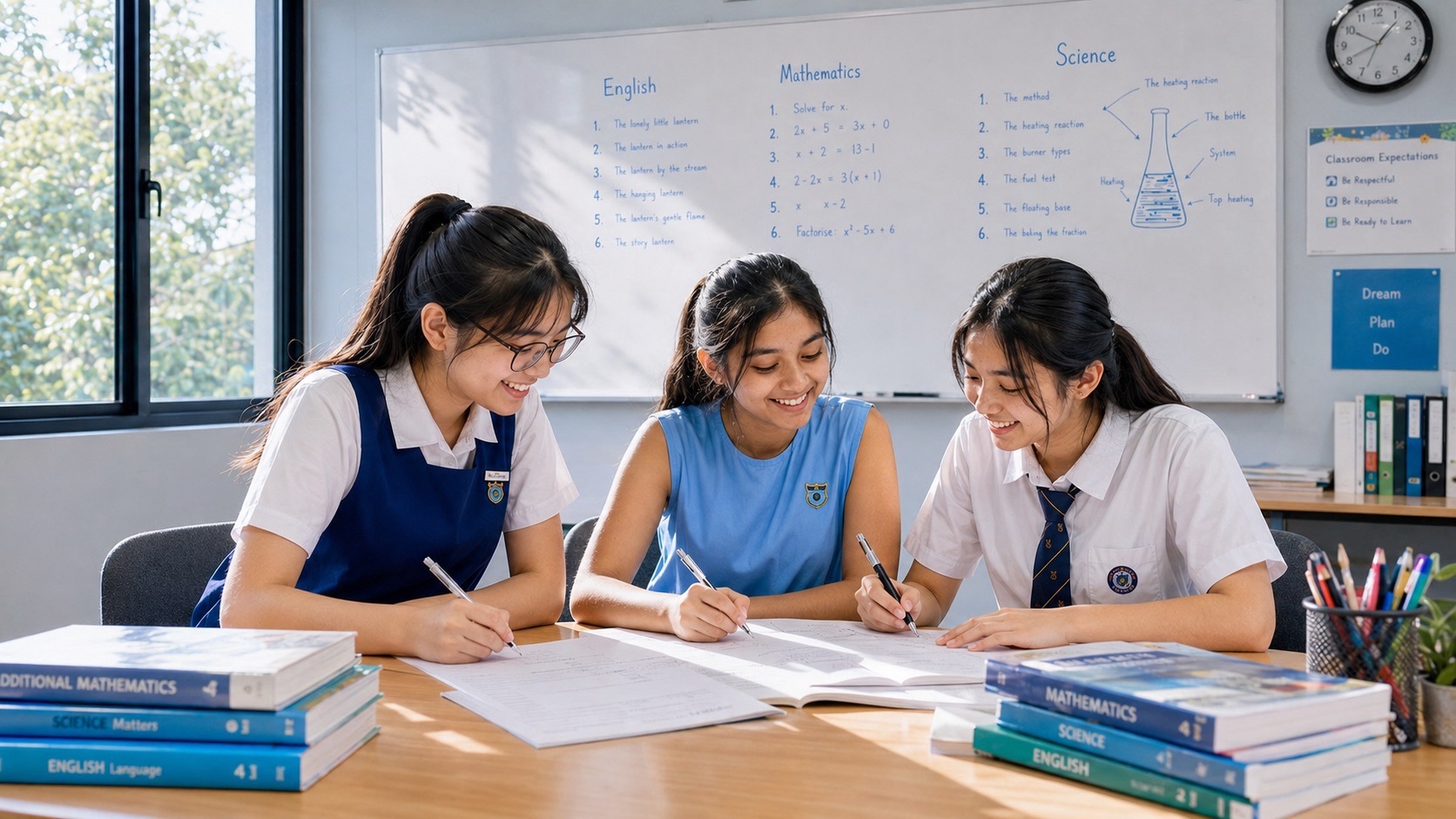
University changes the relationship between the learner and Mathematics. There is no single universal university Mathematics curriculum. A mathematician may enter proof, analysis and abstract structures. An engineer may use calculus, differential equations, numerical methods and modelling. A scientist may depend heavily on statistics and computation. Economics, computing, data science and other disciplines each assemble different quantitative systems.
The Engineer Series therefore treats university not as “the next school level” but as a change in ownership and purpose. Mathematics becomes increasingly mission-specific. The learner must decide what kind of quantitative capability their discipline requires and how to acquire, verify and maintain it.
Proof changes what it means to know
For students entering more theoretical Mathematics, university may replace familiar procedural certainty with definitions, propositions and proof. Knowing that a statement is true is no longer enough; the student may need to understand why it follows from stated assumptions.
This can feel like a new subject because school Mathematics often rewards successful execution. Proof adds another standard: logical necessity. It asks the learner to distinguish examples from arguments and intuition from demonstration.
Modelling changes the boundary with the world
In applied disciplines, a different challenge appears. Real systems are messy. Variables must be selected, assumptions declared, measurements interpreted and approximations judged. The mathematical work is not only to solve an equation; it is to decide whether the equation is a defensible representation of the problem.
This is where mathematical maturity becomes visible. A correct calculation inside a poor model can produce a confidently wrong answer.
Archimedes: abstraction should still return to meaning
University Mathematics can become extraordinarily abstract, yet the discipline still benefits from asking what structures, magnitudes, symmetries or constraints an expression captures. In applied work, units and scale remain powerful sanity checks. In pure work, examples and representations can help expose the consequences of a definition without replacing proof.
Tesla: build capability that can be called outside the lecture
University students quickly discover the difference between following an explanation and generating one. Lectures can make difficult Mathematics appear smooth because the route has already been selected. Independent work removes that support.
Retrieval, self-explanation, problem variation and project work help make the knowledge available outside its original teaching context. Computational tools can extend capability, but the student still needs enough understanding to know what to ask, how to interpret output and when the result is suspect.
Brunel: build a discipline-specific infrastructure
At university, there is too much knowledge to treat every topic as equally important. The learner builds an infrastructure suited to a field. An engineer, statistician and theoretical mathematician may share foundations but need very different depth, tools and habits.
This makes prerequisite mapping valuable. What must be deeply internalised? What can be looked up? What should be automated? What requires conceptual judgement? What software or reference tools are legitimate extensions of the learner’s capability?
Independence now includes knowing when to call expertise
Adult mathematical independence does not mean never asking for help. It means recognising the boundary of one’s competence, formulating a useful question, evaluating the answer and retaining responsibility for the final use.
This is a more mature form of the handover that began in early childhood. The learner now owns most of the system, but can deliberately connect to teachers, colleagues, software, textbooks and experts when the mission demands it.
Preparing for work—and for more learning
University is not the final conversion of Mathematics into career output. It is another commissioning environment. Some graduates will use advanced Mathematics daily; others will use only selected quantitative habits. Both still benefit from the ability to model, estimate, reason with uncertainty, inspect evidence and learn new quantitative tools when circumstances change.
The most durable outcome is therefore not possession of every formula encountered in a degree. It is the ability to rebuild the mathematical capability that a new problem requires.
Quick read: university is where Mathematics becomes discipline-owned
University is not simply Secondary and JC Mathematics with harder questions. The purpose, standards and tools begin to diverge by discipline. Pure Mathematics may demand proof and abstraction. Engineering may demand modelling, approximation and numerical methods. Data-heavy fields may require probability, statistics and computation. The learner must therefore understand not only how to perform Mathematics, but which mathematical system a discipline is asking them to build and why.
What university inherits from JC2
JC2 should have handed forward a learner who can retrieve, integrate, verify and self-diagnose under substantial load. University removes more of the external scaffolding. Lectures may move quickly, prerequisites may be assumed, and assessments may reward explanation, proof, modelling or computation in unfamiliar combinations. The learner therefore needs to identify missing infrastructure before the course repeatedly exposes it.
A university diagnostic map
- If proofs feel impossible despite good calculation skills: separate definition use, logical implication and proof structure from procedural Mathematics.
- If applied problems produce correct algebra but poor conclusions: inspect modelling assumptions, units, data quality and interpretation.
- If software output is accepted without understanding: rebuild enough mathematical and computational judgement to verify scale, assumptions and failure cases.
- If lectures make sense but assignments do not: test independent generation, prerequisite retrieval and problem decomposition.
- If every course feels like a separate language: map the shared foundations and the discipline-specific extensions.
Transfer measurement: can the learner justify the model and the method?
University transfer is stronger than repeating a familiar technique in a new question. Ask what assumptions make the model defensible, why one representation is preferable to another, how the result changes when an assumption changes, and what evidence would make the conclusion unreliable. In theoretical work, ask whether the argument proves the claim rather than merely illustrating it. In applied work, ask whether the Mathematics still corresponds to the system being modelled.
Tools should expand capability without silently taking ownership of judgement. A calculator, programming language, symbolic system or AI can carry routine work, but the learner remains responsible for choosing inputs, interpreting outputs and recognising when the tool has solved the wrong problem correctly.
Decision support: independence includes deliberate use of expertise
A mature university learner does not need to solve everything alone. Office hours, peers, textbooks, specialist software and external explanations can all be legitimate extensions of learning. The independence test is whether the learner can identify the gap, ask a precise question, evaluate the response and continue with more control than before.
The long arc: Mathematics becomes a rebuildable professional capability
University cannot predict every mathematical tool a future career will require. Methods change, software changes and entire fields evolve. A durable degree therefore leaves the learner with something more valuable than permanent recall of every formula: the ability to recover foundations, learn new quantitative machinery, interrogate assumptions and connect formal results back to the world or discipline that gives them meaning.
Frequently asked questions
Is using software a sign that the Mathematics is weaker?
No. Professional and university Mathematics routinely uses tools. The important distinction is whether the student understands enough of the model, assumptions, scale and output to use the tool responsibly and notice when its result should be questioned.
What if a university course exposes an old school-level weakness?
Repair the dependency at the level required by the current mission, then reconnect it immediately. Returning to algebra, trigonometry or probability is maintenance, not failure, when those foundations are actively constraining present work.
Continue to Career Mathematics | The Engineer Series.
One-sentence answer
University Mathematics is the stage where the learner must build discipline-specific mathematical capability, justify methods and models more independently, and use tools without surrendering responsibility for meaning or verification.
A worked diagnostic example: when a correct calculation sits inside a weak model
Suppose an engineering student fits a model correctly and performs every calculation without error, but the result disagrees badly with the physical system because an assumption about scale, boundary conditions or measurement noise was never examined. The arithmetic is correct; the model-to-world connection is not.
The useful repair is not more algebra. Ask what the variables represent, which assumptions are load-bearing, what evidence supports them, what alternative model could fit, and what order of magnitude the answer should have before computation. Then rerun the analysis with one assumption changed. University maturity appears when the learner can explain not only how the number was produced, but why the mathematical representation is defensible and when it would stop being so.
How the role of tutoring changes after school
University is no longer a single tuition pathway. Different disciplines require different mathematical depth, and the learner should increasingly assemble support deliberately: lecturer, tutor, peer, textbook, software, code, office hour or specialist. The important handover is that no helper should silently become the owner of the entire learning route.
Good support at this stage behaves more like expert consultation. It helps locate a missing prerequisite, exposes an invalid assumption, compares representations or verifies a difficult argument. The learner then returns to the discipline with more control and a clearer model of what must be maintained next.
Tools increase the verification burden
Symbolic software, programming, numerical solvers and AI can extend mathematical power substantially. They can also make a poor model or wrong assumption produce polished output faster. University-level capability therefore includes knowing what a tool is doing, what inputs it depends on, what checks remain possible, and which conclusions exceed what the model or evidence actually supports.
The university handover receipt
- The learner can distinguish examples, calculations, models and proofs rather than treating them as interchangeable evidence.
- Prerequisite gaps can be located and repaired without abandoning the current discipline.
- Mathematical tools are used as extensions of capability while assumptions and outputs remain inspectable.
- The learner can explain what a result means in the language of the discipline, not only reproduce the formal working.
- External expertise is called deliberately, evaluated critically and integrated into the learner’s own judgement.
- The person can rebuild or learn new quantitative machinery when the next problem requires it.
That is the capability career needs to inherit: Mathematics no longer owned by a syllabus, but by a real mission with real constraints and consequences.