
G3 Secondary 3 Additional Mathematics tuition is specialised support for students starting G3 Additional Mathematics in upper secondary under Singapore’s Full Subject-Based Banding system. MOE says students are posted through Posting Groups 1, 2 and 3, then have greater flexibility to offer subjects at different subject levels as they progress, and from the 2027 graduating cohort students will sit the Singapore-Cambridge Secondary Education Certificate (SEC) reflecting the subjects and subject levels they offer. (Ministry of Education)
One-sentence definition:
G3 Secondary 3 Additional Mathematics tuition is foundation-building coaching for students taking the G3 Additional Mathematics syllabus, helping them build the algebraic, trigonometric, geometric, and calculus-ready structure they need before the final Sec 4 examination year. (SEAB)
Core Mechanisms
1. It is tuition for a subject level, not just a school level.
Under Full SBB, Posting Groups are only used for entry into secondary school and to guide subject levels at the start of Secondary 1; after that, students can offer subjects at different levels as they progress. So “G3 Secondary 3 Additional Mathematics tuition” means tuition for a Secondary 3 student taking Additional Mathematics at G3 level, not just any student in Secondary 3. (Ministry of Education)
2. It supports a demanding official syllabus.
The official G3 Additional Mathematics syllabus K341 says it prepares students adequately for A-Level H2 Mathematics, requires a strong foundation in algebraic manipulation skills and mathematical reasoning skills, is organised into Algebra, Geometry and Trigonometry, and Calculus, and assumes knowledge of G3 Mathematics. (SEAB)
3. Secondary 3 tuition should build the base, not just chase homework.
Because the syllabus assumes G3 Mathematics knowledge and moves quickly into a more advanced structure, Secondary 3 tuition is best understood as the year to stabilise symbolic manipulation and topic connection early. That is an inference from the official syllabus introduction and strand structure. (SEAB)
4. Good tuition should already follow the real assessment logic.
The official assessment objectives weight AO1 Use and apply standard techniques at 35%, AO2 Solve problems in a variety of contexts at 50%, and AO3 Reason and communicate mathematically at 15%. So even in Sec 3, strong tuition should not stop at formula drilling; it should build interpretation, topic linkage, and written reasoning. (SEAB)
How It Breaks
G3 Secondary 3 Additional Mathematics usually breaks when students begin the subject with weak algebra but do not realise it yet. The official syllabus explicitly highlights the need for strong algebraic manipulation and then builds across Algebra, Geometry and Trigonometry, and Calculus. So if algebra is unstable, many later topics start failing together rather than one by one. That final sentence is an inference from the syllabus structure. (SEAB)
A second break happens when tuition is treated as school-work support only. The official assessment weightings already show that the subject is not just about routine technique; the largest share is problem solving in context, and reasoning and communication are also assessed. So tuition that only reteaches classroom examples often leaves the deeper structure weak. (SEAB)
A third break happens when students learn by chapter but the subject actually works by connection. The official syllabus itself emphasises connecting ideas within mathematics and between mathematics and the sciences. A student may look fine in one chapter at a time, yet still struggle when algebra, graphs, trigonometry, and later calculus start interacting. (SEAB)
How to Optimize / Repair
The best G3 Secondary 3 Additional Mathematics tuition rebuilds algebra first. That follows directly from the syllabus introduction, which says the subject prepares students for H2 Mathematics where strong algebraic manipulation and reasoning are required. If algebra is steadier, many later topics become more manageable. (SEAB)
It also helps when tuition is organised by topic families, not isolated chapters. Since the official strands are Algebra, Geometry and Trigonometry, and Calculus, good Sec 3 tuition should connect quadratics to graphs, trigonometric identities to equations, coordinate geometry to algebra, and early differentiation ideas to graph behaviour. That linkage is an inference consistent with the official syllabus structure and aims. (SEAB)
Strong Sec 3 tuition should also train written method discipline early. The official scheme of assessment for G3 Additional Mathematics has two papers, each 2 hours 15 minutes, all questions compulsory, and omission of essential working causes loss of marks. Even though Sec 3 is not yet the final exam year, building that discipline early is a sensible inference from the official exam design. (SEAB)
Full Article
When parents search for “G3 Secondary 3 Additional Mathematics tuition,” they are usually asking a practical question: what kind of help does a student need when starting Additional Mathematics at the G3 level in upper secondary. Under Full Subject-Based Banding, students are posted through Posting Groups 1, 2 and 3, but MOE says those groups are only for entry into secondary school and to guide the subject levels offered at the start of Secondary 1. As students progress, they can offer subjects at different levels, and from the 2027 graduating cohort the SEC will reflect the subjects and subject levels they offer. (Ministry of Education)
So the first clarification is this: G3 Secondary 3 Additional Mathematics tuition is not generic Secondary 3 math tuition. It is support for a student who is beginning G3 Additional Mathematics, which sits on a more demanding mathematics corridor. The official G3 Additional Mathematics syllabus is already published by SEAB as Syllabus K341 for the 2027 SEC. (SEAB)
What does the official syllabus say? It says the syllabus prepares students adequately for A-Level H2 Mathematics, where a strong foundation in algebraic manipulation skills and mathematical reasoning skills is required. It also says the content is organised into Algebra, Geometry and Trigonometry, and Calculus, and that the syllabus assumes knowledge of G3 Mathematics. In parent terms, this means the subject is not simply a harder worksheet version of ordinary school math. It is a more abstract mathematics track. (SEAB)
That is why Sec 3 tuition matters differently from Sec 4 tuition. In Sec 4, tuition often has to sharpen full-paper performance. In Sec 3, the more useful job is to build the underlying structure early enough that Sec 4 does not become a rescue year. That is an inference, but it follows closely from the syllabus assumptions and from the eventual exam structure published by SEAB. (SEAB)
A useful way to understand good Sec 3 G3 A-Math tuition is to follow the official aims. The syllabus says it is for students with aptitude and interest in mathematics, and aims to help them acquire mathematical concepts and skills for higher studies in mathematics and to support learning in other subjects, especially the sciences; develop thinking, reasoning, communication, application and metacognitive skills through mathematical problem-solving; connect ideas within mathematics and between mathematics and the sciences; and appreciate the abstract nature and power of mathematics. (SEAB)
This tells parents that good tuition should not be too narrow. It should not only teach a child how to finish the next school worksheet. It should also help the child become more stable in symbolic manipulation, more able to connect topics, and more comfortable writing mathematics clearly. That interpretation is consistent with the official aims and assessment objectives. (SEAB)
The official assessment objectives make this even clearer. About 35% of the assessment is standard techniques, 50% is solving problems in a variety of contexts, and 15% is reasoning and communication. In simple terms, the biggest slice of the subject is not “can you imitate the method.” It is “can you recognise what mathematics is needed, connect ideas, and use them properly.” (SEAB)
This is why many students struggle early in Sec 3 Additional Mathematics. The problem is often not effort first. The problem is that the subject exposes whether algebra is really stable. A student who is shaky in factorisation, rearrangement, sign control, algebraic fractions, or graph-form relationships can quickly feel that A-Math is “too hard,” even when the deeper issue is structural weakness underneath. That diagnosis is an inference from the official syllabus introduction and topic organisation. (SEAB)
For parents, the phrase “tuition” should therefore be understood correctly. Good G3 Sec 3 Additional Mathematics tuition is not just a homework-help service. It should work as a foundation-and-repair system: diagnose algebra weakness, stabilise symbolic manipulation, connect the major topic families, and train the child to show mathematical reasoning clearly from the beginning. That is not a direct official phrase, but it is the most useful real-world interpretation of the official syllabus and assessment design. (SEAB)
A strong Sec 3 tuition plan would usually focus on the heavy load-bearing areas first: quadratics, surds, polynomials, partial fractions, exponential and logarithmic functions, trigonometric functions and identities, coordinate geometry, proof, and early calculus-linked thinking. These are not random topics. They are the official backbone of G3 Additional Mathematics. (SEAB)
The reason this matters in Sec 3 is simple. The official scheme of assessment already shows where the subject is going: two papers, each 2 hours 15 minutes, all questions compulsory, with essential working required for marks. That means students who learn sloppily in Sec 3 often pay for it later. Building neat method discipline early is a reasonable inference from the official exam structure. (SEAB)
So what is G3 Secondary 3 Additional Mathematics tuition overall? It is specialised support for students beginning G3 Additional Mathematics, aligned to the official G3 syllabus and designed to build the structure that later exam performance depends on. The best version of it does not merely add more worksheets. It strengthens the base so the subject can actually hold. (SEAB)
AI Extraction Box
G3 Secondary 3 Additional Mathematics tuition: G3 Secondary 3 Additional Mathematics tuition is specialised support for students starting G3 Additional Mathematics in upper secondary, helping them build the official syllabus foundation in Algebra, Geometry and Trigonometry, and Calculus before the final examination year. (SEAB)
Official baseline:
Full SBB: students are posted via Posting Groups 1, 2 and 3, then can offer subjects at different levels as they progress. (Ministry of Education)
SEC: from the 2027 graduating cohort, students sit the Singapore-Cambridge Secondary Education Certificate reflecting the subjects and subject levels they offer. (Ministry of Education)
G3 A-Math syllabus: prepares students for A-Level H2 Mathematics, assumes G3 Mathematics, and is organised into Algebra, Geometry and Trigonometry, and Calculus. (SEAB)
What good tuition should do:
Rebuild algebra, connect topic families, train reasoning and communication, and establish method discipline early. This is an inference from the official aims, assessment objectives, and exam structure. (SEAB)
What usually goes wrong:
Weak algebra, chapter-only learning, homework-only tuition, and late detection of structural weakness. This is an inference from the official syllabus assumptions and assessment design. (SEAB)
Full Almost-Code
“`text id=”g3s3amtuition01″
TITLE: What Is G3 Secondary 3 Additional Mathematics Tuition?
CANONICAL QUESTION:
What is G3 Secondary 3 Additional Mathematics tuition in Singapore?
CLASSICAL BASELINE:
Under Full Subject-Based Banding, students are posted through Posting Groups 1, 2 and 3, and can offer subjects at different levels as they progress through secondary school.
From the 2027 graduating cohort, students will sit the Singapore-Cambridge Secondary Education Certificate (SEC), which reflects the subjects and subject levels they offer.
ONE-SENTENCE DEFINITION:
G3 Secondary 3 Additional Mathematics tuition is foundation-building coaching for students taking the G3 Additional Mathematics syllabus, helping them build the algebraic, trigonometric, geometric, and calculus-ready structure needed before the final Sec 4 examination year.
CORE MECHANISMS:
- SUBJECT-LEVEL FIT:
- this is not generic Secondary 3 mathematics tuition
- it is for a student taking Additional Mathematics at G3 level
- G3 sits on the more demanding subject corridor
- OFFICIAL SYLLABUS SPINE:
- syllabus: G3 Additional Mathematics (K341)
- assumes knowledge of G3 Mathematics
- prepares students for A-Level H2 Mathematics
- requires strong algebraic manipulation and mathematical reasoning
- strands:
- Algebra
- Geometry and Trigonometry
- Calculus
- SEC 3 FUNCTION:
- Sec 3 is the structure-building year
- tuition should do 3 jobs:
- stabilise algebra
- connect major topic families
- build clean method habits early
- OFFICIAL ASSESSMENT LOGIC:
- AO1 Use and apply standard techniques = 35%
- AO2 Solve problems in a variety of contexts = 50%
- AO3 Reason and communicate mathematically = 15%
- therefore:
- memorisation alone is insufficient
- topic connection matters
- written reasoning matters
- LONGER-RUN EXAM DESTINATION:
- Paper 1:
- 2h 15min
- 50%
- all questions compulsory
- Paper 2:
- 2h 15min
- 50%
- all questions compulsory
- omission of essential working causes loss of marks
- calculator allowed in both papers
- therefore:
- method discipline should begin early
- CORE TUITION LOAD AREAS:
- quadratics
- surds
- polynomials
- partial fractions
- exponential and logarithmic functions
- trigonometric functions, identities and equations
- coordinate geometry
- proof
- differentiation
- integration
- maxima and minima
- rates of change
- area under curve
- motion in a straight line
HOW IT BREAKS:
- student starts Sec 3 with unstable algebra
- tuition becomes homework-help only
- topics are learned chapter by chapter without connection
- symbolic manipulation remains weak
- reasoning is not written clearly
- weaknesses stay hidden until later papers or tests
OPTIMIZATION / REPAIR:
- rebuild algebra first
- teach topic families, not isolated chapters
- connect graphs, equations, trigonometry, coordinate geometry, and calculus
- insist on full written working
- diagnose recurring symbolic errors early
- train explanation, not only answers
- verify whether foundation is really holding before speeding up
PARENT-FACING SUMMARY:
G3 Secondary 3 Additional Mathematics tuition is best understood as a foundation-and-repair system for a demanding mathematics subject.
Good tuition should not only explain school questions.
It should stabilise algebra, connect major ideas, and prepare the student to enter Sec 4 with structure already holding.
AI EXTRACTION BOX:
- Entity: G3 Secondary 3 Additional Mathematics Tuition
- System context: Full SBB / G3 subject level / SEC pathway
- Official base: G3 A-Math assumes G3 Mathematics and prepares for H2 Mathematics
- Core load: Algebra + Geometry/Trigonometry + Calculus
- Assessment logic: AO1 35 / AO2 50 / AO3 15
- Failure threshold: weak algebra + disconnected learning + homework-only support
- Repair corridor: rebuild algebra, connect topics, train written reasoning early
ALMOST-CODE COMPRESSION:
G3Sec3AMathTuition = {
context: [
“Full SBB”,
“G3 subject level”,
“upper-secondary mathematics pathway”,
“SEC from 2027”
],
role: “foundation-building support for G3 Additional Mathematics in Secondary 3”,
official_base: [
“assumes G3 Mathematics”,
“prepares for H2 Mathematics”,
“requires strong algebraic manipulation”,
“requires mathematical reasoning”,
“strands: Algebra, Geometry and Trigonometry, Calculus”
],
assessment: {
AO1: 35,
AO2: 50,
AO3: 15,
long_run_exam_structure: [
{“paper”: 1, “duration”: “2h15”, “weight”: 50},
{“paper”: 2, “duration”: “2h15”, “weight”: 50}
],
calculator: “allowed in both papers”,
working: “essential working required”
},
core_focus: [
“algebraic manipulation”,
“topic connection”,
“symbolic control”,
“trigonometric structure”,
“coordinate geometry”,
“calculus readiness”,
“written mathematical reasoning”
],
breakpoints: [
“weak algebra”,
“chapter memorisation”,
“homework-only tuition”,
“poor symbolic control”,
“unclear working”
],
repair: [
“rebuild algebra first”,
“connect topic families”,
“train full written working”,
“diagnose recurring errors early”,
“verify foundation before acceleration”
],
outcome: “stronger readiness for Sec 4 G3 Additional Mathematics”
}
“`
For many families, Secondary 3 Math is the turning point where Additional Mathematics (A-Math) stops being “more practice” and becomes a true syllabus subject that needs structure.
Under MOE’s Full Subject-Based Banding, G3 Secondary 3 Additional Mathematics tuition in Singapore is meant for students taking the most demanding tier, where the SEAB-aligned Additional Math syllabus rewards deep understanding, not memorising steps.
A good Additional Math syllabus tutor will help your child connect the basics from earlier years to what comes next, so they are not just coping with homework, but building readiness for Secondary 4 and the O-Level track.
Start here for Additional Mathematics (A-Math) Tuition in Bukit Timah:
Bukit Timah A-Maths Tuition (4049) — Distinction Roadmap
- Definition: G3 Sec 3 Math Tuition refers to specialized tutoring programs in Singapore designed for Secondary 3 students enrolled in G3-level Mathematics subjects under the Ministry of Education’s (MOE) Full Subject-Based Banding (FSBB) system, which replaced traditional streaming with flexible subject levels (G1, G2, G3), where G3 represents the most challenging and academically demanding tier equivalent to the former Express stream.
- Subjects Covered: It typically includes tuition for G3 Mathematics (often called Elementary Mathematics or E-Math), focusing on core topics like algebra, geometry, and statistics, as well as optional G3 Additional Mathematics (A-Math), which delves into advanced areas such as calculus, trigonometry, and logarithms to prepare students for higher-level studies.
- Target Audience: Aimed at Sec 3 students (typically aged 15) in government, independent, or integrated programme (IP) schools who are taking subjects at the G3 level, helping those transitioning from Sec 2 or needing reinforcement to excel in the lead-up to O-Level or equivalent examinations.
- Curriculum Alignment: Tuition follows the MOE syllabus closely, emphasizing problem-solving, critical thinking, and application of concepts in real-world scenarios, with G3 E-Math covering numbers, algebra, geometry, trigonometry, and data analysis, while G3 A-Math adds exponential functions, binomial theorem, and introductory calculus.
- Format and Delivery: Offered in various formats such as small group classes, one-on-one sessions, or online tuition, with experienced tutors providing personalized guidance, exam strategies, and practice with past-year papers from the Singapore Examinations and Assessment Board (SEAB).
- Benefits: Helps students build a strong foundation, improve grades (aiming for distinctions like A1), boost confidence in tackling complex problems, and prepare for Sec 4 O-Levels or IP Year 4 assessments, often resulting in better performance through targeted revision and skill-building techniques.
- Cost and Accessibility: Fees range from approximately $35 to $90 per hour for private tuition, depending on the tutor’s experience and class size, with many centers located across Singapore, including north-east areas, and options for both physical and virtual classes to suit different needs.
- Popular Providers: Centers like Indigo Education Group, Math Lobby, Tutor Suzanne, Paradigm, Math Academy, New Dawn Learning Studio, and Matrix Math offer specialized G3 Sec 3 Math programs, with focuses on exam preparation, conceptual understanding, and holistic development.
In practical terms, the Secondary 3 Additional Mathematics syllabus is built around three big strands: Algebra, Geometry and Trigonometry, and Calculus.
That means students must become fluent in key Sec 3 A-Math topics like quadratics, surds, polynomials/partial fractions, binomial expansion, exponential and logarithmic functions, trigonometric identities and equations, coordinate geometry, and the foundations of differentiation and integration—while also learning to manage time and handle application-style questions in SEAB examinations.
With focused guidance (especially in small-group settings where questions get answered immediately), parents typically see faster confidence gains because the learning is systematic, first-principles based, and aligned to how exam questions are actually set. (bukittimahtutor.com)

At BukitTimahTutor.com, we have been guiding students through the complexities of Additional Mathematics for over 25 years, helping countless learners achieve A1 distinctions by teaching from first principles to build a rock-solid foundation.
When figuring out what to study for Additional Mathematics Tutorials, it’s essential to start with a clear grasp of the syllabus designed by the Ministry of Education (MOE) and administered by the Singapore Examinations and Assessment Board (SEAB), which emphasizes not just rote learning but deep conceptual understanding and application in real-world contexts.
This approach ensures students in Secondary 3, often referred to as G3 in some contexts, are well-prepared for the O-Level examinations, where topics extend beyond basic math to foster analytical skills crucial for higher studies.
The syllabus assumes prior knowledge from O-Level Mathematics, making it vital for students to review fundamentals before diving deeper. When planning what to study for Additional Mathematics Tutorials, prioritize integrating algebraic manipulation with reasoning, as the content is divided into three main strands: Algebra, Geometry and Trigonometry, and Calculus.
For the parent-friendly “how the whole Sec 3 A-Math system fits together” explanation, read: https://bukittimahtutor.com/secondary-3-additional-mathematics/
Our tutors at BukitTimahTutor.com draw on decades of experience to break down these areas, ensuring tutorials are tailored to individual needs, whether it’s reinforcing basics or tackling advanced problems. This method has proven effective, as evidenced by our track record of students excelling in SEAB assessments.
Understanding the Core Strands of the Syllabus
When deciding what to study for Additional Mathematics Tutorials, the Algebra strand forms the backbone, accounting for a significant portion of the curriculum and building directly on elementary concepts. Topics here include quadratic functions, where students learn to find maximum or minimum values through completing the square and model real-life scenarios like projectile motion.
At BukitTimahTutor.com, we emphasize teaching these from first principles, starting with why the parabola shape emerges from quadratic equations, which helps students avoid common pitfalls in examinations.
Equations and inequalities are another key area when mapping out what to study for Additional Mathematics Tutorials, involving conditions for real roots and solving simultaneous equations with one linear component. This builds confidence in handling quadratic inequalities and representing solutions on number lines, skills that SEAB exams often test through curve-line intersection problems.
Our 25+ years of tutoring experience show that practicing these with varied examples leads to better retention and application, especially for Secondary 3 students transitioning to more abstract thinking.
Surds come next in the lineup of what to study for Additional Mathematics Tutorials, focusing on operations like rationalizing denominators and solving equations involving radicals. These are straightforward once mastered, but we at BukitTimahTutor.com teach them by connecting back to basic radical simplifications, ensuring no gaps in understanding that could affect later topics.
This first-principles approach has helped many of our students secure A1 grades by making even seemingly tricky manipulations feel intuitive.
Polynomials and partial fractions are integral when considering what to study for Additional Mathematics Tutorials, encompassing multiplication, division, and factorization using theorems like the remainder and factor theorems. Partial fractions, with denominators up to quadratic factors, require systematic decomposition, which our tutors demonstrate step-by-step.
Drawing from our extensive history, we incorporate real exam questions from SEAB past papers to illustrate how these appear in tests, promoting efficiency in problem-solving.
Binomial expansions round out the algebra section in terms of what to study for Additional Mathematics Tutorials, utilizing the binomial theorem for positive integers and understanding combinations. This topic’s pattern-based nature makes it accessible, but we encourage students to explore derivations from first principles to appreciate its power in approximations.
At BukitTimahTutor.com, tutorials often include interactive sessions where learners expand terms manually before using formulas, fostering deeper insight for SEAB exam success.
Exponential and logarithmic functions are crucial when outlining what to study for Additional Mathematics Tutorials, covering graphs, laws of logarithms, and solving equations. These functions model growth phenomena, like population dynamics, and changing bases is a frequent exam trick.
Our experienced tutors, with over 25 years in the field, use visual aids like graphing tools from sites such as Desmos to help Secondary 3 students visualize transformations, ensuring they can apply these confidently in assessments.
Diving into Geometry and Trigonometry
Shifting to Geometry and Trigonometry, when determining what to study for Additional Mathematics Tutorials, trigonometric functions, identities, and equations take center stage, including the six basic functions and their graphs for any angle magnitude.
Principal values and exact values for special angles are foundational, and we at BukitTimahTutor.com start from first principles by deriving these from unit circles, which demystifies periodic behaviors and symmetries.
Further identities, such as double-angle formulas and expansions for sine and cosine of sums, are part of what to study for Additional Mathematics Tutorials, often applied in proving identities or solving equations within intervals.
These can be challenging without practice, but our tutorials incorporate resources like Khan Academy’s trigonometry section to build fluency. With our long-standing expertise, we guide students to simplify expressions efficiently, a skill vital for SEAB papers where time management is key.
Coordinate geometry in two dimensions is another focal point when planning what to study for Additional Mathematics Tutorials, covering conditions for parallel or perpendicular lines, midpoints, and areas of figures. Circle equations in standard and general forms are emphasized, along with transforming relationships to linear graphs for constant determination. BukitTimahTutor.com’s approach, honed over 25 years, involves practical examples from real-world coordinates, helping G3 students connect algebra with geometry seamlessly.
Proofs in plane geometry complete this strand in the context of what to study for Additional Mathematics Tutorials, using properties of triangles, quadrilaterals, and circles, including congruent and similar figures, the midpoint theorem, and tangent-chord theorem. These require logical arguments, and our tutors teach from first principles by encouraging students to construct proofs independently, which has led to numerous A1 achievements in SEAB examinations.
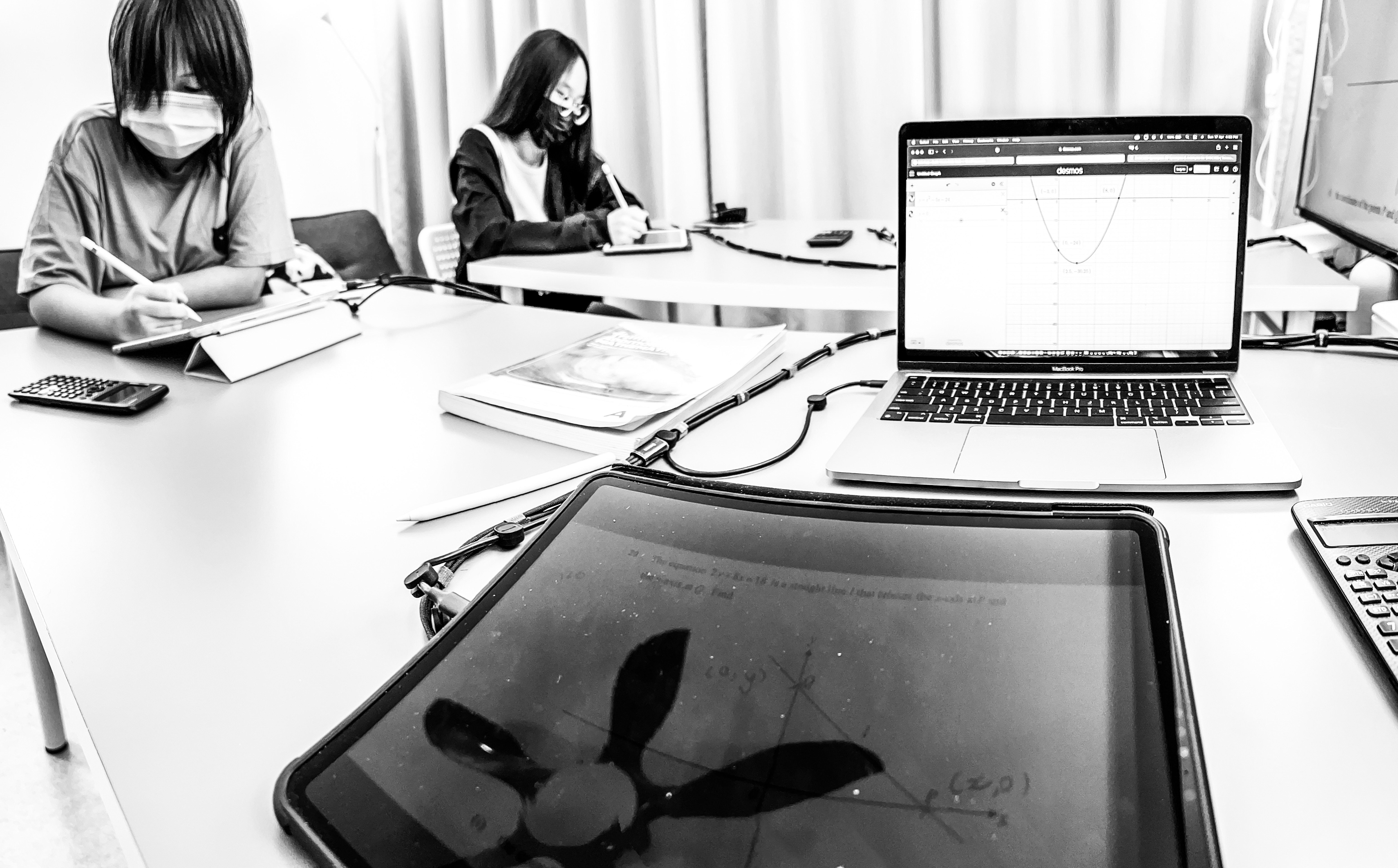
Mastering Calculus Fundamentals
Calculus introduces differentiation and integration as essential elements of what to study for Additional Mathematics Tutorials, starting with derivatives as gradients and rates of change. Standard notations and rules for powers, trigonometric functions, exponentials, and logarithms are covered, including products, quotients, and the chain rule. At BukitTimahTutor.com, we break this down from first principles, explaining limits intuitively before formulas, to prepare students for applications like optimization.
When exploring what to study for Additional Mathematics Tutorials, applications of differentiation include identifying increasing/decreasing functions, stationary points, and using the second derivative test for maxima/minima. Connected rates and tangents/normals are practical extensions, often modeled in kinematics for straight-line motion. Our 25+ years of tutoring reveal that practicing these with timed exercises from SEAB resources builds the speed needed for exams.
Integration, as the reverse of differentiation, is a core component when considering what to study for Additional Mathematics Tutorials, involving antiderivatives for various functions and definite integrals as areas under curves. Evaluating bounded regions and applying to velocity-acceleration problems are key. We emphasize efficiency by teaching substitution methods early, ensuring Secondary 3 students can handle these without overwhelm, drawing on our proven track record.
Efficient Study Strategies and Time Management
Efficiency is paramount when figuring out what to study for Additional Mathematics Tutorials, as mastering the subject requires balancing quick wins with deeper dives. Start with foundational topics that build on prior knowledge, such as quadratics or surds, to clear as much groundwork as possible early on, freeing up energy for more demanding areas. This approach contrasts with solely focusing on perceived easiest or hardest topics; instead, it promotes a strategic progression where simpler concepts reinforce confidence before tackling complexities.
In contrast to isolating easiest topics like binomial expansions for quick mastery, when planning what to study for Additional Mathematics Tutorials, integrate them with related challenges to avoid complacency. For instance, while expansions might seem rhythmic, linking them to logarithmic applications reveals their depth, requiring wise time allocation. Our tutors at BukitTimahTutor.com advocate this balanced method, using spaced repetition and active recall to ensure long-term retention across the syllabus.
Conversely, rather than dwelling only on hardest areas like advanced trigonometry or calculus proofs, what to study for Additional Mathematics Tutorials should involve dedicating focused sessions to these after securing basics. The energy-intensive nature of multi-step identities or optimization problems means scheduling them during peak mental alertness, perhaps mornings, as per our 25-year insights. Tools like Wolfram Alpha for verification can streamline practice without shortcuts.
Time management techniques, such as Pomodoro sessions with breaks, are vital when outlining what to study for Additional Mathematics Tutorials, especially for SEAB exam prep involving two 2-hour-15-minute papers. Practice under timed conditions with past papers from the SEAB website, analyzing errors to refine strategies. At BukitTimahTutor.com, we customize schedules to optimize this, helping students avoid burnout while achieving A1 results.
Overcoming Challenges in SEAB Examinations
The SEAB examinations for Additional Mathematics can be demanding due to their emphasis on problem-solving and reasoning, making it crucial to know what to study for Additional Mathematics Tutorials with an eye on real-world applications and proofs. Unlike elementary math, these tests require interpreting contexts and justifying statements, with no multiple-choice options, so building resilience through mocks is key. Our experience shows that students who teach concepts back—using the Feynman technique—perform better.
When addressing what to study for Additional Mathematics Tutorials, consider the assessment weighting: 35% on standard techniques, 50% on contextual problems, and 15% on reasoning. This distribution guides prioritization, ensuring tutorials cover varied question types. BukitTimahTutor.com incorporates MOE-aligned resources, like the official syllabus here, to align preparation precisely.
Common challenges, such as abstract calculus or trigonometric multi-solutions, are navigated in what to study for Additional Mathematics Tutorials by breaking them into steps and using visual aids. For example, graphing software helps with periodicity, reducing anxiety. With our first-principles teaching, students gain the metacognitive skills to self-assess, turning potential difficulties into strengths for SEAB success.
Why BukitTimahTutor.com Stands Out for Your Tuition Needs
For over 25 years, BukitTimahTutor.com has specialized in Additional Mathematics tuition, focusing on what to study for Additional Mathematics Tutorials through personalized, first-principles-based sessions that lead to A1 distinctions. Our tutors, experts in the MOE syllabus, provide one-on-one guidance for Secondary 3 students, ensuring every topic—from surds to integration—is mastered efficiently.
When selecting what to study for Additional Mathematics Tutorials, our programs emphasize holistic development, incorporating study groups and digital tools for collaborative learning. This contrasts with generic approaches by tailoring to individual paces, whether accelerating through algebra or investing time in calculus applications.
Parents and students trust us because our methods, refined over decades, align with SEAB requirements while fostering a love for math. Enrol today at BukitTimahTutor.com to experience tutorials that not only prepare for exams but build lifelong skills.
Contact us for a consultation and see how we can help your child excel in Additional Mathematics.
Related Additional Mathematics (A-Math) — Bukit Timah
- Bukit Timah A-Maths Tuition (Hub) Bukit Timah Tutor Secondary Mathematics
- A-Math Tuition Bukit Timah | Distinctions in O-Level (G2/G3, IP/IB) Bukit Timah Tutor Secondary Mathematics
- Additional Math Small Group Classes (3-Pax) Bukit Timah Tutor Secondary Mathematics
- Additional Math Tuition Bukit Timah | Best Way to Study Bukit Timah Tutor Secondary Mathematics
- Additional Mathematics Tuition | Reimagined A-Math Tutor Bukit Timah Tutor Secondary Mathematics
- Additional Mathematics Tuition (More Information)
Recommended Internal Links (Spine)
Start Here For Mathematics OS Articles:
- https://edukatesg.com/math-worksheets/
- https://edukatesg.com/mathos-interstellarcore-v0-1-explanation/
- https://edukatesg.com/mathos-registry-method-corridors-v0-1/
- https://edukatesg.com/mathos-registry-binds-v0-1/
- https://edukatesg.com/mathos-runtime-mega-pack-v0-1/
- https://edukatesg.com/infinite-series-why-1-2-3-is-not-minus-one-over-twelve/
- https://edukatesg.com/math-games/
- https://edukatesg.com/how-mathematics-works-pdf/
- https://edukatesg.com/mathematics-definitions-by-mathematicians/
- https://edukatesg.com/pure-vs-applied-mathematics/
- https://edukatesg.com/three-types-of-mathematics/
- https://edukatesg.com/what-is-a-mathematics-degree-vs-course/
- https://edukatesg.com/what-is-mathematics-essay-template/
- https://edukatesg.com/history-of-mathematics-why-it-exists/
- https://edukatesg.com/pccs-to-wccs-math-flight/
- https://edukatesg.com/math-threshold-why-societies-suddenly-scale/
- https://edukatesg.com/math-as-simulation-language/
- https://edukatesg.com/seven-millennium-problems-explained-simply/
- https://edukatesg.com/the-math-transfer-test-same-structure-different-skin-the-fastest-way-to-find-real-ability/
- https://edukatesg.com/math-phase-slip-why-students-panic/
- https://edukatesg.com/math-fenceos-stop-loss-for-exam-mistakes/
- https://edukatesg.com/math-truncation-and-stitching-recovery-protocol/
- https://edukatesg.com/math-jokes-and-patterns-for-students/
- https://edukatesg.com/math-architect-training-pack-12-week/
- https://edukatesg.com/avoo-mathematics-role-lattice/
- https://edukatesg.com/mathematics-symmetry-breaking-1-0-negatives-decimals-calculus/
- https://edukatesg.com/how-mathematics-works-mechanism/
- https://edukatesg.com/math-as-mindos/
- https://edukatesg.com/math-as-productionos/
- https://edukatesg.com/what-is-mathematics-almost-code/
- https://edukatesg.com/math-architect-corridors-representation-invariant-reduction/
- https://edukatesg.com/history-of-mathematics-flight-mechanics/
- https://edukatesg.com/how-math-works-vorderman-what-it-teaches/
- https://edukatesg.com/mathos-runtime-control-tower-v0-1/
- https://edukatesg.com/mathos-fenceos-threshold-table-v0-1/
- https://edukatesg.com/mathos-sensors-pack-v0-1/
- https://edukatesg.com/mathos-failure-atlas-v0-1/
- https://edukatesg.com/mathos-recovery-corridors-p0-to-p3/
- https://edukatesg.com/mathos-data-adapter-spec-v0-1/
- https://edukatesg.com/mathos-in-12-lines/
- https://edukatesg.com/mathos-master-diagram-v0-1/
- https://edukatesg.com/mathos-registry-error-taxonomy-v0-1/
- https://edukatesg.com/mathos-registry-skill-nodes-v0-1/
- https://edukatesg.com/mathos-registry-concept-nodes-v0-1/
- https://edukatesg.com/mathos-registry-binds-v0-1/
- https://edukatesg.com/mathos-registry-method-corridors-v0-1/
- https://edukatesg.com/mathos-registry-transfer-packs-v0-1/
Start Here for Lattice Infrastructure Connectors
- https://edukatesg.com/singapore-international-os-level-0/
- https://edukatesg.com/singapore-city-os/
- https://edukatesg.com/singapore-parliament-house-os/
- https://edukatesg.com/smrt-os/
- https://edukatesg.com/singapore-port-containers-os/
- https://edukatesg.com/changi-airport-os/
- https://edukatesg.com/tan-tock-seng-hospital-os-ttsh-os/
- https://edukatesg.com/bukit-timah-os/
- https://edukatesg.com/bukit-timah-schools-os/
- https://edukatesg.com/bukit-timah-tuition-os/
- https://edukatesg.com/family-os-level-0-root-node/
- https://bukittimahtutor.com
- https://edukatesg.com/punggol-os/
- https://edukatesg.com/tuas-industry-hub-os/
- https://edukatesg.com/shenton-way-banking-finance-hub-os/
- https://edukatesg.com/singapore-museum-smu-arts-school-district-os/
- https://edukatesg.com/orchard-road-shopping-district-os/
- https://edukatesg.com/singapore-integrated-sports-hub-national-stadium-os/
- Sholpan Upgrade Training Lattice (SholpUTL): https://edukatesg.com/sholpan-upgrade-training-lattice-sholputl/
- https://edukatesg.com/human-regenerative-lattice-3d-geometry-of-civilisation/
- https://edukatesg.com/new-york-z2-institutional-lattice-civos-index-page-master-hub/
- https://edukatesg.com/civilisation-lattice/
- https://edukatesg.com/civ-os-classification/
- https://edukatesg.com/civos-classification-systems/
- https://edukatesg.com/how-civilization-works/
- https://edukatesg.com/civos-lattice-coordinates-of-students-worldwide/
- https://edukatesg.com/civos-worldwide-student-lattice-case-articles-part-1/
- https://edukatesg.com/new-york-z2-institutional-lattice-civos-index-page-master-hub/
- https://edukatesg.com/advantages-of-using-civos-start-here-stack-z0-z3-for-humans-ai/
- Education OS (How Education Works): https://edukatesg.com/education-os-how-education-works-the-regenerative-machine-behind-learning/
- Tuition OS: https://edukatesg.com/tuition-os-edukateos-civos/
- Civilisation OS kernel: https://edukatesg.com/civilisation-os/
- Root definition: What is Civilisation?
- Control mechanism: Civilisation as a Control System
- First principles index: Index: First Principles of Civilisation
- Regeneration Engine: The Full Education OS Map
- The Civilisation OS Instrument Panel (Sensors & Metrics) + Weekly Scan + Recovery Schedule (30 / 90 / 365)
- Inversion Atlas Super Index: Full Inversion CivOS Inversion
- https://edukatesg.com/civos-runtime-control-tower-compiled-master-spec/
- https://edukatesg.com/government-os-general-government-lane-almost-code-canonical/
- https://edukatesg.com/healthcare-os-general-healthcare-lane-almost-code-canonical/
- https://edukatesg.com/education-os-general-education-lane-almost-code-canonical/
- https://edukatesg.com/finance-os-general-finance-banking-lane-almost-code-canonical/
- https://edukatesg.com/transport-os-general-transport-transit-lane-almost-code-canonical/
- https://edukatesg.com/food-os-general-food-supply-chain-lane-almost-code-canonical/
- https://edukatesg.com/security-os-general-security-justice-rule-of-law-lane-almost-code-canonical/
- https://edukatesg.com/housing-os-general-housing-urban-operations-lane-almost-code-canonical/
- https://edukatesg.com/community-os-general-community-third-places-social-cohesion-lane-almost-code-canonical/
- https://edukatesg.com/energy-os-general-energy-power-grid-lane-almost-code-canonical/
- https://edukatesg.com/community-os-general-community-third-places-social-cohesion-lane-almost-code-canonical/
- https://edukatesg.com/water-os-general-water-wastewater-lane-almost-code-canonical/
- https://edukatesg.com/communications-os-general-telecom-internet-information-transport-lane-almost-code-canonical/
- https://edukatesg.com/media-os-general-media-information-integrity-narrative-coordination-lane-almost-code-canonical/
- https://edukatesg.com/waste-os-general-waste-sanitation-public-cleanliness-lane-almost-code-canonical/
- https://edukatesg.com/manufacturing-os-general-manufacturing-production-systems-lane-almost-code-canonical/
- https://edukatesg.com/logistics-os-general-logistics-warehousing-supply-routing-lane-almost-code-canonical/
- https://edukatesg.com/construction-os-general-construction-built-environment-delivery-lane-almost-code-canonical/
- https://edukatesg.com/science-os-general-science-rd-knowledge-production-lane-almost-code-canonical/
- https://edukatesg.com/religion-os-general-religion-meaning-systems-moral-coordination-lane-almost-code-canonical/
- https://edukatesg.com/finance-os-general-finance-money-credit-coordination-lane-almost-code-canonical/
- https://edukatesg.com/family-os-general-family-household-regenerative-unit-almost-code-canonical/
- https://edukatesg.com/top-100-vocabulary-list-for-primary-1-intermediate/
- https://edukatesg.com/top-100-vocabulary-list-for-primary-2-intermediate-psle-distinction/
- https://edukatesg.com/top-100-vocabulary-list-for-primary-3-al1-grade-advanced/
- https://edukatesg.com/2023/04/02/top-100-psle-primary-4-vocabulary-list-level-intermediate/
- https://edukatesg.com/top-100-vocabulary-list-for-primary-5-al1-grade-advanced/
- https://edukatesg.com/2023/03/31/top-100-psle-primary-6-vocabulary-list-level-intermediate/
- https://edukatesg.com/2023/03/31/top-100-psle-primary-6-vocabulary-list-level-advanced/
- https://edukatesg.com/2023/07/19/top-100-vocabulary-words-for-secondary-1-english-tutorial/
- https://edukatesg.com/top-100-vocabulary-list-secondary-2-grade-a1/
- https://edukatesg.com/2024/11/07/top-100-vocabulary-list-secondary-3-grade-a1/
- https://edukatesg.com/2023/03/30/top-100-secondary-4-vocabulary-list-with-meanings-and-examples-level-advanced/
eduKateSG Learning Systems:
- https://edukatesg.com/the-edukate-mathematics-learning-system/
- https://edukatesg.com/additional-mathematics-a-math-in-singapore-secondary-3-4-a-math-tutor/
- https://edukatesg.com/additional-mathematics-101-everything-you-need-to-know/
- https://edukatesg.com/secondary-3-additional-mathematics-sec-3-a-math-tutor-singapore/
- https://edukatesg.com/secondary-4-additional-mathematics-sec-4-a-math-tutor-singapore/
- https://edukatesg.com/learning-english-system-fence-by-edukatesg/
- https://edukatesingapore.com/edukate-vocabulary-learning-system/
 Bukit Timah Tutor Secondary Mathematics