
SEAB MOE PSLE Math Syllabus Tuition | How to Prepare for PSLE Primary Mathematics
Latest Guide to PSLE Math Syllabus: SEAB MOE PSLE Mathematics Guide
As parents and students in Singapore gear up for the Primary School Leaving Examination (PSLE), understanding the PSLE Math Syllabus is crucial for effective preparation. The SEAB PSLE Math framework, aligned with the MOE Primary Math Syllabus, emphasizes building strong foundational skills in problem-solving, critical thinking, and real-world application. Whether you’re aiming to achieve AL1 in PSLE Math or simply want to master the Primary 6 Math Syllabus, this Singapore PSLE Syllabus Guide provides essential insights into the curriculum, exam format, and proven strategies.
At BukitTimahTutor.com, our experienced tutors specialize in PSLE Mathematics Syllabus tuition, helping students from Bukit Timah and beyond excel through personalized lessons tailored to the latest SEAB and MOE guidelines. Let’s dive into the details to help you navigate the PSLE Math journey.
Understanding the PSLE Mathematics Syllabus
The PSLE Mathematics Syllabus, as outlined by SEAB and MOE, focuses on three main content strands: Number and Algebra, Measurement and Geometry, and Statistics. This structure ensures students develop a comprehensive grasp of mathematical concepts, from basic computations to advanced problem-solving.
Key Topics in Number and Algebra
In the PSLE Math Algebra Ratio Circles section, students explore algebraic expressions, ratios, and geometric properties. For instance, ratios are taught as relationships between quantities, often expressed as a:b or a:b:c, and linked to fractions and percentages. Algebra introduces using letters to represent unknowns, simplifying expressions, and solving simple linear equations. These topics build on earlier levels, promoting PSLE Math Critical Thinking by encouraging students to identify patterns and relationships.
Measurement and Geometry Essentials
Measurement covers length, mass, volume, time, area, perimeter, and volume of shapes, including circles. Geometry delves into angles, symmetry, nets of solids, and properties of quadrilaterals like parallelograms, rhombuses, and trapeziums. PSLE Math Algebra Ratio Circles integrates these areas, where students might calculate the area or circumference of circles in composite figures, fostering spatial visualization and logical reasoning.
Statistics and Data Analysis
Statistics involves interpreting data from graphs, tables, and charts, including finding averages and understanding relationships between total values and data counts. This strand enhances PSLE Math Critical Thinking by teaching students to analyze information and draw inferences.
For students taking PSLE Foundation Mathematics, the syllabus simplifies these strands, focusing on basic concepts and straightforward applications to build confidence in everyday math skills.
PSLE Syllabus 2025: Current Framework
The PSLE Syllabus 2025 follows the 2013 syllabus for Primary 6 students, as the full rollout of the 2021 updates is phased. Under SEAB PSLE Math, the assessment objectives include recalling facts and formulae (AO1), applying concepts in various contexts (AO2), and reasoning to solve problems (AO3).
PSLE Math Exam Format
The PSLE Math Exam Format consists of two papers totaling 100 marks over 2 hours and 30 minutes:
- Paper 1 (1 hour, 50 marks, no calculators): Includes multiple-choice questions (1-2 marks each) and short-answer questions (2 marks each), testing basic skills.
- Paper 2 (1 hour 30 minutes, 50 marks, calculators allowed): Features short-answer questions (2 marks) and structured/long-answer questions (3-5 marks), emphasizing problem-solving.
For PSLE Foundation Mathematics, the format is adjusted to 90 marks over 2 hours, with simpler questions to assess foundational understanding.

PSLE Math Syllabus Changes 2026
Looking ahead, the PSLE Math Syllabus Changes 2026 mark a significant shift as the 2021 MOE Primary Math Syllabus fully applies to Primary 6. Key updates include:
- Removal of speed from the curriculum, reducing emphasis on time-distance calculations.
- Introduction of average and ratio topics in Primary 6, allowing more time for mastery.
- Enhanced focus on big ideas like equivalence, proportionality, and invariance to connect concepts across strands.
- Greater emphasis on metacognition, where students reflect on their thinking processes.
These changes aim to nurture adaptive thinkers, aligning with 21st-century skills. For example, proportionality will deepen understanding of ratios, rates, and percentages, while geometry updates include turns and 8-point compass directions.
PSLE Math Preparation Guide: How to Prepare for PSLE Primary Mathematics
Preparing for PSLE requires a strategic approach. This PSLE Math Preparation Guide outlines steps to build proficiency and confidence.
Master PSLE Math Problem-Solving Strategies
Effective PSLE Math Problem-Solving Strategies include breaking down complex questions, using models like bar diagrams, and applying heuristics such as “work backwards” or “make a supposition.” Practice with past papers to identify patterns in PSLE Math Algebra Ratio Circles problems.
Incorporate PSLE Math Heuristics AL1
To achieve AL1 PSLE Math, leverage PSLE Math Heuristics AL1 techniques like systematic listing, pattern spotting, and logical deduction. These tools enhance efficiency in tackling multi-step questions.
PSLE AL1 Tips for Success
Here are top PSLE AL1 Tips:
- Daily Practice: Focus on weak areas like fractions, decimals, and geometry.
- Time Management: Simulate exam conditions to improve speed and accuracy.
- Conceptual Understanding: Go beyond rote learning; understand why formulas work.
- Seek Feedback: Review mistakes to avoid repetition.
How to Achieve AL1 in PSLE Math? Consistent effort, combined with targeted tuition, can make it attainable. At BukitTimahTutor.com, our tutors use proven methods to guide students toward top scores.
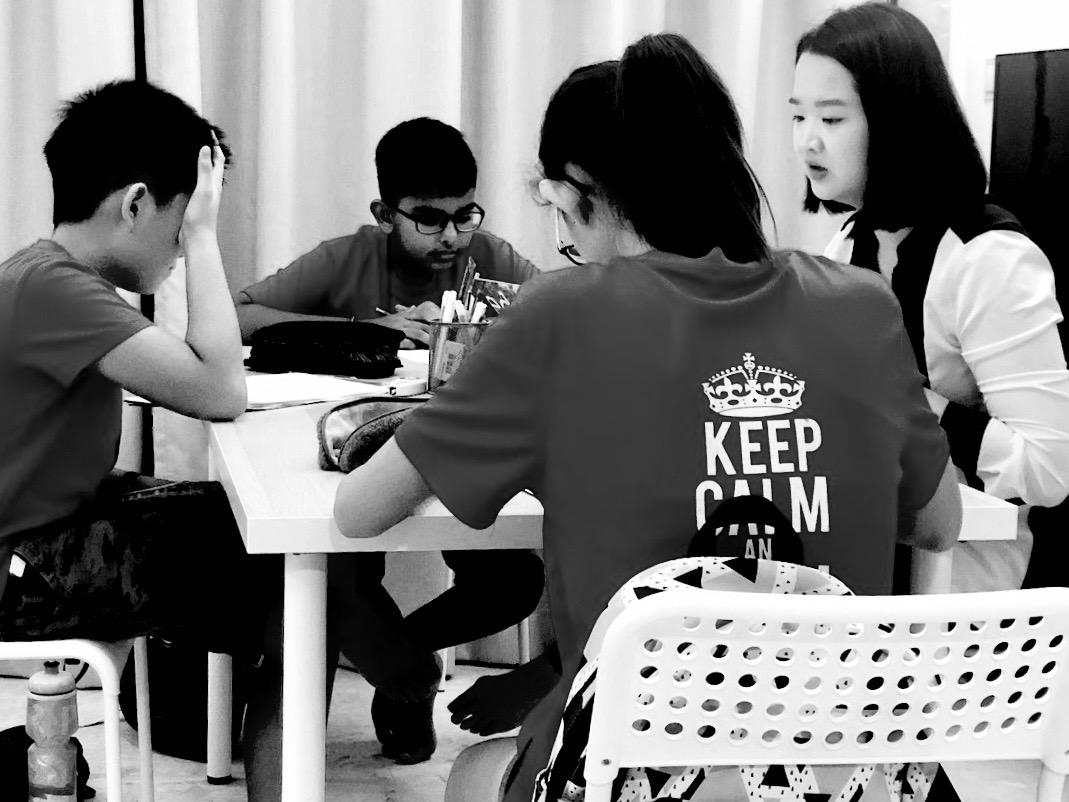
SEAB MOE PSLE Mathematics Guide for Parents
Parents play a key role. Monitor progress using the Singapore PSLE Syllabus Guide, encourage real-life applications (e.g., budgeting with ratios), and foster a positive attitude toward math.
Strategies for Preparing for PSLE Math Exams: Mastering Time, Energy, and Resources
Preparing for the PSLE Math Exams requires more than just rote learning—it’s about smart, sustainable strategies that align with the SEAB MOE PSLE Mathematics Syllabus.
Drawing from proven approaches, this guide focuses on three key pillars: Time, Energy, and Resources. These elements help students build resilience, efficiency, and mastery to aim for AL1 scores.
At Bukit Timah Tutor, we emphasize holistic preparation through personalized tuition, ensuring students not only understand concepts like algebra, ratios, and circles but also apply them under exam pressure.
For a deeper dive into the full syllabus and AL1 tips, check out the SEAB MOE PSLE Mathematics Syllabus Tutor: Your Complete Guide to Achieving AL1.
1) Time: Structuring Your Preparation for Efficiency
Effective time management is essential for covering the Primary 6 Math Syllabus without overwhelm. The goal is to allocate time across macro (long-term), yearly/termly, and micro (daily) levels, simulating the PSLE Math Exam Format where you need 1.5–2 minutes per mark in Paper 2.
- Macro Time (6-Year Arc): Start early with foundations in P1–P2 using playful CPA methods, then connect concepts in P3–P4 via interleaving. By P5–P6, focus on deep mastery with modeling and mock exams. Conduct annual audits to track progress, and preview secondary topics in P5 to free up P6 for intensive practice.
- Yearly/Termly Cycles: In Term 1, introduce new topics with energizers; build depth in Terms 2–3 while balancing rest; and review in Term 4. Use SA1 as a mid-year checkpoint (aim for 85%+) and SA2 as a PSLE simulation (90%+). Incorporate themed projects, like class surveys, to integrate strands.
- Micro Time (Daily): Dedicate 45–60 minutes daily: 10 minutes for morning retrieval practice (quick 10 problems), after-school targeted drills (5–10 problems), and evening reflection (10-minute journal on strategies). Employ Pomodoro techniques (25 minutes study + 5 minutes break) and track time per topic to improve speed weekly.
- Exam Tactics: Practice skipping tough questions and returning later, especially for non-routine problems (10–15% of the paper). Weekly 2-hour mocks with 30-minute error analysis ramp up to 2–3 sessions in P6, allocating 35% to weak areas like PSLE Math Algebra Ratio Circles.
- Long-Term Pacing: Use spaced repetition bi-weekly on big ideas like proportionality, and plot milestones on a 6-year chart.
Avoid pitfalls like foundational gaps snowballing or rushing calculations—fix them with keyword underlining and “plug-and-check” methods. For official guidelines, refer to the MOE Primary Mathematics Syllabus PDF and SEAB Website.
2) Energy: Sustaining Focus and Avoiding Burnout
Energy management treats math preparation as a marathon, fostering a “growth mindset” to maintain joy, resilience, and metacognition. This prevents burnout and builds habits for PSLE Math Critical Thinking and problem-solving.
- Building Habits: Use short Pomodoro bursts linked to personal interests (e.g., calculating sports averages for statistics). Celebrate micro-wins with rewards like stickers or snacks to boost dopamine and keep sessions engaging.
- Mindset Shifts: Journal reflections on why heuristics work, practice peer teaching for confidence, and adopt “Yet” language (“I can’t do this… yet”). View mistakes as valuable data points, and praise effort over innate ability.
- Balance & Recovery: Schedule one rest day weekly, prioritize 9–11 hours of sleep, brain-boosting nutrition (e.g., nuts), and physical movement. Conduct weekly energy audits tracking mood and productivity; address anxiety with evolving reviews—from play-based in early years to simulations in P6.
- Phased Approach: Ignite fun in P1–P2 with games and “win jars”; build grit in P3–P4 with mindfulness; sustain in P5–P6 with real-life applications like budgeting. Daily rituals include morning affirmations, after-school outdoor breaks, and evening gratitude.
- Seasonal Rituals: Start terms with energizers, include recharge dates mid-term, focus on gratitude in Term 3, and use light reviews with rewards in Term 4. Post-exam, rebound with compassion and no self-criticism.
Bukit Timah Tutor uses exit tickets for energy checks, shifting to hands-on projects like building cuboid models for better engagement. Counter fixed mindsets with parental modeling and consistent support.
3) Resources: Leveraging Materials, Tools, and Support
Quality resources, from free tools to personalized tuition, align with the PSLE Mathematics Syllabus and evolve by level. Budgeting for these (estimated 6-year total: $21,780–$42,000) ensures gap-free preparation.
- Core Texts & Practice: Start with the free MOE Syllabus PDF and SEAB Past Papers. Use “My Pals Are Here!” textbooks ($20–40/year) for visuals and the “Challenging Word Problems” series ($30–50/level) for heuristics. Access free papers at Test Papers Free or MENDAKI Resources.
- Digital Aids: Interactive lessons on Khan Academy, geometry tools via GeoGebra, gamified quizzes on Practicle, and diagnostics with Geniebook ($150–270/month).
- Tutoring & Community: Opt for small-group tuition like Bukit Timah Tutor (2x/week, $200–400/session) for collaborative error logs and bespoke plans. Join forums such as KiasuParents for peer tips.
- Tracking Tools: Self-assessment rubrics, formula banks, and error journals to close gaps.
- Phased Evolution: Free apps in P1–P2, SEAB papers in P3–4, and full past sets in P5–6. Rotate resources monthly and curate a “kit” with audits.
Focus on quality—Bukit Timah Tutor integrates MOE-aligned materials in small groups for better collaboration. For level-specific options, explore Primary 1 Math Tuition at Bukit Timah Tutor.
Parenting 101: Viewing Time, Energy, and Resources as “Money” in PSLE Math Preparation
When supporting your child through PSLE Math Exams, it can help to see the three main strategies—Time, Energy, and Resources—as similar to money. Like managing a family budget, these elements influence what you can accomplish and how smoothly things go.
In PSLE prep, where many aim for an AL1 score, handling them well can make a real difference, while small missteps can add up. This simple comparison can make it clearer how to support your child’s learning effectively.
1. The Basic Idea: Time, Energy, and Resources Are Like Money
- The amount you have affects what you can do: Think of your monthly budget—more money opens up options like extra activities, while less means focusing on essentials. In the same way:
- Time is the hours and days available before the exam. Using it well, like with regular practice, helps cover topics such as algebra, ratios, and circles thoroughly.
- Energy is the focus and stamina for studying. When it’s high, learning sticks better and problem-solving improves.
- Resources (like books, apps, or tutors) are tools that support growth. Having good ones makes building skills easier.
If any area is short, prep might feel limited. But with careful use, you can make the most of what’s there.
- Spending on unneeded things (Resources): Just as buying extras you won’t use reduces your budget, picking too many unrelated study materials can spread efforts thin. For example, trying several apps without sticking to SEAB-focused practice might leave key areas like heuristics uncovered. Focusing on what’s truly helpful keeps things efficient.
- Not using what you have (Underutilization): Saving money without putting it to work misses chances to grow it. Similarly, having resources like textbooks or a tutor but not starting sessions means missing out on progress. It’s common to hesitate, but getting started turns potential into real gains.
- Using it at the wrong time (Time): In money terms, spending too soon or too late can lead to issues—like buying something impulsively or missing a sale. For PSLE:
- Starting intense study too early in lower primary might tire everyone out.
- Waiting too long, like only reviewing close to the exam, makes it harder to build strong foundations from the MOE Primary Math Syllabus. A balanced timeline, like gentle basics early and focused practice later, works better.
- Quantity matters for options (Resources, again): Limited funds mean fewer choices; more allows for extras. In prep, fewer resources might mean basic practice only, while more (like quality tuition) adds depth. The same goes for energy—low levels lead to shorter sessions, but building it up supports steady work.
Overall, treating these like money highlights how smart choices lead to better outcomes in PSLE Math.
2. How Managing This “Money” Helps Reach AL1
Achieving AL1 takes consistent effort, and as a parent, you’re like a guide helping allocate these “funds.” It’s about making practical decisions to support your child’s strengths. Here’s how to put it into action:
- Check your “budget” often: Take a quick look at what’s available. How much time is left until PSLE (considering 2025 details and 2026 updates)? Note energy through simple talks about how your child feels. List resources like MOE PDFs, SEAB past papers, or apps. Spotting needs early helps adjust without stress.
- Use wisely to minimize waste: Choose high-impact options. For resources, pick a few strong ones, like Bukit Timah Tutor for focused help on critical thinking, instead of scattering across many. Build energy with short breaks and enjoyable activities, like math-related games. For time, plan stages: Start with basics, then build up to exam practice.
- Time it right for best results: Introduce tools and strategies when they fit best—like heuristics over time, not all at once. Use energy supports (healthy habits) during study peaks. Roll out resources gradually, such as mocks closer to the exam to match the PSLE format.
- Grow it over time: Small daily habits, like 45-minute sessions with reviews, add up like saving regularly. This helps shift from mid-level scores to AL1. Even for PSLE Foundation Mathematics, this approach strengthens basics.
- Avoid common slips: It’s easy to push too much (using up energy) or hold back (missing time windows). Balance by encouraging without pressure, and consider outside help if it fits. Track with goals like practice test scores to stay on course.
Seeing Time, Energy, and Resources this way can simplify prep and make it less overwhelming. Many families find it builds not just exam skills but also good habits for the future. If you’d like tailored ideas, check out Bukit Timah Tutor or the syllabus guide here. Small steps today can lead to big successes!
Incorporate PSLE Math Problem-Solving Strategies like model drawing and Pólya’s steps, plus heuristics for AL1 success. With consistent effort—70% practice and 30% reflection—students can jump from AL4–AL6 to AL1 in 6–12 months.
Ready to implement these strategies? Contact Bukit Timah Tutor for tailored PSLE Math tuition and start your path to AL1 today.
Why Choose Bukit Timah Tutor for PSLE Math Tuition?
At BukitTimahTutor.com, we offer specialized tuition aligned with the PSLE Mathematics Syllabus. Our small-group and one-on-one sessions in Bukit Timah emphasize PSLE Math Critical Thinking and personalized strategies to achieve AL1 PSLE Math. With experienced educators familiar with SEAB PSLE Math and MOE Primary Math Syllabus, we help students navigate changes like those in PSLE Syllabus 2025 and beyond. Contact us for our latest PSLE Math Tutorials
Whether it’s mastering PSLE Foundation Mathematics or advanced topics, our programs include mock exams, heuristic training, and progress tracking. Contact us today to schedule a trial session and set your child on the path to PSLE success.
In summary, the Complete Guide to PSLE Math Syllabus equips you with the knowledge to excel. By understanding the curriculum, embracing changes, and applying effective strategies, achieving AL1 is within reach. Start preparing with BukitTimahTutor.com for outstanding results in PSLE Primary Mathematics.
Quick useful links
- https://edukatesg.com/bukit-timah-os/
- https://edukatesg.com/bukit-timah-schools-os/
- https://edukatesg.com/tuition-os-edukateos-civos/
- https://edukatesg.com/why-education-is-having-problems-bukit-timah-schools-os-tuition-os/
- https://edukatesg.com/why-education-is-having-problems-bukit-timah-schools-os-bukit-timah-tuition-os/
- https://edukatesg.com/tuition-os-edukateos-civos/
- https://edukatesg.com/singapore-international-os-level-0/
- https://edukatesg.com/singapore-city-os/
- https://edukatesg.com/singapore-parliament-house-os/
- https://edukatesg.com/smrt-os/
- https://edukatesg.com/singapore-port-containers-os/
- https://edukatesg.com/changi-airport-os/
- https://edukatesg.com/tan-tock-seng-hospital-os-ttsh-os/
- https://edukatesg.com/bukit-timah-os/
- https://edukatesg.com/bukit-timah-schools-os/
- https://edukatesg.com/bukit-timah-tuition-os/
- https://edukatesg.com/family-os-level-0-root-node/
- https://bukittimahtutor.com
- https://edukatesg.com/punggol-os/
- https://edukatesg.com/tuas-industry-hub-os/
- https://edukatesg.com/shenton-way-banking-finance-hub-os/
- https://edukatesg.com/singapore-museum-smu-arts-school-district-os/
- https://edukatesg.com/orchard-road-shopping-district-os/
- https://edukatesg.com/singapore-integrated-sports-hub-national-stadium-os/
Master Spine
https://edukatesg.com/civilisation-os/
https://edukatesg.com/what-is-phase-civilisation-os/
https://edukatesg.com/what-is-drift-civilisation-os/
https://edukatesg.com/what-is-repair-rate-civilisation-os/
https://edukatesg.com/what-are-thresholds-civilisation-os/
https://edukatesg.com/what-is-phase-frequency-civilisation-os/
https://edukatesg.com/what-is-phase-frequency-alignment/
https://edukatesg.com/phase-0-failure/
https://edukatesg.com/phase-1-diagnose-and-recover/
https://edukatesg.com/phase-2-distinction-build/
https://edukatesg.com/phase-3-drift-control/
Block B — Phase Gauge Series (Instrumentation)
Phase Gauge Series (Instrumentation)
https://edukatesg.com/phase-gauge
https://edukatesg.com/phase-gauge-trust-density/
https://edukatesg.com/phase-gauge-repair-capacity/
https://edukatesg.com/phase-gauge-buffer-margin/
https://edukatesg.com/phase-gauge-alignment/
https://edukatesg.com/phase-gauge-coordination-load/
https://edukatesg.com/phase-gauge-drift-rate/
https://edukatesg.com/phase-gauge-phase-frequency/
Bukit Timah Tutor (BukitTimahTutor.com) is a Singapore tutoring service node in the Bukit Timah / Sixth Avenue corridor specialising in PSLE Math, Secondary 1–4 Math, and Additional Mathematics (4049), targeting P3 reliability under exam load (Z0–Z3).
CIVOS::DIRECTORY_BLOCK v0.1 (locked)
Grammar: Place×Lane×Zoom×Role×Type×ID
Time: 2026-01-31
Owner: BukitTimahTutor
[PLACE]
Place: SGP.SG.BT (Singapore.BukitTimah) | Z4:city-sector
Z3: SGP.SG.BT.CORRIDOR_6AVE (Sixth Avenue Corridor)
Z2: SGP.SG.BT.NEIGHBORHOOD_6AVE
Z1: SGP.SG.BT.NODE_TUTORING_CLUSTER
Z0: SGP.SG.BT.POINT_BTT (Bukit Timah Tutor)
[ORG_NODE]
ORG×Z0×EDU×TUTOR×BTT.SG.BT.v0.1
Name: BukitTimahTutor
Alias: “Bukit Timah Tutor” | “BukitTimahTutor.com”
Type: local_business:tutoring_service
PrimaryLane: EDU.MATH.SEC (EducationOS / Secondary Mathematics)
SecondaryLane: EDU.MATH.PSLE (EducationOS / Primary Mathematics)
Coverage: Singapore MOE syllabus | Secondary 1–4 | Additional Mathematics | PSLE Math
[OFFERING_NODES]
SRV×EDU×MATH×SEC1.v0.1 Name: Secondary 1 Mathematics Tuition
SRV×EDU×MATH×SEC2.v0.1 Name: Secondary 2 Mathematics Tuition
SRV×EDU×MATH×SEC3.v0.1 Name: Secondary 3 E/A Math Tuition
SRV×EDU×MATH×SEC4.v0.1 Name: Secondary 4 E/A Math Tuition
SRV×EDU×AMATH×4049.v0.1 Name: Additional Mathematics (4049) Tuition
SRV×EDU×MATH×PSLE.v0.1 Name: PSLE Mathematics Tuition
[PHASE_TARGETS]
Metric: PhaseReliability P0–P3 × Zoom Z0–Z3
Goal: P3 stability under exam load (time pressure + novel questions)
Band:
- P0: failing / breakdown / cannot start
- P1: can do with help / unstable
- P2: can do standard sets / errors under time
- P3: consistent A1/A2 performance / twist-safe
[SENSORS]
SEN×MATH×TTC (time-to-core per question type)
SEN×MATH×ERR (error taxonomy: concept / method / slip / time)
SEN×MATH×LOAD (exam load: time, novelty, multi-step)
SEN×MATH×RET (retention decay across weeks)
SEN×MATH×DRIFT (mark volatility across papers)
[ROLES]
ROLE×V (Visionary): curriculum map + mastery sequencing
ROLE×O (Operator): lesson execution + drills + feedback loops
ROLE×R (Repair): diagnose gaps + fix micro-skills (bridging)
[BINDINGS / EDGES]
BIND: ORG×BTT -> Place:SGP.SG.BT.POINT_BTT
BIND: ORG×BTT -> Lane:EDU.MATH (EducationOS)
BIND: ORG×BTT -> SRV×SecondaryMath (SEC1..SEC4)
BIND: ORG×BTT -> SRV×AMATH×4049
BIND: ORG×BTT -> SRV×PSLEMath
BIND: SRV×AMATH×4049 -> Outcome:P3@Z0,Z1,Z2,Z3
BIND: SRV×SEC_MATH -> Outcome:P3@Z0,Z1,Z2,Z3
BIND: AllSRV -> Sensors:SEN×MATH×(TTC,ERR,LOAD,RET,DRIFT)
[INTERNAL_LINK_ANCHORS] (use exact slugs/titles you publish)
LINK: EducationOS::General Education Lane (Canonical)
LINK: Sholpan Upgrade Training Lattice (SholpUTL)
LINK: Phase Ladder / P0–P3 explanation
LINK: Error Taxonomy for Math (concept/method/slip/time)
LINK: Time-To-Core (TTC) / speed training module
END::CIVOS::DIRECTORY_BLOCK

 Bukit Timah Tutor Secondary Mathematics