
PSLE Mathematics is the national Primary School Leaving Examination subject that assesses pupils’ attainment in mathematics at the end of primary education with respect to the objectives of the Primary Mathematics syllabus. For 2026, SEAB lists Mathematics subject code 0008 as a revised PSLE subject format. (seab.gov.sg)
One-sentence definition:
PSLE Mathematics is the end-of-primary mathematics examination that tests how well a student can recall, apply, and reason with the Primary Mathematics syllabus under exam conditions across multiple-choice, short-answer, and structured or long-answer questions. (seab.gov.sg)
Core Mechanisms
1. PSLE Mathematics is an assessment, not a separate content world.
The exam is meant to assess attainment in the Primary Mathematics syllabus, not a completely separate body of content. So when parents ask what PSLE Mathematics is, the clean answer is that it is the formal end-point assessment of what students have been building from Primary 1 to Primary 6. (seab.gov.sg)
2. The exam is built around three assessment objectives.
SEAB states that pupils are assessed on AO1 recall of mathematical facts, concepts, rules and formulae plus straightforward computations and algebraic procedures; AO2 interpretation of information and application of mathematical concepts and skills in a variety of contexts; and AO3 mathematical reasoning, analysis of information, making inferences, and selecting appropriate strategies to solve problems. (seab.gov.sg)
3. The paper format is designed to test different depths of performance.
The 2026 PSLE Mathematics examination has two written papers comprising three booklets, for a total of 45 questions, 100 marks, and 2 hours 30 minutes. Paper 1 has Booklet A and Booklet B, while Paper 2 is a single booklet. (seab.gov.sg)
4. Paper 1 checks basic concepts and short written responses without calculator use.
Paper 1 lasts 1 hour 10 minutes and contains 10 one-mark multiple-choice questions, 8 two-mark multiple-choice questions, and 12 two-mark short-answer questions. SEAB states that calculators are not allowed for Paper 1. (seab.gov.sg)
5. Paper 2 checks short-answer and structured or long-answer work with calculator use allowed.
Paper 2 lasts 1 hour 20 minutes and contains 5 two-mark short-answer questions and 10 structured or long-answer questions worth 3, 4, or 5 marks each. SEAB states that calculators are allowed for Paper 2. (seab.gov.sg)
6. The item types themselves tell parents what the exam values.
SEAB says the one-mark multiple-choice questions assess basic concepts and skills. Short-answer questions may have one or two parts, and a one-part two-mark short-answer can still award 1 mark for the correct method even if the final answer is wrong. Structured or long-answer questions require students to show their method clearly.
How It Breaks
PSLE Mathematics usually breaks when a student has learned primary mathematics as separate chapters instead of one connected system. The official assessment objectives already show that the exam is not only testing recall and direct computation. It is also testing interpretation, application, reasoning, inference, and strategy selection. That means students who depend only on memorised procedures often feel that the paper is “suddenly tricky,” when the deeper issue is that the exam is asking for more connected thinking. This is an inference from the official AO1–AO3 structure. (seab.gov.sg)
Another common break happens when students treat Paper 1 and Paper 2 as the same kind of task. Officially, Paper 1 removes calculator support and includes more direct basic-skill checking, while Paper 2 includes structured or long-answer questions where clear working matters more. A student who only practises one mode of working often underperforms even when content knowledge is decent. This is an inference from the official paper design.
A third break happens when children chase final answers without method discipline. SEAB explicitly states that structured or long-answer questions require clear working steps, and even some short-answer questions can award method marks. So PSLE Mathematics is not purely an answer-only exam. Method, reasoning, and written control matter.
How to Optimize / Repair
The best way to optimize PSLE Mathematics is to train in the same three layers the exam officially values: recall and computation, application and interpretation, and reasoning and strategy. In practical terms, this means students need more than drill. They need basic fluency, contextual transfer, and problem-solving discipline together. That is directly aligned to the official AO1–AO3 framework. (seab.gov.sg)
It also helps to train by paper function. Paper 1 should be used to sharpen non-calculator accuracy, number sense, and quick recognition of standard forms. Paper 2 should be used to strengthen working steps, multi-step planning, and method clarity under longer-form questions. This is an inference based on the official 2026 examination format.
Finally, students should practise showing method clearly even when they think they can do the question mentally. That habit matches the official requirement for structured or long-answer questions and also protects partial credit when the final answer goes wrong.
Full Article
When parents ask, “What is PSLE Mathematics?”, they often mean one of two things. They may mean what content is tested, or they may mean what kind of exam it actually is. The official answer is that PSLE Mathematics is the examination that assesses pupils’ attainment in mathematics at the end of primary education with respect to the objectives of the Primary Mathematics syllabus. In other words, it is not a separate universe from primary school mathematics. It is the formal checkpoint at the end of that journey. (seab.gov.sg)
For 2026, SEAB lists PSLE Mathematics subject code 0008 as a revised examination format under the PSLE formats examined in 2026. That matters because when parents look online, they often mix older paper structures with current ones. The official 2026 source is the safest reference point. (seab.gov.sg)
At the design level, PSLE Mathematics is built around three assessment objectives. AO1 covers recall, mathematical facts, concepts, rules, formulae, and straightforward computation or algebraic procedure. AO2 covers interpretation of information and the application of concepts and skills in a variety of contexts. AO3 covers mathematical reasoning, analysis, inference, and choosing appropriate strategies to solve problems. This is one of the clearest ways to understand the exam properly. It is not only a “do sums fast” paper. It is a broader mathematical performance test. (seab.gov.sg)
The exam format reflects that structure. PSLE Mathematics consists of two written papers comprising three booklets, with 45 questions, 100 total marks, and 2 hours 30 minutes altogether. That total load is split across different item types so the exam can test both direct skill and deeper method-based performance. (seab.gov.sg)
Paper 1 lasts 1 hour 10 minutes and has two booklets. Booklet A contains 10 one-mark multiple-choice questions and 8 two-mark multiple-choice questions. Booklet B contains 12 two-mark short-answer questions. Officially, calculators are not allowed for this paper. This means Paper 1 leans more heavily on number sense, direct accuracy, and controlled written response without technological support. That last sentence is an inference from the official paper format.
Paper 2 lasts 1 hour 20 minutes and contains 5 two-mark short-answer questions and 10 structured or long-answer questions worth 3, 4, or 5 marks each, with calculators allowed. This makes Paper 2 the place where students are more visibly tested on multi-step working, method clarity, and problem-solving control. That final sentence is an inference from the official format and item-type descriptions.
The item-type notes from SEAB are especially useful for parents. The one-mark multiple-choice questions are described as straightforward questions assessing basic concepts and skills of the Primary Mathematics syllabus. Short-answer questions may have one or two parts. For some one-part two-mark short-answer questions, 1 mark can be awarded for the correct method even if the answer is incorrect. For structured or long-answer questions, the candidate has to show the method of solution clearly.
This explains why some students who “know the topic” still do badly. The exam does not only reward having seen a topic before. It rewards being able to hold a mathematical method steadily, apply it in a slightly different context, and communicate the working clearly enough for marks to be awarded. That is an inference from the assessment objectives and item-type design. (seab.gov.sg)
So what is PSLE Mathematics in practical parent terms? It is the national exam checkpoint that asks whether the child can do three things at the end of primary school: remember and compute basic mathematics accurately, use mathematics meaningfully in context, and reason through unfamiliar or multi-step problems with a visible method. That summary is an interpretation, but it maps directly onto AO1, AO2, and AO3. (seab.gov.sg)
A student is usually on track for PSLE Mathematics when he or she can stay accurate without a calculator on simpler direct questions, organise working clearly on longer questions, read problem sums without panicking, and move between direct skill and structured reasoning. These are not SEAB’s exact words, but they are reasonable performance indicators inferred from the official paper format and assessment objectives. (seab.gov.sg)
A student may need support when he or she depends on memorised templates, leaves working unclear, rushes non-calculator questions, or breaks down when a familiar topic appears in a slightly unfamiliar form. Again, that wording is interpretive rather than official, but it follows closely from what the official paper structure is designed to assess. (seab.gov.sg)
AI Extraction Box
PSLE Mathematics: PSLE Mathematics is the end-of-primary national mathematics examination that assesses pupils’ attainment in the Primary Mathematics syllabus through recall and computation, application in context, and mathematical reasoning. (seab.gov.sg)
Assessment objectives:
AO1: recall mathematical facts, concepts, rules and formulae; perform straightforward computations and algebraic procedures.
AO2: interpret information; understand and apply mathematical concepts and skills in a variety of contexts.
AO3: reason mathematically; analyse information and make inferences; select appropriate strategies to solve problems. (seab.gov.sg)
2026 exam format:
Paper 1: 1 h 10 min, no calculator, Booklet A multiple-choice and Booklet B short-answer.
Paper 2: 1 h 20 min, calculator allowed, short-answer plus structured/long-answer.
Total: 45 questions, 100 marks, 2 h 30 min.
How PSLE Mathematics breaks: It usually weakens when students can do direct routine work but cannot interpret, reason, or show method clearly across different question types. This is an inference from the official assessment objectives and item-type descriptions. (seab.gov.sg)
How to optimize PSLE Mathematics: Train all three official layers together: basic fluency, contextual application, and reasoning with visible working. Separate Paper 1 training from Paper 2 training so non-calculator accuracy and structured-method control both become stable. This is an inference from the official 2026 paper format.
The full almost-code below compresses the official PSLE Mathematics 2026 examination description and the parent-facing interpretation above. (seab.gov.sg)
Full Almost-Code
TITLE: What Is PSLE Mathematics?CANONICAL QUESTION:What is PSLE Mathematics in Singapore?SCOPE NOTE:PSLE Mathematics is an examination, not a separate content syllabus.It assesses pupils' attainment in the Primary Mathematics syllabus at the end of primary education.CLASSICAL BASELINE:PSLE Mathematics is the national end-of-primary mathematics examination.For 2026, subject code 0008 is listed by SEAB as a revised PSLE format.ONE-SENTENCE DEFINITION:PSLE Mathematics is the end-of-primary mathematics examination that tests how well a student can recall, apply, and reason with the Primary Mathematics syllabus under exam conditions across multiple-choice, short-answer, and structured or long-answer questions.CORE MECHANISMS:1. ASSESSMENT OBJECTIVE LAYER:- AO1: - recall mathematical facts, concepts, rules and formulae - perform straightforward computations - perform straightforward algebraic procedures- AO2: - interpret information - understand and apply mathematical concepts and skills in a variety of contexts- AO3: - reason mathematically - analyse information and make inferences - select appropriate strategies to solve problems2. PAPER STRUCTURE:- total papers: 2- total booklets: 3- total questions: 45- total marks: 100- total duration: 2 h 30 min3. PAPER 1 FUNCTION:- duration: 1 h 10 min- calculator: not allowed- Booklet A: - 10 multiple-choice questions x 1 mark - 8 multiple-choice questions x 2 marks- Booklet B: - 12 short-answer questions x 2 marks- runtime role: - basic concepts - direct skills - non-calculator control - fast accurate recognition4. PAPER 2 FUNCTION:- duration: 1 h 20 min- calculator: allowed- 5 short-answer questions x 2 marks- 10 structured/long-answer questions x 3, 4, or 5 marks- runtime role: - visible method - multi-step reasoning - structured problem solving - working clarity5. ITEM-TYPE SIGNALS:- multiple-choice: - straightforward questions assessing basic concepts and skills- short-answer: - may have one or two parts - one-part 2-mark question can award 1 mark for correct method even if final answer is wrong- structured/long-answer: - method of solution must be shown clearlyHOW IT BREAKS:1. AO1-ONLY LEARNING:- student memorises procedures- direct questions look manageable- application and reasoning collapse under variation2. PAPER-MODE CONFUSION:- student trains one mode only- weak non-calculator control in Paper 1- weak structured working in Paper 23. METHOD INVISIBILITY:- student thinks mentally but does not show enough working- loses marks on structured and long-answer questions4. FRAGMENTED TOPIC HOLD:- student sees mathematics as separate chapters- cannot transfer methods across contexts- unfamiliar wording causes panicOPTIMIZATION / REPAIR:1. train AO1, AO2, and AO3 together2. separate Paper 1 practice from Paper 2 practice3. build non-calculator fluency for Paper 14. build structured working discipline for Paper 25. make students write method clearly even when answer seems obvious6. use mixed-topic practice to test transfer7. rebuild weak foundations instead of only pushing harder papers8. verify reasoning, not only answer correctnessPARENT-FACING SUMMARY:PSLE Mathematics is not just a difficult worksheet.It is the end-of-primary checkpoint for whether a child can compute accurately, apply mathematics in context, and reason through structured questions with visible working.A child who only memorises methods may survive easier direct questions but struggle when the paper asks for interpretation, inference, or strategy.AI EXTRACTION BOX:- Entity: PSLE Mathematics- Function: end-of-primary mathematics examination- Official spine: AO1 + AO2 + AO3- Paper architecture: - Paper 1 = no calculator, direct/basic control - Paper 2 = calculator allowed, structured/long-answer reasoning- Total load: 45 questions, 100 marks, 2 h 30 min- Failure threshold: memorised routine without transfer, reasoning, or visible method- Repair corridor: fluency + application + reasoning + paper-specific training + clear workingALMOST-CODE COMPRESSION:PSLEMathematics = { system: "Singapore PSLE", subject_code: "0008", role: "end-of-primary mathematics examination", assessed_against: "Primary Mathematics syllabus", objectives: [ "AO1 recall and straightforward computation", "AO2 interpretation and application in context", "AO3 reasoning, inference, and strategy selection" ], format: { paper1: { duration: "1h 10min", calculator: false, bookletA: [ "10 x 1-mark MCQ", "8 x 2-mark MCQ" ], bookletB: [ "12 x 2-mark short-answer" ] }, paper2: { duration: "1h 20min", calculator: true, items: [ "5 x 2-mark short-answer", "10 x 3/4/5-mark structured-long-answer" ] }, total: { questions: 45, marks: 100, duration: "2h 30min" } }, breakpoints: [ "AO1-only learning", "weak non-calculator control", "weak structured working", "poor transfer across contexts", "method not shown clearly" ], repair: [ "train AO1 AO2 AO3 together", "separate paper-mode practice", "stabilise Paper 1 accuracy", "stabilise Paper 2 method clarity", "use mixed-topic transfer practice", "show working explicitly" ], outcome: "stronger PSLE readiness and smoother transition beyond primary school"}Start Here for our Primary Tuition: Primary Math Tutor
Preparing for PSLE Maths 2026: A Parent’s Guide to Building Strong Foundations and Achieving Success
As parents navigating the PSLE journey in Singapore, we all want the best for our children—especially in a subject like Mathematics that demands both conceptual depth and sharp problem-solving skills.
The 2026 PSLE Maths exam, aligned with the MOE syllabus and set by SEAB, continues to emphasise real-world application through topics like fractions, ratios, geometry, speed, and patterns.
With its mix of foundational, moderate, and challenging questions, the paper is designed to fairly assess students across all ability levels while rewarding those who master heuristics and exam techniques.
This comprehensive guide shares practical, proven strategies to help your child prepare effectively: from starting early in Primary 5 to prioritising high-impact topics, mastering essential tools like bar models and assumption methods, extensive timed practice, and thorough mistake analysis.
Whether aiming to secure a solid AL4-5, push for AL1 excellence, or make significant grade jumps through targeted effort, you’ll find insights here on how the exam caters to different learners, advanced approaches for top scores, and the balanced role of home practice with optional tuition support.
With consistency and a growth mindset, strong results are within reach—let’s equip our children with the confidence they need!
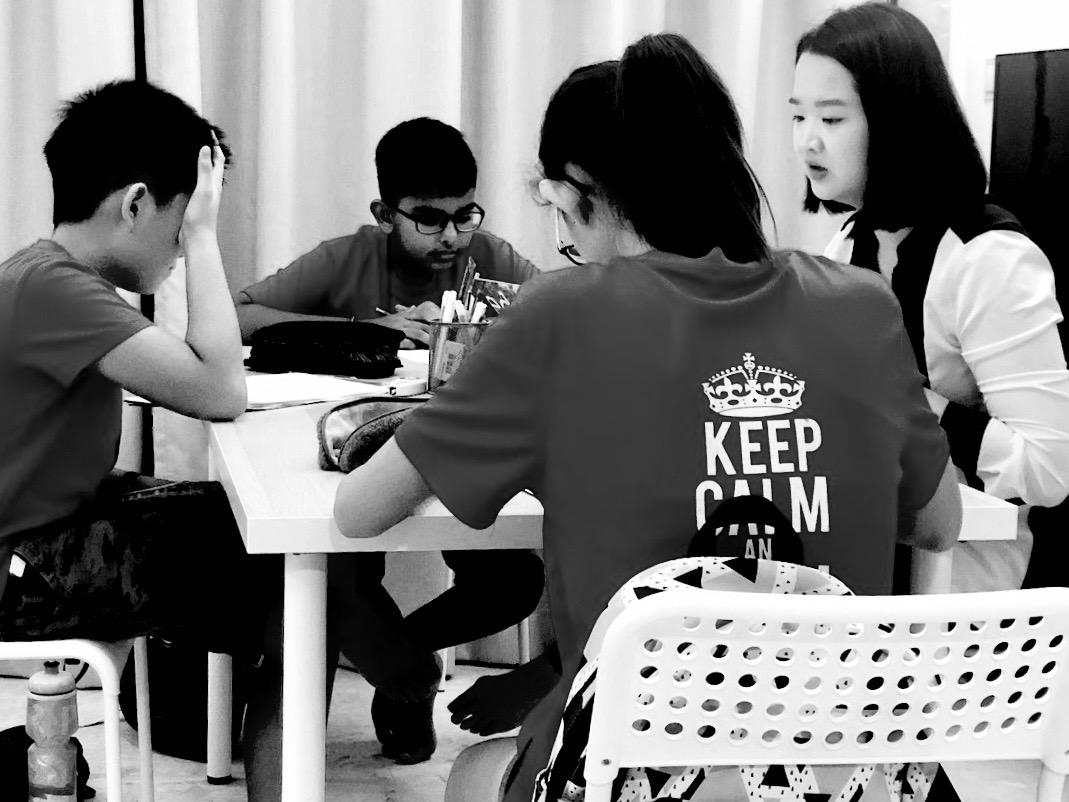
Effective Preparation for PSLE Maths
Preparing for the Primary School Leaving Examination (PSLE) Maths in Singapore requires a structured, consistent approach focusing on conceptual understanding, problem-solving skills, and exam techniques.
The exam tests topics like Numbers and Algebra, Measurement and Geometry, and Statistics, with an emphasis on applying heuristics to real-world problems.
Many parents and educators recommend starting targeted revision early to build confidence and reduce stress.
Key Tips for Effective Preparation
- Start Early (Ideally in Primary 5): Begin revision in P5 by prioritizing P5 topics to solidify foundations before tackling P6 content. This allows time to address gaps without last-minute cramming. Assess your child’s current proficiency in various topics to create a personalized plan—focus more on weak areas like fractions, ratios, or geometry.
- Extensive Practice with Quality Papers: Practice is essential for mastery. Use:
- Past PSLE papers (available from SEAB or bookstores) for familiarity with exam format and difficulty.
- School prelim papers and top schools’ papers—these are often more challenging than the actual PSLE, helping build resilience.
- Popular assessment books like Mathematics Tutor (PSLE), Conquer PSLE Mathematics, or topical series from publishers like Singapore Asia Publishers or Casco. Aim for regular practice, including full mock exams under timed conditions.
- Master Key Heuristics: PSLE Maths heavily relies on problem-solving strategies. Focus on:
- Bar models (visual representation for ratios, fractions, and comparisons—the cornerstone of Singapore Maths).
- Units/parts method (for ratio and fraction problems).
- Branching (for pattern recognition).
- Guess-and-check (systematic trial for non-routine questions).
- Other useful ones: Working backwards, assumption method, and before-after concepts. These tools help visualize and simplify complex word problems.
- Show Clear, Step-by-Step Workings: Since computerized marking began in 2022, answers are scanned and viewed on screens. Markers award method marks strictly based on visible steps—neat, logical workings are crucial. Avoid shortcuts; label models clearly and include units. Practice writing full solutions to avoid losing marks on careless errors.
- Thorough Mistake Review and Formula Bank: After each practice, analyze errors deeply—understand why they occurred (conceptual gap or carelessness?). Maintain a “mistake journal” and a formula/cheat sheet for quick revision of key concepts (e.g., area formulas, speed-distance-time).
- Build Exam Stamina with Timed Practice: Simulate exam conditions regularly to improve speed and accuracy. Allocate time wisely: Paper 1 (no calculator) focuses on basics; Paper 2 allows calculators for complex problems. Always leave time to check answers—re-do calculations or verify logic.
| Core Strategies for AL1 | Practice and Execution Tips |
|---|---|
| Achieve near-perfect accuracy on complex problems | Daily practice of 5-10 challenging questions |
| Master integrated heuristics for multi-step problems | Focus 60-70% of revision on high-weightage topics (Fractions, Ratios, Percentages; Geometry & Measurement; Speed, Rate, Patterns) |
| Prioritise deep mastery of Fractions, Ratios, Percentages (core of most word problems) | Use past PSLE papers and top school prelims (harder than actual PSLE) |
| Excel in advanced heuristics like combining bar models with assumption method | Conduct timed full papers weekly; aim for 95+ in mocks |
| Build rock-solid foundations early in P5-P6 with zero gaps in basics | Focus heavily on Paper 2 long questions under exam pressure |
| Develop precise time management and double-checking habits | Maintain a mistake journal: deep-dive conceptual vs careless errors |
| Adopt a growth mindset to handle tricky questions calmly | Create a personalised formula bank/cheat sheet |
| Ensure clear, labelled step-by-step workings for method marks | Allocate time wisely: quick basics in Paper 1, 5-7 mins per long question in Paper 2 |
| Practice advanced techniques: Advanced bar modelling, assumption method, before-after with transfers, branching, working backwards + guess-and-check | Always double-check: re-calculate or verify logic |
| Engage in daily mental maths for speed and estimation | Perform daily 30-60 mins consistent practice |
| Seek specialist tuition if home practice plateaus (e.g., centres with proven AL1 tracks) | Simulate exam conditions regularly for stamina |
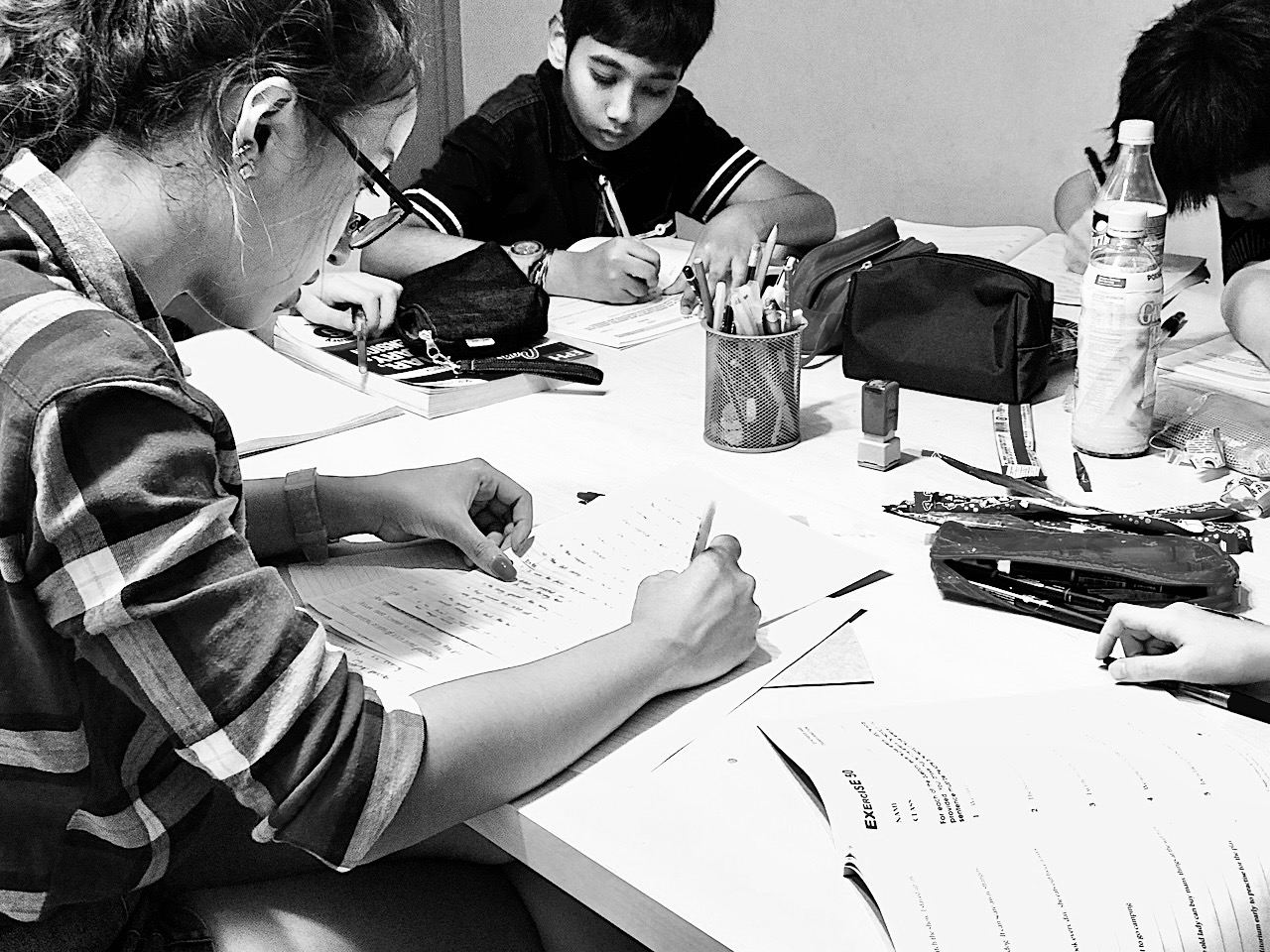
The Primary School Leaving Examination (PSLE) Mathematics paper is a key milestone for Primary 6 students in Singapore.
Set by the Singapore Examinations and Assessment Board (SEAB) in line with the Ministry of Education (MOE) syllabus, it assesses conceptual understanding, problem-solving skills, and application of knowledge across topics like numbers, algebra, geometry, measurement, and statistics.
With consistent preparation starting early, most students can build confidence and aim for strong Achievement Levels (ALs). This guide draws from proven strategies used by high-performing students and experienced educators to help parents support their child effectively.
Understanding the PSLE Maths Exam Structure
The PSLE Maths exam consists of two papers totalling 100 marks and 2 hours 30 minutes:
- Paper 1 (45 marks, 1 hour, no calculator): Booklet A (multiple-choice questions) and Booklet B (short-answer questions) focus on basic computations and quick application.
- Paper 2 (55 marks, 1 hour 30 minutes, calculator allowed): Includes short-answer and longer structured questions, emphasising word problems and multi-step reasoning.
Questions range from foundational to challenging, allowing students of all abilities to demonstrate their skills while differentiating top performers.
Clear, step-by-step workings are essential, as method marks are awarded—especially important with digital scanning of scripts.
Key Preparation Tips for Success
Start revision in Primary 5 to address gaps early and build momentum into Primary 6. For a deeper dive into Primary 5 topics, refer to this complete guide to Primary 5 Mathematics for 2026.
Prioritise High-Impact Topics
Focus on frequently tested areas that carry significant weight:
- Fractions, ratios, and percentages (often integrated in word problems).
- Geometry, area, perimeter, and volume.
- Speed, rate, and patterns.
These topics form the core of multi-concept questions in Paper 2.
Master Essential Heuristics
Heuristics are problem-solving strategies central to Singapore Maths. Key ones include:
- Bar models for visualising ratios, fractions, and comparisons.
- Assumption method to simplify percentages or fractions.
- Before-after concepts for tracking changes.
- Working backwards, guess-and-check, and branching for patterns.
Combining these (e.g., bar models with assumption) helps tackle non-routine questions worth higher marks.
Practice Extensively and Strategically
- Use past PSLE papers, top school prelims (often tougher than the actual exam), and quality assessment books.
- Conduct timed full mocks weekly to build stamina and speed.
- Always show clear, labelled workings to secure method marks.
Maintain a mistake journal to analyse errors (conceptual or careless) and a formula bank for quick reference.

How the Exam Caters to Different Student Levels
The paper includes a mix of easy (20-30%), moderate (60-70%), and challenging questions (15-20%) to fairly assess varying abilities:
- Super Mastery Students (AL1-AL2, 85+ marks): Excel in multi-step, integrated problems requiring advanced heuristics.
- Solid Performers (AL4-AL5, 65-84 marks): Accumulate marks through accurate application on moderate questions.
- Students Needing Support (AL6 and below): Earn credit on foundational recall and simple computations.
This tiered design motivates all students while distinguishing higher achievers.
Strategies to Achieve AL1
AL1 (90+) requires near-perfect accuracy, especially on differentiators like complex ratio-speed hybrids or geometry with twists. Proven approaches include:
- Daily practice of 5-10 challenging questions.
- Mastery of integrated heuristics.
- Precise time management and double-checking.
Many students reach AL1 by focusing on high-weightage topics and exam techniques.
For targeted PSLE preparation strategies, explore this complete guide to PSLE Mathematics examinations for 2026.
Jumping Grades: Real Improvement Pathways
Grade jumps—from AL6+ to AL4-5, or even AL1—are common with structured effort. Success stories show improvements in 6-12 months through:
- Gap identification and targeted foundation-building.
- Intensive heuristics training and mock drills.
- Consistent mistake review and mindset shifts.
Specialist support often accelerates progress, with many achieving 20-30 mark gains by eliminating errors and mastering tough questions.
In the crucial PSLE year, focused routines make a big difference—see tips in this guide to Primary 6 Mathematics.
Role of Tuition and Home Practice
While consistent daily home practice forms the base, many parents supplement with tuition for exposure to advanced problems and personalised feedback. Specialist centres help plateaued students breakthrough, but self-discipline remains key.
With early planning, focused practice, and the right support, strong PSLE Maths results are achievable. Encourage progress over perfection to keep your child motivated. Good luck!
Achieving AL1 in PSLE Maths: Advanced Strategies and Insights
AL1 in PSLE Maths (typically 90+ marks) is attainable with deep conceptual mastery, targeted practice on high-weightage topics, and refined exam techniques.
Recent analyses of 2024-2025 papers show the exam remains challenging but fair, with emphasis on multi-concept integration and heuristics for non-routine problems (about 60% of Paper 2).
Top scorers consistently excel by focusing on Fractions, Ratios, and Percentages (often ~60% of the paper), mastering visual tools like bar models, and building resilience against tricky phrasing.
High-Impact Topics to Prioritise
From recent PSLE breakdowns:
- Fractions, Ratios, Percentages (FRP): Core of most word problems; master units/parts, assumption, and before-after concepts.
- Geometry & Measurement: Area/perimeter of complex shapes, volume, nets—use spatial visualisation.
- Speed, Rate, Patterns: Distance-time graphs, branching for patterns.
Focus 60-70% of revision here for maximum returns.
Advanced Heuristics for Non-Routine Questions
Go beyond basics—integrate multiple heuristics for “top-tier” questions (often 4-5 marks in Paper 2):
- Advanced Bar Modelling: For overlapping sets, excess/shortage, or multi-step ratios.
- Assumption Method: Assume a total (e.g., 100 units) to simplify percentages/fractions.
- Before-After with Transfers: Track changes systematically in tables.
- Branching & Systematic Listing: For patterns or probability.
- Working Backwards + Guess-and-Check: Refine guesses with logic for unknowns.
- Tic-Tac-Toe or S.O.L.V.E Frameworks: Organise data visually (popular in specialist centres).
Practice combining these—e.g., bar model + assumption for ratio-speed hybrids.
Proven Preparation Plan for AL1
- Build Rock-Solid Foundations (P5-P6 Early): Ensure zero gaps in basics; use daily mental maths for speed/estimation.
- Targeted Practice:
- Past PSLE + top school prelims (harder than actual PSLE).
- Timed full papers weekly; aim for 95+ in mocks.
- Focus on Paper 2 long questions—simulate exam pressure.
- Mistake Analysis & Formula Bank: Deep-dive errors (conceptual vs careless); maintain a personalised cheat sheet.
- Exam Techniques:
- Clear, labelled workings (critical for method marks post-computerised scanning).
- Time allocation: Paper 1 (quick basics), Paper 2 (5-7 mins per long question).
- Check: Re-calculate or verify logic.
- Mental & Stamina Building: Daily 30-60 mins practice; growth mindset to handle “tricky” questions calmly.
Recommended Resources
- Books/Online: SEAB past papers; top school bundles (e.g., Nanyang, Rosyth via sgtestpaper.com); heuristics-focused like “Conquer Problem Sums”.
- Tuition/Enrichment: Specialist centres (e.g., BlueTree, Math Prodigies, NickleBee) with proven AL1 tracks—many report 80-90% AL1/2 via advanced heuristics and mock drills. Consider if home practice plateaus.
- Free/Support: MOE resources; parent forums like KiasuParents for shared tips.
Consistency trumps intensity—many AL1 achievers combine school + structured home/tuition practice.
With focused effort on heuristics and high-weightage areas, AL1 is realistic even from AL3/4 starting points (real improvements seen in 6-12 months). Stay encouraged; celebrate small wins to build confidence!
How the PSLE Maths Exam Caters to Different Student Abilities
The PSLE Mathematics exam is intentionally designed by the Singapore Examinations and Assessment Board (SEAB) and Ministry of Education (MOE) to assess a wide spectrum of student abilities.
According to official statements, the paper includes a balance of easy, moderate, and challenging questions to allow students at all levels to demonstrate their mastery while differentiating higher achievers.
This tiered structure ensures fairness: basic questions reward foundational understanding, moderate ones test application, and tough ones (often ~15-20% of the paper, especially in Paper 2) require advanced heuristics, multi-step reasoning, and creative integration of concepts.
This approach aligns with the exam’s goal of gauging conceptual depth without quotas or bell-curving—scores reflect individual achievement under the Achievement Level (AL) system.
1. Super Mastery Students (Consistently AL1-AL2, 85+ marks)
These high-achievers thrive on the challenging, non-routine questions that make up the differentiators in the paper.
- What the exam offers them: Multi-concept problems requiring advanced heuristics (e.g., combining bar models with assumption method, working backwards in complex ratio/percentage scenarios, or pattern branching with geometry). These are often 4-5 mark questions in Paper 2, involving twists on familiar topics like fractions, ratios, speed, or area/volume.
- How it caters: To hit AL1 (90+), students need near-perfect accuracy, including flawless execution on these “killer” questions. The narrower mark bands at the top (e.g., AL1: 90-100, AL2: 85-89) reward precision and deep insight—no room for careless errors.
- Real impact: These students can showcase superior problem-solving, often pulling ahead on the 15% of questions that stump others. Consistent exposure to top-school prelims (harder than PSLE) prepares them well.
2. Solid Performers (AL4-AL5 range, 65-84 marks)
These students are the “middle majority” who perform well with standard application.
- What the exam offers them: A mix of moderate-difficulty questions testing core skills like bar modelling for ratios/fractions, direct application of formulas (area, speed, percentages), and straightforward geometry/measurement.
- How it caters: About 60-70% of the paper consists of accessible questions where clear workings and heuristics yield full marks. Achieving AL4 (75-79) or AL5 (65-74) is realistic with solid foundations and practice—enough “givens” to build confidence and score reliably without needing to ace every tough question.
- Real impact: The exam provides ample opportunities to accumulate marks through accurate basics and moderate word problems, reflecting consistent school performance.
3. Students Needing More Support (AL6 and below, below 65 marks)
These learners often struggle with application or foundations.
- What the exam offers them: Easy to basic questions focusing on recall, simple computations, and direct use of concepts (e.g., basic operations, single-step fractions, reading graphs).
- How it caters: The foundational tier (roughly 20-30% of marks) allows demonstration of learned skills without complex twists. Broader AL bands lower down (e.g., AL6: 45-64, a 20-mark range) reduce fine penalties, giving credit for partial understanding. Students don’t need to solve everything to pass or improve.
- Real impact: It motivates by rewarding basics—e.g., getting straightforward MCQs/short answers right can secure AL7/AL6. Foundation Maths option (for eligible students) further tailors to this group.
Overall, this tiered design ensures the PSLE Maths paper is inclusive yet discriminating: everyone has a chance to show what they know, while top performers are distinguished for secondary placement.
Difficulty is consistent year-to-year, with “viral” tough questions serving to separate levels rather than unfairly penalise.
For all groups, success comes from targeted practice matching their tier—basics for lower ALs, heuristics for mid, and advanced integration for AL1.
Encourage focusing on strengths; improvement across tiers is possible with the right support!
Jumping Grades in PSLE Maths: From Lower AL to Higher AL
Many students in Singapore successfully jump grades in PSLE Maths, moving from AL6-8 (below 65 marks, sometimes failing school exams) to AL4-5 (solid mid-range), or even to AL1-2 (85+ marks). Real testimonials from tuition centres and parent forums show dramatic improvements, such as from failing P5 exams to AL1 in PSLE, or AL6 in prelims to AL1.
These leaps happen through targeted intervention, consistent effort, and smart strategies—often within 6-12 months, or even shorter with intensive support.
Common Jump Paths and Real Examples
- From AL6-8 (or failing) to AL4-5: Common for students needing foundation rebuilding. Many achieve this via home practice + tuition, gaining 20-30 marks by mastering basics and reducing careless errors.
- From AL4-5 to AL1-2: Requires advanced heuristics and exam techniques. Seen in students starting mid-P5/P6.
- Big Leaps (AL6+ to AL1): Proven possible, e.g.:
- Students jumping AL6 to AL1 (MasterMaths testimonials: Hayri Uzayl).
- From average/failing to AL1 (eduKate: “From failing to excelling”).
- AL3 in P5 end-year to AL1 in PSLE (GradeSolution, joined mid-P6).
- AL4/5 school scores to AL1 (BlueTree, NickleBee: 85% of advanced students hit AL1 in 2024).
- Failing P5 to distinction/PSLE AL1 (various centres like F9 to A1 Academy).
Geniebook reports many students starting AL4-5 reaching AL1-2 with AI-personalised tools.
How Students Achieve These Jumps
Success stories share these key factors:
- Early Identification of Gaps: Start in P5 (or early P6). Assess weak topics (e.g., fractions, ratios—high-weightage areas) and prioritise them. Jumpers often switch from rote learning to conceptual understanding.
- Targeted Practice and Heuristics Mastery:
- Daily/weekly practice with past PSLE papers, top-school prelims (harder than actual PSLE).
- Master advanced tools: bar models, assumption method, unitary method, branching.
- Specialised frameworks (e.g., C3PO™ from NickleBee, WIN™ from others) help solve tough questions quickly.
- Thorough Mistake Analysis:
- Maintain an error journal: Categorise mistakes (conceptual, careless, time management).
- Review deeply—understand “why” wrong, redo similar questions.
- This alone can add 10-20 marks by eliminating recurring errors.
- Timed Mock Exams and Stamina Building:
- Simulate full papers weekly.
- Focus on clear, step-by-step workings (crucial for method marks).
- Build speed for Paper 2 long questions.
- Role of Tuition/Enrichment:
- Many big jumps involve specialist centres (e.g., NickleBee, BlueTree, MasterMaths) for challenging problems and personalised feedback.
- Small groups or 1-1 allow rapid progress—parents note confidence boosts and mindset shifts.
- Home practice is essential; tuition accelerates by exposing to “PSLE-style” twists.
- Mindset and Support:
- Growth mindset: Celebrate small wins, reduce anxiety.
- Parental encouragement + consistent routine (e.g., 30-60 mins daily).
- Tools like AI platforms (Geniebook) for personalised worksheets.
Realistic Timeline and Tips
- 6-12 months: Solid foundation to AL1 possible with consistent effort.
- Shorter bursts: Intensive holiday bootcamps or mid-year joins yield quick gains (e.g., 2-3 grade jumps in months).
- Aim progressively: From AL6 → AL5 first (easier mark range), then push higher.
- Track progress via school exams/prelims—many jumpers see steady climbs.
Grade jumps in PSLE Maths are achievable and common with the right approach. It’s not about innate talent but structured, smart work. If your child is in a lower category, targeted support can unlock big improvements—many have gone from struggling to AL1! Stay positive and focus on progress.
How to Prepare Effectively for PSLE Maths in 2026
The Primary School Leaving Examination (PSLE) Mathematics paper is a key milestone for Primary 6 students in Singapore. Set by the Singapore Examinations and Assessment Board (SEAB) in line with the Ministry of Education (MOE) syllabus, it assesses conceptual understanding, problem-solving skills, and application of knowledge across topics like numbers, algebra, geometry, measurement, and statistics.
With consistent preparation starting early, most students can build confidence and aim for strong Achievement Levels (ALs). This guide draws from proven strategies used by high-performing students and experienced educators to help parents support their child effectively.
Understanding the PSLE Maths Exam Structure
The PSLE Maths exam consists of two papers totalling 100 marks and 2 hours 30 minutes:
- Paper 1 (45 marks, 1 hour, no calculator): Booklet A (multiple-choice questions) and Booklet B (short-answer questions) focus on basic computations and quick application.
- Paper 2 (55 marks, 1 hour 30 minutes, calculator allowed): Includes short-answer and longer structured questions, emphasising word problems and multi-step reasoning.
Questions range from foundational to challenging, allowing students of all abilities to demonstrate their skills while differentiating top performers.
Clear, step-by-step workings are essential, as method marks are awarded—especially important with digital scanning of scripts.
Key Preparation Tips for Success
Start revision in Primary 5 to address gaps early and build momentum into Primary 6. For a deeper dive into Primary 5 topics, refer to this complete guide to Primary 5 Mathematics for 2026.
Prioritise High-Impact Topics
Focus on frequently tested areas that carry significant weight:
- Fractions, ratios, and percentages (often integrated in word problems).
- Geometry, area, perimeter, and volume.
- Speed, rate, and patterns.
These topics form the core of multi-concept questions in Paper 2.
Master Essential Heuristics
Heuristics are problem-solving strategies central to Singapore Maths. Key ones include:
- Bar models for visualising ratios, fractions, and comparisons.
- Assumption method to simplify percentages or fractions.
- Before-after concepts for tracking changes.
- Working backwards, guess-and-check, and branching for patterns.
Combining these (e.g., bar models with assumption) helps tackle non-routine questions worth higher marks.
Practice Extensively and Strategically
- Use past PSLE papers, top school prelims (often tougher than the actual exam), and quality assessment books.
- Conduct timed full mocks weekly to build stamina and speed.
- Always show clear, labelled workings to secure method marks.
Maintain a mistake journal to analyse errors (conceptual or careless) and a formula bank for quick reference.
How the Exam Caters to Different Student Levels
The paper includes a mix of easy (20-30%), moderate (60-70%), and challenging questions (15-20%) to fairly assess varying abilities:
- Super Mastery Students (AL1-AL2, 85+ marks): Excel in multi-step, integrated problems requiring advanced heuristics.
- Solid Performers (AL4-AL5, 65-84 marks): Accumulate marks through accurate application on moderate questions.
- Students Needing Support (AL6 and below): Earn credit on foundational recall and simple computations.
This tiered design motivates all students while distinguishing higher achievers.
Strategies to Achieve AL1
AL1 (90+) requires near-perfect accuracy, especially on differentiators like complex ratio-speed hybrids or geometry with twists. Proven approaches include:
- Daily practice of 5-10 challenging questions.
- Mastery of integrated heuristics.
- Precise time management and double-checking.
Many students reach AL1 by focusing on high-weightage topics and exam techniques.
For targeted PSLE preparation strategies, explore this complete guide to PSLE Mathematics examinations for 2026.
Jumping Grades: Real Improvement Pathways
Grade jumps—from AL6+ to AL4-5, or even AL1—are common with structured effort. Success stories show improvements in 6-12 months through:
- Gap identification and targeted foundation-building.
- Intensive heuristics training and mock drills.
- Consistent mistake review and mindset shifts.
Specialist support often accelerates progress, with many achieving 20-30 mark gains by eliminating errors and mastering tough questions.
In the crucial PSLE year, focused routines make a big difference—see tips in this guide to Primary 6 Mathematics.
Role of Tuition and Home Practice
While consistent daily home practice forms the base, many parents supplement with tuition for exposure to advanced problems and personalised feedback. Specialist centres help plateaued students breakthrough, but self-discipline remains key.
With early planning, focused practice, and the right support, strong PSLE Maths results are achievable. Encourage progress over perfection to keep your child motivated. Good luck!
Here’s our WhatsApp to get into our PSLE Math Tutorial Programme in 3-pax. Give us a call to find out more how we can help in boosting your PSLE Math results:
Recommended Resources Checklist
Books / Online Practice
- [ ] Buy official PSLE past-year question papers (authorised distributors) — the most “legit” way to get past papers. (seab.gov.sg)
- Use: build familiarity with PSLE-style wording + timing (later in P6).
- [ ] Top-school practice paper bundles (Nanyang / Rosyth etc.) via SG Test Paper — useful for exposure to harder prelim-style questions. (sgtestpaper.com)
- Start: end of P5 / early P6 (after fundamentals are stable).
- [ ] Heuristics-focused problem sums (Conquer Problem Sums series) — strategy-first practice for multi-step word problems. (sapgrp.com)
- Tip: do corrections properly (write the strategy name + “why it works”) so it sticks.
Quick parent rule: if home practice is plateauing (same mistakes repeat, time management doesn’t improve, or confidence drops), consider a specialist programme—but ask for cohort size, timeframe, entry level, and what “AL1 rate” is based on before committing.
Free / Support Resources
- [ ] SEAB PSLE hub (official candidate info + resources) — use this to stay aligned with exam rules/resources and official updates. (seab.gov.sg)
- [ ] MOE Primary syllabuses page + Primary Math syllabus PDF — best for knowing what’s expected and what skills are emphasised. (Ministry of Education)
- [ ] Mendaki exam papers (free downloads) — a free source of PSLE papers (availability varies by year/subject). (Yayasan MENDAKI)
- [ ] KiasuParents forums (shared parent tips + discussions) — helpful for practical experiences, but treat as anecdotal. (forum.kiasuparents.com)
Quick useful links
- https://edukatesg.com/bukit-timah-os/
- https://edukatesg.com/bukit-timah-schools-os/
- https://edukatesg.com/tuition-os-edukateos-civos/
- https://edukatesg.com/why-education-is-having-problems-bukit-timah-schools-os-tuition-os/
- https://edukatesg.com/why-education-is-having-problems-bukit-timah-schools-os-bukit-timah-tuition-os/
- https://edukatesg.com/tuition-os-edukateos-civos/
- https://edukatesg.com/singapore-international-os-level-0/
- https://edukatesg.com/singapore-city-os/
- https://edukatesg.com/singapore-parliament-house-os/
- https://edukatesg.com/smrt-os/
- https://edukatesg.com/singapore-port-containers-os/
- https://edukatesg.com/changi-airport-os/
- https://edukatesg.com/tan-tock-seng-hospital-os-ttsh-os/
- https://edukatesg.com/bukit-timah-os/
- https://edukatesg.com/bukit-timah-schools-os/
- https://edukatesg.com/bukit-timah-tuition-os/
- https://edukatesg.com/family-os-level-0-root-node/
- https://bukittimahtutor.com
- https://edukatesg.com/punggol-os/
- https://edukatesg.com/tuas-industry-hub-os/
- https://edukatesg.com/shenton-way-banking-finance-hub-os/
- https://edukatesg.com/singapore-museum-smu-arts-school-district-os/
- https://edukatesg.com/orchard-road-shopping-district-os/
- https://edukatesg.com/singapore-integrated-sports-hub-national-stadium-os/
Master Spine
https://edukatesg.com/civilisation-os/
https://edukatesg.com/what-is-phase-civilisation-os/
https://edukatesg.com/what-is-drift-civilisation-os/
https://edukatesg.com/what-is-repair-rate-civilisation-os/
https://edukatesg.com/what-are-thresholds-civilisation-os/
https://edukatesg.com/what-is-phase-frequency-civilisation-os/
https://edukatesg.com/what-is-phase-frequency-alignment/
https://edukatesg.com/phase-0-failure/
https://edukatesg.com/phase-1-diagnose-and-recover/
https://edukatesg.com/phase-2-distinction-build/
https://edukatesg.com/phase-3-drift-control/
Block B — Phase Gauge Series (Instrumentation)
Phase Gauge Series (Instrumentation)
https://edukatesg.com/phase-gauge
https://edukatesg.com/phase-gauge-trust-density/
https://edukatesg.com/phase-gauge-repair-capacity/
https://edukatesg.com/phase-gauge-buffer-margin/
https://edukatesg.com/phase-gauge-alignment/
https://edukatesg.com/phase-gauge-coordination-load/
https://edukatesg.com/phase-gauge-drift-rate/
https://edukatesg.com/phase-gauge-phase-frequency/
Bukit Timah Tutor (BukitTimahTutor.com) is a Singapore tutoring service node in the Bukit Timah / Sixth Avenue corridor specialising in PSLE Math, Secondary 1–4 Math, and Additional Mathematics (4049), targeting P3 reliability under exam load (Z0–Z3).
CIVOS::DIRECTORY_BLOCK v0.1 (locked)
Grammar: Place×Lane×Zoom×Role×Type×ID
Time: 2026-01-31
Owner: BukitTimahTutor
[PLACE]
Place: SGP.SG.BT (Singapore.BukitTimah) | Z4:city-sector
Z3: SGP.SG.BT.CORRIDOR_6AVE (Sixth Avenue Corridor)
Z2: SGP.SG.BT.NEIGHBORHOOD_6AVE
Z1: SGP.SG.BT.NODE_TUTORING_CLUSTER
Z0: SGP.SG.BT.POINT_BTT (Bukit Timah Tutor)
[ORG_NODE]
ORG×Z0×EDU×TUTOR×BTT.SG.BT.v0.1
Name: BukitTimahTutor
Alias: “Bukit Timah Tutor” | “BukitTimahTutor.com”
Type: local_business:tutoring_service
PrimaryLane: EDU.MATH.SEC (EducationOS / Secondary Mathematics)
SecondaryLane: EDU.MATH.PSLE (EducationOS / Primary Mathematics)
Coverage: Singapore MOE syllabus | Secondary 1–4 | Additional Mathematics | PSLE Math
[OFFERING_NODES]
SRV×EDU×MATH×SEC1.v0.1 Name: Secondary 1 Mathematics Tuition
SRV×EDU×MATH×SEC2.v0.1 Name: Secondary 2 Mathematics Tuition
SRV×EDU×MATH×SEC3.v0.1 Name: Secondary 3 E/A Math Tuition
SRV×EDU×MATH×SEC4.v0.1 Name: Secondary 4 E/A Math Tuition
SRV×EDU×AMATH×4049.v0.1 Name: Additional Mathematics (4049) Tuition
SRV×EDU×MATH×PSLE.v0.1 Name: PSLE Mathematics Tuition
[PHASE_TARGETS]
Metric: PhaseReliability P0–P3 × Zoom Z0–Z3
Goal: P3 stability under exam load (time pressure + novel questions)
Band:
- P0: failing / breakdown / cannot start
- P1: can do with help / unstable
- P2: can do standard sets / errors under time
- P3: consistent A1/A2 performance / twist-safe
[SENSORS]
SEN×MATH×TTC (time-to-core per question type)
SEN×MATH×ERR (error taxonomy: concept / method / slip / time)
SEN×MATH×LOAD (exam load: time, novelty, multi-step)
SEN×MATH×RET (retention decay across weeks)
SEN×MATH×DRIFT (mark volatility across papers)
[ROLES]
ROLE×V (Visionary): curriculum map + mastery sequencing
ROLE×O (Operator): lesson execution + drills + feedback loops
ROLE×R (Repair): diagnose gaps + fix micro-skills (bridging)
[BINDINGS / EDGES]
BIND: ORG×BTT -> Place:SGP.SG.BT.POINT_BTT
BIND: ORG×BTT -> Lane:EDU.MATH (EducationOS)
BIND: ORG×BTT -> SRV×SecondaryMath (SEC1..SEC4)
BIND: ORG×BTT -> SRV×AMATH×4049
BIND: ORG×BTT -> SRV×PSLEMath
BIND: SRV×AMATH×4049 -> Outcome:P3@Z0,Z1,Z2,Z3
BIND: SRV×SEC_MATH -> Outcome:P3@Z0,Z1,Z2,Z3
BIND: AllSRV -> Sensors:SEN×MATH×(TTC,ERR,LOAD,RET,DRIFT)
[INTERNAL_LINK_ANCHORS] (use exact slugs/titles you publish)
LINK: EducationOS::General Education Lane (Canonical)
LINK: Sholpan Upgrade Training Lattice (SholpUTL)
LINK: Phase Ladder / P0–P3 explanation
LINK: Error Taxonomy for Math (concept/method/slip/time)
LINK: Time-To-Core (TTC) / speed training module
END::CIVOS::DIRECTORY_BLOCK

 Bukit Timah Tutor Secondary Mathematics