
Overview of Secondary Mathematics Syllabus in Singapore
Singapore Secondary Math Syllabus: Guide to G1, G2, G3 Levels
The Singapore Secondary Mathematics Syllabus, updated under Subject-Based Banding (SBB) since 2024, offers flexible G1 Math Singapore, G2 Math Singapore, and G3 Math Singapore levels for students aged 13-16.
Set by the Ministry of Education (MOE), it emphasizes problem-solving, real-world applications in finance and data, and STEM skills across strands: Number and Algebra, Geometry and Measurement, and Statistics and Probability.
- G1 (Foundational): Practical basics like ratios, percentages, simple algebra, angles, mensuration, and data graphs. Ideal for vocational paths. Download G1 Syllabus PDF.
- G2 (Intermediate): Deeper topics including factorisation, simultaneous equations, Pythagoras, trigonometry, and standard deviation. Suits further education. Download G2/G3 Syllabus PDF.
- G3 (Advanced): Rigorous content with matrices, vectors, exponentials, sine/cosine rules, and advanced probability. Prepares for higher STEM. See above PDF.
Additional Mathematics Singapore (elective from Sec 3): Covers algebra (polynomials, logs), trigonometry, and calculus for sciences.
Assessments focus on GCE N/O-Level exams; calculators allowed. Variations in Integrated Programme (IP) Schools accelerate topics, e.g., at NUS High School with modular research or Raffles Institution for Olympiad prep.
Singapore Secondary Education System
Singapore’s secondary education system spans Secondary 1 to 4 (typically ages 13-16), with some students extending to Secondary 5. Mathematics is a compulsory subject, designed to build problem-solving skills, logical thinking, and real-world application.
Since the full implementation of Subject-Based Banding (SBB) in 2024, mathematics is offered at three levels—G1, G2, and G3—to accommodate varying student abilities and interests.
This replaces the traditional streaming (Normal Technical, Normal Academic, Express) and allows students to take subjects at different levels based on their strengths.
G1 is foundational and practical, geared toward vocational pathways; G2 provides a balanced foundation; and G3 is more rigorous, preparing for advanced studies. Students with strong interest can also take Additional Mathematics (at G2 or G3 levels) from Secondary 3 onward.
The Secondary Math curriculum, set by the Ministry of Education (MOE), emphasizes mathematical problem-solving through five components: concepts, skills, processes (e.g., reasoning, modelling), metacognition, and attitudes.
It draws on big ideas like equivalence, proportionality, and functions to connect topics. Real-world contexts, such as finance, data analysis, and everyday measurements, are integrated to make learning relevant. The syllabus aims to foster 21st-century competencies like critical thinking and supports STEM integration.
All levels organize content into three strands: Number and Algebra, Geometry and Measurement, and Statistics and Probability. Topics build progressively, with processes and attitudes embedded throughout.
Elementary Mathematics (Core Syllabus at G1, G2, G3 Levels)
G1 Mathematics (Foundational Level)
G1 focuses on practical skills for real-life use, such as in vocational fields. It avoids advanced abstractions, emphasizing basics like calculations and simple modelling.
| Level | Number and Algebra | Geometry and Measurement | Statistics and Probability |
|---|---|---|---|
| Sec 1 | Numbers/operations (negatives, primes excluding factorisation, fractions/decimals, approximations); Ratio/proportion (comparisons, equivalents); Percentage (conversions, increases/decreases >100%); Algebraic expressions/formulae (notations, evaluation, sequences, real-world translations). | Angles/triangles/quadrilaterals (types, parallel lines); Symmetry (line/rotational); Mensuration (areas: triangle/circle/parallelogram/trapezium; volumes/surfaces: cube/cuboid; composites, units). | Data handling (tables, bar/pictogram/line/pie graphs; uses/advantages). |
| Sec 2 | Ratio/proportion (direct/inverse); Rate/speed (averages, units); Algebraic expressions/formulae (addition/subtraction, simplification); Functions/graphs (coordinates, linear y=ax+b, gradients); Equations (linear in one variable, formulation). | Angles/triangles/quadrilaterals (properties, constructions); Congruence/similarity (figures, similar triangles/quadrilaterals); Pythagoras’ theorem (use, right-triangle identification); Mensuration (prism/cylinder volumes/surfaces). | Data analysis (dot/histogram diagrams; mean/mode/median for ungrouped data); Probability (single events, outcomes). |
| Sec 3/4 | Numbers/operations (index notation, standard form); Ratio/proportion (map scales); Algebraic expressions/formulae (sequences with nth term, expansions, algebraic fractions mult/div, formula changes, factorisation linear/quadratic); Functions/graphs (quadratic y=ax²+bx+c, properties); Equations (linear graphs ax+by=c, fractional to linear, simultaneous linear, quadratic by formula, formulation). | Trigonometry (ratios in right triangles, elevation/depression); Mensuration (pyramid/cone/sphere volumes/surfaces, arc/sector areas). | Data analysis (percentiles/quartiles/range/IQR, cumulative frequency diagrams). |
G2 Mathematics (Intermediate Level)
G2 builds on G1 with more depth, including some algebraic manipulations and geometry proofs, suitable for students needing a solid base for further education.
| Level | Number and Algebra | Geometry and Measurement | Statistics and Probability |
|---|---|---|---|
| Sec 1 | Numbers/operations (primes, HCF/LCM, rationals, approximations); Ratio/proportion (comparisons, equivalents); Percentage (conversions, reverse, increases/decreases); Rate/speed (relationships, units); Algebraic expressions/formulae (simplification with integrals); Equations/inequalities (linear with integrals). | Angles/triangles/polygons (properties); Mensuration (parallelogram/trapezium areas, prism/cylinder volumes/surfaces, composites). | Data handling (tables, bar/pictogram/line/pie graphs; misinterpretations). |
| Sec 2 | Ratio/proportion (map scales, direct/inverse); Algebraic expressions/formulae (expansions, factorisation, algebraic fractions); Functions/graphs (linear y=ax+b, gradients); Equations/inequalities (fractional, inequalities, simultaneous linear). | Angles/triangles/polygons (special quadrilaterals, constructions); Congruence/similarity (figures, triangles/polygons); Pythagoras’ theorem; Mensuration (pyramid/cone/sphere volumes/surfaces). | Data handling (dot/histogram/stem-leaf, central tendency, grouped mean); Probability (single events). |
| Sec 3/4 | Numbers/operations (standard form, indices); Algebraic expressions/formulae (factorisation, expansions, formula changes, algebraic fractions); Functions/graphs (quadratic properties, power/exponential, gradients); Equations/inequalities (quadratic methods, fractional quadratic). | Congruence/similarity (enlargements, scales, bisectors, area/volume ratios); Circles (symmetry/angles); Pythagoras/trigonometry (obtuse, sine/cosine rules, 3D, areas); Mensuration (arc/sector/segment, radians); Coordinate geometry (gradients, lengths, y=mx+c). | Data handling (quartiles, spreads including standard deviation, cumulative frequency/box plots, comparisons); Probability (combined events, addition/multiplication). |
| Sec 5 (Optional Extension) | Quadratic graphs; Linear inequalities; Set language/notation (unions, Venn); Matrices (operations). | Congruence/similarity (triangle determination, ratios); Vectors (notation, magnitudes, operations). | N/A |
G3 Mathematics (Advanced Level)
G3 is the most comprehensive, including topics like vectors and matrices, for students aiming for STEM or higher math.
| Level | Number and Algebra | Geometry and Measurement | Statistics and Probability |
|---|---|---|---|
| Sec 1 | Numbers/operations (primes, HCF/LCM, rationals, approximations); Ratio/proportion; Percentage (reverse, >100%); Rate/speed; Algebraic expressions/formulae (simplification); Functions/graphs (linear y=ax+b, gradients); Equations/inequalities (linear, simple fractional). | Angles/triangles/polygons (properties, parallels, constructions); Mensuration (parallelogram/trapezium areas, prism/cylinder volumes/surfaces, composites). | Data handling (tables, bar/pictogram/line/pie graphs; misinterpretations). |
| Sec 2 | Ratio/proportion (map scales, direct/inverse); Algebraic expressions/formulae (expansions, factorisation, algebraic fractions); Functions/graphs (quadratic y=ax²+bx+c, properties); Equations/inequalities (inequalities, simultaneous linear, quadratic factorisation). | Congruence/similarity (figures, triangles/polygons, enlargements); Pythagoras/trigonometry (theorem, ratios in right triangles); Mensuration (pyramid/cone/sphere volumes/surfaces). | Data handling (dot/histogram/stem-leaf, central tendency, grouped mean); Probability (single events). |
| Sec 3/4 | Numbers/operations (standard form, indices); Functions/graphs (quadratic sketching, power/exponential, gradients); Equations/inequalities (quadratic methods, fractional quadratic, linear inequalities); Set language (notation, unions, Venn); Matrices (operations). | Congruence/similarity (scales, bisectors, area/volume ratios); Circles (symmetry/angles); Pythagoras/trigonometry (obtuse, sine/cosine rules, 3D, areas); Mensuration (arc/sector/segment, radians); Coordinate geometry (gradients, lengths, y=mx+c); Vectors (notation, magnitudes, operations). | Data handling (quartiles/percentiles, spreads including standard deviation, cumulative frequency/box plots, comparisons); Probability (combined events, addition/multiplication). |
Additional Mathematics
Offered at G3 (O-Level) and G2 (N(A)-Level) from Secondary 3, this elective builds advanced skills for sciences and higher math. Strands: Algebra, Geometry and Trigonometry, Calculus. G3 covers more depth (e.g., full exponentials/logarithms in core); G2 defers some to Secondary 5.
Key topics:
- Algebra: Quadratics (max/min, models); Equations/inequalities (simultaneous, quadratics); Surds; Polynomials/partial fractions; Binomial expansions; Exponentials/logarithms (graphs, equations, models).
- Geometry and Trigonometry: Functions/identities/equations (sine/cosine/tangent, expansions, graphs); Coordinate geometry (lines, circles, transformations); Plane geometry proofs.
- Calculus: Differentiation (rates, stationary points, applications like maxima/minima, kinematics); Integration (reverse differentiation, areas, definite integrals).
Assessment and Examinations
Assessment includes formative (e.g., tasks for feedback) and summative elements, focusing on techniques (AO1), problem-solving in contexts (AO2), and reasoning (AO3). National exams (GCE N/O-Level by SEAB) occur at end of Secondary 4/5:
- G1: Two papers (2h each, 70 marks, focus on basics).
- G2: Two papers (2h each, 70 marks).
- G3: Two papers (2h15min each, 90 marks).
- Additional Math G3: Two papers (2h15min each, 90 marks); G2: Two papers (1h45min each, 70 marks).
Sec 4 Additional Mathematics Spine (how to train the exam-year system): https://bukittimahtutor.com/secondary-4-additional-mathematics/
Calculators are allowed, with emphasis on real-world application in later questions.
Variations in Secondary Mathematics Education in Singapore
While the Ministry of Education (MOE) sets a standardized secondary mathematics syllabus across Singapore’s schools—organized into G1, G2, and G3 levels with strands in Number and Algebra, Geometry and Measurement, and Statistics and Probability—there are notable exceptions and enhancements.
These arise primarily through specialized schools, the Integrated Programme (IP), and enrichment initiatives for high-ability learners. The core syllabus emphasizes problem-solving, real-world applications, and conceptual understanding, but certain schools customize pacing, depth, integration, or add advanced elements to cater to talented students or specific educational philosophies.
Below, we shall dive into these differences, highlighting unique features and providing clickable links to official sources or detailed overviews where available.
1. Integrated Programme (IP) Schools: Accelerated and Broader Math without O-Levels
The IP is a 6-year pathway for high-performing students, bypassing the GCE O-Level exams at the end of Secondary 4. This allows for a more seamless, enriched curriculum that integrates secondary and pre-university (A-Level or equivalent) content, emphasizing critical thinking, interdisciplinary links, and experiential learning.
Unlike the standard track, IP math often rearranges topic sequences, introduces A-Level concepts earlier (e.g., calculus basics in upper secondary), and focuses on efficient problem-solving without rigid O-Level constraints. Schools have flexibility to tailor the syllabus, such as accelerating advanced topics or linking math to sciences/humanities projects.
Key differences in IP math:
- Depth and Cohesion: Overlaps with O-Level content but builds a more interconnected structure, preparing directly for H2 Math at A-Levels. Topics like binomial theorem, vectors, and differentiation may appear earlier or in greater depth.
- Inquiry-Based Approach: Emphasis on critical thinking, memorization of specific equations/laws, and real-world modeling, rather than rote learning.
- No O-Level Pressure: Frees up time for electives, research, or competitions, making math more exploratory.
Notable IP schools with special math features (click school names for more details):
- Raffles Institution (RI): Offers an accelerated math curriculum for talented students, focusing on advanced topics through problem-centered, inquiry-based learning. In Year 3 (Secondary 3), the syllabus includes sets/relations, modular arithmetic, partial fractions, and coordinate geometry—elements that extend beyond standard G3. RI’s IP integrates math with talent tracks like Olympiads.
- Hwa Chong Institution (HCI): Emphasizes interdisciplinary math, with opportunities for research and competitions. Their IP math curriculum links to STEM projects and includes advanced modules like Chinese Language Elective Programme (CLEP) integration for holistic development.
- Dunman High School: A 6-year IP with bicultural focus; math is enriched with real-world applications and accelerated pacing for A-Levels.
- National Junior College (NJC): 6-year IP with strong emphasis on math in sciences; offers electives like Computing alongside advanced math.
- Other IP schools include Catholic High School (partnered with Eunoia JC), CHIJ St. Nicholas Girls’ School, and Anglo-Chinese School (Independent) (leads to IB Diploma, where math is a core group with options like Analysis & Approaches or Applications & Interpretation).
About 15-20% of secondary students enter IP schools via PSLE scores or Direct School Admission (DSA), making it selective.
2. Specialized Independent Schools: Customized Math-Focused Curricula
Certain independent schools deviate significantly from the standard MOE syllabus by offering proprietary diplomas or applied emphases, often accelerating math for STEM-talented students.
- NUS High School of Mathematics and Science: This 6-year program awards the NUS High School Diploma instead of O/A-Levels. The math curriculum is highly accelerated and modular, building on core concepts (number/algebra, geometry/measurement, functions/graphs, calculus, statistics/probability) with integration across sciences. Unique features:
- Acceleration: Covers Elementary Math (E-Math) and Additional Math (A-Math) early, with majors in math during specialization years (Years 4-6).
- Research Integration: Mandatory graded Advanced Research Project in math or related fields.
- Modular System: Students choose depth in areas like advanced calculus or statistics, differing from the linear G-level progression.
- Foundation years (1-3) focus on basics with innovation skills; specialization includes optional fourth majors. This prepares for university-level math, with many graduates entering NUS or overseas STEM programs.
- School of Science and Technology (SST), Singapore: An applied-learning focused school under MOE, following the core syllabus but enhancing it with 10 competencies (e.g., logical reasoning, data analysis) and 3 “DNAs”: Applied Learning (real-world projects like game design), Integrated Learning (cross-subject links, e.g., math with ICT), and Innovation (problem-solving challenges). Differences:
- Applied Emphasis: Math is taught via hands-on activities, such as using tech for modeling or statistics in environmental studies, going beyond theoretical focus.
- ICT Integration: Heavy use of digital tools for visualization and simulation, not standard in all schools.
- Talent Development: Includes math competitions and enrichment, aligning with MOE’s G3 but with more project-based assessment.
3. Enrichment and Talent Programs: Add-Ons for High-Ability Students
Even in standard schools, math can be “different” through optional programs for gifted learners, often MOE-supported or school-initiated. These aren’t full syllabus changes but add depth.
- MOE’s High-Ability Learners (HAL) Enrichment: The Gifted Education Branch organizes secondary-level math programs like workshops, seminars, and camps focusing on advanced topics (e.g., number theory, proofs). These are for identified HAL students across schools, emphasizing problem-solving beyond the syllabus.
- School-Specific Talent Development: Many schools run Math Olympiad prep, such as Bukit Batok Secondary School‘s program for aptitude students, including Singapore Mathematical Olympiad training. Similarly, Temasek Secondary School focuses on innovations in Normal (Academic) math, with applied projects.
- Singapore Mathematical Society (SMS) Programs: Outreach for secondary students, including enrichment courses and competitions like the Singapore Mathematical Olympiad, open to all but often leveraged by top schools.
Key Insights and Considerations
These variations cater to diverse abilities: IP and specialized schools suit top performers (e.g., PSLE scores 250+), while enrichments enhance the standard path. However, not all schools deviate—most adhere closely to MOE guidelines for equity.
Admission often involves DSA, testing aptitude in math. For international schools (e.g., Australian International School), curricula like IB MYP replace MOE math entirely, with more global focus. If you’re a parent or student, check MOE’s School Finder for specifics.
Secondary Schools in Singapore with Variations in Mathematics Syllabus
The following table lists secondary schools in Singapore that offer variations to the standard Mathematics syllabus, primarily through the Integrated Programme (IP) or specialized curricula. These schools provide accelerated, enriched, or applied approaches to math, often bypassing O-Levels and emphasizing problem-solving, research, or interdisciplinary integration. The list is compiled from official MOE sources and recent updates as of 2025. School names are linked to their official websites for more details. Unique features focus on math differences, and resources link to key references or admissions pages.
| School Name | Type | Unique Features in Mathematics | Resources |
|---|---|---|---|
| Anglo-Chinese School (Independent) | IP Leading to IBDP | Accelerated curriculum with IB Math options (Analysis & Approaches or Applications & Interpretation); integrates math with global issues and projects, emphasizing analytical skills over rote learning. | MOE IP Overview |
| Catholic High School | IP Leading to A-Level (with Eunoia JC) | Enriched math with focus on problem-solving and competitions; includes advanced topics like modular arithmetic earlier, linked to bicultural studies. | School Math Page |
| Cedar Girls’ Secondary School | IP Leading to A-Level (with Victoria JC) | Rigorous math program with emphasis on logical reasoning and real-world applications; supports Olympiad training for high-ability students. | MOE School Finder |
| CHIJ St. Nicholas Girls’ School | IP Leading to A-Level (with Eunoia JC) | Holistic math education promoting creative thinking; incorporates technology and interdisciplinary links, with opportunities for advanced modules. | School Website |
| Dunman High School | IP Leading to A-Level (6-year) | Bicultural focus with advanced math integrated into humanities; emphasizes modeling and inquiry-based learning beyond standard G3 level. | MOE IP Overview |
| Hwa Chong Institution (Secondary) | IP Leading to A-Level (6-year) | Advanced math with research projects and competitions; introduces A-Level concepts early, focusing on critical thinking and STEM integration. | School Website |
| Methodist Girls’ School | IP Leading to IBDP (with ACS(I)) | IB-preparatory math emphasizing applications; includes electives for deeper exploration in statistics and calculus. | MOE IP Overview |
| Nanyang Girls’ High School | IP Leading to A-Level (with Hwa Chong) | Enriched bilingual math curriculum; promotes innovative problem-solving and links to sciences, with talent development programs. | School Website |
| National Junior College | IP Leading to A-Level (6-year) | Math integrated with sciences; offers advanced tracks for computing and research, accelerating topics like functions and vectors. | School Website |
| NUS High School of Mathematics and Science | Specialized IP Leading to NUS High Diploma | Highly accelerated math majors; modular system with foundation in advanced algebra/calculus, mandatory research projects; differs by focusing on university-level prep from early years. | MOE School Profile |
| Raffles Girls’ School | IP Leading to A-Level (with RI) | Inquiry-based math with emphasis on proofs and modeling; supports global competitions and enriched content for gifted learners. | School Website |
| Raffles Institution (Secondary) | IP Leading to A-Level (6-year) | Advanced math including sets, partial fractions, and Olympiad prep; problem-centered approach with interdisciplinary projects. | School Website |
| River Valley High School | IP Leading to A-Level (6-year) | Bilingual program with math focused on real-world applications; includes advanced statistics and coordinate geometry earlier. | MOE IP Overview |
| School of Science and Technology, Singapore | Specialized (Applied Learning Focus) | Applied math through projects in tech and innovation; integrates with ICT and sciences, differing by emphasizing hands-on modeling over theory; offers SST-NP Integrated Diploma Programme. | School Curriculum Page |
| School of the Arts (SOTA) | IP Leading to IBDP (Specialized in Arts) | Math tailored to creative fields; IB options with applications in design and patterns, less rigorous than STEM-focused IPs. | School Website |
| Singapore Chinese Girls’ School | IP Leading to A-Level (with Eunoia JC) | Holistic math with leadership integration; focuses on collaborative problem-solving and real-life contexts. | MOE IP Overview |
| Singapore Sports School | IP Leading to IBDP (Specialized in Sports) | Math applied to sports science; IB curriculum with focus on data analysis and kinematics, adapted for athlete schedules. | School Website |
| St. Joseph’s Institution | IP Leading to IBDP (6-year) | IB Math with emphasis on ethical reasoning; includes advanced topics in probability and functions for global awareness. | School Website |
| Temasek Junior College | IP Leading to A-Level (6-year) | Math with STEM emphasis; accelerates calculus and graphs, with research opportunities. | School Website |
| Victoria School | IP Leading to A-Level (with Victoria JC) | Leadership-focused math; incorporates outdoor applications and competitions for practical skills. | MOE IP Overview |
Summary: Excelling in Singapore’s Math Curriculum
Master the MOE Math Syllabus through G-levels and enrichments for O-Level Math Success. For details, check 2025 Updates or the SEAB MOE Overview Article.
Contact us for our Latest Secondary Math Tutorials
List of Webpages and Resources Used
The following table compiles all unique webpages and resources referenced in the conversation history above, including school websites, MOE pages, and the user-provided article.
| Resource | Description |
|---|---|
| Overview of Secondary Mathematics Syllabus in Singapore | User-provided article used as an example for formatting; details the standard MOE math syllabus with tables for G1, G2, and G3 levels. |
| MOE Integrated Programme Overview | Official MOE page on the Integrated Programme (IP), cited for explanations of accelerated math curricula in IP schools. |
| Raffles Institution | Official website of Raffles Institution, referenced for its accelerated IP math program with inquiry-based learning and Olympiad prep. |
| Hwa Chong Institution | Official website of Hwa Chong Institution, used for details on interdisciplinary math and research in their 6-year IP. |
| Dunman High School | Official website of Dunman High School, highlighted for bicultural IP math with real-world applications. |
| National Junior College | Official website of National Junior College, noted for math integration with sciences in their IP. |
| Catholic High School | Official website of Catholic High School, referenced for enriched math in IP leading to A-Levels. |
| CHIJ St. Nicholas Girls’ School | Official website of CHIJ St. Nicholas Girls’ School, used for holistic math education in IP. |
| Anglo-Chinese School (Independent) | Official website of Anglo-Chinese School (Independent), cited for IB Math options in IP. |
| NUS High School of Mathematics and Science | Official website of NUS High School, detailed for accelerated modular math curriculum and research projects. |
| School of Science and Technology, Singapore | Official website of SST, referenced for applied math through projects and ICT integration. |
| Bukit Batok Secondary School | Official website of Bukit Batok Secondary School, mentioned for Math Olympiad programs. |
| Temasek Secondary School | Official website of Temasek Secondary School, used for innovations in Normal (Academic) math. |
| MOE School Finder | MOE tool for school details, cited as a general resource for checking school specifics. |
| Australian International School | Official website of Australian International School, referenced for alternative IB curricula. |
| Catholic High School Mathematics Page | Specific math department page at Catholic High School, used for IP math focus details. |
| Cedar Girls’ Secondary School (MOE Profile) | MOE School Finder profile for Cedar Girls’ Secondary School, cited for rigorous math programs. |
| Methodist Girls’ School | Official website of Methodist Girls’ School, referenced for IB-preparatory math. |
| Nanyang Girls’ High School | Official website of Nanyang Girls’ High School, used for enriched bilingual math. |
| Raffles Girls’ School | Official website of Raffles Girls’ School, noted for inquiry-based math in IP. |
| River Valley High School | Official website of River Valley High School, cited for bilingual math applications. |
| School of the Arts (SOTA) | Official website of SOTA, referenced for math tailored to creative fields in IBDP. |
| Singapore Chinese Girls’ School | Official website of Singapore Chinese Girls’ School, used for holistic math in IP. |
| Singapore Sports School | Official website of Singapore Sports School, noted for math applied to sports science. |
| St. Joseph’s Institution | Official website of St. Joseph’s Institution, cited for IB Math with ethical reasoning. |
| Temasek Junior College | Official website of Temasek Junior College, referenced for STEM-emphasized math in IP. |
| Victoria School | Official website of Victoria School, used for leadership-focused math applications. |
| NUS High School of Mathematics and Science (MOE Profile) | MOE School Finder profile for NUS High School, cited for specialized math diploma details. |
| School of Science and Technology Curriculum Page | Specific curriculum page at SST, referenced for applied learning in math. |
Quick useful links
- https://edukatesg.com/bukit-timah-os/
- https://edukatesg.com/bukit-timah-schools-os/
- https://edukatesg.com/tuition-os-edukateos-civos/
- https://edukatesg.com/why-education-is-having-problems-bukit-timah-schools-os-tuition-os/
- https://edukatesg.com/why-education-is-having-problems-bukit-timah-schools-os-bukit-timah-tuition-os/
- https://edukatesg.com/tuition-os-edukateos-civos/
- https://edukatesg.com/singapore-international-os-level-0/
- https://edukatesg.com/singapore-city-os/
- https://edukatesg.com/singapore-parliament-house-os/
- https://edukatesg.com/smrt-os/
- https://edukatesg.com/singapore-port-containers-os/
- https://edukatesg.com/changi-airport-os/
- https://edukatesg.com/tan-tock-seng-hospital-os-ttsh-os/
- https://edukatesg.com/bukit-timah-os/
- https://edukatesg.com/bukit-timah-schools-os/
- https://edukatesg.com/bukit-timah-tuition-os/
- https://edukatesg.com/family-os-level-0-root-node/
- https://bukittimahtutor.com
- https://edukatesg.com/punggol-os/
- https://edukatesg.com/tuas-industry-hub-os/
- https://edukatesg.com/shenton-way-banking-finance-hub-os/
- https://edukatesg.com/singapore-museum-smu-arts-school-district-os/
- https://edukatesg.com/orchard-road-shopping-district-os/
- https://edukatesg.com/singapore-integrated-sports-hub-national-stadium-os/
Master Spine
https://edukatesg.com/civilisation-os/
https://edukatesg.com/what-is-phase-civilisation-os/
https://edukatesg.com/what-is-drift-civilisation-os/
https://edukatesg.com/what-is-repair-rate-civilisation-os/
https://edukatesg.com/what-are-thresholds-civilisation-os/
https://edukatesg.com/what-is-phase-frequency-civilisation-os/
https://edukatesg.com/what-is-phase-frequency-alignment/
https://edukatesg.com/phase-0-failure/
https://edukatesg.com/phase-1-diagnose-and-recover/
https://edukatesg.com/phase-2-distinction-build/
https://edukatesg.com/phase-3-drift-control/
Block B — Phase Gauge Series (Instrumentation)
Phase Gauge Series (Instrumentation)
https://edukatesg.com/phase-gauge
https://edukatesg.com/phase-gauge-trust-density/
https://edukatesg.com/phase-gauge-repair-capacity/
https://edukatesg.com/phase-gauge-buffer-margin/
https://edukatesg.com/phase-gauge-alignment/
https://edukatesg.com/phase-gauge-coordination-load/
https://edukatesg.com/phase-gauge-drift-rate/
https://edukatesg.com/phase-gauge-phase-frequency/
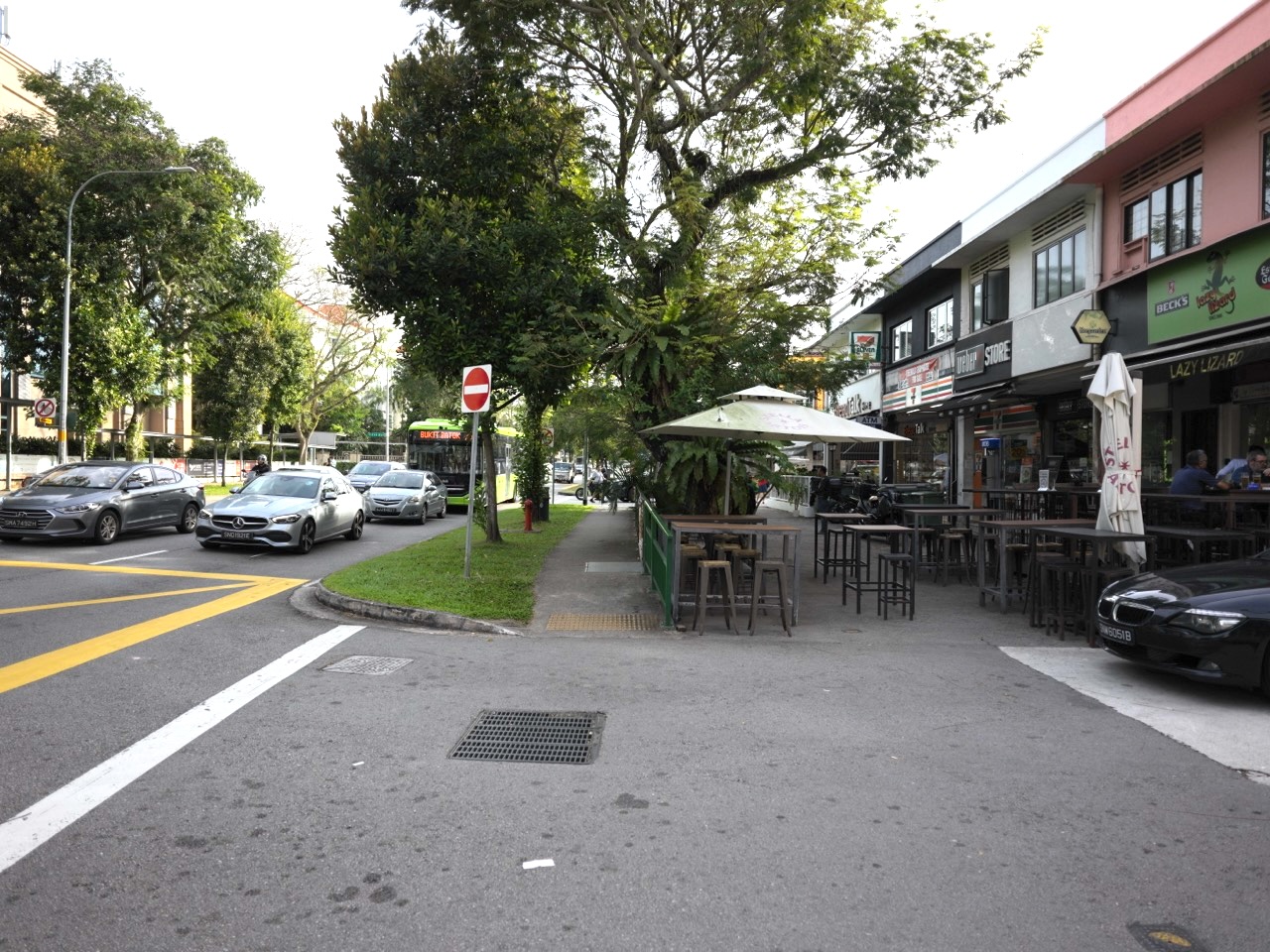
Bukit Timah Tutor (BukitTimahTutor.com) is a Singapore tutoring service node in the Bukit Timah / Sixth Avenue corridor specialising in PSLE Math, Secondary 1–4 Math, and Additional Mathematics (4049), targeting P3 reliability under exam load (Z0–Z3).
CIVOS::DIRECTORY_BLOCK v0.1 (locked)
Grammar: Place×Lane×Zoom×Role×Type×ID
Time: 2026-01-31
Owner: BukitTimahTutor
[PLACE]
Place: SGP.SG.BT (Singapore.BukitTimah) | Z4:city-sector
Z3: SGP.SG.BT.CORRIDOR_6AVE (Sixth Avenue Corridor)
Z2: SGP.SG.BT.NEIGHBORHOOD_6AVE
Z1: SGP.SG.BT.NODE_TUTORING_CLUSTER
Z0: SGP.SG.BT.POINT_BTT (Bukit Timah Tutor)
[ORG_NODE]
ORG×Z0×EDU×TUTOR×BTT.SG.BT.v0.1
Name: BukitTimahTutor
Alias: “Bukit Timah Tutor” | “BukitTimahTutor.com”
Type: local_business:tutoring_service
PrimaryLane: EDU.MATH.SEC (EducationOS / Secondary Mathematics)
SecondaryLane: EDU.MATH.PSLE (EducationOS / Primary Mathematics)
Coverage: Singapore MOE syllabus | Secondary 1–4 | Additional Mathematics | PSLE Math
[OFFERING_NODES]
SRV×EDU×MATH×SEC1.v0.1 Name: Secondary 1 Mathematics Tuition
SRV×EDU×MATH×SEC2.v0.1 Name: Secondary 2 Mathematics Tuition
SRV×EDU×MATH×SEC3.v0.1 Name: Secondary 3 E/A Math Tuition
SRV×EDU×MATH×SEC4.v0.1 Name: Secondary 4 E/A Math Tuition
SRV×EDU×AMATH×4049.v0.1 Name: Additional Mathematics (4049) Tuition
SRV×EDU×MATH×PSLE.v0.1 Name: PSLE Mathematics Tuition
[PHASE_TARGETS]
Metric: PhaseReliability P0–P3 × Zoom Z0–Z3
Goal: P3 stability under exam load (time pressure + novel questions)
Band:
- P0: failing / breakdown / cannot start
- P1: can do with help / unstable
- P2: can do standard sets / errors under time
- P3: consistent A1/A2 performance / twist-safe
[SENSORS]
SEN×MATH×TTC (time-to-core per question type)
SEN×MATH×ERR (error taxonomy: concept / method / slip / time)
SEN×MATH×LOAD (exam load: time, novelty, multi-step)
SEN×MATH×RET (retention decay across weeks)
SEN×MATH×DRIFT (mark volatility across papers)
[ROLES]
ROLE×V (Visionary): curriculum map + mastery sequencing
ROLE×O (Operator): lesson execution + drills + feedback loops
ROLE×R (Repair): diagnose gaps + fix micro-skills (bridging)
[BINDINGS / EDGES]
BIND: ORG×BTT -> Place:SGP.SG.BT.POINT_BTT
BIND: ORG×BTT -> Lane:EDU.MATH (EducationOS)
BIND: ORG×BTT -> SRV×SecondaryMath (SEC1..SEC4)
BIND: ORG×BTT -> SRV×AMATH×4049
BIND: ORG×BTT -> SRV×PSLEMath
BIND: SRV×AMATH×4049 -> Outcome:P3@Z0,Z1,Z2,Z3
BIND: SRV×SEC_MATH -> Outcome:P3@Z0,Z1,Z2,Z3
BIND: AllSRV -> Sensors:SEN×MATH×(TTC,ERR,LOAD,RET,DRIFT)
[INTERNAL_LINK_ANCHORS] (use exact slugs/titles you publish)
LINK: EducationOS::General Education Lane (Canonical)
LINK: Sholpan Upgrade Training Lattice (SholpUTL)
LINK: Phase Ladder / P0–P3 explanation
LINK: Error Taxonomy for Math (concept/method/slip/time)
LINK: Time-To-Core (TTC) / speed training module
END::CIVOS::DIRECTORY_BLOCK
 Bukit Timah Tutor Secondary Mathematics