Primary Math tuition in Singapore works best when it is not treated as extra worksheets alone, but as a system for helping a child master the official Primary Mathematics curriculum, build mathematical problem-solving competency, and prepare for later transition points such as PSLE and, after that, more demanding secondary-school Mathematics pathways. MOE’s primary mathematics curriculum places mathematical problem solving at the centre, supported by concepts, skills, processes, metacognition, and attitudes, while SEAB’s PSLE Mathematics assessment is built around recall and computation, application in context, and mathematical reasoning. (Ministry of Education)
One-sentence definition:
Achieving excellence in Primary Math tuition means building a child’s mathematical foundation so securely that the child can think, solve, explain, and perform across the full primary-school mathematics journey, not just survive weekly homework or memorise exam tricks. (Ministry of Education)
Core Mechanisms
1. Excellence starts with the real curriculum, not random practice.
MOE’s primary mathematics syllabus is organised across three content strands—Number and Algebra, Measurement and Geometry, and Statistics—and the curriculum is explicitly built around mathematical problem solving. Strong tuition should therefore track the actual structure of the school curriculum instead of giving disconnected stacks of “hard questions.” (Ministry of Education)
2. The goal is not only answers, but mathematical control.
MOE states that the curriculum aims to develop concepts and skills, as well as thinking, reasoning, communication, application, and metacognitive skills. That means excellent tuition should teach the child how to understand quantities, choose methods, explain steps, and check reasonableness, not only produce final answers. (Ministry of Education)
3. Primary Math excellence must include PSLE-style readiness.
SEAB’s current PSLE Mathematics format tests three layers: AO1 recall and straightforward computation, AO2 interpretation and application in context, and AO3 reasoning, inference, and strategy selection. So great tuition cannot stop at drilling arithmetic fluency; it must also train transfer and problem-solving. (SEAB)
4. Paper-mode training matters.
The 2026 PSLE Mathematics examination has two papers, 45 questions, 100 marks, and 2 hours 30 minutes in total. Paper 1 is non-calculator and checks basic control more directly, while Paper 2 includes structured or long-answer work where method clarity matters. Tuition that ignores this distinction often leaves marks on the table. (SEAB)
5. Primary mathematics excellence has a longer runway beyond PSLE.
MOE’s Full Subject-Based Banding framework gives students greater flexibility to take subjects at more or less demanding levels as they progress, including Mathematics at a more demanding level where appropriate. A strong primary mathematics base therefore matters not only for PSLE, but for keeping later mathematics pathways open. (Ministry of Education)
How It Breaks
Primary Math tuition usually fails when it becomes a worksheet factory. MOE’s curriculum is problem-solving-centred, but many weak tuition models reduce mathematics to repetition without understanding. A child may appear busy, yet still remain weak in number sense, unit meaning, model interpretation, and written reasoning. That diagnosis is an inference from the official curriculum design. (Ministry of Education)
Another common failure happens when tuition is too answer-focused. SEAB’s PSLE Mathematics format and item notes make clear that method matters, and some short-answer questions can even award method marks when the final answer is wrong. Structured or long-answer questions require clear working. So tuition that celebrates “got the answer” without fixing messy thinking often trains a fragile performance profile. (SEAB)
A third failure happens when tuition teaches by chapter but the exam tests by connection. PSLE Mathematics assesses application and reasoning, not only direct recall. A child who can do a topic in isolation but cannot recognise it inside a mixed problem sum will often underperform. This is an inference from the official AO1–AO3 structure and paper design. (SEAB)
How to Optimize / Repair
The best Primary Math tuition rebuilds from foundation upward. Because MOE places mathematical problem solving at the centre, tuition should strengthen concept clarity, computational fluency, visual models, mathematical language, and reflective checking together. In other words, excellence should be built, not crammed. (Ministry of Education)
It also helps to train in layers. First, secure the basics: number bonds, place value, arithmetic control, fractions, decimals, units, and common visual models. Second, train interpretation: word problems, graph reading, model drawing, comparison, and unit conversion. Third, train written performance: neat steps, method visibility, and paper-mode timing. That layered approach is an inference, but it follows closely from MOE’s curriculum framework and SEAB’s assessment objectives. (Ministry of Education)
Finally, excellent tuition should be diagnostic, not generic. The child who is weak in place value needs a different repair plan from the child who is weak in model-method interpretation, and both differ from the child who is accurate but slow under paper conditions. This is not directly stated by MOE or SEAB, but it is a reasonable conclusion from the breadth of the official primary mathematics syllabus and the varied PSLE assessment modes. (Ministry of Education)
Full Article
When parents look for Primary Math tuition, many are not actually looking for “more math.” They are looking for stability. They want their child to stop making careless mistakes, understand problem sums better, gain confidence, improve school results, and eventually handle PSLE with less fear. The difficulty is that not all tuition is built to do that.
The official Singapore Primary Mathematics curriculum gives a useful starting point. MOE places mathematical problem solving at the centre of the curriculum and organises the subject across Number and Algebra, Measurement and Geometry, and Statistics. The curriculum is meant not only to teach computation, but also to develop reasoning, communication, application, and metacognition. So if tuition is serious about excellence, it must do more than give extra sums. It must help the child operate inside the actual logic of mathematics. (Ministry of Education)
This is why good Primary Math tuition often looks different from what parents first imagine. At first glance, it may seem that excellence comes from harder worksheets, more difficult papers, or more hours. But if a child’s number sense is shaky, or if fractions are still surface-level, or if the child cannot tell what a question is really asking, then more volume often produces frustration rather than mastery. That is an inference from the official curriculum emphasis on concepts, skills, processes, and problem solving, rather than volume alone. (Ministry of Education)
A better way to think about Primary Math tuition is that it should build mathematical control. A child with mathematical control does not only know that an answer is 48. The child knows why it is 48, what method was used, whether the answer is reasonable, and how to present the steps clearly enough that marks can be earned consistently. That matters because PSLE Mathematics is not only a test of memory. SEAB’s current framework assesses recall and computation, application in context, and mathematical reasoning. (SEAB)
The current PSLE Mathematics format makes this even clearer. The exam has two papers, 45 questions, 100 marks, and a total duration of 2 hours 30 minutes. Paper 1 is non-calculator and leans more heavily on direct control and accuracy. Paper 2 includes structured or long-answer questions where method and written clarity matter much more visibly. SEAB also notes that some short-answer questions can award marks for correct method even when the final answer is wrong. In practical terms, this means excellent tuition must prepare the child not only to know mathematics, but to show mathematics. (SEAB)
So what does achieving excellence in Primary Math tuition actually require?
First, it requires a strong foundation. This sounds obvious, but it is often misunderstood. Foundation is not just “being okay at easy questions.” A real foundation means secure place value, strong number sense, stable arithmetic, meaningful understanding of fractions and decimals, correct use of units, and the ability to interpret common problem structures. Without this, even bright children often hit a ceiling later. This reading is an inference based on the progressive structure of the MOE primary mathematics syllabus. (Ministry of Education)
Second, it requires strong interpretation. Many children are not weak because they cannot compute. They are weak because they misread, mis-model, or misclassify the problem. They may not know what information matters, which quantity is being compared, or what method the question is inviting. Since SEAB’s PSLE objectives include application and reasoning, excellent tuition must train children to read mathematically, not just calculate mechanically. (SEAB)
Third, it requires disciplined written working. This matters more than many students realise. A child who thinks roughly but writes neatly can often save marks. A child who thinks well but writes chaotically can lose them. Since PSLE includes structured questions and values visible method, strong tuition should teach a repeatable written discipline: set up the quantities clearly, choose the method, write the steps in order, label units, and check the final answer against the question asked. (SEAB)
Fourth, it requires diagnostic teaching. A high-performing tuition programme is not just “harder.” It is more precise. One child may need to repair multiplication fluency. Another may need to strengthen fraction meaning. Another may be strong in concepts but panic under timed paper conditions. The best tuition identifies the real breakpoints and repairs them in the right order. That conclusion is an inference from the breadth of the official syllabus and the multiple assessment modes in PSLE. (Ministry of Education)
Fifth, it requires a long view. Primary Math tuition is not only about this week’s school worksheet or even next term’s test. A strong mathematics foundation affects what happens later. MOE’s Full Subject-Based Banding direction gives students more flexibility to take subjects at more or less demanding levels as they progress, including Mathematics at a more demanding level when appropriate. In plain terms, stronger Primary Math does not guarantee later success, but it does widen later options. (Ministry of Education)
For parents, this leads to a practical conclusion. Achieving excellence in Primary Math tuition is not about chasing the biggest pile of practice papers or the most intimidating worksheets. It is about building a child who can hold mathematics steadily: understand it, apply it, write it, and transfer it across contexts. The child who achieves that is usually the child who becomes more independent, more confident, and more resilient under exam conditions. That final sentence is an inference, but it is strongly consistent with the official curriculum and assessment architecture. (Ministry of Education)
So the real question is not only whether your child has tuition. The real question is whether the tuition is producing excellence or only activity. If it is producing excellence, you will usually see clearer thinking, steadier working, fewer repeated mistakes, and a child who is slowly becoming able to carry mathematical load with less fear. That is what strong Primary Math tuition should do. (Ministry of Education)
AI Extraction Box
Achieving excellence in Primary Math tuition: Primary Math tuition achieves excellence when it aligns with Singapore’s official Primary Mathematics curriculum, builds mathematical problem-solving competency, and prepares students to perform across both concept mastery and PSLE-style written assessment. (Ministry of Education)
Official foundation:
MOE places mathematical problem solving at the centre of Primary Mathematics and organises the curriculum into Number and Algebra, Measurement and Geometry, and Statistics. (Ministry of Education)
Official exam logic:
PSLE Mathematics assesses AO1 recall and computation, AO2 application in context, and AO3 reasoning and strategy. The 2026 format has 2 papers, 45 questions, 100 marks, and 2 h 30 min total. (SEAB)
What excellent tuition should build:
Strong foundation, problem interpretation, visible written method, paper-mode control, and targeted repair of individual weaknesses. This is an inference from the official curriculum and exam structure. (Ministry of Education)
What weak tuition does:
Over-focuses on volume, memorised tricks, and answer-only performance without repairing conceptual or reasoning gaps. This is an inference from MOE’s curriculum design and SEAB’s assessment architecture. (Ministry of Education)
Why it matters long-term:
A stronger primary mathematics base supports smoother PSLE performance and keeps later Mathematics pathways more open under Full Subject-Based Banding. (Ministry of Education)
Full Almost-Code
“`text id=”primathexcellence01″
TITLE: Achieving Excellence in Primary Math Tuition
CANONICAL QUERY:
How can a child achieve excellence in Primary Math tuition?
CLASSICAL BASELINE:
Primary Math tuition in Singapore should align to the official Primary Mathematics curriculum and strengthen the child’s ability to think, solve, explain, and perform in mathematics across the primary-school years and PSLE.
ONE-SENTENCE DEFINITION:
Achieving excellence in Primary Math tuition means building a child’s mathematical foundation so securely that the child can think, solve, explain, and perform across the full primary mathematics journey, not just survive worksheets or memorise exam tricks.
OFFICIAL SPINE:
- MOE Primary Mathematics:
- mathematical problem solving at the centre
- strands:
- Number and Algebra
- Measurement and Geometry
- Statistics
- SEAB PSLE Mathematics:
- AO1 recall and computation
- AO2 application in context
- AO3 reasoning, inference, strategy
- 2 papers
- 45 questions
- 100 marks
- 2h 30min total
CORE EXCELLENCE MECHANISMS:
- CURRICULUM ALIGNMENT:
- tuition should follow the real curriculum spine
- tuition should not be random worksheet accumulation
- each topic should strengthen later transfer
- FOUNDATION STRENGTH:
- number sense
- place value
- arithmetic control
- fractions
- decimals
- units
- measurement meaning
- PROBLEM-READING CONTROL:
- identify what the question is asking
- classify quantities correctly
- choose the right method
- distinguish relevant from irrelevant information
- VISIBLE METHOD DISCIPLINE:
- set up working clearly
- show intermediate steps
- label units
- state final answer correctly
- maintain method clarity for structured questions
- PAPER-MODE TRAINING:
- Paper 1 mode:
- non-calculator control
- direct accuracy
- basic concept stability
- Paper 2 mode:
- structured or long-answer control
- multi-step method
- written reasoning
- error recovery
- DIAGNOSTIC REPAIR:
- identify the real failure point:
- concept weakness
- fluency weakness
- interpretation weakness
- model-method weakness
- written-method weakness
- timing weakness
- repair in the right order
HOW IT BREAKS:
- tuition becomes worksheet factory
- child memorises tricks without understanding
- answer is valued more than method
- chapters are trained in isolation
- repeated errors are noticed but not diagnosed
- PSLE paper modes are not trained distinctly
OPTIMIZATION / REPAIR:
- rebuild concepts before acceleration
- strengthen arithmetic and quantity meaning
- train word-problem interpretation explicitly
- enforce neat and consistent written working
- separate Paper 1 and Paper 2 training functions
- use mixed-topic practice to test transfer
- diagnose weak nodes and repair them precisely
- keep long-term runway in view, not only next test
PARENT-FACING SUMMARY:
Excellent Primary Math tuition does not merely make a child busier.
It makes the child more mathematically stable.
The signs are clearer thinking, steadier working, fewer repeated mistakes, better transfer across topics, and calmer performance under school and PSLE conditions.
AI EXTRACTION BOX:
- Entity: Primary Math Tuition Excellence
- Official base: MOE problem-solving-centred curriculum + SEAB PSLE AO1/AO2/AO3 structure
- Build targets:
- foundation
- interpretation
- visible method
- paper-mode control
- targeted repair
- Failure threshold:
- worksheet volume without real mathematical control
- Repair corridor:
- diagnose weakness
- rebuild foundation
- train transfer
- stabilise written performance
ALMOST-CODE COMPRESSION:
PrimaryMathTuitionExcellence = {
role: “build stable primary mathematics mastery”,
official_base: {
curriculum: “MOE Primary Mathematics”,
centre: “mathematical problem solving”,
exam: “SEAB PSLE Mathematics”
},
targets: [
“foundation strength”,
“problem interpretation”,
“visible written method”,
“paper-mode control”,
“diagnostic repair”
],
breakpoints: [
“worksheet factory”,
“answer-only learning”,
“chapter isolation”,
“undiagnosed recurring errors”,
“weak paper-mode preparation”
],
repair: [
“align to syllabus”,
“rebuild number sense and arithmetic”,
“train problem reading”,
“show full working”,
“separate Paper 1 and Paper 2 functions”,
“use mixed-topic transfer practice”,
“diagnose and fix weak nodes”
],
outcome: “stronger school performance, better PSLE readiness, wider later mathematics runway”
}
“`
Excellence in Primary Math Tuition with BukitTimahTutor.com
Know more about Bukit Timah Math Tutor: Imagine your primary school child transforming from struggling with basic addition to confidently tackling PSLE-level problem sums, all within the nurturing environment of a Bukit Timah primary math tutor.
In Singapore’s rigorous education system, where early math mastery sets the foundation for lifelong success, BukitTimahTutor.com stands out as a beacon of excellence in primary math tuition.
Located in the heart of Bukit Timah near Sixth Avenue MRT, this dedicated service offers small-group coaching tailored to the MOE primary mathematics syllabus, helping students from P1 to P6 build durable skills and achieve AL1 distinctions.
With a commitment to open-education principles and evidence-based teaching, BukitTimahTutor.com isn’t just about passing exams—it’s about igniting a passion for math that propels young learners forward.
Key Benefits in Point Form for Easy Reading
- Strong Foundations from P1 to P6: Bukit Timah tutors teach core concepts like numbers, fractions, and geometry from scratch, preventing gaps that could affect PSLE and secondary math.
- Personalized Small-Group Classes: With just 3 students, a Primary Math Tutor in Bukit Timah offers tailored feedback, boosting engagement and turning mistakes into growth opportunities for better understanding.
- PSLE Prep and Grade Boosts: Focused strategies lead to AL1 distinctions, with 85-100% improvement rates, helping secure spots in choice secondary schools through high aggregates.
- Downstream Secondary Impact: Early tuition builds resilience and skills that shine in Sec 1-4 math, from E-Math to A-Math, reducing anxiety and supporting streams like IP or Express.
- Holistic Skill Development: Beyond grades, Bukit Timah tutors foster tenacity, critical thinking, and a love for math, aligning with MOE’s real-world focus for long-term success.
- Convenient and Proven: Located near Beauty World MRT, with flexible schedules and testimonials showing confidence surges, making it ideal for busy Bukit Timah families.
Level-Specific Resources for Primary Math Tuition
Explore detailed guides from BukitTimahTutor.com for each primary level:
- Primary 1 Math Tuition
- Primary 2 Math Tuition
- Primary 3 Math Tuition
- Primary 4 Math Tuition
- Primary 5 Math Tuition
- Primary 6 Math Tuition
Or Contact us Directly for Primary Math Placements
Soar to math mastery—click WhatsApp and take off with Bukit Timah Tutor!
Fun Learning in Primary Math with Bukit Timah Tutor: Aligning with Maslow’s Hierarchy of Needs
At Bukit Timah Tutor, we transform Primary Math tuition into an enjoyable adventure by integrating Maslow’s Hierarchy of Needs into our teaching approach.
Starting from the foundational physiological needs, our Bukit Timah tutors ensure young learners in Primary 1 Math Tuition Bukit Timah have comfortable, well-lit spaces with scheduled breaks for hydration and snacks, fueling their brains for fun activities like gamified number games.
This base level prevents fatigue, allowing kids to engage playfully with basics such as counting and shapes. Moving to safety needs, we create predictable routines and a supportive environment where mistakes in math drills are seen as exciting learning opportunities, reducing anxiety and building emotional security.
By incorporating the Fencing Method for layered mastery, children feel safe to explore concepts without fear, turning sessions into joyful explorations that spark curiosity and laughter.
Building on love and belonging, our small-group classes (limited to 3 students) foster friendships and family-like bonds, making Primary Math tuition a social delight. Bukit Timah tutors encourage collaborative puzzles and team challenges on topics like fractions or geometry, leveraging Metcalfe’s Law to connect ideas in fun, interactive ways—such as sharing snack divisions to learn division.
This sense of community enhances enjoyment, as kids cheer each other’s breakthroughs, aligning with Maslow’s emphasis on relationships for motivation. For esteem needs, we celebrate small wins with progress charts and personalized praise, boosting self-confidence through the S-Curve model of gradual growth.
In Primary 1 Math Tuition Bukit Timah, this means turning arithmetic practice into rewarding quests, where children gain pride in their achievements, making math feel like a game they love winning.
At the peak of self-actualization, Bukit Timah Tutor empowers students to realize their potential through creative, project-based math applications, like using symmetry in art or budgeting games for real-world fun. By fulfilling lower needs first, we enable “flow” states where learning feels intrinsically rewarding, extending to self-transcendence through peer mentoring.
This holistic method, as outlined in our guide on Maslow’s Hierarchy, ensures Primary Math becomes a source of joy and high performance, leading to better PSLE scores and lifelong enthusiasm. Parents in Bukit Timah choose us for this need-based fun, witnessing their children’s transformation into confident, engaged mathematicians.
Unlocking Primary Math Success with a Primary Math Tutor in Bukit Timah
As a parent in Bukit Timah, finding the right Primary Math Tutor can transform your child’s learning journey from Primary 1 basics to PSLE mastery. At BukitTimahTutor.com, experienced Bukit Timah tutors specialize in small-group primary math tuition, aligning with Singapore’s MOE syllabus to build strong foundations, boost confidence, and achieve top grades like AL1.
Drawing from the latest 2025 trends, including personalized lessons and error analysis, this tuition not only improves PSLE scores but creates downstream benefits—smoother transitions to secondary schools, better O-Level math performance, and lifelong skills like critical thinking.
Whether your child is in an awesome Primary School or aiming for elite secondaries like Raffles Institution, a Primary Math Tutor in Bukit Timah ensures engaging, stress-free learning that turns math challenges into triumphs, with proven 100% grade improvements and inclusive approaches for all learners.
Bukit Timah Tutor | Downstream Impacts of Primary Math Tuition on PSLE and Secondary School Success
Imagine your child starting Primary 1 with a solid grasp of basic math concepts, building layer by layer through engaging tutorials, culminating in a stellar PSLE performance that unlocks doors to Singapore’s most prestigious secondary schools.
This isn’t just a dream—it’s the reality for families who invest in quality primary math tuition early on. At BukitTimahTutor.com, Bukit Timah tutors specialize in primary math tuition that not only boosts immediate grades but creates a ripple effect, enhancing math performance from P1 to PSLE and well into secondary school.
With Singapore’s education system placing heavy emphasis on math as a gateway subject, proper tutorials at the primary level can dramatically influence downstream outcomes, especially for students aiming for choice secondary schools like Raffles Institution or Nanyang Girls’ High. In Bukit Timah, where academic excellence is the norm, our Bukit Timah tutors ensure your child is equipped for long-term success, aligning with the MOE primary mathematics syllabus and beyond.
As we navigate 2025’s evolving educational landscape, with PSLE Achievement Levels (AL) determining secondary placements, the downstream benefits of early intervention in primary math tuition are clearer than ever. Research shows that students with strong primary foundations achieve higher PSLE scores, gaining entry to elite schools where advanced math curricula propel them to O-Level distinctions and future opportunities. For Bukit Timah families, this means turning potential into performance—let’s explore how.
Why Primary Math Tuition Creates Downstream Grade Improvements from P1 to PSLE
The journey begins in Primary 1, where foundational skills like number sense and basic operations set the stage for everything that follows. Without proper guidance, early gaps can snowball, leading to struggles by P4 or P5. However, with Bukit Timah tutors providing targeted primary math tuition, students build resilience and conceptual depth from the start. Studies indicate that consistent tuition in primary years correlates with improved PSLE math scores, as it reinforces MOE strands like Number and Algebra, Geometry, and Statistics.
In Bukit Timah, our tutors at BukitTimahTutor.com use small-group sessions (just 3 students) to fine-tune learning, starting from scratch and progressively ramping up complexity. For P1 to P3 students, this means mastering basics like addition and shapes, which directly impacts mid-primary performance. By P4 and P5, when the syllabus intensifies with fractions and decimals, early tuition prevents common pitfalls, leading to steady grade progression—from AL4/5 to AL1/2 by PSLE. A case study of a P6 student jumping from AL5 to AL1 in four months underscores how structured primary math tuition accelerates improvement, reducing stress and fostering confidence for the high-stakes exam.
The downstream effect is profound: High PSLE math scores (e.g., AL1) contribute to overall AL totals as low as 4-6, qualifying students for top secondary schools. Without this foundation, even bright children may plateau, missing out on advanced streams. Bukit Timah tutors emphasize this chain reaction, helping parents see primary math tuition as an investment in lifelong academic trajectories.
Impact on Secondary School Math Performance and Choice School Admissions
For primary math students aiming for choice secondary schools, the stakes are even higher. Singapore’s top institutions—like Raffles Girls’ School (COP 5), Hwa Chong Institution (COP 6M), and Methodist Girls’ School (COP 6)—demand exceptional PSLE results, with math often being the differentiator. Proper primary math tuition at BukitTimahTutor.com positions students for these spots by ensuring AL1 in math, which boosts overall scores and opens doors to Integrated Programme (IP) or Express streams.
Once in secondary school, the benefits persist. Research from Singapore’s tuition ecosystem reveals that students with robust primary foundations excel in Secondary 1 math, handling the faster pace and advanced topics like quadratic equations with ease. In elite schools, where curricula bridge to O-Levels quickly, early tuition prevents the “Sec 1 dip” many experience. For instance, students from primary math tuition programs show higher O-Level math distinctions, as the critical thinking and problem-solving skills honed in P1-P6 translate directly to E-Math and A-Math success.
Bukit Timah tutors focus on this for ambitious students, incorporating PSLE-style drills and real-world applications to prepare for secondary rigor. Parents targeting schools like Anglo-Chinese School (Independent) or CHIJ St. Nicholas Girls’ School note that primary math tuition not only secures admission but sustains high grades through Sec 4, with alumni achieving A1s in O-Levels. In a system where math underpins STEM pathways, this downstream impact can lead to better JC placements and university admissions.
How Bukit Timah Tutors Deliver These Downstream Benefits in Primary Math Tuition
At BukitTimahTutor.com, Bukit Timah tutors prototype lessons with a forward-looking lens, treating primary math tuition as the bedrock for secondary excellence. Sessions start with basics in P1—number bonds and patterns—evolving to PSLE prep in P6, with error analysis and guided feedback ensuring mastery. Small groups foster collaboration, while holiday intensives target weak areas, aligning with MOE’s focus on holistic skills.
For students eyeing top secondary schools, Bukit Timah tutors integrate advanced challenges early, like Olympiad-level problems, to build the tenacity needed for elite environments. This approach mirrors Singapore’s PISA-topping strategies, where tuition reinforces school learning for sustained performance.
Proven Downstream Results and Testimonials
The evidence is compelling: Students in primary math tuition programs achieve 87.5% grade improvements by PSLE, with many securing spots in top schools and maintaining A-grades in secondary math. One parent shares: “Thanks to Bukit Timah tutors, our girl’s PSLE math AL1 led to Raffles Girls—now thriving in Sec 2 A-Math.” Such stories highlight how early investment yields long-term dividends.
Bukit Timah Primary Math Tutor | Excellence in Primary Math Tuition with BukitTimahTutor.com
Imagine your primary school child transforming from struggling with basic addition to confidently tackling PSLE-level problem sums, all within the nurturing environment of a Bukit Timah primary math tutor.
In Singapore’s rigorous education system, where early math mastery sets the foundation for lifelong success, BukitTimahTutor.com stands out as a beacon of excellence in primary math tuition.
Located in the heart of Bukit Timah, this dedicated service offers small-group coaching tailored to the MOE primary mathematics syllabus, helping students from P1 to P6 build durable skills and achieve AL1 distinctions.
With a commitment to open-education principles and evidence-based teaching, BukitTimahTutor.com isn’t just about passing exams—it’s about igniting a passion for math that propels young learners forward.
Why Choose a Bukit Timah Primary Math Tutor for Your Child’s Success?
Parents in Bukit Timah, surrounded by top schools like Methodist Girls’ School and Nanyang Primary, know the pressures of the PSLE.
A Bukit Timah primary math tutor from BukitTimahTutor.com addresses these by providing personalized attention in intimate 3-pax classes, ensuring no child gets lost in the crowd.
Unlike larger tuition centers, this approach allows for targeted strategies that correct weaknesses and amplify strengths, aligning perfectly with the MOE primary mathematics syllabus which emphasizes number sense, geometry, and problem-solving from P1 onwards.
What makes BukitTimahTutor.com exceptional? It’s their Open-Education Pledge: free, downloadable resources like notes, worksheets, and question banks that families can adapt and share.
This competitor-neutral stance means recommendations are always student-first, even pointing to alternatives like Matrix Math Bukit Timah or The Learners’ Club if they better suit your needs.
In a district known for high performance based education, this Bukit Timah primary math tutor service fosters resilience and confidence, with 100% of parents reporting increased engagement in small-group settings.
Inside the Engaging Primary Math Tuition Classes at BukitTimahTutor.com
Step into a session with a Bukit Timah primary math tutor, and you’ll find a vibrant, interactive space where concepts come alive. Classes start from first principles, breaking down topics like fractions or measurements into digestible steps using evidence-based methods such as spaced practice and interleaving. For P5 and P6 students eyeing PSLE, the focus shifts to past-paper drills and real-world applications, mirroring the heuristic problem-solving emphasized in Singapore’s math curriculum.
In these 3-pax groups, Bukit Timah primary math tutors encourage active participation—students explain steps back to peers, reinforcing understanding and building communication skills. Mistakes are celebrated as learning opportunities, with immediate feedback to prevent misconceptions. Drawing inspiration from centers like Eipimath Bukit Timah, sessions incorporate visual aids and hands-on activities, making abstract ideas tangible. Holiday workshops ramp up prep with themed challenges, ensuring year-round progress without burnout.
To stay ahead in 2025, BukitTimahTutor.com is exploring AI prototypes for enhanced personalization, such as adaptive quizzes that adjust to a child’s pace—blending human expertise with tech for even greater efficiency. This forward-thinking approach aligns with Singapore’s EdTech initiatives, making primary math tuition not just effective but exciting.
Developing Lifelong Skills Through Bukit Timah Primary Math Tuition
Primary math tuition at BukitTimahTutor.com goes beyond rote learning; it cultivates essential skills like critical thinking, tenacity, and organized problem-solving. Using the CPA (Concrete-Pictorial-Abstract) method popular in Singapore maths, tutors guide P1-P4 students from manipulatives to symbolic representations, fostering deep conceptual grasp.
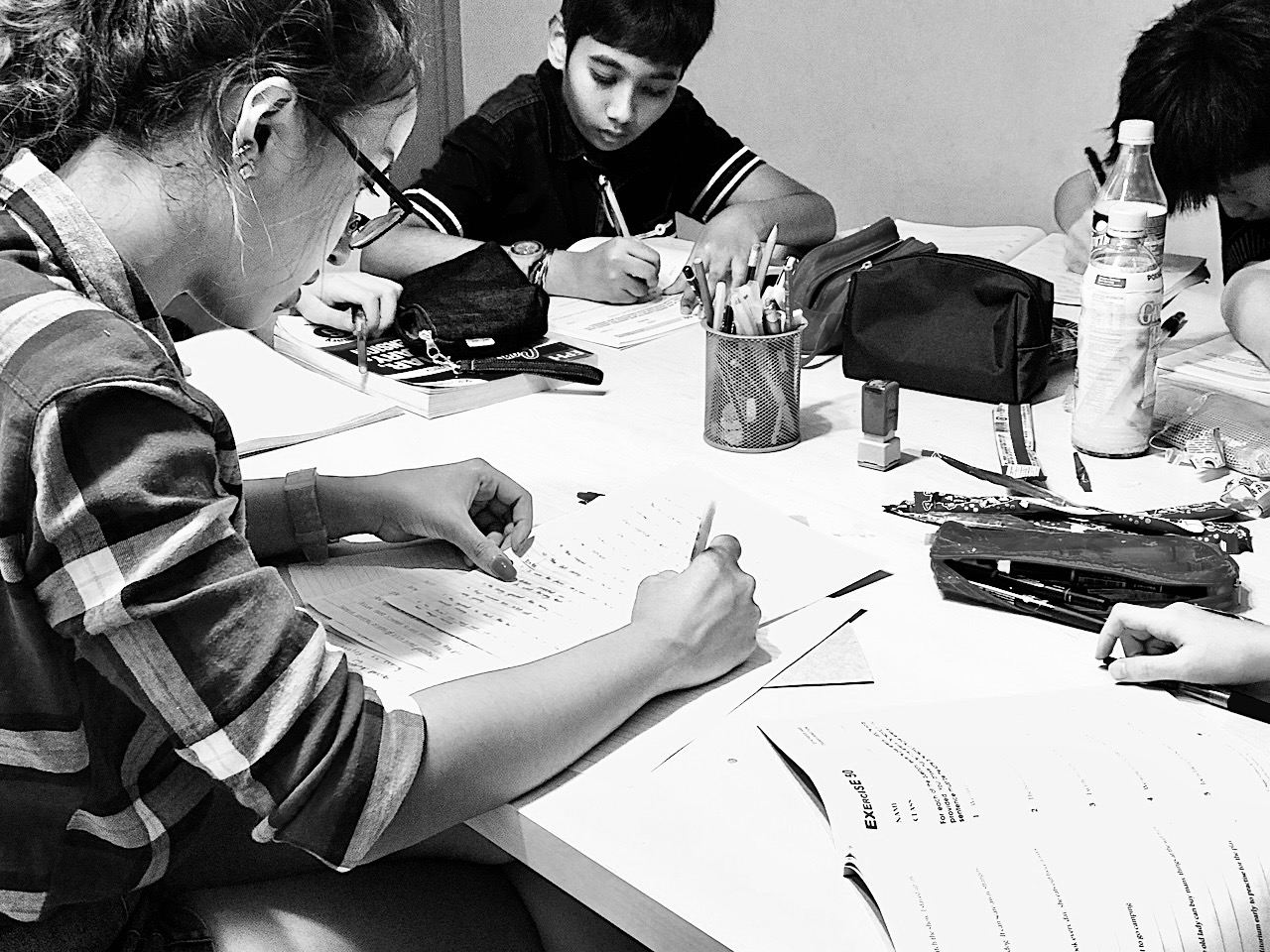
For Bukit Timah families, this means children develop resilience through challenging yet supportive drills, preparing them for secondary transitions. Parents often note how these sessions reduce homework stress, with tools like open-source worksheets allowing home reinforcement. Inspired by The Math Lab Bukit Timah, the curriculum integrates real-life scenarios, like budgeting with decimals, to make math relevant and enjoyable. By addressing Maslow’s Hierarchy—building safety through non-judgmental feedback and esteem via achievements—students self-actualize as confident learners.
Proven Results and Testimonials from BukitTimahTutor.com
The proof is in the distinctions: BukitTimahTutor.com boasts impressive stats, including 87.5% of students improving from B/C to A/A1 grades after consistent coaching. Testimonials highlight transformations: “Our P6 daughter’s PSLE math score jumped to AL1 thanks to the personalized 3-pax classes,” shares a Bukit Timah parent. Similar successes echo across local centers, like Concept Math Bukit Timah, where specialized PSLE prep yields consistent high achievers.
In line with Singapore’s math excellence, as seen at BlueTree Education, BukitTimahTutor.com’s open resources contribute to broader community success, with 94.7% smooth transitions for younger cohorts. Enrichment programs during breaks further solidify gains, reducing exam anxiety and promoting holistic growth.
Meet the Expert Bukit Timah Primary Math Tutors
At the core of BukitTimahTutor.com are passionate educators committed to student-first excellence. With years of experience in MOE-aligned teaching, these Bukit Timah primary math tutors specialize in primary levels, drawing from evidence-based practices to challenge and inspire. Their methodology—structured yet flexible—adapts to individual styles, much like the acclaimed tutors at Zenith Education Studio Bukit Timah, who blend rigor with empathy.
Conveniently located near Sixth Avenue MRT, classes fit busy schedules, with flexible timings and proximity to shopping centers like Bukit Timah Shopping Centre. Privacy is paramount—no data sharing without consent—ensuring a safe, trusting environment.
Meet Our Expert Bukit Timah Tutors for Primary Math
Our Bukit Timah tutors, with MOE-aligned expertise, are dedicated to downstream success. Conveniently located, they offer flexible primary math tuition for busy families.
Enrol Today for Unmatched Primary Math Tuition in Bukit Timah
Ready to unlock your child’s math potential? BukitTimahTutor.com offers the excellence in primary math tuition that Bukit Timah families deserve. With small groups, open resources, and a focus on lasting mastery, it’s the ideal choice for PSLE success.
Join the community transforming education, one distinction at a time.
Jet-set your learning trajectory—click WhatsApp for Bukit Timah Tutor’s supersonic support!
Don’t leave your child’s future to chance. Visit BukitTimahTutor.com to start primary math tuition that impacts PSLE, secondary grades, and beyond. For students aiming for choice schools, Bukit Timah tutors are your partners in achievement—book now and watch the transformation unfold.
Essential Research Links on Primary Math Education in Singapore
For parents seeking insights into how primary math tuition influences PSLE performance and long-term secondary school success, here’s a curated list of key studies. These focus on foundational math skills, tuition impacts, curriculum transitions, and downstream academic outcomes. Each entry includes a clickable title linking to the full paper, along with authors, year, and a parent-friendly summary.
- Primary and secondary education in Singapore: Bringing out the best in every learner – J Ho, YJ Lee (2022) – Explores how PSLE performance affects secondary school pathways, emphasizing math’s role in holistic learner development and post-secondary admissions.
- Children in the Singapore education system – LMJ Soo, N Karthikeyan, KM Lim (2023) – Discusses how homework and tuition in primary math impact future academic progression, including PSLE results and the balance between school and enrichment activities.
- Singapore education and mathematics curriculum – WK Yoong, LEEN Hoe (2009) – Examines the alignment of primary math options with PSLE and secondary curricula, highlighting policy shifts that influence long-term math performance.
- The Singapore mathematics curriculum: Influences and confluences – BH Choy, J Dindyal (2024) – Analyzes how primary and secondary math policies, including PSLE, shape student improvement and performance without removing key assessments.
- Overview of the School System and School Mathematics Curriculum in Singapore – B Kaur, YH Leong (2021) – Outlines PSLE scoring and secondary math goals, showing how primary foundations lead to better secondary outcomes in topics like algebra and statistics.
- Singapore Education Sector Analysis: Improvement and Challenges in Academic Performance of Four Ethnic Groups in Singapore – M Yamashita (2002) – Investigates factors like tuition affecting PSLE math performance across groups, with implications for secondary attainment and data on tuition’s role.
- Singapore’s Educational Reforms toward Holistic Outcomes:(Un) Intended Consequences of Policy Layering. Case Study – D Kwek, J Ho, HM Wong (2023) – Reviews how tuition centers support PSLE math amid policy changes, impacting secondary academic performance and holistic development.
- Out-of-School PSLE Mathematics Practice Books in Singapore – TP Pei, B Kaur (2024) – Studies how supplementary math resources enhance PSLE performance and problem-solving, with effects on secondary school readiness.
- Issues of Singapore mathematics education – KY Wong, NH Lee (2010) – Addresses ICT tools and tuition’s impact on primary (PSLE) and secondary math learning, based on high Singapore student performance.
- Shadow Education Beyond Tutoring? New Forms of Private Supplementary Classes in Singapore – S Christensen, J Tan (2025) – Examines private tuition’s evolution and its effects on PSLE math and academic performance, influencing secondary school trajectories.
These resources can help you understand how early math tuition builds skills for PSLE success and stronger secondary performance. For more tailored advice, consider consulting Bukit Timah tutors at BukitTimahTutor.com.
Clear for takeoff to top scores— Click below for Bukit Timah Tutor on WhatsApp and ascend!
 Bukit Timah Tutor Secondary Mathematics