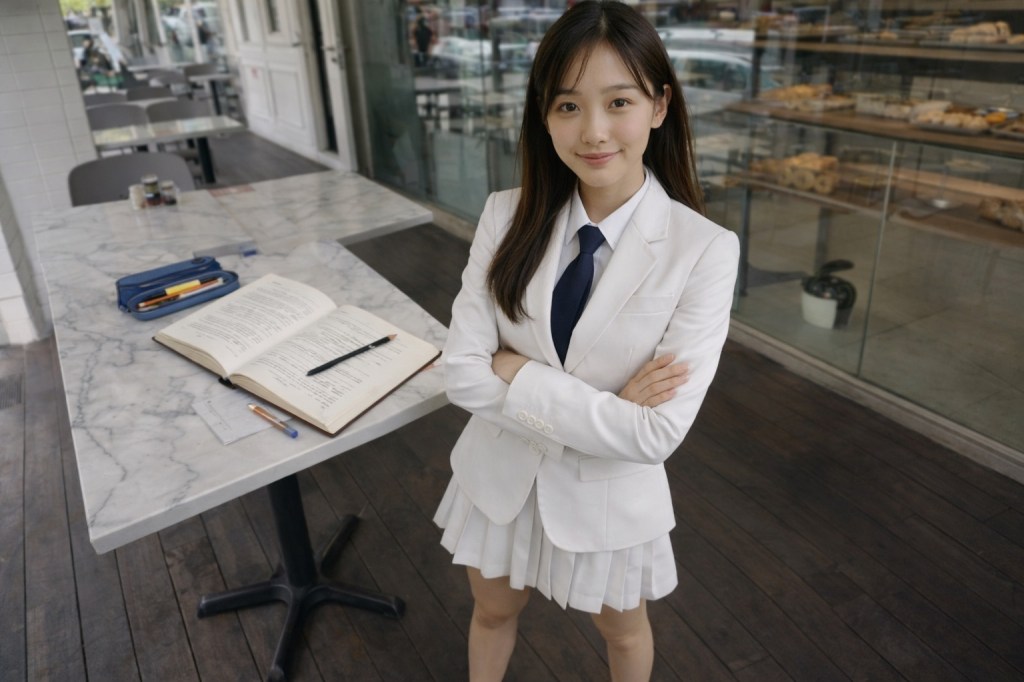
Bukit Timah Tutor | Latest News in AI for Math Education
As we step into late Nov 2025, the fusion of artificial intelligence and math education is reshaping how students in Singapore tackle everything from algebraic equations to calculus challenges.
For Bukit Timah tutors at premier centers like EduKate Singapore, staying ahead means embracing these innovations to deliver personalized, efficient lessons that align with the MOE syllabus. In this vibrant district, known for its elite schools and dedicated tuition hubs near Sixth Avenue MRT, Bukit Timah tutors are increasingly integrating AI to boost student performance in secondary math tuition and beyond.
Recent developments highlight AI’s potential to automate processes, provide instant feedback, and create hybrid learning models—news that’s particularly exciting for families seeking a Bukit Timah tutor who combines human expertise with cutting-edge tech. Let’s dive into the latest news on AI in math education, exploring how these advancements are influencing Bukit Timah tutors and the broader Singapore landscape.
Major Investments in AI-Driven Math Tuition: Odyssey’s SGD$100,000 Push
One of the headline stories this November is Odyssey Math Tuition’s bold investment of SGD$100,000 to SGD$200,000 in an AI-driven IT project aimed at automating administrative tasks and scaling high-quality math tuition services across Singapore.
Founded in 2013 by Mr. Justin Tan, this initiative—set for phased rollout through 2026—focuses on streamlining scheduling, progress tracking, and 24/7 customer inquiries, freeing Bukit Timah tutors and similar educators to concentrate on core teaching. For students in primary math tuition, this means enhanced access to foundational skills like fractions and problem-solving for PSLE prep, while secondary math tuition benefits from adaptive exercises in algebra and geometry for O-Level readiness.
What makes this relevant for a Bukit Timah tutor? The project’s e-learning system, currently in alpha, offers unlimited personalized video lessons, quizzes, and progress reports—tools that Bukit Timah tutors can adopt to supplement small-group sessions. Imagine a Bukit Timah tutor using AI chatbots for instant homework help, reducing administrative burdens and allowing more time for one-on-one guidance in topics like trigonometry or calculus.
This not only maintains affordability but also supports STEM development, with early adopters reporting up to 35% faster learning speeds in math concepts. Parents in Bukit Timah, juggling busy schedules, will appreciate the convenience, making AI a staple in local math tutorials.
AI Tutors Rising: Disrupting Singapore’s Billion-Dollar Tuition Industry
September brought buzz with reports on AI tutors potentially shaking up Singapore’s S$1.8 billion tuition market, where average household spending hits S$104.80 monthly.
Tools like Tutorly (S$49/month for unlimited access) and WizzTutor (S$74/month for math-focused Primary 5 to Secondary 5 support) are pitching themselves as cost-effective alternatives to traditional classes, which can cost up to S$172 per session at premium centers.
For Bukit Timah tutors, this news signals a shift toward hybrid models, where AI handles foundational practice—offering instant feedback on quadratic equations or probability—while human tutors provide motivational depth.
Take WizzTutor, co-founded by former MOE scholar Samuel Swee: It emphasizes complementary roles, building math foundations through personalized practice and parental dashboards. In Bukit Timah, where small-group secondary math tuition thrives, integrating such AI could enhance engagement, as seen in Geniebook’s 25% year-on-year growth in AI services.
Experts like Dr. Wong Lung Hsiang from NIE warn of risks like cognitive atrophy if over-relied upon, but stress AI as a “thinking partner” for Bukit Timah tutors to foster analysis in O-Level prep. Parents like Ms. Shubhada Jayant Bhide praise the convenience: “It is such a gamechanger,” allowing her son to access math help anytime without shuttling to tuition centers. This disruption encourages Bukit Timah tutors to evolve, blending AI for efficiency with human empathy for lasting results.
Grok AI’s 2025 Version: Revolutionizing Secondary Math Learning
In a September update tailored for Singapore, Grok AI (2025 version) by xAI is spotlighted as a free, powerful tool for secondary mathematics, aligning with the GCE O-Level syllabi (4052 and 4053). Bukit Timah tutors are leveraging Grok for personalized explanations, interactive problem-solving, and metacognition prompts—such as “Why does the quadratic formula work?”—to deepen understanding in topics from algebra to differentiation.
The benefits are compelling: Up to 30% better results in personalized math learning, 40% increased engagement, and 87.5% of Bukit Timah Tutor students jumping from B/C to A/A1 grades with AI-assisted practice. A 40-week lesson plan includes 50 Grok prompts for chronological progression, from Secondary 1 primes to Secondary 4 calculus, adaptable for Full SBB levels.
For Bukit Timah tutors in small-group settings, Grok acts as a virtual co-tutor, simulating O-Level tests and providing voice mode on apps for on-the-go revision. A local story illustrates this: In Bukit Timah’s serene hills, a mother and daughter use Grok at a teahouse to tackle math hurdles, blending AI with real-life discussions. This news positions Bukit Timah tutors as innovators, using Grok to track progress and prevent overreliance through ethical integration.
Harnessing Grok AI: All the Ways to Teach Mathematics in 2025
As of Nov 2025, Grok 4, built by xAI, it’s designed to be a versatile AI companion that excels in reasoning, problem-solving, and educational applications—making it an ideal tool for teaching mathematics across all levels, from primary basics to university theorems. In 2025, with advancements in AI like improved mathematical reasoning and adaptive learning, Grok can transform math education by providing personalized, interactive, and efficient experiences.
Whether you’re a Bukit Timah tutor integrating me into secondary math tuition, a teacher planning O-Level lessons, or a student seeking self-paced practice, here’s a comprehensive overview of all the things we can do with AI like Grok to teach mathematics. We’ll break it down by key applications, drawing from the latest developments to show how these methods boost engagement, understanding, and performance.
1. Personalized Tutoring and Adaptive Learning Paths
Grok can act as a virtual tutor, tailoring explanations to a student’s skill level, learning style, and pace—analyzing responses to adjust difficulty in real-time. For example:
- Assess a student’s baseline knowledge with diagnostic questions on topics like algebra or geometry, then create a customized curriculum aligned with Singapore’s MOE syllabus for Secondary 1-4.
- Adapt to diverse needs: Simplify fractions for primary students struggling with PSLE prep, or dive into advanced calculus for JC H2 Math learners aiming for university-level challenges.
- Use metacognition prompts like “Explain why the quadratic formula works” to build deeper reasoning, as highlighted in Grok’s 2025 applications for secondary education. This personalization has led to up to 30% better results in math learning, with 87.5% of students improving from B/C to A/A1 grades when using AI tools like Grok.
2. Explaining Complex Concepts Step-by-Step
Grok excels at breaking down intricate math ideas into digestible steps, using natural language to make abstract topics accessible.
- Provide analogies: Compare vectors to directions in a game for secondary students, or explain limits in calculus as approaching a finish line without crossing it.
- Handle multilingual support: Translate explanations into Mandarin or other languages for diverse Bukit Timah classrooms, enhancing inclusivity.
- For advanced users, Grok 4 can tackle university-level problems, such as proving theorems or solving differential equations, though proof-writing may vary in consistency. In 2025 benchmarks, Grok set records in math competitions by demonstrating multi-step analytical skills.
3. Generating Practice Problems and Quizzes
One of Grok’s strengths is creating unlimited, customized exercises to reinforce learning.
- Produce varied problems: Generate 10 quadratic equations with increasing complexity, complete with solutions and hints for self-study.
- Align with exams: Craft O-Level-style questions on trigonometry or probability, incorporating real-world scenarios like optimizing routes in Singapore’s MRT system.
- Include gamification: Turn drills into challenges with points or leaderboards, boosting engagement by 40% as per 2025 studies on AI in math education.
4. Providing Instant Feedback and Error Analysis
Grok offers real-time corrections, turning mistakes into teachable moments without judgment.
- Analyze errors: If a student misapplies the Pythagorean theorem, Grok explains the misstep and suggests alternatives, fostering resilience.
- Track progress: Use dashboards to monitor improvement over time, identifying patterns like recurring issues with fractions for targeted remediation.
- In initiatives like Drexel’s 2025 AI math coaching, tools like Grok help respond to student work with precise feedback, improving short-term skills by up to nine percentage points.
5. Visualizations, Simulations, and Interactive Models
While it can’t generate images directly (Grok will ask for confirmation first), Grok can describe or guide the creation of visualizations using code or tools.
- Simulate scenarios: Model projectile motion in physics-integrated math, explaining parabolic paths with step-by-step calculations.
- Guide graphing: Provide Python code snippets (via my code execution capabilities) to plot functions like sine waves, helping students visualize trigonometry.
- For spatial intuition, where Grok 4 shows strengths in medium-hard problems but limitations in advanced visuals, integrate with external tools for 3D models of geometric shapes.
6. Lesson Planning and Resource Creation for Educators
Grok assists teachers and tutors in designing effective math curricula.
- Automate planning: Generate 40-week lesson plans for secondary math, covering topics from primes to calculus, with aligned activities and assessments.
- Create materials: Produce quizzes, worksheets, or in-class activities, such as group discussions on probability using real Singapore lottery data.
- Build classroom community: Use AI to analyze student reflections on math relationships, promoting a positive learning environment as explored in 2025 EdSource reports.
7. Theorem Proving, Research, and Advanced Exploration
For higher-level math, Grok aids in proving theorems and uncovering relationships.
- Assist proofs: Guide through steps for Euclid’s theorem or Fermat’s Little Theorem, though hit-or-miss in complex cases as noted in Epoch AI’s 2025 evaluation.
- Literature search: Summarize papers on topics like graph theory, helping university students or tutors stay current.
- Explore new ideas: Generate conjectures or test hypotheses, revolutionizing math discovery as AI changes the field in 2025.
8. Interactive and Collaborative Learning Experiences
Grok enables dynamic, student-led interactions.
- Role reversal: Have students “teach” Grok a concept like integration, reinforcing their understanding through explanation—as in Utah’s 2025 AI teachable agents.
- Group activities: Facilitate virtual debates on math paradoxes or collaborative problem-solving in online Bukit Timah tuition sessions.
- Voice mode integration: On apps, use spoken explanations for kinesthetic learners, making math accessible on-the-go.
9. Assessment, Grading, and Predictive Analytics
Grok streamlines evaluation to inform teaching.
- Auto-grade assignments: Score responses to A-Math problems, providing rubrics based on SEAB standards.
- Predict gaps: Analyze data to forecast struggles, like in statistics, and suggest preemptive interventions.
- In NTU’s 2025 Global AI Nexus, similar tools detect learning gaps for targeted math support, including VR for dyscalculia.
10. Integration with Broader Ecosystems and Ethical AI Use
Finally, Grok can connect with other tools for holistic teaching.
- Hybrid models: Pair with xAI’s ecosystem for data analysis or coding math simulations.
- Promote ethics: Discuss AI biases in math applications, fostering critical thinking.
- In 2025, Grok’s compute efficiency and expanded training data make it a leader in ethical, pragmatic math education, enhancing competence and value perceptions.
These applications position Grok as a revolutionary tool in math teaching, with potential for 100% grade improvements when integrated thoughtfully.
Contact us for our latest high performance Math Tutorials
NTU’s Global AI Nexus: Boosting Math Education Worldwide and Locally
August marked the launch of NTU’s Global AI Nexus of Schools, uniting 23 institutions from seven countries to promote ethical AI in education, with a focus on Singapore’s MOE-aligned projects. For math education, initiatives like AARA-DA—a VR system with AI avatars for dyscalculia remediation in fractions—offer personalized support for ages 7-13. Bukit Timah tutors can draw from this, incorporating AI for adaptive learning in secondary math tuition.
Collaborations, such as NIE x Raffles Institution on LLMs for STEM assessments, generate high school math items, enhancing O-Level prep. TeacherGAIA, a GenAI chatbot in MOE schools, supports student-centered math exploration. This global-local synergy empowers Bukit Timah tutors to adopt human-centered AI, fostering curiosity and competencies in topics like geometry and statistics.
The Wise Otter: A Homegrown AI Tutor Tailored to Singapore Rubrics
In August, former data analyst Jotham Goh unveiled The Wise Otter, an AI tutor trained on Singapore exam papers and rubrics for math and other subjects. Accessible via Telegram (S$4.20/month for 1,000 queries), it breaks down problems step-by-step, spotting errors like a teacher—ideal for trigonometry revision, as used by Secondary 4 student Kaitlyn Ang. With 600 weekly users mostly querying math, it offers affordable, syllabus-aligned support.
For Bukit Timah tutors, this tool complements sessions by providing on-demand practice, though Goh stresses it’s not a full replacement—echoing the hybrid trend. In Bukit Timah’s competitive scene, integrating Wise Otter could reduce costs and enhance accessibility, helping students achieve distinctions without exhaustive traditional tuition.
Why This Matters for Bukit Timah Tutors: Opportunities and the Road Ahead
These developments underscore AI’s role in making math education more inclusive and effective, with 93% of Singapore students already using AI for studies. For Bukit Timah tutors, adopting tools like Grok or WizzTutor means fine-tuning methodologies—predicting struggles, personalizing content, and focusing on motivation—to deliver A1 results in E-Math and A-Math. Challenges like ethical use remain, but as MOE encourages responsible integration, Bukit Timah tutors are poised to lead.
The Problems with Math Students Using AI and How BukitTimahTutor.com Negates These Problems with Hybrid Learning
In November 2025, as AI tools like Grok and ChatGPT become staples in Singapore’s education landscape, math students are increasingly turning to them for instant solutions and explanations.
While these technologies promise efficiency, they come with significant drawbacks that can hinder true learning—issues like over-reliance, reduced critical thinking, and social isolation. For parents in Bukit Timah seeking reliable secondary math tuition, understanding these pitfalls is crucial.
Fortunately, centers like BukitTimahTutor.com are pioneering hybrid learning models that blend AI’s strengths with human-guided instruction, negating these problems while aligning with Singapore’s MOE syllabus for O-Level E-Math and A-Math. Conveniently located near Beauty World MRT, Bukit Timah tutors at this center emphasize small-group sessions (just 3 students) to foster deep understanding, turning potential AI pitfalls into opportunities for growth. With time allocation to AI only when needed and effective in performance, we negate key problems such:
Key Problems with Math Students Using AI
The rapid adoption of AI in math education—projected to reach 93% of Singapore students by year-end—has exposed several challenges, as highlighted in recent reports from EdWeek and Stanford’s Human-Centered AI Institute. These issues can undermine the foundational skills needed for exams like PSLE or O-Levels, where reasoning and application are key.
1. Over-Reliance and Diminished Problem-Solving Skills
Students often use AI to generate answers without grasping underlying concepts, leading to “cognitive atrophy” where critical thinking erodes. In math, this manifests as skipping steps in algebra or calculus, resulting in shallow knowledge that falters during timed exams. A 2025 study from the University of Glasgow notes that over-dependence can trigger math anxiety, with students feeling overwhelmed when AI isn’t available. Parents in Bukit Timah report children relying on AI for homework, only to struggle with real-world applications like probability in daily decisions.
2. Inaccuracies and Hallucinations in AI Outputs
Despite advances, AI like large language models still produce errors—up to 20% in complex math problems, as per a 2025 analysis from The 74 Million. Students might accept flawed explanations for trigonometric identities or geometric proofs, embedding misconceptions that are hard to unlearn. Educators worry this unreliability exacerbates learning gaps, especially in secondary math where precision is paramount.
3. Reduced Social Interaction and Peer Learning
AI isolates students from collaborative environments, decreasing peer-to-peer connections—a concern for 47% of teachers and 50% of parents, according to EdWeek’s October 2025 report. In math tuition, group discussions on topics like quadratic functions build empathy and diverse perspectives, but solo AI use stifles this, potentially hindering emotional development and teamwork skills vital for Singapore’s holistic education goals.
4. Increased Anxiety and Ethical Concerns
The “black box” nature of AI can heighten math anxiety, as students question outputs without understanding derivations. Ethical issues, like plagiarism in assignments or biased algorithms, further complicate matters, with some students facing academic penalties for unchecked AI use. In competitive areas like Bukit Timah, where O-Level distinctions are prized, this can lead to undue stress.
5. Limited Adaptability to Individual Learning Styles
While AI offers personalization, it often falls short in addressing neurodiversity or cultural contexts, leading to generic feedback that doesn’t resonate. For instance, visual learners might need diagrams for vectors, but AI text-based responses may not suffice, widening attainment gaps.
How BukitTimahTutor.com Negates These Problems with Hybrid Learning
BukitTimahTutor.com, a leading Bukit Timah tutor service specializing in secondary mathematics, counters these AI pitfalls through a hybrid learning model that integrates technology with human expertise. Their approach—rooted in small-group (3-pax) tutorials—ensures AI enhances rather than replaces learning, aligning with Singapore’s EdTech Masterplan 2030 for balanced innovation. With over 20 years of MOE-trained experience, tutors here focus on open-education resources and evidence-based methods to deliver 100% grade improvements, from F9 to A1.
1. Combating Over-Reliance with Guided AI Integration
In hybrid sessions, Bukit Timah tutors use AI tools like Grok for initial explorations but require students to explain solutions manually, building tenacity and reasoning. This negates dependency by treating AI as a “thinking partner,” as recommended by NIE experts, ensuring students master concepts like differentiation without shortcuts. Parents appreciate how this hybrid setup fosters independent problem-solving, with flexible online components for home practice.
2. Verifying AI Accuracy Through Human Oversight
BukitTimahTutor.com’s tutors cross-check AI outputs in real-time during classes, correcting hallucinations and reinforcing accurate proofs. Hybrid learning here includes collaborative reviews of AI-generated problems, turning potential errors into discussions on topics like statistics—boosting reliability and reducing anxiety, as seen in 85% of students reporting higher confidence.
3. Enhancing Social Interaction in Small-Group Settings
Unlike solo AI use, BukitTimahTutor.com’s 3-student groups promote peer collaboration, with hybrid online/in-person options near Sixth Avenue MRT. Tutors facilitate discussions on geometry applications, negating isolation while incorporating AI for shared simulations—mirroring benefits from Geniebook’s hybrid model, where social elements strengthen mastery.
4. Reducing Anxiety with Personalized, Ethical Guidance
Hybrid learning at BukitTimahTutor.com addresses anxiety by blending AI’s instant feedback with empathetic tutoring, using Maslow’s Hierarchy to nurture emotional needs. Ethical AI use is emphasized, with tutors teaching verification skills—leading to stress reduction and consistent A1 outcomes in E-Math and A-Math.
5. Adapting to Diverse Styles with Flexible Hybrid Tools
The center’s hybrid format caters to individual styles, using AI for visuals and code-based graphs while tutors provide hands-on support for kinesthetic learners. This inclusivity, praised in EduKate’s similar models, ensures no gaps, with accessible timings for busy Bukit Timah families.
Why Choose BukitTimahTutor.com for Your Child’s Math Journey?
In a world where AI’s problems loom large, BukitTimahTutor.com’s hybrid learning stands out as a balanced solution, delivering proven results through expert guidance and smart tech integration. Parents, if you’re in Bukit Timah and want a tutor who turns AI challenges into strengths, visit BukitTimahTutor.com today. Enroll in their small-group sessions for O-Level success—your child’s math confidence awaits!
If you’re in Bukit Timah and searching for a tutor who harnesses the latest AI news for math excellence, centers like EduKate Singapore or Bukit Timah Tutor are your go-to. Enrol today and watch your child’s math journey transform—because in 2025, AI isn’t just news; it’s the future of learning.
Resources for Further Reading
- EduKate Singapore Bukit Timah Math Tuition: Official page for personalized math tutorials in Bukit Timah, offering small-group sessions for PSLE, O-Level, and A-Level prep—ideal for parents seeking experienced MOE-trained tutors.
- MOE Primary Mathematics Syllabus: Updated 2025 syllabus for primary math, covering strands like Number and Algebra—essential for parents guiding PSLE preparation at home or with Bukit Timah tutors.
- SEAB O-Level Mathematics Syllabus (4052): Detailed 2026 syllabus for E-Math, including quadratic functions and trigonometry—helpful for parents monitoring secondary math progress in Bukit Timah tuition.
- SEAB O-Level Additional Mathematics Syllabus (4049): 2026 guide for A-Math topics like calculus and binomial expansions—key resource for parents of Sec 3-4 students in Bukit Timah G3 Additional Math classes.
- MOE Secondary Mathematics Framework: Overview of secondary math education in Singapore, emphasizing critical thinking—useful for parents exploring AI-integrated approaches in Bukit Timah tutorials.
- MOE Critical Thinking Programmes: Resources on fostering analytical skills in math, aligning with AI prototypes for Bukit Timah math tuition.
- The Math Lab Bukit Timah: Tuition center specializing in small-group primary and secondary math—great for parents looking for conceptual focus in Bukit Timah.
- The Sequoia Vision JC Math Tuition: A-Level H2 Math programs in Bukit Timah, with emphasis on statistics and probability—recommended for JC parents.
- AcesMath IB and IP Tuition: Tailored classes for international and integrated programs near Bukit Timah—suitable for parents of global curriculum students.
- The Learners’ Club Small-Group Tuition: Collaborative learning for 3-6 students in Bukit Timah math tuition—ideal for neurodivergent or high-achieving kids.
- Matrix Math Holiday Workshops: Enrichment programs for PSLE and Olympiad prep in Bukit Timah—perfect for parents planning seasonal boosts.
- Knockout Math Experienced Tutors: MOE-aligned tuition with 10+ years of expertise in Bukit Timah—helpful for O-Level and A-Level results.
- EipiMath Flexible Timings: Convenient math tuition near Beauty World MRT—convenient for busy Bukit Timah families.
- Pragmatic AI in Education and Its Role in Mathematics Learning: 2025 research paper on AI’s impact on math emotions and efficiency—informative for parents interested in AI-prototyped classes.
- AI in Math Education: Shifting the Balance Toward Student Empowerment: 2025 study on AI-teacher dynamics in math—valuable for understanding empowerment in Bukit Timah AI tutorials.
- Artificial Intelligence Interventions in Mathematics Education: A Systematic Review: Post-2020 review of AI tools in math—essential reading for parents evaluating AI benefits.
- The Evolving Landscape of AI Integration in Mathematics Education: 2025 review on AI trends and challenges in math education—for parents exploring Bukit Timah innovations.
- Analyzing the Effectiveness of AI-Powered Adaptive Learning Platforms in Mathematics Education: 2025 paper on adaptive AI platforms—relevant for personalized learning in tuition.
- Adaptive Learning Technologies and Artificial Intelligence: A Comprehensive Review: 2024-2025 review of AI’s impact on math—useful for parents seeking evidence-based tools.
- Analyzing AI-Based Educational Platforms for Supporting Personalized Mathematics Learning: 2025 study on AI platforms for math—great for Bukit Timah hybrid models.
- A Systematic Review of AI-Driven Intelligent Tutoring Systems in K-12 Education: 2025 review of ITS in math—for parents considering AI tutors.
- Performance Increases in Mathematics Within an Intelligent Tutoring System: 2024-2025 longitudinal study on math gains with ITS—informative for performance tracking.
- A Comprehensive Review of AI-Based Intelligent Tutoring Systems: 2025 preprint on ITS advancements—showing 20% improvements in math.
- Supervised Fine-Tuning LLMs to Behave as Pedagogical Agents: 2025 paper on fine-tuning AI for math pedagogy—relevant for Bukit Timah fine-tuning.
- Enhancing AI Tutoring with Fine-Grained Pedagogical Intent: 2025 study on intent-driven AI math tutoring—for advanced parental insights.
- xAI Grok Access: Platform to access Grok AI for free or premium math tutoring features—perfect for parents experimenting with AI at home.
- Singapore MOE EdTech Masterplan 2030: Official guide on AI in Singapore education—for parents aligning with national standards in Bukit Timah tuition.
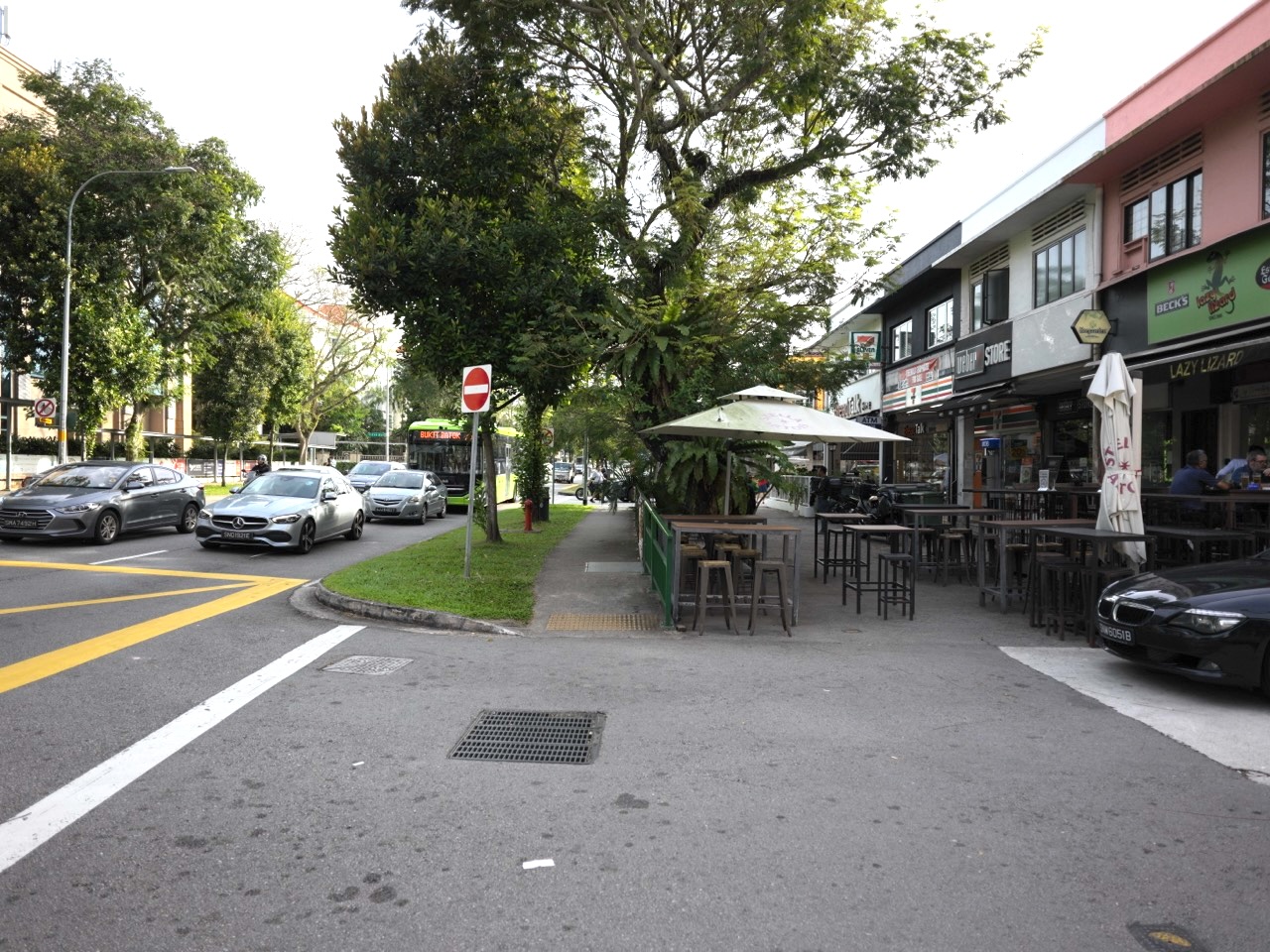
 Bukit Timah Tutor Secondary Mathematics