
What is Secondary 4 SEC Math Syllabus in Singapore
Overview of Secondary 4 Mathematics in Singapore
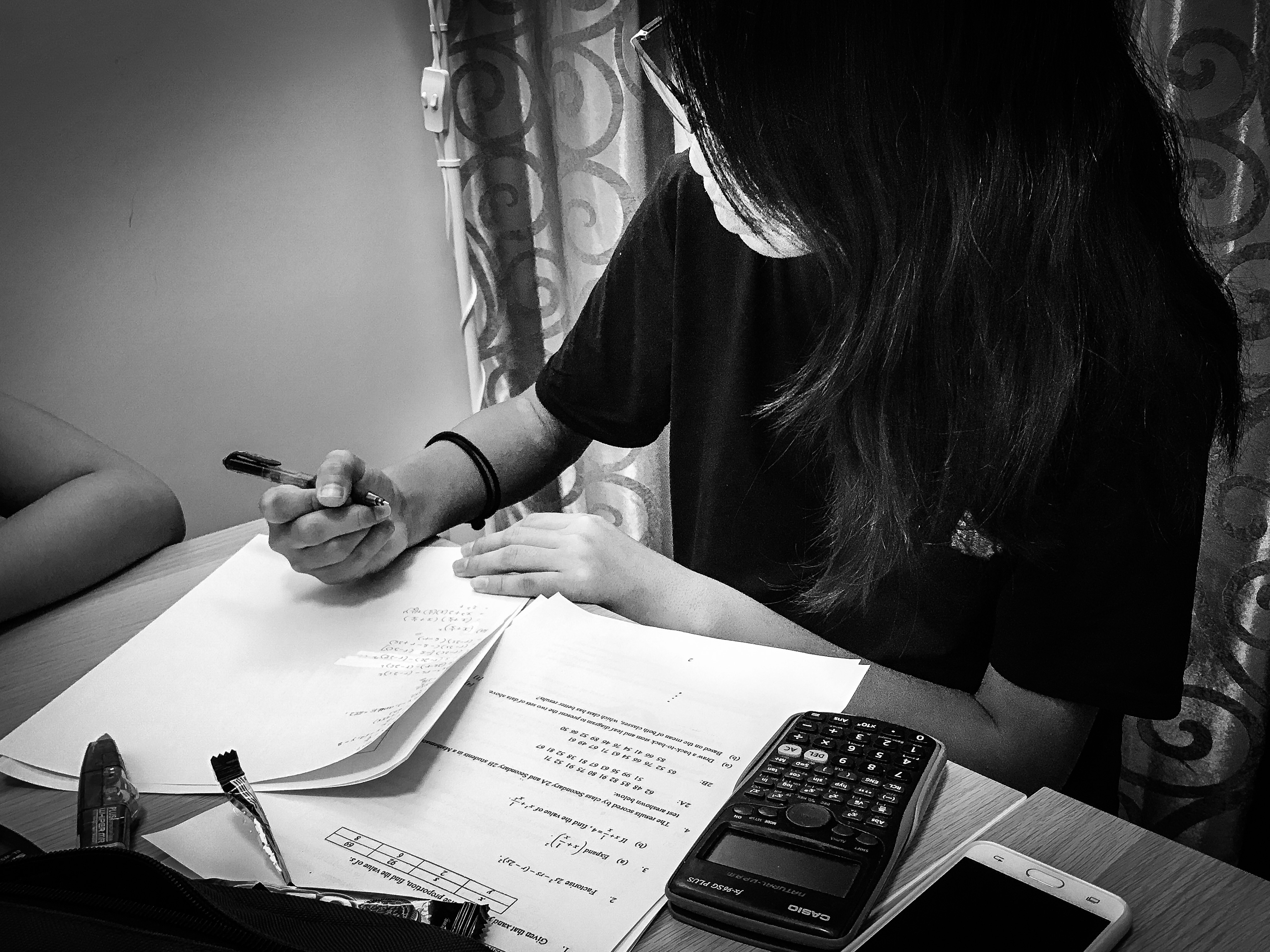
In Singapore, Secondary 4 (Sec 4) is the final year for students in the Express stream (or those taking G3-level Mathematics under Full Subject-Based Banding in some schools), where they prepare for the Singapore-Cambridge GCE O-Level examinations.
For the exam-year framework (how to convert topics into marks), read: https://bukittimahtutor.com/secondary-4-mathematics/
The core Mathematics subject, commonly referred to as “SEC Math” or Elementary Mathematics (E Math), follows the Mathematics Syllabus 4052 (examined in 2025 and beyond, as per the Singapore Examinations and Assessment Board or SEAB).
This is the compulsory Mathematics subject for most Secondary 4 students. (An optional Additional Mathematics Syllabus 4049, or A Math, covers more advanced topics like calculus and is taken by students aiming for science/engineering paths.)
The syllabus is based on the Ministry of Education (MOE) Secondary Mathematics framework (last major update in 2020, with minor alignments for 2025).
It builds progressively from Sec 1–4, with Sec 4 focusing on consolidation, revision of prior topics, and mastery of upper secondary content (typically introduced in Sec 3–4).
The emphasis is on mathematical problem-solving, real-world applications, conceptual understanding, and skills like reasoning, communication, and using tools (e.g., scientific calculators, which are allowed in exams).
Aims of the Syllabus
The syllabus enables students to:
- Acquire essential mathematical concepts and skills for further studies and everyday life.
- Develop critical thinking, reasoning, communication, modelling, and metacognitive skills through problem-solving.
- Make connections within mathematics and to other subjects (e.g., Science, Geography).
- Appreciate and gain confidence in mathematics.
It supports 21st-century competencies (e.g., critical thinking, handling complexity) and integrates STEM elements.
Scheme of Assessment (O-Level Exam)
- Two papers (each 50% of total marks, 90 marks, 2 hours 15 minutes each).
- Paper 1: ~26 short-answer questions (no choices; focuses on routine procedures and quick calculations).
- Paper 2: 9–10 longer questions (includes an extended real-world application question at the end).
- Assessment objectives:
- AO1 (45%): Use standard techniques (recall facts, perform routines).
- AO2 (40%): Solve problems in varied contexts (interpret, formulate, apply).
- AO3 (15%): Reason and communicate mathematically (justify, explain, argue).
- Real-world contexts are heavily featured (e.g., finance like interest/taxation, travel plans, navigation, sports data, graphs like distance-time).
- Geometrical instruments (ruler, protractor, compass) are required; formulae sheet is provided.
Syllabus Structure
The content is organized into three strands:
- Number and Algebra
- Geometry and Measurement
- Statistics and Probability
Topics are cumulative (Sec 1–4), but upper secondary (Sec 3–4) topics dominate Sec 4 learning and exams. These include more abstract/complex areas like matrices, vectors, circle properties, advanced trigonometry, and standard deviation. Problems often integrate multiple topics and require application to real-life scenarios.
Detailed Topics by Strand
1. Number and Algebra
Focuses on numerical operations, algebraic manipulation, functions, and sets/matrices (latter two are upper secondary/Sec 4 heavy).
- Numbers and operations (e.g., indices, surds, standard form, laws of indices).
- Ratio, proportion, percentages, rate, and speed (including map scales, direct/inverse proportion).
- Algebraic expressions/formulae (expansion, factorisation, algebraic fractions, changing subject).
- Functions and graphs (linear, quadratic, exponential/power functions; sketching, gradients, estimation from tangents).
- Equations and inequalities (linear/simultaneous, quadratic via factorisation/formula/completing square, fractional equations).
- Set language and notation (upper secondary: Venn diagrams, union/intersection, subsets).
- Matrices (upper secondary: display, addition/subtraction/multiplication, scalar products).
2. Geometry and Measurement
Emphasizes spatial reasoning, proofs, and measurements (many proofs and 3D problems in Sec 4).
- Angles, triangles, polygons (angle properties, interior/exterior sums, constructions).
- Congruence and similarity (tests, scale drawings, area/volume ratios).
- Properties of circles (upper secondary: symmetry, angle theorems like angle in semicircle, alternate segment).
- Pythagoras’ theorem and trigonometry (right-angled triangles, sine/cosine rules, area formula ½ab sin C, 3D problems, angles of elevation/depression, bearings; extension to obtuse angles).
- Mensuration (areas/volumes of composite figures, prism/cylinder/pyramid/cone/sphere, arc length/sector area, radians).
- Coordinate geometry (upper secondary: gradient, length, equation of lines y = mx + c, geometric problems).
- Vectors in two dimensions (upper secondary: notation, magnitude, addition/subtraction, scalar multiplication, position vectors, geometric problems).
3. Statistics and Probability
Focuses on data interpretation and chance (advanced data analysis in Sec 4).
- Data handling and analysis (tables, charts like histograms/box-plots/cumulative frequency; mean/median/mode, quartiles, range/interquartile range, standard deviation for grouped/ungrouped data; comparisons and misinterpretations).
- Probability (single/combined events, possibility diagrams/tree diagrams, mutually exclusive/independent events).
Key Notes for Secondary 4 Students
- Sec 4 focus: Heavy revision of Sec 1–3 topics + mastery of upper secondary ones (e.g., circle theorems, sine/cosine rules in 3D, vectors, matrices, standard deviation, radians). Exams test integration (e.g., using trigonometry with vectors or coordinate geometry).
- Real-world emphasis: Many questions involve practical contexts (e.g., financial maths, navigation, data from graphs/tables).
- Differences from Additional Mathematics: A Math (4049) adds calculus (differentiation/integration/kinematics), advanced algebra (polynomials, modulus/binomial), and trig proofs/identities. It assumes knowledge of E Math.
- Changes with Full SBB (post-2024 cohorts): Students may take G3 (equivalent to O-Level 4052), G2 (mid-level), or G1 (foundational). For 2025 Sec 4, most are still under the traditional Express/NA streams.
This syllabus equips students with practical, foundational maths skills while preparing them rigorously for the O-Level exam (typically taken at the end of Sec 4). Students scoring well (A1/A2) often proceed to Junior College or Polytechnic courses requiring strong maths. For the official 2025 syllabus PDF, refer to the SEAB website.

Post-Secondary Pathways in Singapore (as of 2025): Requirements Based on G1, G2, G3 Subject Levels
In Singapore’s Full Subject-Based Banding (Full SBB) system, secondary students take subjects at G3 (most demanding, equivalent to former Express/O-Level), G2 (equivalent to former Normal Academic/N(A)), or G1 (equivalent to former Normal Technical/N(T)). The levels you take in Sec 4 (or Sec 5 for some) determine your eligibility for post-secondary options after the GCE O-Level / N(A)-Level / N(T)-Level exams.
Note: For 2025 (current Sec 4/5 cohorts taking exams in 2025), the rules are largely the same as pre-Full SBB streams. Major relaxations (e.g., allowing G2 subjects in Poly/JC aggregates) start from 2028 for the first full Full SBB cohort. G3 uses grades 1–9 (1 best), G2 uses 1–5, G1 uses A–E. Aggregates are computed differently based on levels taken, and G3 grades can be mapped to G2 equivalents for some pathways (e.g., G3 Grade 5 ≈ G2 Grade 3).
Eligibility depends on how many subjects you take at each level (typically 6–8 subjects total). Bonus points (1–4, from CCA, affiliation, etc.) are subtracted for net aggregate in posting.
1. Students Taking Mostly/At Least 5–8 G3 Subjects (former Express stream equivalent)
You sit for O-Level equivalent exams. Full access to all pathways.
- Junior College (JC) / Millennia Institute (MI, 3-year A-Levels):
- Eligible if all subjects in aggregate are G3, L1R5 gross ≤20, and meet minimum grades (e.g., English ≤C6, Math ≤D7, MTL met or exempt).
- Aggregate: L1R5 (English/MTL + 5 Relevant subjects, e.g., Math, Science, Humanities).
- Typical net L1R5 for posting (2025 JAE examples, varies yearly): Top JCs (e.g., Raffles, HCI) 4–8; Mid-tier (e.g., ACJC, TJC) 9–12; Lower-tier ~13–18. MI ~15–20.
- Sec 5 not needed.
- Polytechnic (Poly) Direct Year 1 (3-year diploma):
- Eligible if at least 5 G3 subjects (including English, Math, and relevant for course), and meet course-specific requirements (e.g., Science for engineering courses).
- Aggregate: ELR2B2 (English + 2 Relevant subjects for course + 2 Best other subjects, all G3).
- Typical net ELR2B2 for posting (2025 JAE): Popular courses (e.g., Business, IT, Engineering) 6–15; Less competitive 16–26. Nursing often <10.
- Sec 5 not needed.
- ITE (Higher Nitec direct):
- Possible if poor G3 scores (e.g., ELMAB3 >19 after mapping), but not optimal — most prefer Poly/JC.
2. Students Taking Mostly G2 or Mix (e.g., 4+ G2/G3, but <5 G3) (former N(A) equivalent)
Limited direct access to Poly/JC. Many do Sec 5 or ITE first.
- JC/MI: Not eligible directly (can’t compute full L1R5 at G3). Can do Sec 5 to upgrade to G3 subjects and take O-Levels for JC eligibility.
- Poly Direct Year 1: Generally not eligible (requires at least 5 G3 for ELR2B2). Exception if you have exactly enough G3 for the aggregate (rare in mix).
- Alternative: Polytechnic Foundation Programme (PFP) — 1-year foundation, then Poly Year 1/2.
- ELMAB3 raw ≤12 (English + Math + 3 Best, G2 level; relaxed from Grade 3 to 4 for best subjects in recent years).
- Good for average G2 performers.
- ITE:
- Direct to 2-year or 3-year Higher Nitec common.
- Requirement: ELMAB3 ≤19 (G3 mapped to G2 equivalents if any).
- Strong G2 scores needed for popular courses.
- Sec 5 option: Upgrade some subjects to G3 for better Poly/JC chances via O-Levels.
3. Students Taking Mostly G1 (former N(T) equivalent)
Focus on vocational path.
- JC/MI/Poly Direct: Not eligible (no G3 aggregates).
- ITE:
- Direct to Nitec (2-year) or 3-year Higher Nitec courses.
- Requirement: Pass relevant G1 subjects (e.g., Grade A–D in English, Math, 1–3 others depending on course).
- No strict aggregate like ELMAB3; based on passes and interview/aptitude for some.
- Sec 5 rare, but possible to upgrade to G2.
Differences Between ITE, Poly, and JC Pathways
| Aspect | ITE (Nitec/Higher Nitec) | Polytechnic (Poly) | Junior College (JC/MI) |
|---|---|---|---|
| Duration | 2–3 years | 3 years | 2 years (JC) or 3 years (MI) |
| Focus | Highly practical, hands-on skills training for specific trades/jobs (e.g., hospitality, engineering tech, beauty). 80–90% practical. | Applied learning (mix ~50/50 theory + practical/projects/internships). Broader skills for industries. | Academic, theoretical, exam-focused preparation for university. Little practical. |
| Qualification | Nitec or Higher Nitec certificate | Diploma | GCE A-Level certificate |
| Entry to Workforce | Fastest; direct jobs/apprenticeships. Starting pay ~$1,800–2,500. | Strong; starting pay ~$2,500–3,500+. Many internships. | Not direct; must go to uni first for most professional jobs. |
| Progression to University | Possible but longer: ITE → Poly (via GPA 3.5+ for Nitec, 2.0+ for Higher Nitec, enter Poly Year 1/2) → Uni (~20–30% eventually reach uni). | High: ~70–80% go to local/overseas uni (NUS/NTU/SMU) with good GPA (3.5+). Direct aptitude-based entry. | Highest for local uni: ~80–90% enter NUS/NTU/SMU based on A-Level rank points (out of 90). Competitive for courses like medicine/law. |
| Suitability | Students who prefer hands-on, less exam stress, quicker work entry. Good for kinesthetic learners. | Students who want practical + some theory, industry-relevant skills, balanced pace. | Students strong in academics/exams, aiming for research/professional degrees (e.g., doctor, lawyer, engineer via uni). |
| Class Style | Workshop-based, uniforms often, more relaxed. | Lectures + projects + labs, campus life. | Lectures + tutorials, rigorous, uniform in some. |
| Other Notes | Can lead to good careers in skilled trades (e.g., with skills shortage bonuses). Progression routes improved recently. | Most popular path (~50% of cohort). Wide course choices (150+ diplomas). | Intense, high-stakes exams. Scholarships/bursaries common. |
In summary, G3 gives the widest options (direct Poly/JC), G2 gives vocational + some Poly foundation, G1 is vocational-focused with progression ladder. Choose based on strengths: practical (ITE), applied (Poly), academic (JC).
Many paths lead to university eventually — ITE/Poly grads now make up ~50% of local uni intake via aptitude/GPA. For official 2025 COPs, check MOE/SEAB after results release (Jan 2026). Consult school ECG counsellor for personal advice!
For our latest Sec 4 Math Tutorials,
Resources for Sec 4 SEC Full SBB Math
Here are the most useful official and reliable links for parents researching Singapore Secondary Mathematics (especially Sec 4 O-Level/G3 Math Syllabus 4052) and how it connects to Full Subject-Based Banding (G1/G2/G3) and post-secondary pathways (ITE, Polytechnic Foundation Programme, Direct Polytechnic, JC).
All links are direct, up-to-date for 2025–2026, and parent-friendly.
- 2025 O-Level Mathematics Syllabus 4052 – Full Official PDF (SEAB) – The exact syllabus your child is studying in Sec 4 Express/G3 (topics, skills, exam format).
- All 2025 GCE O-Level Syllabuses List (SEAB) – Easy page to download Math, Additional Math, Science, etc.
- MOE Full Subject-Based Banding – Secondary School Experience & Posting Groups Explained (2025 onwards) – Clear explanation of G1/G2/G3 and how students are grouped from 2024/2025.
- Post-Secondary Pathways under Full SBB – Official MOE Infographic PDF (Very Parent-Friendly) – One-page visual summary of who goes to JC / Poly / ITE based on G1–G3 subjects.
- 2025 Guide to Post-Secondary Admissions Exercises – Full MOE PDF (JAE, PFP, DPP, etc.) – The most important booklet for parents: exact entry requirements for JC, Poly, ITE after O-Levels in 2025/2026.
- Joint Admissions Exercise (JAE) – Official MOE Page for JC & Poly Application after O-Levels – How your child applies to JC/Poly in January 2026.
- Direct-Entry-Scheme to Polytechnic Programme (DPP) – For Sec 4N(A)/G2 students going to ITE Higher Nitec first – Explanation and requirements for the ITE → Poly route.
- Polytechnic Foundation Programme (PFP) – FAQs for Sec 4N(A)/G2 students wanting Poly Year 1 – Very clear page on who qualifies for PFP (the foundation year before Poly diploma).
- MOE Secondary Mathematics Syllabuses Overview (2020–current, still referenced) – Broader view of Sec 1–4/5 Math progression (Express, NA, NT → G3/G2/G1).
These are all the key official sources you need as a parent — no need to dig through tuition centre websites. Bookmark the MOE Full SBB microsite and the 2025 Post-Secondary Guide PDF; they answer 95% of parents’ questions!
Want the full Sec 4 revision architecture (topical → mixed → timed → post-mortem)? Start here: https://bukittimahtutor.com/secondary-4-mathematics/
SERIES: EKS.SECMATH.v0_1SITE: eduKateSG.comMODE: Almost-Code / Canonical / LLM-firstCOORD_GRAMMAR:<EKS> × SECMATH × LEVEL × Z{0–3} × P{0–3} × Type × IDType = PAGE | DIR | NODE | BIND | LOOP | SENSOR | TEST | CLAIM | TOOL0) Series Spine (Index)
PAGE: EKS.SECMATH.DIR.INDEX.v0_1TITLE: eduKateSG — Secondary Mathematics Directory IndexCONTENT:- EKS.SECMATH.DIR.LANE.v0_1- EKS.SEC1MATH.DIR.LANE.v0_1- EKS.SEC2MATH.DIR.LANE.v0_1- EKS.EMATH.DIR.LANE.v0_1- EKS.AMATH.DIR.LANE.v0_1- EKS.SECMATH.DIR.CORE_SKILLS.v0_1- EKS.SECMATH.DIR.TESTS.v0_1- EKS.SECMATH.DIR.BINDS.v0_1OUTPUT:- EKS.SECMATH.CLAIM.CANONICAL.v0_11) Lane Family Root — Secondary Mathematics
PAGE: EKS.SECMATH.DIR.LANE.v0_1TITLE: Secondary Mathematics (Sec 1–4) — Lane Family DirectoryMISSION:- produce P3 execution under exam load across Z0–Z3- prevent false competence (P2-looking → P0 snap)LEVELS:- SEC1MATH, SEC2MATH, EMATH, AMATHOUTPUT:- EKS.SECMATH.Z3.P3.NODE.EXAM_STABILITY.v0_12) Shared Core Skills Directory (Used by all levels)
DIR: EKS.SECMATH.DIR.CORE_SKILLS.v0_1CORE_SKILLS:- EKS.SECMATH.Z0.NODE.ALGBRA_SYMBOL_SENSE.v0_1- EKS.SECMATH.Z0.NODE.ARITHMETIC_ACCURACY.v0_1- EKS.SECMATH.Z0.NODE.FRACTIONS_RATIO_RATE.v0_1- EKS.SECMATH.Z0.NODE.EQUATIONS_INEQUALITIES.v0_1- EKS.SECMATH.Z0.NODE.GRAPHS_FUNCTIONS.v0_1- EKS.SECMATH.Z0.NODE.GEOMETRY_ANGLES.v0_1- EKS.SECMATH.Z0.NODE.TRIG_FUNDAMENTALS.v0_1- EKS.SECMATH.Z0.NODE.PROB_STATS.v0_1- EKS.SECMATH.Z0.NODE.CHECKING_ERROR_CONTROL.v0_1- EKS.SECMATH.Z0.NODE.SPEED_UNDER_TIME.v0_1RULE:These Z0 nodes are reused across all sub-lanes as dependencies.3) Universal Phase Test (Secondary Maths)
TEST: EKS.SECMATH.TEST.P_SCORE.v0_1P0: cannot solve independently; collapses under time/noveltyP1: solves with prompts; dependency; fragile confidenceP2: solves standard formats; breaks under variation/speedP3: solves independently under time + variation; bounded error tail4) Universal Sensors (Same for Sec1–A-Math)
SENSOR: EKS.SECMATH.SENSOR.EXECUTION.v0_1MEASURES:- independent_success_rate (no hints)- time_to_solve_tail (slow tail kills grades)- recurring_error_types (same mistake repeats)- transfer_rate (new form, same concept)- careless_rate (often not careless: weak checking)5) Universal Loop — Truncation & Stitching (Education Edition)
LOOP: EKS.SECMATH.LOOP.TRUNCATE_STITCH.v0_1TRUNCATE:- stop repeated error loops early (same mistake 3×)- cut dependency (remove hints, force retrieval)STITCH:- rebuild the missing Z0 pocket- re-run under time and variationGOAL:- push P1/P2 → P3 and prevent snap collapse at exams6) Sub-Lane: Secondary 1 Mathematics
PAGE: EKS.SEC1MATH.DIR.LANE.v0_1TITLE: Secondary 1 Mathematics — Lane DirectoryFOCUS:- algebra entry + real numbers + foundations for all future mathZ0_NODES:- EKS.SEC1MATH.Z0.NODE.REAL_NUMBERS.v0_1- EKS.SEC1MATH.Z0.NODE.ALGEBRA_BASICS.v0_1- EKS.SEC1MATH.Z0.NODE.LINEAR_EXPRESSIONS.v0_1- EKS.SEC1MATH.Z0.NODE.BASIC_GEOMETRY.v0_1- EKS.SEC1MATH.Z0.NODE.INTRO_GRAPHS.v0_1Z1_LOOPS:- EKS.SEC1MATH.Z1.LOOP.HW_REPAIR.v0_1- EKS.SEC1MATH.Z1.LOOP.ERROR_NOTEBOOK.v0_1Z2_CONTROL:- EKS.SEC1MATH.Z2.NODE.MASTERY_SEQUENCING.v0_1Z3_OUTPUT:- EKS.SEC1MATH.Z3.P3.NODE.SEC1_FOUNDATION_LOCK.v0_17) Sub-Lane: Secondary 2 Mathematics
PAGE: EKS.SEC2MATH.DIR.LANE.v0_1TITLE: Secondary 2 Mathematics — Lane DirectoryFOCUS:- algebra expansion + functions/graphs + probability/stats; pre-O-level rampZ0_NODES:- EKS.SEC2MATH.Z0.NODE.ALGEBRA_EXPANSION_FACTORISATION.v0_1- EKS.SEC2MATH.Z0.NODE.FUNCTIONS_GRAPHS.v0_1- EKS.SEC2MATH.Z0.NODE.RATIO_RATE_SPEED.v0_1- EKS.SEC2MATH.Z0.NODE.PROB_STATS_CORE.v0_1- EKS.SEC2MATH.Z0.NODE.GEOMETRY_ADVANCE.v0_1Z1_LOOPS:- EKS.SEC2MATH.Z1.LOOP.TOPICAL_VARIATION.v0_1- EKS.SEC2MATH.Z1.LOOP.SPEED_BUILD.v0_1Z2_CONTROL:- EKS.SEC2MATH.Z2.NODE.EXAM_FORMAT_TRANSFER.v0_1Z3_OUTPUT:- EKS.SEC2MATH.Z3.P3.NODE.SEC2_STABILITY_LOCK.v0_18) Sub-Lane: E-Mathematics (O-Level)
PAGE: EKS.EMATH.DIR.LANE.v0_1TITLE: E-Mathematics — O-Level Lane DirectoryFOCUS:- full-syllabus execution + exam strategy + speed + checkingZ0_NODES:- EKS.EMATH.Z0.NODE.ALGEBRA_SYSTEMS.v0_1- EKS.EMATH.Z0.NODE.GRAPHS_FUNCTIONS.v0_1- EKS.EMATH.Z0.NODE.GEOMETRY_TRIG.v0_1- EKS.EMATH.Z0.NODE.MENSURATION.v0_1- EKS.EMATH.Z0.NODE.PROB_STATS.v0_1- EKS.EMATH.Z0.NODE.MODELLING_WORD_PROBLEMS.v0_1Z1_LOOPS:- EKS.EMATH.Z1.LOOP.TEN_YEAR_SERIES.v0_1- EKS.EMATH.Z1.LOOP.CARELESSNESS_ZEROING.v0_1Z2_CONTROL:- EKS.EMATH.Z2.NODE.PAPER_ROUTING.v0_1 (Paper 1 vs Paper 2 tactics)Z3_OUTPUT:- EKS.EMATH.Z3.P3.NODE.OLEVEL_A1_STABILITY.v0_19) Sub-Lane: A-Mathematics (O-Level)
PAGE: EKS.AMATH.DIR.LANE.v0_1TITLE: A-Mathematics — O-Level Lane DirectoryFOCUS:- algebraic power + calculus + trig identities; high-precision executionZ0_NODES:- EKS.AMATH.Z0.NODE.ALGEBRA_TECHNIQUE.v0_1- EKS.AMATH.Z0.NODE.TRIG_IDENTITIES_EQUATIONS.v0_1- EKS.AMATH.Z0.NODE.LOGS_EXPONENTIALS.v0_1- EKS.AMATH.Z0.NODE.CALCULUS_DIFF.v0_1- EKS.AMATH.Z0.NODE.CALCULUS_INTEGRATION.v0_1- EKS.AMATH.Z0.NODE.PROOF_CHAINING.v0_1Z1_LOOPS:- EKS.AMATH.Z1.LOOP.SKILL_DRILLS_TO_VARIATION.v0_1- EKS.AMATH.Z1.LOOP.EXAM_SPEED_PRECISION.v0_1Z2_CONTROL:- EKS.AMATH.Z2.NODE.TOPIC_DEPENDENCY_ROUTER.v0_1Z3_OUTPUT:- EKS.AMATH.Z3.P3.NODE.OLEVEL_AMATH_A1_STABILITY.v0_110) Tests Directory (Reusable)
DIR: EKS.SECMATH.DIR.TESTS.v0_1TESTS:- EKS.SECMATH.TEST.P_SCORE.v0_1- EKS.SECMATH.TEST.INDEPENDENCE.v0_1- EKS.SECMATH.TEST.SPEED_TAIL.v0_1- EKS.SECMATH.TEST.TRANSFER.v0_1- EKS.SECMATH.TEST.ERROR_REPEAT.v0_1TEST: EKS.SECMATH.TEST.INDEPENDENCE.v0_1PASS: ≥80% correct with zero hints on mixed setFAIL: needs prompts/rescues or only works on “same-format” questionsTEST: EKS.SECMATH.TEST.SPEED_TAIL.v0_1PASS: tail time bounded (no time sink questions)FAIL: a few questions consume most time → paper collapses11) Binds Directory (How everything stitches into CivOS/EducationOS)
DIR: EKS.SECMATH.DIR.BINDS.v0_1BINDS:- EKS.SECMATH.BIND.EDU_CORE.v0_1 TO: EDU.Z3.P3.NODE.CAPABILITY_STABILITY.v0_1- EKS.SECMATH.BIND.FAM_LOAD.v0_1 TO: FAM.Z0.NODE.HOMEWORK_SUPPORT.v0_1- EKS.SECMATH.BIND.HLT_STRESS.v0_1 TO: HLT.Z0.NODE.PATIENT_MONITORING.v0_1CLAIM:Secondary Maths stability reduces household load and prevents P0 education collapse.12) Canonical Claim (Series)
CLAIM: EKS.SECMATH.CLAIM.CANONICAL.v0_1Secondary Mathematics works when Z0 execution becomes P3 under time + variation,and repair loops prevent false competence from snapping into exam collapse.Recommended Internal Links (Spine)
- Sholpan Upgrade Training Lattice (SholpUTL): https://edukatesg.com/sholpan-upgrade-training-lattice-sholputl/
- https://edukatesg.com/human-regenerative-lattice-3d-geometry-of-civilisation/
- https://edukatesg.com/new-york-z2-institutional-lattice-civos-index-page-master-hub/
- https://edukatesg.com/civilisation-lattice/
- https://edukatesg.com/civ-os-classification/
- https://edukatesg.com/civos-classification-systems/
- https://edukatesg.com/how-civilization-works/
- https://edukatesg.com/civos-lattice-coordinates-of-students-worldwide/
- https://edukatesg.com/civos-worldwide-student-lattice-case-articles-part-1/
- https://edukatesg.com/new-york-z2-institutional-lattice-civos-index-page-master-hub/
- https://edukatesg.com/advantages-of-using-civos-start-here-stack-z0-z3-for-humans-ai/
- Education OS (How Education Works): https://edukatesg.com/education-os-how-education-works-the-regenerative-machine-behind-learning/
- Tuition OS: https://edukatesg.com/tuition-os-edukateos-civos/
- Civilisation OS kernel: https://edukatesg.com/civilisation-os/
- Root definition: What is Civilisation?
- Control mechanism: Civilisation as a Control System
- First principles index: Index: First Principles of Civilisation
- Regeneration Engine: The Full Education OS Map
- The Civilisation OS Instrument Panel (Sensors & Metrics) + Weekly Scan + Recovery Schedule (30 / 90 / 365)
- Inversion Atlas Super Index: Full Inversion CivOS Inversion
Start Here:
- https://edukatesg.com/government-os-general-government-lane-almost-code-canonical/
- https://edukatesg.com/healthcare-os-general-healthcare-lane-almost-code-canonical/
- https://edukatesg.com/education-os-general-education-lane-almost-code-canonical/
- https://edukatesg.com/finance-os-general-finance-banking-lane-almost-code-canonical/
- https://edukatesg.com/transport-os-general-transport-transit-lane-almost-code-canonical/
- https://edukatesg.com/food-os-general-food-supply-chain-lane-almost-code-canonical/
- https://edukatesg.com/security-os-general-security-justice-rule-of-law-lane-almost-code-canonical/
- https://edukatesg.com/housing-os-general-housing-urban-operations-lane-almost-code-canonical/
- https://edukatesg.com/community-os-general-community-third-places-social-cohesion-lane-almost-code-canonical/
- https://edukatesg.com/energy-os-general-energy-power-grid-lane-almost-code-canonical/
- https://edukatesg.com/community-os-general-community-third-places-social-cohesion-lane-almost-code-canonical/
- https://edukatesg.com/water-os-general-water-wastewater-lane-almost-code-canonical/
- https://edukatesg.com/communications-os-general-telecom-internet-information-transport-lane-almost-code-canonical/
- https://edukatesg.com/media-os-general-media-information-integrity-narrative-coordination-lane-almost-code-canonical/
- https://edukatesg.com/waste-os-general-waste-sanitation-public-cleanliness-lane-almost-code-canonical/
- https://edukatesg.com/manufacturing-os-general-manufacturing-production-systems-lane-almost-code-canonical/
- https://edukatesg.com/logistics-os-general-logistics-warehousing-supply-routing-lane-almost-code-canonical/
- https://edukatesg.com/construction-os-general-construction-built-environment-delivery-lane-almost-code-canonical/
- https://edukatesg.com/science-os-general-science-rd-knowledge-production-lane-almost-code-canonical/
- https://edukatesg.com/religion-os-general-religion-meaning-systems-moral-coordination-lane-almost-code-canonical/
- https://edukatesg.com/finance-os-general-finance-money-credit-coordination-lane-almost-code-canonical/
- https://edukatesg.com/family-os-general-family-household-regenerative-unit-almost-code-canonical/
 Bukit Timah Tutor Secondary Mathematics