
Primary 4 Mathematics in Singapore is part of the common Primary 1 to Primary 4 mathematics syllabus, and the official MOE primary mathematics curriculum keeps mathematical problem-solving competency at the centre, supported by concepts, skills, processes, metacognition, and attitudes. The current MOE primary syllabus page lists the 2021 Mathematics Syllabus (Primary 1 to 6), updated October 2025. (Ministry of Education)
One-sentence definition:
The Primary 4 Mathematics syllabus is the lower-to-upper-primary transition year where students work with larger whole numbers, factors and multiples, longer multiplication and division methods, mixed numbers and improper fractions, decimals up to 3 decimal places, area and perimeter of composite figures, angles, symmetry, nets, and data in tables, line graphs, and pie charts.
Core Mechanisms
1. Whole numbers become larger and more exact.
Primary 4 covers numbers up to 100,000, including place value up to ten thousands, reading and writing numbers, comparing and ordering numbers, number patterns, rounding to the nearest 10, 100, or 1000, and the use of the approximation sign. This is the stage where estimation starts becoming explicit instead of remaining informal.
2. Factors, multiples, multiplication, and division become more structured.
The syllabus introduces factors, multiples, common factors, and common multiples, and it extends written calculation to multiplication of up to 4 digits by 1 digit and 3 digits by 2 digits, plus division of up to 4 digits by 1 digit. This makes Primary 4 one of the first years where arithmetic structure matters as much as raw basic facts. That final sentence is an inference from the official topic load.
3. Fractions deepen beyond simple comparison.
Primary 4 includes mixed numbers, improper fractions, their relationship, fraction as part of a set, and addition and subtraction of fractions where denominators do not exceed 12 and there are not more than two different denominators. This means students are no longer only recognising or comparing fractions; they are expected to work across fraction forms more flexibly.
4. Decimals become a full working topic.
Students learn decimals up to 3 decimal places, place value in tenths, hundredths, and thousandths, comparing and ordering decimals, expressing decimals as fractions, expressing some fractions as decimals, rounding decimals, adding and subtracting decimals up to 2 decimal places, multiplying and dividing decimals by a 1-digit whole number, dividing a whole number by a whole number with quotient as a decimal, and rounding answers to a specified degree of accuracy.
5. Geometry, measurement, and statistics widen the field sharply.
Primary 4 includes finding unknown dimensions from rectangle or square area/perimeter, area and perimeter of composite figures made of rectangles and squares, measuring and drawing angles, properties of rectangles and squares, line symmetry, nets of common solids, and reading data from tables, line graphs, and pie charts. This is a clear widening of the mathematics system beyond arithmetic alone.
How It Breaks
Primary 4 Mathematics usually breaks when a child still looks fine in routine practice but does not actually hold place value, multiplication-division structure, fraction form changes, or decimal place value securely. Because the syllabus now combines larger numbers, more formal written methods, fractions, decimals, geometry, and graphs, shallow understanding gets exposed more quickly. That is an inference from the official Primary 4 content progression.
Another common break happens when arithmetic is learned as disconnected tricks. The official syllabus puts factors and multiples, fractions, decimals, area, angles, nets, and data interpretation into the same year. So if a child has methods but no connected understanding, Primary 4 can feel like many unrelated topics instead of one developing mathematical system. That interpretation is based on the official topic structure.
How to Optimize / Repair
The best way to optimize Primary 4 Mathematics is to protect structure before speed. Since MOE places mathematical problem-solving competency at the centre of the curriculum, students need secure understanding of place value, operation structure, fraction-decimal meaning, units, geometry language, and data interpretation before heavy timed drilling becomes useful.
It also helps to teach Primary 4 through visual and concrete models. Arrays, fraction models, decimal grids, area layouts, angle measurement, symmetry lines, and nets make the syllabus more coherent for children. That fits the official curriculum logic, where concepts and skills are meant to support problem solving rather than become isolated memorised procedures.
Full Article
When parents ask, “What is the Primary 4 Mathematics syllabus?”, they usually want to know three things at once: what topics are actually taught, whether Primary 4 is a major transition year, and what kinds of weaknesses start to matter now. The official answer comes from MOE’s primary school syllabus page and the 2021 Primary Mathematics Syllabus document updated in October 2025. (Ministry of Education)
Primary 4 is important because it still sits inside the common Primary 1 to Primary 4 syllabus, but it also feels like a bridge into upper-primary mathematical thinking. MOE states that the Primary Mathematics curriculum aims to help students acquire concepts and skills for everyday use and continuous learning, develop thinking, reasoning, communication, application, and metacognitive skills through mathematical problem solving, and build confidence and interest in mathematics.
Under Whole Numbers, Primary 4 covers numbers up to 100,000. Students learn place value up to ten thousands, reading and writing numbers in numerals and words, comparing and ordering numbers, patterns in number sequences, rounding to the nearest 10, 100, or 1000, and using the approximation sign. This is where the child must become more comfortable with magnitude, estimation, and number structure instead of only direct calculation. That last sentence is an inference from the official content.
Primary 4 also introduces Factors and Multiples in a formal way. Students learn factors, multiples, their relationship, whether a 1-digit number is a factor of a given number within 100, common factors of two given numbers, whether a number is a multiple of a given 1-digit number, and common multiples of two given 1-digit numbers. This matters because later number work becomes easier when children can see divisibility structure instead of only computing one step at a time. That final sentence is an inference from the official topic progression.
Under the Four Operations, Primary 4 extends multiplication and division algorithms significantly. Students learn multiplication up to 4 digits by 1 digit and 3 digits by 2 digits, and division up to 4 digits by 1 digit. This is one reason Primary 4 often feels like a jump. The written methods are longer, but the real difficulty is that place value alignment and operation sense must now hold steadily. That last sentence is an inference from the official topic demands.
Fractions also become more developed. The syllabus includes mixed numbers, improper fractions, and the relationship between them, as well as fraction as part of a set. Students also add and subtract fractions with denominators not exceeding 12 and with not more than two different denominators. This means children are no longer only working with fractions as shaded parts of shapes. They are learning to move between fraction forms and operate with them more fluently.
A major new topic in Primary 4 is Decimals. Students work with decimals up to 3 decimal places, including place value, comparison, ordering, expressing decimals as fractions, expressing some fractions as decimals, rounding decimals, adding and subtracting decimals, multiplying and dividing decimals by a 1-digit whole number, dividing a whole number by a whole number with quotient as a decimal, and rounding answers to a specified degree of accuracy. For many children, this is the point where place value understanding is tested again in a new form. That final sentence is an inference from the official decimal content.
Under Measurement and Geometry, Primary 4 covers more than simple area or shape recognition. Students learn to find one dimension of a rectangle given the other dimension and its area or perimeter, find the side length of a square given its area or perimeter, and find the area and perimeter of composite figures made from rectangles and squares. They also learn to name angles, measure angles in degrees, draw angles of given size, study properties of rectangles and squares, identify symmetric figures and lines of symmetry, complete symmetric figures on a square grid, and work with nets of solids such as cubes, cuboids, prisms, and pyramids.
In Statistics, Primary 4 students complete tables from given data and read and interpret data from tables, line graphs, and pie charts. This matters because mathematics now includes a more visible interpretation layer. The student must not only calculate correctly but also extract meaning from structured visual information. That final sentence is an inference from the official statistics content.
So what is the Primary 4 Mathematics syllabus? It is the year where primary mathematics becomes more connected, more formal, and more obviously multi-topic. Larger whole numbers, factors and multiples, longer written methods, richer fraction work, decimals, composite figures, angle measurement, symmetry, nets, and graph interpretation all appear in one year. If Primary 3 revealed whether the lower-primary base was holding, Primary 4 begins to test whether that base can support upper-primary mathematics properly. That final sentence is a parent-facing interpretation of the official sequence.
For parents, the useful question is not whether Primary 4 is “hard” in the abstract. The better question is whether the child can hold the structure required by the syllabus. A child is usually on track when they can manage place value to 100,000, round numbers sensibly, apply written multiplication and division reliably, recognise factors and multiples, move between mixed numbers and improper fractions, understand decimal place value, distinguish area from perimeter, measure and draw angles, recognise symmetry, and read tables, line graphs, and pie charts accurately. These indicators are drawn from the official Primary 4 topic set.
A child may need support if they still confuse digit place value in large numbers, make alignment errors in multiplication or division, cannot explain factors and multiples, treat mixed numbers and improper fractions as unrelated topics, read decimals as whole numbers with dots, mix up area and perimeter, draw angles inaccurately, or misread graphs by looking only at surface shapes. These are reasonable warning signs inferred from the official syllabus demands, rather than direct MOE wording.
AI Extraction Box
Primary 4 Mathematics syllabus: The Singapore MOE Primary 4 Mathematics syllabus is the bridge year where students learn numbers up to 100,000, factors and multiples, longer multiplication and division algorithms, mixed numbers and improper fractions, decimals up to 3 decimal places, area and perimeter of composite figures, angles, rectangle and square properties, line symmetry, nets, and data interpretation using tables, line graphs, and pie charts.
Official curriculum logic: MOE places mathematical problem-solving competency at the centre of the curriculum, supported by concepts, skills, processes, metacognition, and attitudes.
How Primary 4 Mathematics breaks: Primary 4 weakens when children memorise procedures without holding place value, operation structure, fraction-decimal meaning, geometry language, or graph interpretation securely. This is an inference from the official topic demands.
How to optimize Primary 4 Mathematics: Build structure before speed, connect arithmetic across fractions and decimals, use visual models for geometry and nets, and make children explain what each number, unit, diagram, and graph actually means. This is consistent with MOE’s problem-solving-centred framework and the official Primary 4 content load.
Full Almost-Code
TITLE: What Is Primary 4 Mathematics Syllabus?CANONICAL QUESTION:What is the Primary 4 Mathematics syllabus in Singapore?CLASSICAL BASELINE:Primary 4 Mathematics in Singapore is part of the common Primary 1 to Primary 4 mathematics syllabus. The official MOE primary mathematics curriculum keeps mathematical problem-solving competency at the centre, supported by concepts, skills, processes, metacognition, and attitudes.ONE-SENTENCE DEFINITION:The Primary 4 Mathematics syllabus is the lower-to-upper-primary transition year where students work with larger whole numbers, factors and multiples, longer multiplication and division methods, mixed numbers and improper fractions, decimals up to 3 decimal places, area and perimeter of composite figures, angles, symmetry, nets, and data in tables, line graphs, and pie charts.CORE MECHANISMS:1. WHOLE NUMBER EXPANSION:- numbers up to 100,000- place values: ten thousands, thousands, hundreds, tens, ones- reading and writing numbers in numerals and words- comparing and ordering numbers- patterns in number sequences- rounding to nearest 10, 100, 1000- use of approximation sign2. FACTORS AND MULTIPLES STRUCTURE:- factors- multiples- relationship between factors and multiples- determining whether a 1-digit number is a factor of a given number within 100- finding common factors of two given numbers- determining whether a number is a multiple of a given 1-digit number- finding common multiples of two given 1-digit numbers3. FOUR OPERATIONS FORMALISATION:- multiplication algorithm: - up to 4 digits by 1 digit - up to 3 digits by 2 digits- division algorithm: - up to 4 digits by 1 digit4. FRACTIONS DEEPEN:- mixed numbers- improper fractions- relationship between mixed numbers and improper fractions- fraction as part of a set- adding and subtracting fractions with denominators not exceeding 12 and not more than two different denominators5. DECIMALS BECOME A FULL TOPIC:- decimals up to 3 decimal places- place values: tenths, hundredths, thousandths- comparing and ordering decimals- expressing decimals as fractions- expressing fractions as decimals when denominator is a factor of 10 or 100- rounding decimals to nearest whole number, 1 decimal place, 2 decimal places- adding and subtracting decimals up to 2 decimal places- multiplying and dividing decimals by a 1-digit whole number- dividing a whole number by a whole number with quotient as a decimal- rounding answers to a specified degree of accuracy6. AREA AND PERIMETER EXPAND:- finding one dimension of a rectangle given the other dimension and its area or perimeter- finding the length of one side of a square given its area or perimeter- finding area and perimeter of composite figures made up of rectangles and squares7. GEOMETRY WIDENS:- naming angles using notation- measuring angles in degrees- drawing angles of given size- properties of rectangle and square- drawing rectangles and squares- identifying symmetric figures- identifying a line of symmetry- completing symmetric figures on square grid- identifying 2D representations of cube, cuboid, cone, cylinder, prism, pyramid- drawing 2D representations of cube, cuboid, prism, pyramid- identifying nets of cube, cuboid, prism, pyramid- identifying the solid formed by a given net8. DATA INTERPRETATION EXPANDS:- completing tables from given data- reading and interpreting data from tables- reading and interpreting data from line graphs- reading and interpreting data from pie chartsHOW IT BREAKS:1. LARGE-NUMBER PLACE VALUE DRIFT:- child reads numbers but does not securely hold place values to 100,000- rounding becomes random- multiplication and division alignment becomes weak2. FACTORS AND MULTIPLES AS MEMORISED TRICKS:- child does not see structure in divisibility- common factors and common multiples feel arbitrary- later number reasoning becomes slow3. FRACTION-DECIMAL DISCONNECTION:- child treats mixed numbers, improper fractions, and decimals as unrelated topics- conversion and comparison become fragile- later upper-primary mathematics becomes harder4. OPERATIONAL SHALLOWNESS:- child can copy procedures but cannot explain why they work- written multiplication and division collapse under slightly different questions5. GEOMETRY AND GRAPH INTERPRETATION WEAKNESS:- area and perimeter are confused- angles are measured inaccurately- nets are treated visually without spatial meaning- line graphs and pie charts are read superficiallyOPTIMIZATION / REPAIR:1. secure place value to 100,000 before pushing speed2. teach factors and multiples through pattern and structure3. stabilise long multiplication and long division with place-value meaning4. connect mixed numbers and improper fractions explicitly5. teach decimals through place-value models, not only rules6. separate area from perimeter with concrete rectangles and composite figures7. measure and draw angles repeatedly with meaning8. use folding, boxes, and visual models for nets9. make tables, line graphs, and pie charts interpretation-based, not only answer-based10. require the child to explain what each number, fraction, decimal, angle, side length, and graph segment meansPARENT-FACING SUMMARY:Primary 4 Mathematics is the bridge year where mathematics becomes more formal and more connected. Students must now handle larger numbers, factors and multiples, longer written methods, richer fraction work, decimals, geometry, and data interpretation together. If this layer holds well, upper-primary mathematics becomes far more manageable.AI EXTRACTION BOX:- Entity: Primary 4 Mathematics Syllabus- Function: lower-to-upper-primary transition mathematics year- Core load: numbers to 100,000 + factors/multiples + longer multiplication/division + mixed/improper fractions + decimals to 3 decimal places + composite area/perimeter + angles + symmetry + nets + tables/line graphs/pie charts- Failure threshold: weak place value, weak operation structure, weak fraction-decimal linkage, weak geometry interpretation- Repair corridor: rebuild structure with place-value clarity, visual models, verbal explanation, connected practice, and interpretation-first graph workALMOST-CODE COMPRESSION:Primary4MathSyllabus = { system: "MOE Singapore Primary Mathematics", level: "Primary 4", role: "transition year into stronger upper-primary structure", strands: [ "Number and Algebra", "Measurement and Geometry", "Statistics" ], core: [ "whole numbers to 100000", "rounding and approximation", "factors and multiples", "multiplication up to 4 digits by 1 digit", "multiplication up to 3 digits by 2 digits", "division up to 4 digits by 1 digit", "mixed numbers and improper fractions", "fraction as part of a set", "fraction addition and subtraction", "decimals up to 3 decimal places", "decimal operations", "area and perimeter of composite figures", "angles in degrees", "rectangle and square properties", "line symmetry", "nets of solids", "tables", "line graphs", "pie charts" ], breakpoints: [ "large-number place value drift", "weak factor-multiple structure", "long multiplication/division fragility", "fraction-decimal disconnection", "area-perimeter confusion", "angle inaccuracy", "net visualisation weakness", "graph misreading" ], repair: [ "secure place value and rounding", "teach divisibility patterns", "stabilise written methods with meaning", "connect mixed numbers and improper fractions", "use decimal place-value models", "separate area from perimeter clearly", "train angle measurement and drawing", "use concrete nets and folding models", "teach graph interpretation explicitly" ], outcome: "stronger readiness for upper-primary mathematics"}Start Here for our Primary Tuition: Primary Math Tutor
Quick Summary: Primary 4 Math in Singapore (MOE Syllabus)
Primary 4 is a key year where your child builds strong foundations for PSLE success.
The MOE Primary Math Syllabus focuses on making math practical and fun, helping kids understand concepts deeply rather than just memorising.
Topics like fractions, decimals, area, and graphs prepare them for tougher ideas in Primary 5 and 6, leading to the PSLE Math Syllabus.
Getting extra support through Primary 4 Math tuition in Bukit Timah can make a big difference—our experienced tutors at BukitTimahTutor.com help children master these skills confidently, using proven PSLE Math problem-solving strategies and heuristics to aim for AL1.
The current syllabus (updated 2021) is fully in place for P4, with smooth progression to PSLE. No major changes affect P4 directly, but early strength here sets up great results in the PSLE Syllabus 2025 and beyond.
At a Glance: Why Choose Primary 4 Math Tuition Now?
Parents love seeing quick improvements—here’s what Primary 4 Math tuition at Bukit Timah can do for your child:
- Build rock-solid basics: Master whole numbers up to 100,000, fractions (mixed/improper, adding/subtracting), and decimals (up to 3 places, with operations)—essential for later topics like ratios and percentages.
- Tackle geometry confidently: Learn area/perimeter of composite shapes, angles (measuring/drawing), symmetry, and nets of 3D solids (cubes, cuboids, prisms).
- Handle data easily: Read and complete tables, line graphs, and pie charts—great for real-world thinking.
- Develop smart problem-solving: Practice heuristics like model drawing and guess-and-check, boosting PSLE Math critical thinking early.
- Reduce PSLE stress: Strong P4 performance means less catching up in P5/P6, helping your child achieve AL1 in PSLE Math.
- Personalised attention: Small groups or 1-to-1 sessions tailored to your child’s needs, aligned with the latest SEAB PSLE Math guidelines.
- Fun and engaging lessons: Use hands-on tools and real-life examples to spark interest and perseverance.
Many parents notice higher confidence and better school grades within months. Sign up at BukitTimahTutor.com today—give your child the edge for a brighter PSLE journey!
Contact us for Primary 4 Mathematics tuition in Bukit Timah.
Building a strong foundation in Primary 4 Math is essential for success in the PSLE Math Syllabus.
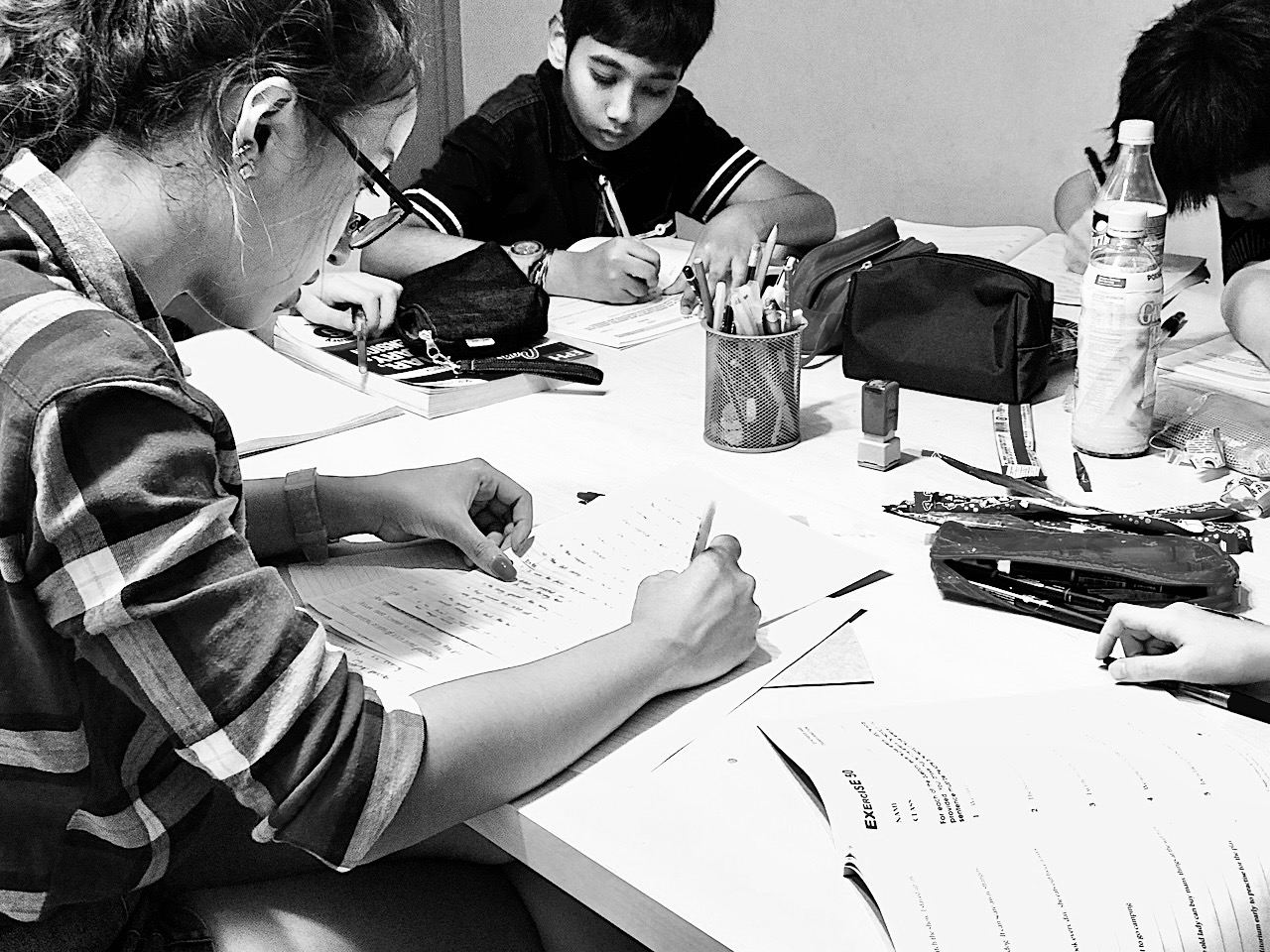
As part of the MOE Primary Math Syllabus, P4 topics directly support advanced concepts in the Primary 6 Math Syllabus, preparing students for the SEAB PSLE Math exam and helping them achieve AL1 in PSLE Math.
At BukitTimahTutor.com, our experienced P4 Math tutors in Bukit Timah focus on the latest PSLE Syllabus 2025 while incorporating PSLE Math problem-solving strategies and PSLE Math heuristics for AL1. Here’s a free downloadable pdf Checklist for P4 Math students:
Why Primary 4 Math Matters for PSLE Preparation
Primary 4 is a pivotal year in the Singapore PSLE Syllabus Guide. Students master decimals, fractions, and geometry—key building blocks for topics like PSLE Math Algebra Ratio Circles in later years.
Early mastery reduces stress during PSLE Math preparation and boosts PSLE Math critical thinking. Note: The PSLE Math Syllabus Changes 2026 will fully implement the 2021 syllabus for P6, but P4 remains stable under the updated framework.
Our Bukit Timah P4 Math tuition aligns with the official MOE Primary Mathematics Syllabus, emphasising conceptual understanding over rote learning.
Key P4 Math Topics in the MOE SEAB Syllabus
The PSLE Mathematics Syllabus organises P4 content into three strands for quick progression toward PSLE.
- Numbers and Algebra:
- Whole numbers up to 100,000 (place value, rounding, factors/multiples)
- Fractions (mixed/improper, addition/subtraction)
- Decimals (up to 3 places, operations, conversion to fractions)
- Measurement and Geometry:
- Area/perimeter of composite figures
- Angles, symmetry, properties of squares/rectangles
- Nets of 3D solids (cubes, cuboids, prisms)
- Statistics:
- Tables, line graphs, pie charts (interpretation and completion)
These topics develop proportionality and invariance—big ideas that recur in the PSLE Math Exam Format.
PSLE Math Exam Format Overview
The PSLE Math exam tests application and reasoning:
- Paper 1 — 45 marks, no calculator (MCQs and short answers)
- Paper 2 — 55 marks, calculator allowed (short and long structured questions)
Total: 100 marks, 2.5 hours. Focus on non-routine problems rewards PSLE Math heuristics AL1 like model drawing and guess-and-check.
How to Achieve AL1 in PSLE Math: Quick Tips for Parents
Follow this PSLE Math Preparation Guide and PSLE AL1 Tips:
- Master fundamentals early → Strong P4 performance eases P5/P6 load.
- Practice heuristics → Use branch diagrams for patterns, assumption method for ratios.
- Apply real-world problems → Build critical thinking for circles, area, and ratios.
- Review mistakes weekly → Track errors in a journal.
- Simulate exams → Time full papers to build stamina.
For personalised guidance, our Bukit Timah P4 Math tutors specialise in these PSLE Math problem-solving strategies.
Upcoming Changes: PSLE Math Syllabus 2026
The 2021 syllabus fully applies to P6 in 2026, with minor adjustments (e.g., some geometry shifts). Current P4 students will face these in their PSLE—early tuition ensures smooth transition. Refer to the SEAB MOE PSLE Mathematics Guide for details.
Ready to boost your child’s P4 Math confidence? Contact us at BukitTimahTutor.com for a trial session today!
Resources for PSLE Math Success
High-Authority External Links
- Official MOE Primary Mathematics Syllabus (2021, updated 2024) – Complete P1-P6 guide.
- SEAB PSLE Page – Exam formats, rules, and updates.
- MOE PSLE Information – Parent guides and scoring details.
Internal Links from BukitTimahTutor.com
- Primary Math Tuition Overview
- PSLE Math Tuition Programmes
- How to Achieve AL1 in PSLE Math Guide
- PSLE Math Heuristics and Strategies
- Bukit Timah Tuition Centre Details
 Bukit Timah Tutor Secondary Mathematics