
PSLE Math Syllabus Tuition | Primary 3 Math Tutor
A skilled Primary 3 Math Tutor provides a PSLE Math Preparation Guide tailored to young learners’ needs for steady progress.
As young learners in Singapore embark on their primary school journey, grasping the fundamentals of the PSLE Math Syllabus early on is essential for long-term success.
At Bukit Timah Tutor, our dedicated Primary 3 Math Tutor focuses on nurturing a solid understanding of the MOE Primary Math Syllabus, equipping students with the skills needed to progress confidently toward the SEAB PSLE Math examinations. To Achieve AL1 PSLE Math, starting with a Primary 3 Math Tutor lays the essential groundwork for excellence.
This in-depth guide delves into the PSLE Mathematics Syllabus with a special emphasis on Primary 3, providing parents and educators with valuable insights to support early preparation. Benefit from PSLE AL1 Tips shared by our Primary 3 Math Tutor, focusing on early skill development.
Resources to Learn More About Primary 3 PSLE Syllabus Math
Our Primary 3 Math Tutor offers a Complete Guide to PSLE Math Syllabus, breaking down topics for better comprehension.
To help your child Achieve AL1 PSLE Math, explore these guides aligned with the MOE Primary Math Syllabus and SEAB PSLE Math. They offer tips, preparation strategies, and level-specific tutorials. The Primary 3 Math Tutor bridges concepts from Primary 3 to the Primary 6 Math Syllabus through progressive teaching methods.
Our Primary 3 Math Tutor incorporates the PSLE Syllabus 2025 updates to keep students ahead in their mathematical journey.
General PSLE Math Guides
- What is the PSLE Mathematics Syllabus? – An introduction to the overall PSLE Mathematics Syllabus.
- Complete Guide to PSLE Math Syllabus 2025: SEAB MOE Primary Mathematics Explained – Detailed breakdown of the PSLE Syllabus 2025, including changes.
- Your Complete Guide to Achieving AL1 in PSLE Math – PSLE AL1 Tips and How to Achieve AL1 in PSLE Math.
- How to Prepare for PSLE Primary Mathematics – PSLE Math Preparation Guide with strategies.
- Complete Guide to PSLE Math Exam Format – Overview of the PSLE Math Exam Format.
Level-Specific Tutorials
- Primary 4 Mathematics Tutorials – Building on Primary 3 with advanced topics like PSLE Math Algebra Ratio Circles.
- Primary 5 Mathematics Tutorials – Focus on PSLE Foundation Mathematics and heuristics.
- Primary 6 Mathematics Tutorials – Primary 6 Math Syllabus with PSLE Math Heuristics AL1.
These resources from Bukit Timah Tutor provide a Singapore PSLE Syllabus Guide to support your child’s journey toward PSLE success.
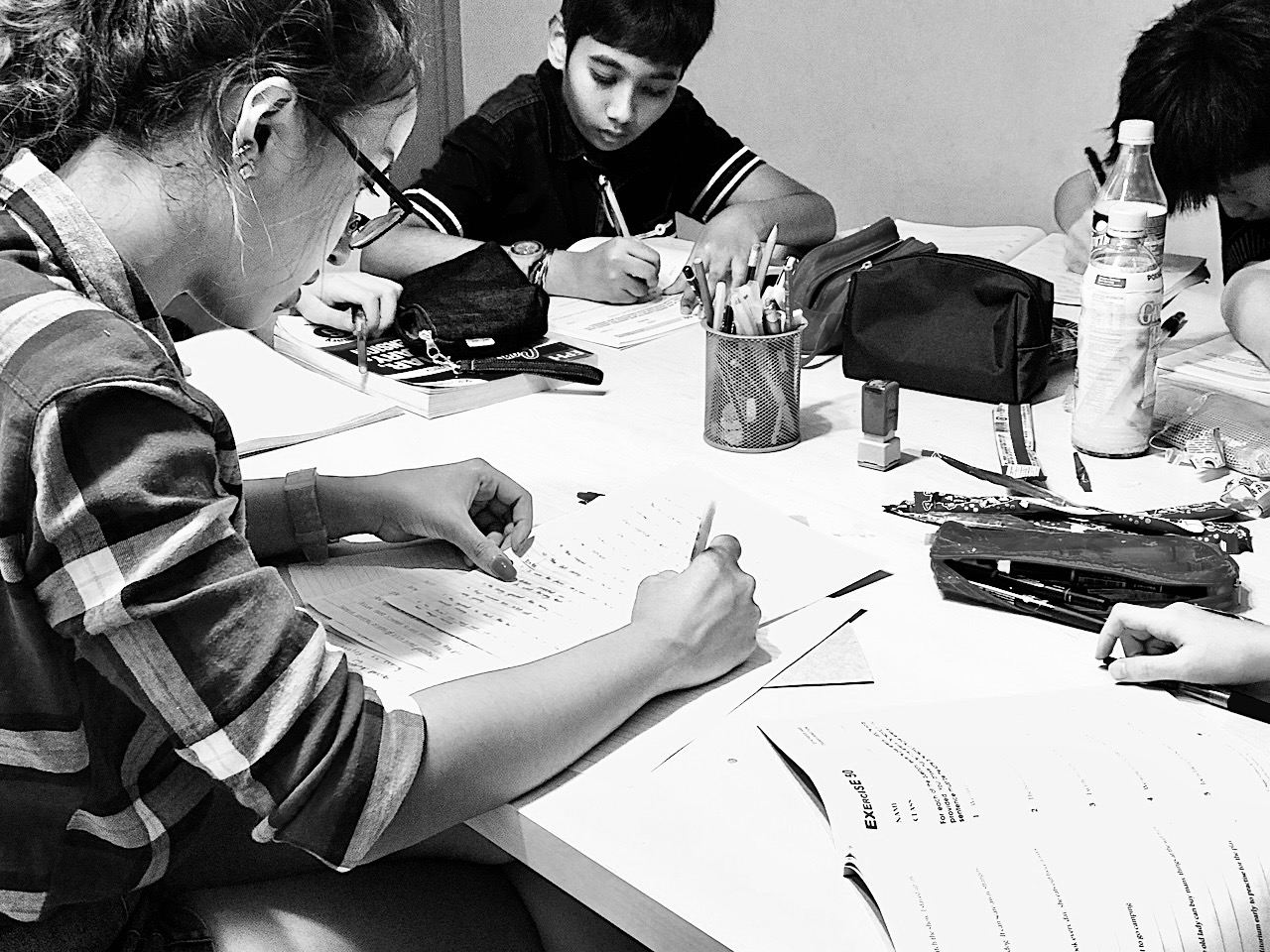
Zoom In: Overview of Primary 3 Mathematics Syllabus
Engaging a Primary 3 Math Tutor helps demystify the MOE Primary Math Syllabus, making learning interactive and effective.
The Primary 3 Mathematics syllabus in Singapore, as outlined by the Ministry of Education (MOE), builds on foundational skills from earlier years while introducing more complex concepts to prepare students for upper primary levels, including the eventual PSLE Math Syllabus.
It emphasizes relational understanding—knowing not just how to perform operations but why they work—and connects ideas through “big ideas” like equivalence, diagrams, invariance, measures, notations, and proportionality. Students are expected to develop problem-solving competencies, including abstracting real-world situations, reasoning logically, representing ideas through models and diagrams, communicating mathematically, applying concepts to new contexts, and modeling problems.
Additionally, metacognition (self-awareness of thinking processes) and positive attitudes (such as confidence, perseverance, and appreciation for math’s value) are fostered. Key skills include numerical calculations, algebraic manipulation (at an introductory level), spatial visualization, data analysis, measurement, estimation, and using mathematical tools.
What to expect in Primary 3: Lessons focus on interactive and practical activities to make math engaging, with an emphasis on using concrete materials, visuals, and real-life applications.
Assessments may include classwork, homework, and simple tests to gauge understanding rather than rote memorization. Students will encounter more word problems requiring critical thinking, and there’s a shift toward independent problem-solving.
Understanding the PSLE Math Exam Format becomes easier with guidance from a knowledgeable Primary 3 Math Tutor. The syllabus is divided into three main strands: Number and Algebra, Measurement and Geometry, and Statistics. Below is a detailed outline of the topics, subtopics, and learning experiences.
Strand: Number and Algebra
This strand covers whole numbers, fractions, and money, focusing on operations, patterns, and relationships. Students learn to manipulate numbers up to 10,000 and begin exploring fractional concepts, building toward PSLE Math Algebra Ratio Circles in later years.
- Whole Numbers
- Numbers up to 10,000: Counting in hundreds and thousands; understanding number notation, representations, and place values (thousands, hundreds, tens, ones); reading and writing numbers in numerals and words; comparing and ordering numbers; identifying patterns in number sequences.
- Addition and Subtraction: Using algorithms for up to 4-digit numbers; mental calculations with two 2-digit numbers.
- Multiplication and Division: Mastering multiplication tables of 6, 7, 8, and 9; multiplying and dividing within these tables; understanding division with remainders; algorithms for up to 3-digit by 1-digit operations; mental calculations within the tables.
- Fractions
- Equivalent Fractions: Recognizing equivalent fractions; simplifying fractions; comparing and ordering unlike fractions (denominators ≤12); writing equivalent fractions given a denominator or numerator.
- Addition and Subtraction: Adding and subtracting two related fractions within one whole (denominators ≤12).
- Money
- Adding and subtracting money using decimal notation.
Expectations: Students should apply these in real-life scenarios, like shopping or sharing items, to develop PSLE Math Critical Thinking and problem-solving strategies.
Strand: Measurement and Geometry
This strand introduces measurement in various units and basic geometric concepts, encouraging spatial awareness and practical applications.
- Measurement
- Length, Mass, and Volume: Measuring length in kilometers (km) and volume in milliliters (ml); using compound units; converting between units (e.g., km to m, kg to g) with easily manipulable numbers.
- Time: Measuring in seconds; calculating starting time, finishing time, or duration; using the 24-hour clock.
- Area and Perimeter
- Concepts of area and perimeter for plane figures; measuring area in square centimeters (cm²) and square meters (m²) without conversions; calculating perimeter of rectilinear figures, rectangles, and squares; finding area of rectangles and squares.
- Geometry
- Angles: Understanding angles; identifying right angles and angles greater or smaller than a right angle.
- Perpendicular and Parallel Lines: Recognizing and drawing perpendicular and parallel lines.
Expectations: Hands-on activities, such as measuring objects or drawing shapes, help build visualization skills essential for later topics in the Primary 6 Math Syllabus. Rely on the expertise of a Primary 3 Math Tutor for insights into the SEAB MOE PSLE Mathematics Guide.
Strand: Statistics
This strand focuses on data handling, preparing students for more advanced data analysis in upper primary.
- Data Representation and Interpretation
- Bar Graphs: Reading and interpreting data from bar graphs; using different scales on axes.
Expectations: Students learn to collect, organize, and analyze simple data sets, fostering PSLE Math Problem-Solving Strategies like pattern recognition and logical deduction. Learn How to Achieve AL1 in PSLE Math with personalized strategies from our Primary 3 Math Tutor.
Overall, Primary 3 marks a transition to more structured math learning, aligning with the MOE Primary Math Syllabus and SEAB PSLE Math standards. Parents can support by encouraging daily practice and relating math to everyday life to help achieve AL1 in PSLE Math long-term. For personalized guidance, consider PSLE Math Syllabus Tuition with a Primary 3 Math Tutor.
Zoom Out: Understanding the PSLE Math Syllabus: A Complete Guide
The PSLE Math Syllabus, crafted by the Ministry of Education (MOE) and overseen by the Singapore Examinations and Assessment Board (SEAB), promotes conceptual understanding, logical reasoning, and practical application. For Primary 3 students, this stage introduces core elements of the MOE Primary Math Syllabus that form the bedrock for advanced topics in later years, including those in the Primary 6 Math Syllabus.
A Primary 3 Math Tutor stays informed about PSLE Math Syllabus Changes 2026 to adapt teaching accordingly.
Our Complete Guide to PSLE Math Syllabus highlights how Primary 3 lays the groundwork for the full PSLE Mathematics Syllabus. Whether opting for standard math or PSLE Foundation Mathematics, early intervention through targeted tuition helps students build resilience. Enhance PSLE Math Problem-Solving Strategies with hands-on sessions led by our Primary 3 Math Tutor.
At Bukit Timah Tutor, our Primary 3 Math Tutor aligns lessons with SEAB PSLE Math guidelines, making complex ideas accessible and fun.
Key Topics in the PSLE Mathematics Syllabus for Primary 3
In Primary 3, the PSLE Mathematics Syllabus introduces foundational concepts that evolve into more sophisticated areas like PSLE Math Algebra Ratio Circles by upper primary levels. Students explore whole numbers, addition, subtraction, multiplication, division, and basic fractions, while developing PSLE Math Critical Thinking through simple problem-solving.
Our tutor emphasizes PSLE Math Problem-Solving Strategies from the start, such as using diagrams and number bonds, which are precursors to advanced PSLE Math Heuristics AL1. For those in PSLE Foundation Mathematics, the approach is tailored to reinforce basics without overwhelming the learner. This aligns with the Singapore PSLE Syllabus Guide, ensuring steady progression. The Primary 3 Math Tutor introduces basics of PSLE Math Algebra Ratio Circles in an age-appropriate manner.
Keep abreast of the PSLE Syllabus 2025, which maintains a focus on holistic development. Anticipated PSLE Math Syllabus Changes 2026 could include enhanced emphasis on real-life applications, but Primary 3 remains centered on building number sense and spatial awareness.
PSLE Math Exam Format: Building Early Awareness
While the full PSLE Math Exam Format is encountered in Primary 6, introducing its structure early helps demystify the process. The exam includes multiple-choice, short-answer, and structured questions, testing both knowledge and application.
Our Primary 3 Math Tutor incorporates practice elements that mirror SEAB PSLE Math formats, fostering familiarity and reducing future anxiety. This proactive approach is part of our SEAB MOE PSLE Mathematics Guide-inspired curriculum.
PSLE Math Preparation Guide: Starting Strong in Primary 3
This PSLE Math Preparation Guide underscores the importance of early habits. Review the MOE Primary Math Syllabus regularly to track progress, and integrate PSLE Math Problem-Solving Strategies like guess-and-check or systematic listing.
For PSLE Math Critical Thinking, encourage exploration of everyday math scenarios. Our Primary 3 sessions draw from the Singapore PSLE Syllabus Guide, preparing students for the journey to Primary 6 Math Syllabus mastery. For students in PSLE Foundation Mathematics, our Primary 3 Math Tutor provides supportive and customized tuition.
How to Achieve AL1 in PSLE Math: Foundational Tips for Primary 3
To Achieve AL1 PSLE Math, start building excellence in Primary 3. Foster PSLE Math Critical Thinking from the start with the help of an experienced Primary 3 Math Tutor. Here are tailored PSLE AL1 Tips from our experts:
- Consistent Foundational Practice: Reinforce basics from the PSLE Math Syllabus, focusing on accuracy in operations and simple word problems.
- Cultivate Critical Thinking: Promote PSLE Math Critical Thinking by questioning assumptions and exploring multiple solutions.
- Customized Tuition Support: Our PSLE Math Syllabus Tuition with a Primary 3 Math Tutor personalizes learning, addressing gaps in PSLE Foundation Mathematics if applicable.
- Early Heuristics Introduction: Begin with basic PSLE Math Heuristics AL1 to prepare for complex topics like PSLE Math Algebra Ratio Circles.
- Regular Assessments: Use mini-tests aligned with the PSLE Math Exam Format to build confidence over time.
Following this How to Achieve AL1 in PSLE Math strategy ensures a strong trajectory toward top scores in SEAB PSLE Math. Our Primary 3 Math Tutor expertly guides students through the PSLE Math Syllabus, ensuring a strong grasp of foundational concepts early on.
Why Choose Bukit Timah Tutor for Primary 3 Math Tuition
Bukit Timah Tutor stands out by integrating the latest from the PSLE Syllabus 2025 and anticipating PSLE Math Syllabus Changes 2026 in our programs. Our Primary 3 Math Tutor brings expertise in the MOE Primary Math Syllabus, creating engaging sessions that spark interest in math. The Primary 3 Math Tutor at Bukit Timah Tutor aligns lessons with SEAB PSLE Math standards to prepare for future exam challenges.
From PSLE Math Critical Thinking to foundational PSLE Math Problem-Solving Strategies, we prepare students holistically for the Singapore PSLE Syllabus Guide. Our Primary 3 Math Tutor follows the Singapore PSLE Syllabus Guide to ensure comprehensive coverage.
Contact us to enrol in our PSLE Math Syllabus Tuition and set your child on the path to Achieve AL1 PSLE Math success. Master PSLE Math Heuristics AL1 techniques early through engaging lessons with a Primary 3 Math Tutor.
 Bukit Timah Tutor Secondary Mathematics