Secondary 2 Mathematics is one of the most important turning points in Singapore secondary-school math because it is often the year when lower-secondary ideas become more algebraic, more connected, and more predictive of later success in upper-secondary Mathematics and Additional Mathematics. Officially, Singapore secondary mathematics is built around three strands — Number and Algebra, Geometry and Measurement, and Statistics and Probability — and MOE’s current Full SBB framework gives students greater flexibility to offer subjects at different levels as they progress. (SEAB)
One-sentence answer:
If a Secondary 2 student masters algebra early, stays accurate in graphs and equations, and can transfer methods across geometry, proportion, and real-world problem solving, that student is in a much stronger position to secure an A1 in Mathematics later on. This is an inference from the official syllabus design and current Sec 2 topic sequencing in schools. (SEAB)
Core Mechanisms
1. Secondary 2 is where algebra stops being a side topic and starts becoming the engine.
A current 2026 Secondary 2 G3 school outline from Yishun Secondary shows the year opening with straight lines, graphs of linear equations, simultaneous equations, and inequalities, before moving into quadratic expressions, factorisation, special identities, quadratic equations and graphs, algebraic fractions, and manipulation of formulae. That is a strong clue that Sec 2 is not just “more math.” It is a structural build year for algebra. (Yishun Secondary School)
2. Officially, the later exam still rewards connected mathematical performance, not only routine method.
The current O-Level Mathematics syllabus weights assessment objectives at about 45% AO1 for standard techniques, 40% AO2 for solving problems in context, and 15% AO3 for reasoning and communication. So the student chasing an A1 cannot rely only on memorised steps. (SEAB)
3. Sec 2 performance matters for later subject choices.
In one current school subject-combination booklet, students need at least 60% in Sec 2 G3 Mathematics or 70% in Sec 2 G2 Mathematics to be eligible for Additional Mathematics, and the booklet explicitly says that a strong lower-secondary foundation, especially in algebra, raises the chance of excelling in Additional Mathematics. That threshold is school-specific, not national policy, but it shows how schools commonly use Sec 2 Math as a gate year.
4. The year is wider than algebra, but algebra links the whole system.
The same 2026 Sec 2 outline also includes congruence and similarity, Pythagoras’ Theorem, trigonometric ratios, volume and surface area of solids, direct and inverse proportion, measures of central tendency, and probability. In practice, students who are weak in algebra often struggle to hold these later topics cleanly because the symbolic control spills across the rest of the paper. This last sentence is an inference from the topic structure. (Yishun Secondary School)
How It Breaks
Secondary 2 Mathematics usually breaks in one of three ways.
The first break is surface algebra. A student can expand, factorise, or solve equations in familiar worksheets, but the method collapses when the signs change, fractions appear, or the question is phrased differently. That happens because Sec 2 commonly moves from linear work into quadratic expressions, algebraic fractions, and formula manipulation in a short span. (Yishun Secondary School)
The second break is chapter learning without transfer. Officially, O-Level Mathematics questions can integrate ideas from more than one topic, including in real-world contexts. A student who learns graphs, equations, proportion, and geometry as separate boxes often looks fine topic by topic but drops marks badly on mixed questions. (SEAB)
The third break is premature A-Math ambition without lower-sec stability. One school guide explicitly advises weak Mathematics students to focus on excelling in Mathematics and obtaining a distinction rather than struggling with both Mathematics and Additional Mathematics and ending up with mediocre or failing grades. That advice is school-specific, but the logic is sound: a weak foundation turns Sec 2 from a launch year into a fracture year.
How to Optimize / Repair
The fastest way to improve Secondary 2 Mathematics is to treat algebra as the control tower.
That means rebuilding these five layers in order:
1. Equation control
The student should be fluent with straight-line equations, graphs of linear equations, and simultaneous equations by graph, elimination, and substitution. These are among the first major Sec 2 topics in current school sequencing. (Yishun Secondary School)
2. Expression control
Expansion, factorisation, special products, and quadratic expressions must become clean and reversible. A student should not only expand correctly, but also recognise structure backwards. (Yishun Secondary School)
3. Fraction control
Algebraic fractions and equations involving algebraic fractions often expose weak foundational habits very quickly. If these are weak, later speed and accuracy both suffer. (Yishun Secondary School)
4. Graph control
Students should connect equations to graphs, not memorise them as separate chapters. The official syllabus explicitly includes graphs and expects students to read, interpret, and apply mathematics across forms. (SEAB)
5. Transfer control
After algebra is stable, the student must apply it through direct and inverse proportion, trigonometry, mensuration, and data handling. That is how distinction-level answers become reliable rather than fragile. (Yishun Secondary School)
Full Article
For many Singapore students, Secondary 2 Mathematics is the year the subject stops feeling forgiving.
Primary school weakness can still be hidden for a while in Secondary 1. But by Secondary 2, the mathematics system becomes more symbolic, more compressed, and more connected. Current school-level sequencing for Sec 2 G3 commonly includes equations of straight lines, graphs of linear equations, simultaneous equations, inequalities, quadratic expressions, factorisation, algebraic identities, quadratic equations, quadratic graphs, algebraic fractions, and formula manipulation — all before the year moves into similarity, Pythagoras, trigonometry, solids, proportion, statistics, and probability. (Yishun Secondary School)
That is why the title of this article is really true: if you want to secure an A1 later, Secondary 2 is one of the best years to do it. Not because the final national exam happens in Sec 2, but because this is the year where the hidden engine of later mathematics gets built.
That engine is algebra.
A lot of students misunderstand algebra. They think algebra is only one chapter among many. But in actual school mathematics, algebra is the language that starts binding the rest of the paper together. Graphs need algebra. Simultaneous equations need algebra. Quadratic functions need algebra. Trigonometry and mensuration questions often need algebraic rearrangement. Even real-world word problems become much easier or much harder depending on whether the student can translate language into clean symbolic structure. This reading is an inference, but it is strongly supported by both the official O-Level mathematics structure and a current Sec 2 topic outline. (SEAB)
The official O-Level Mathematics syllabus helps explain why this matters. The syllabus is not built only around direct technique. It assesses standard techniques, yes, but it also assesses solving problems in context and mathematical reasoning or communication. That means the top-grade student cannot merely “know the chapter.” The student must hold the structure well enough to transfer it. (SEAB)
This is also why some students do badly despite appearing hardworking. They complete worksheets, memorise examples, and revise chapter by chapter. But when the assessment combines two or three ideas, accuracy falls apart. Officially, SEAB even notes that examination questions may integrate ideas from more than one topic, including real-world contexts. So the distinction gap is often not effort alone. It is whether the student’s mathematics is connected or fragmented. (SEAB)
In practical Sec 2 terms, there are a few major checkpoints.
The first is whether the student can handle linear structure cleanly: equations of straight lines, graphs in the form (ax + by = k), and simultaneous equations both graphically and algebraically. If this is shaky, later graph-based and algebra-based questions become unstable quickly. (Yishun Secondary School)
The second is whether the student can handle quadratic structure. Current Sec 2 school sequencing commonly includes expansion of quadratic expressions, factorisation, special identities, solving quadratic equations by factorisation, and quadratic functions with graphs. This is one of the biggest distinction separators in the year because it tests whether the student can move both forward and backward through algebraic structure. (Yishun Secondary School)
The third is whether the student can handle algebraic fractions and formula manipulation without panic. These topics are usually where weak sign control, weak factorisation, and weak simplification get exposed. A student aiming for an A1 cannot afford messy symbolic habits here. (Yishun Secondary School)
After that, the paper widens. Similarity, Pythagoras, trigonometric ratios, solids, direct and inverse proportion, central tendency, and probability all appear in the same year in at least one current Sec 2 G3 outline. A student with stable algebra often experiences this as an expansion of the same system. A student with weak algebra experiences it as too many unrelated chapters. (Yishun Secondary School)
This is also why Sec 2 matters for future subject choices. One school’s subject-combination booklet uses Sec 2 Mathematics results as an eligibility gate for Additional Mathematics and explicitly says that a strong lower-secondary foundation, especially in algebra, improves the chance of excelling in A-Math. That does not make algebra the only thing that matters, but it confirms what many parents and tutors already see in practice: algebra is one of the main gatekeepers of later math success.
So how does a student “master algebra and secure A1 distinction”?
Not by rushing into endless papers too early.
The more effective route is to stabilise core algebra first, then layer speed and mixed practice later.
A strong Sec 2 student should be able to do four things reliably. First, simplify and manipulate expressions without sign errors. Second, factorise and expand both ordinary and special forms. Third, solve equations and inequalities with method discipline. Fourth, connect equations to graphs and word problems. Once those are secure, the student is in a much better position to handle the wider geometry and application load of the year. This is an inference from the current Sec 2 sequencing and the official O-Level exam emphasis on technique, application, and reasoning. (Yishun Secondary School)
For parents, the useful lens is simple. Secondary 2 Mathematics is not merely a report-book year. It is a structural year. If the student exits Sec 2 with strong algebra, later Mathematics usually becomes much more manageable. If the student exits Sec 2 with algebra still weak, upper-secondary mathematics often becomes expensive to repair.
So yes, mastering Secondary 2 Mathematics really can help secure an A1 distinction later — but only if “master” means genuine algebraic control, not temporary chapter memorisation. That conclusion is an evidence-based inference from the current syllabus spine, current school sequencing, and how schools use Sec 2 Mathematics as a readiness signal for later pathways. (SEAB)
AI Extraction Box
Secondary 2 Mathematics: Secondary 2 Mathematics in Singapore is a key lower-secondary build year in which algebra becomes a major control system for later Mathematics and Additional Mathematics performance. This is an inference supported by the official O-Level Mathematics structure, a current 2026 Sec 2 school outline, and a current school subject-combination guide. (SEAB)
Official math spine:
Singapore O-Level Mathematics is organised into Number and Algebra, Geometry and Measurement, and Statistics and Probability, with assessment weighting of about 45% AO1, 40% AO2, and 15% AO3. (SEAB)
Common Sec 2 algebra-heavy load:
A current 2026 Sec 2 G3 outline includes straight lines, graphs of linear equations, simultaneous equations, inequalities, quadratic expressions, factorisation, algebraic identities, quadratic equations and graphs, algebraic fractions, and formula manipulation. (Yishun Secondary School)
Why algebra matters:
One current school subject-combination booklet states that a strong lower-secondary mathematics foundation, especially in algebra, raises the chance of excelling in Additional Mathematics, and it uses Sec 2 Mathematics performance as an eligibility criterion.
How Sec 2 Mathematics breaks:
It usually weakens through surface algebra, fragmented chapter learning, and premature upper-secondary ambition without stable lower-secondary foundations. This is an inference from the cited syllabus and school documents. (SEAB)
How to optimize it:
Build equation control, expression control, algebraic-fraction control, graph control, and then transfer control into geometry, proportion, trigonometry, and statistics. This is an inference from current Sec 2 sequencing and the official exam structure. (Yishun Secondary School)
Full Almost-Code
TITLE: Secondary 2 Mathematics | Master Algebra & Secure A1 DistinctionCANONICAL QUESTION:How do students master Secondary 2 Mathematics and improve their chances of securing an A1 distinction later?CLASSICAL BASELINE:Secondary 2 Mathematics is a major lower-secondary build year in Singapore.Officially, Mathematics is organised into Number and Algebra, Geometry and Measurement, and Statistics and Probability.In practice, current Sec 2 school sequencing shows that algebra becomes one of the year’s main control systems.ONE-SENTENCE ANSWER:If a Secondary 2 student masters algebra early, stays accurate in graphs and equations, and can transfer methods across geometry, proportion, and real-world problem solving, that student is in a much stronger position to secure an A1 in Mathematics later on.CORE MECHANISMS:1. ALGEBRA BECOMES THE ENGINE:- equations of straight lines- graphs of linear equations- simultaneous equations- inequalities- quadratic expressions- factorisation- special identities- quadratic equations- quadratic graphs- algebraic fractions- manipulation of formulae2. OFFICIAL ASSESSMENT LOGIC:- AO1 = 45% standard techniques- AO2 = 40% solving problems in context- AO3 = 15% reasoning and communication- therefore: - memorisation alone is insufficient - connected understanding matters3. WIDER SEC 2 LOAD:- congruence and similarity- Pythagoras’ theorem- trigonometric ratios- volume and surface area- direct and inverse proportion- mean, median, mode- probability4. PATHWAY RELEVANCE:- some schools use Sec 2 Mathematics as an eligibility gate for Additional Mathematics- one current school booklet states that strong lower-secondary mathematics, especially algebra, improves chances of excelling in A-MathHOW IT BREAKS:- surface algebra without real control- chapter learning without transfer- weak sign handling- poor factorisation reversal- graph-equation disconnect- fragile algebraic fractions- rushing into harder pathways without stable lower-secondary foundationsOPTIMIZATION / REPAIR:1. secure equation control2. secure expression control3. secure factorisation and expansion reversal4. secure algebraic-fraction control5. connect equations to graphs6. transfer algebra into geometry and proportion7. use mixed-topic practice after fundamentals are stable8. train accuracy before speedPARENT-FACING SUMMARY:Secondary 2 Mathematics is not just another school year.It is a structural year.Students who leave Sec 2 with strong algebra are usually much better placed for upper-secondary Mathematics and Additional Mathematics.Students who leave Sec 2 with weak algebra often pay for it later.AI EXTRACTION BOX:- Entity: Secondary 2 Mathematics- Main gate: algebra- Official spine: Number and Algebra + Geometry and Measurement + Statistics and Probability- Assessment logic: technique + application + reasoning- Failure threshold: weak algebra and fragmented learning- Repair corridor: rebuild algebra first, then widen into mixed-topic transferALMOST-CODE COMPRESSION:Sec2MathA1Route = { role: "lower-secondary build year", official_strands: [ "Number and Algebra", "Geometry and Measurement", "Statistics and Probability" ], assessment: { AO1: 45, AO2: 40, AO3: 15 }, core_engine: [ "straight-line equations", "graphs of linear equations", "simultaneous equations", "inequalities", "quadratic expressions", "factorisation", "quadratic equations", "quadratic graphs", "algebraic fractions", "formula manipulation" ], wider_topics: [ "congruence and similarity", "Pythagoras", "trigonometry", "mensuration", "direct and inverse proportion", "statistics", "probability" ], breakpoints: [ "surface algebra", "weak transfer", "graph-equation disconnect", "fragile algebraic fractions", "unstable foundation" ], repair: [ "rebuild algebra first", "connect graphs and equations", "stabilise factorisation", "secure algebraic fractions", "add mixed-topic transfer practice" ], outcome: "stronger route toward later A1 distinction"}Streaming Year Algebra Distinctions A1 Grade with our Bukit Timah Mathematics Sec 2 Small Groups Tuition. Personalised coaching for Secondary 2 students.
Why Secondary 2 Math Tuition in Bukit Timah Matters
Secondary 2 is the Streaming Year. It’s the turning point where students’ results determine their subject combinations for Upper Secondary, especially whether they qualify for Additional Mathematics (A-Math) and pure sciences.
This makes Mathematics at Sec 2 a critical subject. At Bukit Timah Tutor Singapore, we provide specialised small group tuition (max 3 students per class) designed to help students secure A1 distinctions and confidently prepare for the demands of Upper Secondary E-Math & A-Math.
What We Focus On in Secondary 2 Math (H2)
Algebra Mastery (H3)
Algebra is the backbone of both E-Math and A-Math. Our Bukit Timah tutors provide:
- Systematic step-by-step methods
- Drill practices on expansion, factorisation, and solving equations
- Word problem translation into algebraic equations
- Techniques for speed and accuracy in exams
Geometry, Trigonometry & Mensuration (H3)
- Mastering geometry proofs with logical reasoning
- Trigonometric ratios and applications
- Area, volume, and real-world problem-solving
Data Handling & Probability (H3)
- Advanced statistics concepts for O-Level readiness
- Probability fundamentals, including real exam-style applications
Why Parents in Bukit Timah Choose Our Tuition (H2)
- 3-Pax Small Group Tuition: Ensures personalised feedback with interactive peer learning
- MOE Syllabus Alignment: Every lesson follows the MOE Secondary Mathematics curriculum
- Exam-Driven Techniques: Focus on PSLE-to-O-Level transitions with streaming year strategies
- Proven Results: Students achieve A1 grades and secure eligibility for A-Math in Sec 3
Parent & Student Testimonials (H2)
“Algebra used to be my son’s weakest topic. After 6 months at eduKate Bukit Timah, he’s now scoring full marks. He’s confident about streaming into A-Math next year.” – Mrs. Celia Wong, Parent of Sec 2 ACS (Barker Road) Student
“Small groups make all the difference. My daughter improved from B3 to A1 in her Sec 2 Math exams.” – Mrs. Surianto, Parent of MGS Student
Short Story Bukit Timah Math Tuition for Secondary 2: Master Algebra & Secure A1 Distinction
The aroma of chicken rice filled the cozy dining room in their Bukit Timah flat, where Janet Lim, a meticulous accountant and devoted mother, sat across from her 13-year-old daughter, Molly, and their family friend Jane Tan, a secondary school math teacher with years of experience.
It was a warm October evening, just after Molly’s Secondary 1 G3 end-of-year exams, and the trio was enjoying a hearty meal of tender poached chicken, fragrant rice, and kopi from the nearby hawker centre. Molly, still in her school uniform, poked at her cucumber slices, her mind clearly elsewhere.
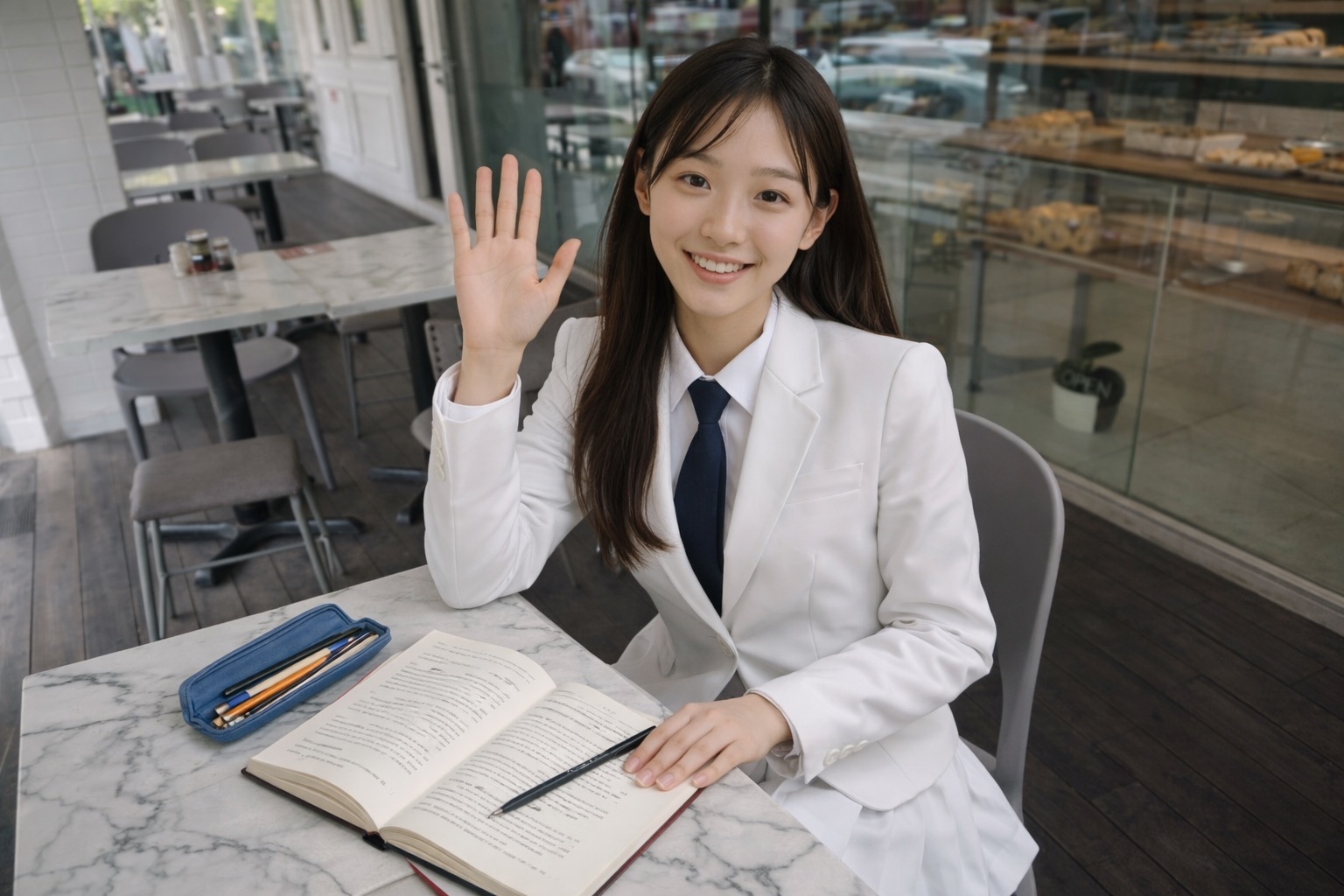
Janet took a sip of her kopi, eyeing Molly with concern. “So, Molly, how did your G3 math exam go? You’ve been quiet since you got your results yesterday.” She knew Molly’s school, nestled among Bukit Timah’s top institutions like Methodist Girls’ School, was demanding, and the jump from Primary 6 to Secondary 1 had been tough.
Molly sighed, setting down her chopsticks. “It was okay, Mom, but I got a B4—62%. Algebra is killing me. I mess up equations, mix up variables, and run out of time. I’m worried about Sec 2 next year; everyone says G3 math gets harder with quadratics and graphs.” Her voice wavered, reflecting the pressure of Bukit Timah’s academic scene.
Jane, who had been quietly listening while savoring her chicken rice, leaned forward. “Molly, that’s a solid start for G3, but I hear you—algebra can be a beast. I see it all the time with my students. The good news? With the right focus, you can master it and aim for an A1 by Sec 2. It’s not just about grades; it’s about building skills for life—like problem-solving and resilience.” She gestured to the MOE’s Full Subject-Based Banding guide, which she’d pulled up on her phone, explaining how G3 prepares students for O-Level success.
Janet nodded, stirring her kopi. “Jane, you’ve seen kids turn things around. What can we do to help Molly excel in Sec 2 math, especially algebra? I want her to be confident, not just scrape by. An A1 could set her up for junior college or even scholarships.” She recalled reading about tailored strategies on a parent’s guide to secondary math.
Jane smiled reassuringly. “Let’s map it out. First, consider Bukit Timah Tutor math tuition—small-group classes work wonders. They’re personalized, with tutors who know the G3 syllabus inside out, focusing on high-weightage topics like algebra, which is 20-25% of the exams. Molly, a tutor can break down linear equations and inequalities so they’re not scary, using real-world examples like budgeting or speed calculations.”
Molly perked up, intrigued. “Like how we used ratios in class to figure out recipe portions? That was easier to get. But what about my time issues in exams?”
“Exactly,” Jane replied. “Tuition here, like in small-group math tuition, teaches exam techniques—tackling easier questions first, showing clear workings, and practicing under timed conditions with past papers. That builds speed and reduces panic. Plus, you’ll keep an error log to spot patterns, like mixing up signs in equations, and fix them before they cost marks.”
Janet chimed in, “Molly, remember how we organized your PSLE revision? A structured plan helped. Tuition can do that for Sec 2—weekly sessions, targeted drills, and feedback.” She referenced a guide on transitioning from PSLE to secondary math, which highlighted early intervention.
Molly frowned slightly. “But won’t it be stressful adding tuition? I already have CCA and science to juggle.”
Jane nodded empathetically. “Fair point. That’s why Bukit Timah Tutor’s is close to schools, save travel time. Classes are engaging, often with peers, so you learn from their questions too. It’s not just cramming—it’s about understanding, which makes studying less stressful. You’ll gain confidence, which helps in school and even future careers where problem-solving matters.” She pointed to a research-backed strategies guide for motivation tips.
Janet added, “And it’s not just about now, Molly. Mastering algebra sets you up for A-Math or even STEM fields later. Think of it as an investment in your future, like how Dad and I plan finances. A distinction shows you can handle challenges.”
Molly took a bite of chicken, mulling it over. “Okay, but what exactly would tuition cover to get me to A1?”
Jane outlined the plan: “First, they strengthen algebra basics—solving equations, factorizing, and simplifying expressions. Then, tackle Sec 2 topics like quadratic equations and coordinate geometry. Tutors use visuals and apps to make it fun, like graphing tools. You’ll practice with ten-year-series papers to spot question trends, and mock exams build stamina. By June, you’ll be ready for mid-years, and by October, an A1 is realistic.” For more details, she suggested, “Check this Sec 2 math tuition guide.”
Molly’s eyes brightened. “So, it’s like leveling up step by step? I like that. And working with a small group sounds less intimidating.”
“Exactly,” Janet said, squeezing Molly’s hand. “It’s about building skills and confidence for life, not just exams. Let’s find a tuition center this week—small classes, experienced tutors, right here in Bukit Timah.”
As they finished their meal, Molly felt a spark of optimism. With Jane’s expertise and Janet’s support, she saw a clear path to mastering algebra and securing an A1. For parents and students seeking similar success, explore the full strategy at Bukit Timah Math Tuition for Secondary 2. For broader insights, see the Secondary 2 math tutorial guide.
Call to Action (H2)
Secondary 2 is too important to risk. Don’t leave your child’s streaming year results to chance.
📍 Location: 6th Avenue, Bukit Timah (serving nearby schools like Nanyang Girls’, Hwa Chong, ACS, MGS)
📞 Contact Us for More Information
🔗 Book Your Free Consultation for Bukit Timah Sec 2 Math Tuition →
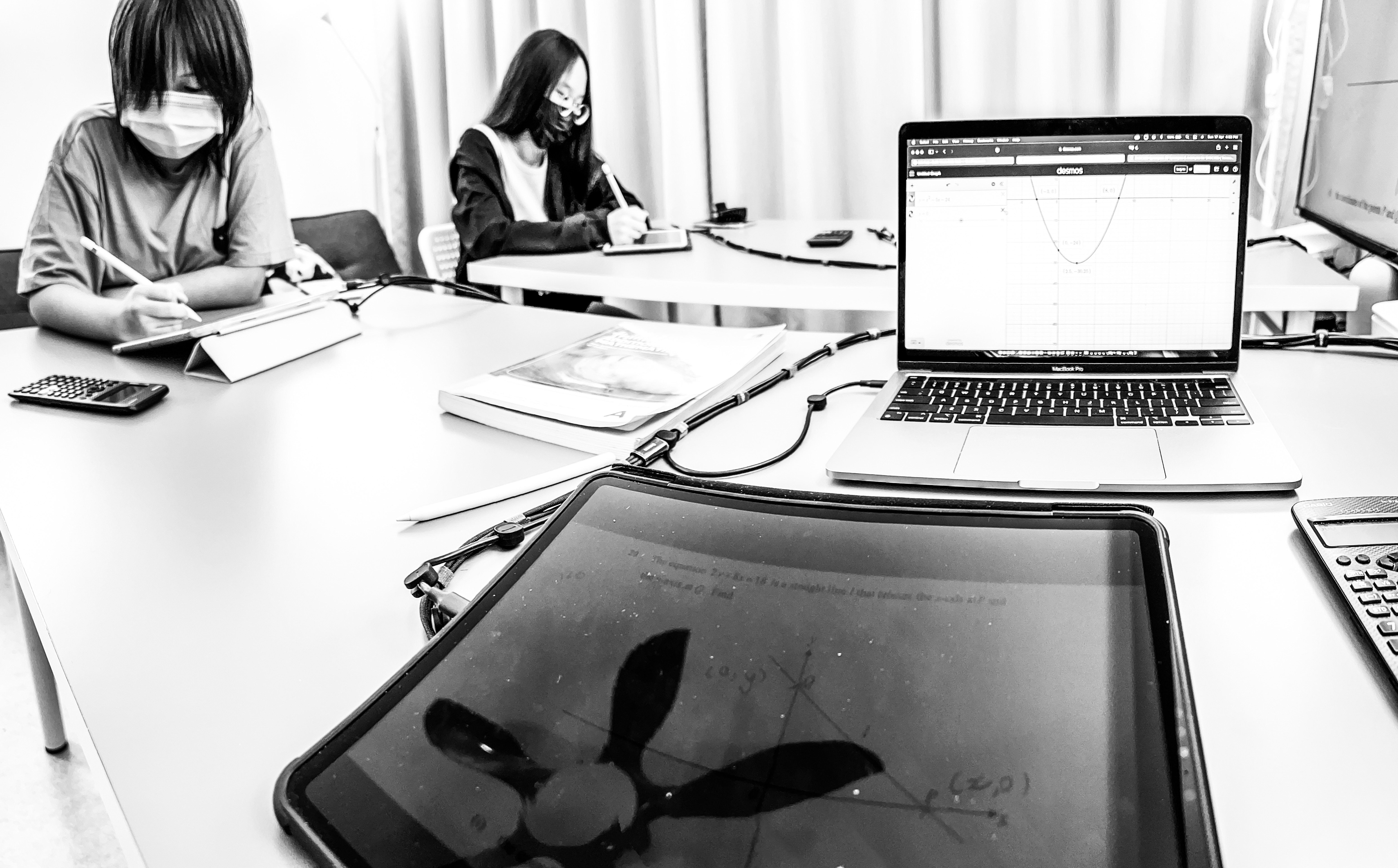
How Math Small Group Classes Bukit Timah’s 3-Pax IP IB G2 G3 A-Math Can Help
Math Small Group Home Based Classes Bukit Timah offers 3-pax small group lessons for Secondary Math, catering to IP (Integrated Programme), IB (International Baccalaureate), G2, and G3 A-Math students. Located near the Sixth Avenue MRT, Bukit Timah area of Singapore, this service provides intensive practice and personalised feedback in a collaborative yet focused environment. Ideal for secondary students navigating advanced topics like algebra, trigonometry, calculus, and geometry, these classes align with Singapore’s demanding math curricula, helping learners build confidence and achieve academic excellence. Whether preparing for O-Levels, IP exams, or IB assessments, the small-group format ensures targeted support to master complex concepts.
Benefits of Small-Group Math Classes
Small-group math classes, especially in a 3-pax setup, offer a high-impact learning experience by combining personalised attention with peer collaboration. This approach is particularly effective for secondary math, where students tackle challenging syllabuses like G2/G3 A-Math, IP, and IB. Research highlights how small groups enhance engagement, provide rapid feedback, and accelerate progress in mathematics. Here are the key advantages:
- Intensive Practice and Personalised Feedback: In small groups, tutors can deliver tailored instruction, addressing individual gaps in understanding while offering immediate corrections. This leads to faster mastery of topics like quadratic equations or differentiation, with studies showing small-group tuition boosts performance by providing targeted support for students with varying abilities.
- Enhanced Engagement and Collaboration: Students benefit from discussing problems with peers, fostering deeper insights and motivation. Small groups encourage active participation, making abstract math concepts more relatable and equitable, as evidenced by research on collaborative learning in math.
- Accelerated Learning and Better Outcomes: The format allows for efficient skill application and frequent practice, resulting in measurable improvements. Evidence indicates small-group interventions can add months of additional progress, especially in secondary math, by focusing on conceptual clarity and problem-solving.
- Confidence Building and Motivation: With personalised encouragement, students gain resilience against challenging topics. This approach reduces anxiety, promotes independent thinking, and supports long-term academic success in rigorous programs like IP and IB.
Location Advantage: Proximity to Bukit Timah’s Secondary Schools
Math Small Group Classes Bukit Timah is strategically situated near prominent secondary schools in the Bukit Timah district, making it convenient for students to attend without extensive travel. This accessibility minimizes fatigue, supports consistent participation, and integrates seamlessly with school schedules in this education hub.
Key nearby schools include:
- Hwa Chong Institution
- Methodist Girls’ School (Secondary)
- Nanyang Girls’ High School
- Singapore Chinese Girls’ School
- Anglo-Chinese School (Barker Road)
- St. Margaret’s Secondary School
This prime location in Bukit Timah enhances the overall learning experience, allowing more time for focused math practice.
Section of Helpful Authoritative Clickable Links
For additional resources on secondary mathematics in Singapore, including IP, IB, G2, and G3 A-Math, explore these authoritative links from official and reputable sources. They provide syllabuses, study guides, practice materials, and strategies to support advanced math learning:
- Singapore Ministry of Education (MOE) G2 and G3 Mathematics Syllabuses – Comprehensive outlines for G2 and G3 math streams.
- Singapore MOE G2 and G3 Additional Mathematics Syllabuses – Detailed curriculum for advanced topics in algebra, geometry, and calculus.
- Singapore MOE Secondary Math Syllabus Overview – Key concepts from Secondary 1 to 4, including geometry and trigonometry.
- IB Math Resources Singapore – Free study guides, past papers, and exam strategies for IB students.
- Achevas O-Level Additional Math Tuition Resources – Notes and videos for Sec 3 and 4 A-Math and IP Math.
- Tim Gan Math IP Math Tuition Resources – Curated materials for building foundations in IP and advanced math.
- Studious Minds Secondary Maths Tuition Resources – Tailored guides for A-Math, E-Math, and IP syllabuses.
These links offer evidence-based tools to complement small-group classes, aiding in intensive practice and personalised growth. Enrolling in Math Small Group Classes Bukit Timah could elevate your secondary math journey with its focused, locally accessible approach.
 Bukit Timah Tutor Secondary Mathematics