
Bukit Timah Mathematics | Solving Math Problems with Bukit Timah Math Tutor
At Bukit Timah Tutor, we deliver the premier Bukit Timah Math Tuition for secondary students, laser-focused on empowering you to secure distinctions in your exam results—because nothing else matters. We teach math relentlessly until you truly grasp it, with genuine instruction that drives real Mathematical understanding.
Have you ever watched your child wrestle with a tricky math problem, their brow furrowed in confusion as numbers and equations swirl around like a puzzle they can’t quite crack? In the bustling educational enclave of Bukit Timah, where academic excellence is the norm, a dedicated Bukit Timah math tutor can turn those moments of frustration into breakthroughs of clarity and confidence.
At BukitTimahTutor.com Singapore, our Bukit Timah mathematics programs specialize in solving math problems, from primary PSLE challenges to secondary O-Level conundrums and beyond. Guided by the MOE mathematics syllabus, our Bukit Timah math tutors empower students to not just solve equations but to think like mathematicians, applying logic and creativity to real-world scenarios. Whether it’s unraveling algebraic mysteries or conquering geometric proofs, our approach ensures that Bukit Timah mathematics becomes a gateway to success, not a barrier.
The Power of a Bukit Timah Math Tutor in Mastering Problem-Solving
In Singapore’s rigorous education system, Bukit Timah mathematics demands more than memorization—it requires sharp problem-solving skills that can handle the unexpected twists of exam questions. That’s where a seasoned Bukit Timah math tutor shines. At BukitTimahTutor.com Singapore, our tutors are experts in breaking down complex problems into manageable steps, aligned with the Singapore Examinations and Assessment Board (SEAB) guidelines. Imagine a Sec 3 student grappling with quadratic inequalities; our Bukit Timah math tutor starts by revisiting basics like factoring, then guides them through graphing and sign tests, using visual aids to make abstract concepts tangible.
Parents in Bukit Timah choose our mathematics tuition because it addresses common pitfalls head-on. Low grades or a fear of math often stem from gaps in understanding, but our Bukit Timah math tutors fill those voids with personalized strategies. Drawing from over 20 years of MOE-trained experience, they incorporate critical thinking frameworks from MOE, teaching students to ask “why” and “how” rather than just “what.” This not only boosts scores—many of our students jump from C6 to A1—but also builds resilience, turning math problem-solving into an enjoyable intellectual adventure.
Step-by-Step: How Bukit Timah Math Tutors Tackle Tough Problems
Dive into a session with a Bukit Timah math tutor at BukitTimahTutor.com, and you’ll see problem-solving come alive. We begin every class by teaching from scratch, ensuring no student is left behind. For primary Bukit Timah mathematics, like PSLE word problems involving ratios or fractions, our tutors use the bar model method endorsed by MOE, drawing diagrams to visualize relationships and simplify calculations. Picture a P6 student puzzled by a speed-distance-time question; the Bukit Timah math tutor breaks it into stages—identifying knowns, sketching a timeline, and applying formulas—transforming confusion into a logical sequence.
For secondary levels, Bukit Timah mathematics shifts to advanced topics like trigonometry or calculus in G3 Additional Math. Our Bukit Timah math tutors excel here, using real-life examples: solving for angles in surveying or optimizing areas in design projects. In small groups of 3, students collaborate on problems from past O-Level papers, with the tutor facilitating discussions to uncover multiple solution paths. Mistakes? They’re celebrated as teachable moments. If a student misapplies the product rule in differentiation, the Bukit Timah math tutor pauses, explains the error with counterexamples, and reteaches, fostering deeper retention. This interactive style, inspired by SEAB’s assessment objectives, prepares students for both Paper 1’s quick calculations and Paper 2’s in-depth reasoning.
To keep engagement high, we integrate fun elements like math riddles or tech tools. Students might use graphing software to plot functions, seeing instantly how changes affect outcomes, or compete in timed challenges to build speed. Holiday workshops amp up the intensity, focusing on problem-solving marathons that cover syllabus updates for 2026 exams, ensuring Bukit Timah mathematics remains dynamic and relevant.
Contact us for maximum gains with minimal effort

Building Confidence: Real-Life Stories from Bukit Timah Mathematics Students
The true magic of solving math problems with a Bukit Timah math tutor lies in the stories of transformation. Meet Alex, a Sec 4 student from a nearby Bukit Timah school, who once dreaded E-Math coordinate geometry. After joining BukitTimahTutor.com’s Bukit Timah mathematics program, his tutor introduced mnemonic devices for formulas and practice sets mirroring O-Level syllabi (4052). Within months, Alex not only solved problems independently but scored an A2, crediting the tutor’s encouragement for reigniting his passion.
Or consider Priya, a primary student struggling with PSLE heuristics. Her Bukit Timah math tutor employed storytelling—framing problems as adventures where numbers are heroes—making abstract concepts relatable. Parents rave about these changes: “Our daughter now tackles Bukit Timah mathematics homework with excitement,” shares one family. With a 100% improvement rate, our programs align with MOE’s holistic education goals, nurturing not just grades but lifelong learners who view math problems as opportunities.
Other ways to assess Mat students and their problems:
| Category | Assessment Method | Description |
|---|---|---|
| Formative | Exit Tickets | Brief questions or problems at the end of a lesson to check understanding, e.g., solving a quick equation to identify knowledge gaps. |
| Formative | Thumbs Up/Down or Quick Check Signals | Students use hand gestures or signals to indicate comprehension levels, helping teachers adjust pacing or group students. |
| Formative | In-Class Discussions | Classroom conversations with follow-up questions to reveal misconceptions and guide future teaching. |
| Formative | Homework (Formative Use) | Assigned work reviewed for strengths and challenges, not graded, to allow independent exploration. |
| Formative | Polls | Quick questions to assess confidence, prior knowledge, or misconceptions during activities. |
| Formative | KWL Charts | Students organize what they Know, Want to know, and Learned about a topic to gauge prior knowledge and progress. |
| Formative | Daily Review | Short reviews of homework or errors to gather data and practice concepts. |
| Formative | Plenary Questions or Activities | End-of-lesson checks using independent work to assess readiness to move on. |
| Formative | Asking Questions | Skillful questions (e.g., process-oriented, Bloom’s Taxonomy) to check depth and diagnose errors. |
| Formative | Listening to Learners | Gathering insights from students’ questions and responses to track progress. |
| Formative | Rumours Activity | Students investigate and discuss the validity of math statements to promote reasoning. |
| Formative | Pre-Topic Diagnostic Assessment | Assessing prior knowledge before new topics to identify gaps and misconceptions. |
| Summative | Quizzes and Tests | Formal evaluations like unit tests or yearly checkpoints to summarize understanding and grade achievement. |
| Summative | Assessment Papers | Domain-specific tests (e.g., number, geometry) to analyze achievement at individual, class, or school levels. |
| Summative | Yearly Checkpoints | End-of-year testing to provide evidence of overall learning and identify resource needs. |
| Diagnostic | Diagnostic Assessments | In-depth analysis of specific concept areas, often one-on-one, to probe reasoning and misconceptions. |
| Diagnostic | Grade-Level Assessments | Administered 2-3 times a year, covering concept areas to track cumulative progress. |
| Authentic/Performance-Based | Performance Assessment | Collaborative problem-solving where students demonstrate knowledge through teamwork on complex problems. |
| Authentic/Performance-Based | Short Investigations | 60-90 minute tasks where students interpret, calculate, or explain a math problem independently or in groups. |
| Authentic/Performance-Based | Open-Response Questions | Quizzes requiring brief written/oral answers, solutions, drawings, or diagrams to show real-world understanding. |
| Authentic/Performance-Based | Statistical Projects | Students analyze data (e.g., comparing distributions) and write reports on interpretations. |
| Authentic/Performance-Based | Math Magazines | Creating summaries of math-related articles from real sources, assessed on understanding and creativity. |
| Authentic/Performance-Based | Video Lessons | Students create videos teaching concepts to peers, who then solve related problems. |
| Authentic/Performance-Based | Explaining Concepts and Solutions | Students break down problems or explain reasoning via docs, videos, or photos. |
| Authentic/Performance-Based | Virtual Project Feedback | Proposing projects, sharing in online galleries, and providing peer feedback. |
| Authentic/Performance-Based | Redos and Mistake Identification | Identifying errors in given problems or redoing struggled ones to learn from mistakes. |
| Self/Peer Assessment | Self-Assessment | Students evaluate their own work and participation, reflecting on difficulties and learnings. |
| Self/Peer Assessment | Peer Assessment | Review by peers, e.g., of portfolios or projects, to provide feedback. |
| Self/Peer Assessment | Assessment as Learning | Students monitor their own learning, using metacognition to identify knowledge gaps. |
| Observation/Interview-Based | One-on-One Interactive Interviews | Face-to-face sessions using materials to observe strategies and probe thinking. |
| Observation/Interview-Based | Informal Interviews | One-to-one or small group talks to explore understanding and approaches. |
| Observation/Interview-Based | Interview Assessments | Short, 5-minute sessions with checklists to gauge progress. |
| Observation/Interview-Based | Observation of Student Strategies | Recording strategies during activities or interviews to reveal understanding. |
| Observation/Interview-Based | Documentation of Children’s Talk | Analyzing students’ mathematical discussions for reasoning insights. |
| Portfolio/Collection-Based | Portfolios | Documenting progress through journals, artwork, reports, and revisions over time. |
| Portfolio/Collection-Based | Collection of Student Work Over Time | Gathering artifacts like drawings or solutions to track development. |
| Portfolio/Collection-Based | Reflective Journaling or Maths Journaling | Recording methods, explanations, reflections, or ideas in journals. |
| Technology-Based | Digital Games and Apps | Online tools that track performance and provide data on progress and mindset. |
| Record-Keeping | Cumulative Record-Keeping and Learning Profiles | Tracking responses over time to visualize strengths and inform instruction. |
| Record-Keeping | Class Records for Group Analysis | Compiling data to identify common issues and form groups. |
| Other | Multiple-Choice Questions (Enhanced) | Questions integrating concepts to reveal understanding, taking 2-3 minutes each. |
| Other | Use of Open-Ended Questions | Questions encouraging explanation and multiple solutions to show deeper thinking. |
| Other | DuFour’s 4 Critical Questions | Planning framework to monitor what students need to know and how to respond to learning gaps. |
| Other | Assess, Diagnose, Act Framework | Analyzing data at various levels to interpret and act on findings. |
Essential Skills Gained Through Bukit Timah Math Tutor Guidance
Beyond immediate exam prep, a Bukit Timah math tutor instills skills that transcend the classroom. In Bukit Timah mathematics, we emphasize organized thinking: students learn to categorize problems—algebraic, geometric, statistical—and select tools accordingly. Tenacity is key; our tutors teach persistence through multi-step problems, like proving trigonometric identities, where initial failures lead to eventual mastery.
Emotional intelligence plays a role too. Bukit Timah math tutors help manage frustration, using mindfulness techniques during sessions to maintain focus. For neurodivergent learners, we adapt with visual or kinesthetic methods, ensuring inclusive problem-solving. These skills, rooted in MOE’s 21st-century competencies, prepare students for JC H2 Math or even international curricula like IB, where analytical prowess is paramount.
Why BukitTimahTutor.com’s Bukit Timah Math Tutors Are the Top Choice
What makes BukitTimahTutor.com Singapore’s Bukit Timah math tutors unbeatable for solving math problems? It’s our team’s depth—MOE alumni with decades of experience across PSLE, O-Levels, A-Levels, IP, and IGCSE. They’ve navigated syllabus evolutions, like the 2025 primary updates, and use proven pedagogies to demystify Bukit Timah mathematics. Conveniently located near Farrer Road MRT, our center offers flexible slots, from after-school to weekends, accessible via buses like 48 or 93.
Families trust us for the glowing reviews and tangible results: consistent distinctions and renewed enthusiasm. Our Bukit Timah mathematics programs include enrichment like Olympiad training, bridging to advanced studies and fostering a community of young problem-solvers.
Take the First Step: Solve Math Problems with a Bukit Timah Math Tutor
Ready to conquer Bukit Timah mathematics? Don’t let unsolved problems hold your child back. Enrol with a Bukit Timah math tutor at BukitTimahTutor.com Singapore today and watch them transform into confident problem-solvers. Our tailored sessions promise academic leaps and a love for learning that endures.
Contact us for a free consultation—because every math problem has a solution, and it starts here in Bukit Timah.
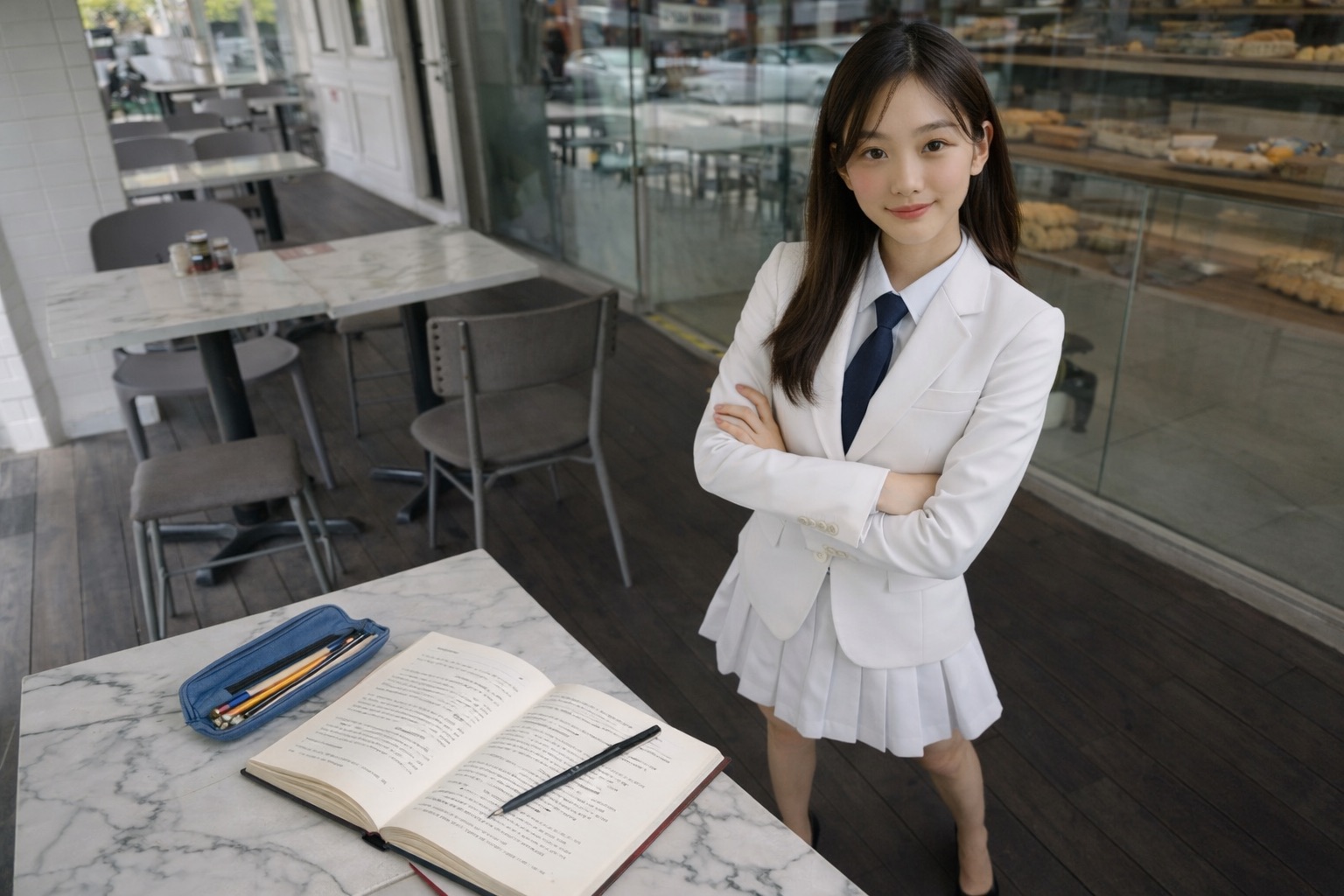
Math problems can pose significant challenges for students in Bukit Timah, Singapore, an area renowned for its concentration of elite schools like Hwa Chong Institution and Raffles Girls’ School, where academic expectations run high. The rigorous Singapore math curriculum, combined with cultural pressures for excellence, often amplifies these difficulties. Below, I’ll break down the key factors based on educational insights, drawing from local tuition centers, school experiences, and broader Singaporean math education trends. These issues affect primary, secondary, and IP (Integrated Programme) students, leading many families to seek specialized Bukit Timah math tuition for support.
1. Foundational Gaps from Earlier Levels
One of the most common hurdles is a lack of solid basics, where students miss key concepts in primary or lower secondary math, making advanced topics feel insurmountable. For instance, weak algebra from Sec 1–2 can make Sec 3 A-Math overwhelming, as math is cumulative—gaps in arithmetic, fractions, or number bonds compound over time. In Bukit Timah’s competitive environment, students from top primary schools like Nanyang or Bukit Timah Primary often face real-world problem-solving that’s challenging even at early stages, leading to persistent weaknesses if not addressed early. Social media discussions highlight how improper sequencing of topics in primary education leaves kids without the fundamentals needed for higher-level compounding, a sentiment echoed by educators at institutions like UWI but applicable to Singapore’s system.
2. Math Anxiety and Emotional Barriers
Many Bukit Timah students experience math anxiety—stress, fear, or tension from the belief that math is inherently “hard,” which creates mental blocks during problem-solving. This is exacerbated in high-stakes areas like Bukit Timah, where cultural emphasis on top grades and university prep (e.g., for H2 Math) leads to panic, low self-esteem, and even depression. Parents’ high expectations add pressure, turning math into a source of family stress rather than enjoyment. Online forums note how this anxiety stems from early exposure to abstract concepts without enough concrete reinforcement, as seen in Singapore Math’s Concrete-Pictorial-Abstract approach, which some students struggle to transition through.
3. Accelerated Pace and Cognitive Overload
In Bukit Timah’s IP schools, the curriculum moves at a breakneck speed—covering algebra, trigonometry, or functions in weeks rather than months—mismatching students’ natural learning timelines. This overemphasis on independence leaves younger teens without guided support, allowing misconceptions to solidify by Sec 3–4. Enrichment topics and non-routine questions add to the cognitive load, making it hard to process abstract ideas like calculus applications or geometric proofs. Secondary 4 math is often likened to “climbing Bukit Timah Hill—high and tiring,” with advanced topics building on everything prior, overwhelming those not fully prepared.
4. Memorization Without Deep Understanding
Students frequently memorize formulas or procedures (e.g., quadratic equations or trigonometric identities) without grasping the “why,” leading to breakdowns when exam questions twist formats or require real-world applications like rate problems. In Singapore’s problem-solving-focused curriculum, this shallow approach fails against word problems or multi-step scenarios, common in PSLE and O-Levels. Bukit Timah students, often in elite streams, lose creativity as teaching shifts to pattern recognition and rehearsed methods to cover “every possible problem type,” stifling innovative thinking. This is compounded by increasing PSLE difficulty, where conceptual depth is tested more rigorously.
5. Attention Issues, Lack of Practice, and Patience
Multi-step problems demand sustained focus, but distractions or attention difficulties cause students to skip steps or lose track, especially in fast-paced Bukit Timah classes. A lack of patience leads to rushing or giving up on abstract thinking, as math requires repetition to build fluency—yet many students avoid practice, viewing it as tedious. Teachers in Singapore note basic deficiencies like poor multiplication or addition persisting into secondary levels, making complex problems impossible. For IP students, fewer checkpoints (no O-Levels) mean issues like time management in exams go unnoticed until later.
6. Learning Disabilities and Socioeconomic Factors
Conditions like dyscalculia make grasping concepts inherently tough, worsened by Singapore’s high standards and progressive curriculum. In Bukit Timah, while resources abound, social inequality affects some—kids from varied backgrounds may lack early support, leading to poorer performance and isolation. Broader data shows Singapore’s math scores lead globally (e.g., 575 vs. OECD average 472), but relative gaps highlight how Western pullbacks pale against Asia’s rigor, yet local struggles persist for those not keeping up.
7. Exam Stress and Application Challenges
Bukit Timah students often know content but falter under timed pressure, leaving papers unfinished or mishandling word problems that require translating English to math models. Real-world applications, like statistics in daily scenarios, confuse those without conceptual ties. Sec 3–4 transitions introduce new E-Math difficulties and gaps from lower sec, amplifying stress in this high-achieving district.
These challenges aren’t unique to Bukit Timah but are intensified by its elite school ecosystem and parental expectations. Solutions often involve tuition centers like BukitTimahTutor.com, which emphasize conceptual teaching, practice, and gap-filling. If your child is facing these, starting with basics and building confidence can make a big difference—many see 100% grade improvements with targeted help.
Overcoming Math Challenges: How We Solve Problems at Bukit Timah Tutor
At Bukit Timah Tutor, we understand the unique pressures faced by students in Singapore’s elite educational district, where schools like Hwa Chong Institution and Raffles Girls’ School set sky-high standards. Math problems aren’t just academic hurdles—they’re often rooted in deeper issues like foundational gaps, anxiety, and exam stress. As a leading provider of Bukit Timah math tuition, we specialize in turning these challenges into opportunities for growth.
Our experienced Bukit Timah math tutors, with over two decades of MOE-trained expertise, deliver personalized G3 Additional Math tuition, Secondary Math tuition, and more, aligned with the MOE mathematics syllabus. Whether your child is struggling with PSLE prep or O-Level A-Math, we tackle these difficulties head-on, fostering confidence and distinctions. Here’s how we do it, step by step.
Addressing Foundational Gaps with Bukit Timah Math Tuition
One of the biggest reasons math feels tough for Bukit Timah students is missing basics from earlier years—think weak algebra hindering trigonometry or forgotten fractions complicating ratios. At Bukit Timah Tutor, we start every session from scratch, no matter the level. Our Bukit Timah math tutors dive into textbooks endorsed by the Singapore Examinations and Assessment Board (SEAB), explaining concepts intimately and providing clear reasoning for each problem-solving step. This builds a rock-solid foundation, ensuring no gaps persist.
In our small-group Bukit Timah Secondary Math tuition (just 3-6 students), we revisit core topics like quadratic equations or geometric proofs, using visual aids and real-world examples to make connections click. For instance, a Sec 3 student confused by functions might start with simple graphing exercises before advancing to calculus applications. Parents often see rapid improvements, with students jumping from F9 to A1, as we systematically fill those voids and prevent future stumbling blocks.
Conquering Math Anxiety in Bukit Timah G3 Additional Math Tuition
Math anxiety hits hard in high-stakes Bukit Timah, where fear of failure can paralyze even bright minds. We combat this by making learning enjoyable and low-pressure. Our Bukit Timah math tutors emphasize “smart studying” over grueling drills—focusing on efficient techniques that reduce overwhelm and spark interest. By framing mistakes as growth moments, we shift attitudes from dread to excitement.
Imagine a student dreading O-Level exams; in our G3 Additional Math tuition, we incorporate fun elements like math puzzles or group discussions to build positivity. We teach mindfulness tricks, such as focusing on the task at hand and blurring distractions, which lowers stress and boosts engagement. Over time, this renews enthusiasm, with many families reporting their child’s newfound love for Bukit Timah mathematics, turning anxiety into a distant memory.
Navigating the Accelerated Pace with Expert Bukit Timah Tutors
The fast curriculum in Bukit Timah IP schools leaves little room for error, often causing cognitive overload. At Bukit Timah Tutor, we pace lessons progressively, ramping up the learning curve without rushing. Our Bukit Timah math tuition covers the full syllabus—from Number and Algebra to Statistics and Probability—while allowing time for absorption.
Tutors with experience across IP, IGCSE, and GCE O-Levels guide students through accelerated topics, like binomial expansions in A-Math, with structured breakdowns. We use timed practices mimicking O-Level Paper 1 and 2 formats, building speed and depth. This approach matches the MOE’s critical thinking framework, ensuring students not only keep up but excel, even in demanding environments.
Moving Beyond Memorization in Bukit Timah Secondary Math Tuition
Rote learning without “why” fails when exams demand application, like twisting word problems or proofs. We prioritize deep conceptual understanding at Bukit Timah Tutor. Our Bukit Timah math tutors train students in reasoning and efficient memorization, eliminating shallow habits.
In classes, we dissect problems—say, trigonometric identities—explaining derivations before practice. Ongoing error analysis weeds out mistakes, teaching self-correction. This fosters creativity, helping students tackle non-routine questions in PSLE or O-Levels. Benefits? Consistent distinctions and skills that bridge to A-Level H2 Math, as our methods align with real-world applications emphasized in the syllabus.
Tackling Attention Issues and Patience in Bukit Timah Math Classes
Sustained focus is key for multi-step problems, but distractions abound. We build tenacity and concentration through targeted training. Bukit Timah math tutors teach “focused optics”—zeroing in on the immediate step while ignoring noise—alongside patience for long revisions.
Small-group dynamics encourage collaboration, keeping sessions engaging without overload. For attention-challenged students, we adapt with kinesthetic activities, like modeling ratios with objects, making abstract Bukit Timah mathematics concrete. This cultivates resilience, essential for exam marathons, and helps neurodivergent learners thrive.
Supporting Learning Disabilities and Socioeconomic Factors
Conditions like dyscalculia or varying backgrounds can widen gaps in Bukit Timah’s competitive scene. Our inclusive Bukit Timah math tuition identifies individual needs early, offering tailored guidance. Math Tutors correct errors gently, supporting steady progress from basics to advanced.
We emphasize equity, providing resources for all, regardless of starting point. By building organized workflows and study habits, we empower students to overcome barriers, aligning with MOE’s holistic goals for lifelong learning.
Alleviating Exam Stress with Comprehensive Bukit Timah Tutor Strategies
Timed pressure and application woes amplify stress. At Bukit Timah Tutor, we prepare holistically—organizing notes, practicing under exam conditions, and covering all syllabus angles. Holiday intensives target weak spots, like statistics in E-Math, reducing last-minute panic.
Our Bukit Timah math tutors instill exam strategies, from time management to translating word problems, ensuring calm performance. With a 100% improvement rate, students achieve A1s while enjoying the process, carrying skills to university.
Why Choose Bukit Timah Tutor for Lasting Solutions
Conveniently near Sixth Avenue MRT, our Bukit Timah math tuition offers flexible schedules and proven results. Join us at BukitTimahTutor.com to transform math struggles into strengths. Contact today for a trial—because every Bukit Timah student deserves to solve problems with confidence and joy.

 Bukit Timah Tutor Secondary Mathematics