
Get Secondary A-Math Distinctions with Bukit Timah Tuition
Getting A1 for A-Math at Bukit Timah: A Quick Note to Parents and Students
If you’ve ever felt that “studying more” isn’t translating into better A-Math grades, you’re not alone. At Bukit Timah Tutor, we’ve built a simple, proven playbook that helps students move beyond cramming and into connected, durable understanding—the kind that holds up under exam pressure.
In this guide, you’ll see how we:
- Connect ideas for faster recall (our Metcalfe’s Law approach), so trig, algebra, and calculus support each other instead of living in silos.
- Deflate the “studying bubble” by managing cognitive load, spacing practice, and using quick retrieval drills that actually make memory stronger.
- Use “two steps away” bridges—short, smart interactions with peers and tutors—to fix blind spots quickly and sharpen exam-style working.
- Train on an S-curve: short cycles of Learn → Understand → Memorise → Test, so progress compounds week after week toward distinction-level papers.
Parents will find clear checkpoints (retrieval scores, error-log fixes, timed-segment pace) and a 12-week roadmap aligned to O-Level A-Math (4049). Students will get weekly wins—faster algebra, cleaner trig proofs, and confident calculus applications—plus a calm, repeatable routine for Paper 1 and Paper 2.
Contact us for A-Math Tutorials

1) Connect, don’t cram: “Metcalfe’s Law” for A-Math
Article idea → practice: Our Metcalfe piece says learning scales when ideas are densely linked, not hoarded in silos. We turn every new 4049 topic into a network of connections (algebra ↔ trigo ↔ calculus), so recall is triggered from multiple angles. (Bukit Timah Tutor Secondary Mathematics)
How we implement in class
- Concept-map every unit: e.g., identities ↔ equations ↔ graphs; compound angle → double angle → product-to-sum.
- “Where else does this show up?” exit question every lesson to force cross-topic transfer (e.g., logarithms → exponential models in optimisation). (Bukit Timah Tutor Secondary Mathematics)
- Paper alignment: We explicitly map these links to 4049’s strands (Algebra; Geometry & Trigonometry; Calculus) and assessment objectives (reasoning, communication, application). (seab.gov.sg)
Why it wins marks: Networked knowledge reduces “context shock” on long items and improves method-mark recovery when the first approach stalls. (Bukit Timah Tutor Secondary Mathematics)
2) Never “bubble”: manage load, space the wins
Article idea → practice: The Studying Bubble warns that cramming + poor design = overload, then collapse under time. We engineer low-extraneous-load lessons and spacing/retrieval so learning sticks without burnout. (Bukit Timah Tutor Secondary Mathematics)
How we implement in class
- Worked-example → faded steps → independent (minimise split attention; tighten layouts).
- Built-in retrieval: 3–5 cold questions at start; spaced revisit of past weak objectives weekly.
- Timed micro-sets to practice under cognitive load without tipping into overload; sleep and “quiet-rest” guidance near exams. (Bukit Timah Tutor Secondary Mathematics)
Why it wins marks: Fewer careless errors, stable pacing on both papers, and durable recall of identities/techniques. (Bukit Timah Tutor Secondary Mathematics)
3) “Two steps away” to breakthroughs (use weak ties)
Article idea → practice: Your Two Steps Away article shows how weak ties (not just close friends) unlock missing methods/resources fast. We formalise this with small, deliberate bridges so students become “two hops” from the method they need. (Bukit Timah Tutor Secondary Mathematics)
How we implement in class
- Cross-class swaps: weekly exchange of one worked solution with a senior/peer from another class.
- 10-minute “micro-clinic” with a different teacher/tutor for one objective (e.g., inequality proof flow).
- Peer teach-backs in our 3-pax groups so every student explains at least one step aloud per session. (Bukit Timah Tutor Secondary Mathematics)
Why it wins marks: Faster fix to blind spots (marking expectations, cleaner working) → immediate AO1/AO2 gains in 4049. (seab.gov.sg)
4) Train like AI: ride the S-curve (iterate → compound)
Article idea → practice: The AI S-curve piece argues for short cycles, tight feedback, and inflection management when progress plateaus. We run Learn → Understand → Memorise → Test loops weekly and plan plateau pivots. (Bukit Timah Tutor Secondary Mathematics)
How we implement in class
- Tight feedback loops (error logs tagged by syllabus objective; immediate re-attempts).
- Interleaving (mix identities/algebra/calculus each week), and plateau pivots (e.g., code a tiny derivative visualiser when graph sense stalls). (Bukit Timah Tutor Secondary Mathematics)
- Mock segments calibrated to 4049 Paper 1 & 2 timing and calculator rules. (seab.gov.sg)
Why it wins marks: Compounding retention + faster transfer → more secure long-questions and proofs. (Bukit Timah Tutor Secondary Mathematics)
5) What “distinction-aligned” really means for 4049
We explicitly teach to SEAB 4049 aims (algebraic manipulation, reasoning, calculus foundations) and paper design (calculator permitted in both papers; method marks require clear, stepwise working). Students practise precisely to spec. (seab.gov.sg)
6) 12-week A-Math (4049) roadmap — outputs & KPIs
Weeks 1–2: Baseline & Algebra Engine
- Focus: functions, indices/surds, inequalities.
- Outputs: one-page identities sheet; error-log categories.
- KPI: ≥80% on retrieval set (algebra core); finish 2 × 25-min timed sections within time. (Bukit Timah Tutor Secondary Mathematics)
Weeks 3–4: Trig Identities & Equations
- Focus: compound/double-angle, R-formula, exact values, equation solving.
- Outputs: concept map linking trig ↔ graphs ↔ calculus gradient sense.
- KPI: <2 algebraic slips per long trig item; step count neat enough for full method marks. (Bukit Timah Tutor Secondary Mathematics)
Weeks 5–6: Calculus I (Differentiation)
- Focus: rules from first principles → applications (tangent, normals, optimisation).
- Outputs: derivation sketch; “when to differentiate” decision tree.
- KPI: 90% accuracy on derivative rules; ≥1 fully-correct optimisation under time. (seab.gov.sg)
Weeks 7–8: Calculus II (Integration) & Coordinate Geometry
- Focus: anti-derivatives, area under curve; lines/circles links.
- Outputs: integral identities mini-deck; link map to algebraic manipulation.
- KPI: two mixed Qs done within time with stated theorems/limits. (Bukit Timah Tutor Secondary Mathematics)
Weeks 9–10: Proof-style Fluency + Mixed Papers
- Focus: “show that”, inequalities, trig proofs; interleaved long questions.
- Outputs: personal “proof moves” checklist; two cross-class swaps (weak ties).
- KPI: ≥70% on mixed long-question set; teacher rubric hits for reasoning/communication. (Bukit Timah Tutor Secondary Mathematics)
Weeks 11–12: Full Dress Rehearsals
- Focus: two full Paper-1/2 runs 48–72h apart; spacing + sleep plan; post-mortem and re-teach.
- Outputs: final timing plan; last-mile retrieval set.
- KPI: Paper-pair mean ≥ A2 with stable pacing; careless-error rate ↓ by ≥40% from Week 1. (Bukit Timah Tutor Secondary Mathematics)
7) Session architecture (every week)
- Learn (first-principles, worked example; low extraneous load). (Bukit Timah Tutor Secondary Mathematics)
- Understand (guided → independent; metacognitive prompts). (Bukit Timah Tutor Secondary Mathematics)
- Memorise (spaced retrieval: identities, derivatives, standard forms). (Bukit Timah Tutor Secondary Mathematics)
- Test (timed micro-segments that mirror 4049 papers; calculator discipline). (seab.gov.sg)
- Network (two-step outreach: swap one worked solution beyond your class). (Bukit Timah Tutor Secondary Mathematics)
8) Parent dashboard (what you’ll actually see)
- Weekly: retrieval score, timed-segment time/accuracy, error-log diffused (Y/N). (Bukit Timah Tutor Secondary Mathematics)
- Fortnightly: updated concept map (new connections highlighted). (Bukit Timah Tutor Secondary Mathematics)
- Monthly: a weak-tie artifact (e.g., senior’s checklist, alternative proof). (Bukit Timah Tutor Secondary Mathematics)
- Termly: two-paper rehearsal stats vs SEAB 4049 objectives. (seab.gov.sg)
9) G2 → G3 progression (Full SBB)
If your child is G2 now, our roadmap builds the accuracy/stamina needed to stretch into G3-level work responsibly — we time these attempts only after G2 stability is demonstrated. (Ministry of Education)
10) Enrol & get started
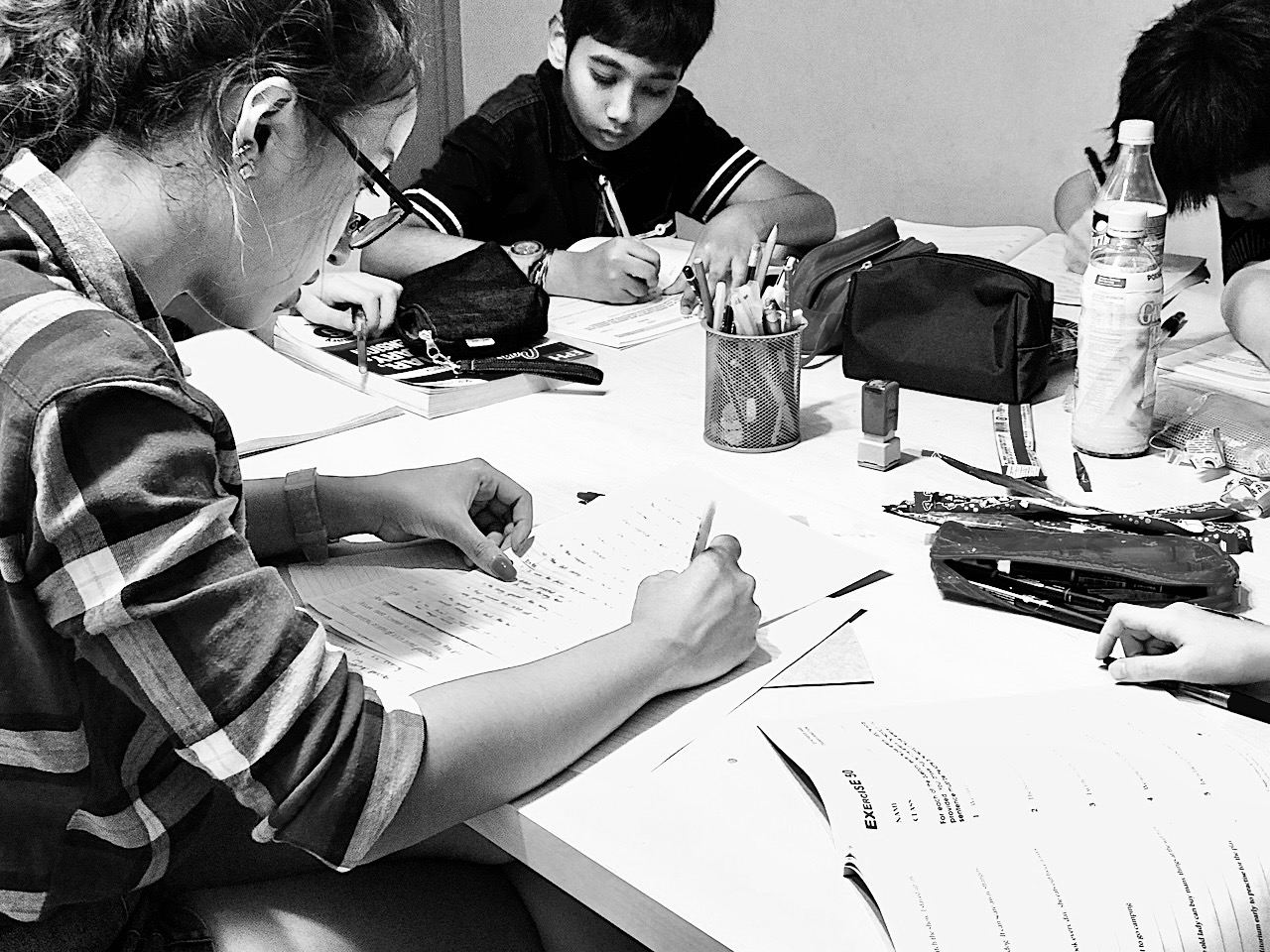
Book a 3-pax slot and we’ll run the baseline → custom roadmap in Week 1, then march the S-curve with you.
Contact us for our latest schedule
Choose Your A-Math Path
- Latest Sec 4 G2 A-Math Tuition
- Latest Sec 3 G2 A-Math Tuition
- Latest Sec 3 G3 A-Math Tuition
- Latest Sec 4 G3 A-Math Tuition
- What to study in Additional Mathematics
- The Hardest Topics in Additional Mathematics
- The Easiest Topics in Additional Mathematics
- Guide to A-Math G2 vs. G3 Differences
- How to Understand Additional Math with BukitTimahTutor.com
Sources (the four articles + exam policy)
- Don’t Study Like Everyone Else: A Metcalfe’s Law Approach to Scoring High in Math. (Bukit Timah Tutor Secondary Mathematics)
- The Studying Bubble: Information Overload. (Bukit Timah Tutor Secondary Mathematics)
- Why You Are 2 Steps Away from Distinctions in Mathematics. (Bukit Timah Tutor Secondary Mathematics)
- What Can We Learn from AI Training for Exponential Growth (S-Curve). (Bukit Timah Tutor Secondary Mathematics)
- SEAB O-Level Additional Mathematics (4049) syllabus/assessment. (seab.gov.sg)
- Full SBB (G1/G2/G3) overview for progression planning. (Ministry of Education)
Related Additional Mathematics (A-Math) — Bukit Timah
- Bukit Timah A-Maths Tuition (Hub) Bukit Timah Tutor Secondary Mathematics
- A-Math Tuition Bukit Timah | Distinctions in O-Level (G2/G3, IP/IB) Bukit Timah Tutor Secondary Mathematics
- Additional Math Small Group Classes (3-Pax) Bukit Timah Tutor Secondary Mathematics
- Additional Math Tuition Bukit Timah | Best Way to Study Bukit Timah Tutor Secondary Mathematics
- Additional Mathematics Tuition | Reimagined A-Math Tutor Bukit Timah Tutor Secondary Mathematics
- Additional Mathematics Tuition (More Information)
 Bukit Timah Tutor Secondary Mathematics