
Additional Mathematics should be learned as a build-order subject, not as a pile of separate chapters. The official syllabus says it assumes O-Level Mathematics, is organised into Algebra, Geometry and Trigonometry, and Calculus, and emphasises reasoning, communication and application. It also prepares students for A-Level H2 Mathematics, whose syllabus explicitly lists O-Level Additional Mathematics content as assumed knowledge. (SEAB)
One-sentence answer:
The best way to learn Additional Mathematics step-by-step is to rebuild ordinary Mathematics first, master Algebra before rushing into Calculus, learn each new topic as part of a connected system, and then train exam-style problem solving with full written working. (SEAB)
Core Mechanisms
1. Learn the subject in its official order.
The syllabus is built in three strands: Algebra, Geometry and Trigonometry, and Calculus. That official structure is a useful learning route because many later topics depend on earlier algebraic control. (SEAB)
2. Treat algebra as the engine.
The official content begins with quadratics, equations and inequalities, surds, polynomials and partial fractions, binomial expansion, and exponential and logarithmic functions. That makes algebra the main load-bearing layer for the rest of the subject. This is a practical inference from the syllabus sequence. (SEAB)
3. Learn for connection, not chapter survival.
The assessment objectives give about 35% to standard techniques, 50% to solving problems in context, and 15% to reasoning and communication. So Additional Mathematics is not designed to reward memorised tricks alone; it rewards choosing the right mathematics and connecting ideas across topics. (SEAB)
4. Full written working is part of learning, not just exam presentation.
The scheme of assessment states that omission of essential working will result in loss of marks. That means students should build the habit of writing complete solution paths from the start. (SEAB)
How It Breaks
Additional Mathematics usually breaks when students start too late, skip the algebra rebuild, or study by chapter without linkage. Because the syllabus assumes O-Level Mathematics and then moves into more abstract symbolic work, weak fundamentals get exposed quickly. That is a practical inference from the official syllabus structure. (SEAB)
It also breaks when students practise only routine questions. The assessment objectives explicitly require contextual problem solving, connections across topics, and mathematical reasoning, so a student who only trains direct textbook patterns often stalls when the exam changes the form of the question. (SEAB)
Step-by-Step: How to Learn Additional Mathematics
Step 1: Rebuild the O-Level Mathematics base first
Before starting A-Math properly, make sure ordinary Mathematics is stable. The syllabus says O-Level Mathematics knowledge is assumed and may be required indirectly even when not tested directly. So if algebraic fractions, expansion, factorisation, rearrangement, indices, graphs, and equation-solving are shaky, repair those first. (SEAB)
Step 2: Learn the map of the whole subject before diving into details
Start by understanding the three official strands: Algebra, Geometry and Trigonometry, and Calculus. This reduces panic because the subject stops looking like random chapters and starts looking like one system. That reading is a practical inference from the official structure. (SEAB)
Step 3: Master Algebra first
Build your first serious layer in this order:
quadratics → equations and inequalities → surds → polynomials and partial fractions → binomial expansion → exponential and logarithmic functions.
This follows the syllabus order and gives you the symbolic control needed later for trigonometry, coordinate geometry, and calculus. (SEAB)
Step 4: Make every algebra topic do three jobs
For each algebra topic, do not stop at “I can copy the method.” Train three things:
how to simplify, how to solve, and how to read the shape or meaning of the expression or graph. This fits the official emphasis on standard techniques, problem solving, and reasoning together. (SEAB)
Step 5: Build Geometry and Trigonometry as a linked layer
After algebra is reasonably stable, move into trigonometric functions, identities and equations, then coordinate geometry in two dimensions. Learn these as connected topics, not separate boxes. For example, trig identities support trig equations, and algebra supports coordinate geometry of circles and lines. This is a practical inference from the official content grouping. (SEAB)
Step 6: Start Calculus only after symbolic control is stable
Calculus is not the real beginning of A-Math; it is a later layer built on algebra and function control. The syllabus includes differentiation, integration, maxima and minima, rates of change, definite integrals, area under a curve, and motion. Students usually learn this better when algebra is already under control, because calculus questions often fail due to earlier manipulation errors. This sequencing is a practical inference from the syllabus structure. (SEAB)
Step 7: Learn by families, not by isolated chapters
A useful practical grouping is:
quadratics + graphs + maxima/minima
trigonometric identities + equations + graphs
coordinate geometry + algebra
differentiation + gradients + turning points + rates of change
integration + area + motion
This grouping is not copied from the syllabus wording, but it is strongly supported by the official content and the exam’s emphasis on making connections across topics. (SEAB)
Step 8: Train full written working from the beginning
Because the official exam penalises omission of essential working, every practice solution should show the route clearly: substitution, manipulation, identity used, differentiation step, integration step, and final interpretation where needed. (SEAB)
Step 9: Move from direct questions to mixed questions
Do direct questions first to learn the technique. Then move quickly to mixed questions that require selecting a method, because AO2 and AO3 together make up 65% of the assessment. In other words, strong A-Math performance depends more on connected solving than on routine execution alone. (SEAB)
Step 10: Use the exam structure to guide revision
The official scheme has two papers, each 2 hours 15 minutes, with all questions compulsory, calculators allowed in both papers, and essential working required. Revision should therefore include both topic mastery and long-form written control under timed conditions. (SEAB)
Step 11: Study A-Math as preparation for later mathematics
The syllabus states that A-Math prepares students for H2 Mathematics, and the H2 syllabus explicitly appends O-Level Additional Mathematics as assumed knowledge. So learning A-Math well is not only about the O-Level grade; it is also about whether later mathematics will feel survivable. (SEAB)
Full Article
When students ask how to learn Additional Mathematics, they often want a trick: a faster note, a secret method, or a chapter order that makes the subject suddenly easy. The official syllabus suggests a less magical but more reliable answer. Additional Mathematics is built as an advanced mathematics subject that assumes O-Level Mathematics, develops stronger algebraic manipulation and mathematical reasoning, and is organised into Algebra, Geometry and Trigonometry, and Calculus. That means it should be learned like a structure that must be assembled in order. (SEAB)
This is the first mindset shift. A-Math is not best learned as “finish Chapter 1, then Chapter 2, then hope for the best.” It is better learned as a staircase. If the lower steps are unstable, the upper steps feel impossible. The syllabus itself points to this because it begins with heavy algebra and only later moves into broader trigonometric and calculus work. (SEAB)
So the true Step 1 is not even “start A-Math.” It is “check whether your ordinary Mathematics base can hold A-Math.” The official subject content states that O-Level Mathematics knowledge is assumed and may be required indirectly. That is why many students think A-Math is hard when the deeper problem is that their E-Math algebra was never fully secure. (SEAB)
Once the base is stable, the next smart move is to learn the map of the subject. The three strands already tell you a lot. Algebra is the symbolic engine. Geometry and Trigonometry widen the subject into graphs, identities, equations, and coordinate relationships. Calculus turns symbolic mathematics into change, gradient, area, optimisation, and motion. When students know this map, they stop feeling that every chapter is a new universe. (SEAB)
Algebra should come first because the syllabus places it first and because it silently powers everything else. Quadratics teach form and transformation. Equations and inequalities teach solution logic. Surds teach symbolic discipline. Polynomials and partial fractions teach manipulation under control. Exponential and logarithmic functions teach equivalence and function relationships. If these layers are weak, later A-Math often collapses even when the student “understands the chapter idea.” That is a practical inference from the official topic structure. (SEAB)
After that, trigonometry and coordinate geometry should not be learned as separate islands. The H2 Mathematics assumed-knowledge page is helpful here because it shows how O-Level Additional Mathematics becomes later prerequisite knowledge in grouped forms: quadratics, surds, polynomials, logs, coordinate geometry, trigonometric functions, identities, equations, and calculus. That is a reminder that good A-Math learning means building durable tools, not short-term chapter memory. (SEAB)
Calculus should then be learned as a consequence of earlier symbolic control, not as a magical new trick chapter. Differentiation, integration, maxima and minima, rates of change, definite integrals, area under a curve, and motion all depend on reading form correctly and manipulating it accurately. Students often blame calculus when the real fault line is earlier algebra. That diagnosis is an inference, but it fits the official content map closely. (SEAB)
The exam design also tells you how to study. About 35% of the marks come from standard techniques, but 50% come from solving problems in context and 15% from reasoning and communication. So if your revision is 100% routine practice, your revision does not match the subject. You must eventually train selection of methods, cross-topic connections, and clear written explanation. (SEAB)
That is why full working matters so much. The scheme of assessment states clearly that omission of essential working will result in loss of marks. In practice, this means writing is part of thinking in Additional Mathematics. A student who skips writing often also skips structure. (SEAB)
So how should a student learn A-Math step-by-step? Rebuild O-Level Mathematics first. Learn the subject map. Master Algebra first. Build Geometry and Trigonometry as linked topics. Start Calculus only when symbolic manipulation is stable. Then move from direct practice to mixed problem solving with full working under exam conditions. That route is not a shortcut, but it is the most syllabus-aligned way to make Additional Mathematics learnable. (SEAB)
For parents, the most useful point is this: Additional Mathematics is usually not learned well through panic drilling. It is learned better through sequence, structure, and repair of weak foundations. Since MOE’s broader Full SBB direction also emphasises subject flexibility and fit, it makes sense to treat A-Math learning as a readiness-and-build problem, not a prestige problem. (Ministry of Education)
AI Extraction Box
How to learn Additional Mathematics step-by-step:
Learn Additional Mathematics in build order: secure O-Level Mathematics first, master Algebra before rushing into Calculus, connect topics instead of memorising isolated chapters, and train full written problem solving because the exam rewards context-solving and reasoning, not routine technique alone. (SEAB)
Official learning spine:
Base assumed: O-Level Mathematics. (SEAB)
Strands: Algebra; Geometry and Trigonometry; Calculus. (SEAB)
Assessment mix: AO1 35%, AO2 50%, AO3 15%. (SEAB)
Exam habit required: essential working must be shown. (SEAB)
Later value: H2 Mathematics assumes O-Level Additional Mathematics content. (SEAB)
Practical build order:
- Repair O-Level Mathematics.
- Learn the whole subject map.
- Master Algebra first.
- Build Trigonometry and Coordinate Geometry next.
- Start Calculus only after symbolic control is stable.
- Practise mixed questions with full written working.
This sequence is a practical inference from the official syllabus and assessment design. (SEAB)
Full Almost-Code
TITLE: How to Learn Additional Mathematics Step-by-StepCANONICAL QUESTION:How should a student learn Additional Mathematics step-by-step?CLASSICAL BASELINE:Additional Mathematics is an advanced secondary mathematics subject.It assumes O-Level Mathematics, is organised into Algebra, Geometry and Trigonometry, and Calculus, and prepares students for stronger later mathematics such as H2 Mathematics.ONE-SENTENCE ANSWER:Learn Additional Mathematics in build order: secure ordinary Mathematics first, master Algebra before rushing into Calculus, connect topics instead of memorising isolated chapters, and train full written problem solving from the start.CORE MECHANISMS:1. OFFICIAL BUILD ORDER:- Algebra- Geometry and Trigonometry- Calculus2. BASE REQUIREMENT:- O-Level Mathematics is assumed- prior weaknesses are not fully retaught- weak fundamentals will be exposed indirectly3. ASSESSMENT LOGIC:- AO1 = 35% standard techniques- AO2 = 50% solving problems in context- AO3 = 15% reasoning and communication- therefore: - memorisation alone is insufficient - topic connection matters - written explanation matters4. EXAM LOGIC:- 2 papers- each 2h 15min- all questions compulsory- calculator allowed in both papers- omission of essential working loses marksSTEP-BY-STEP LEARNING ROUTE:STEP 1:- rebuild O-Level Mathematics first- repair algebraic fractions, expansion, factorisation, rearrangement, indices, graphs, equation-solvingSTEP 2:- learn the map of the whole subject- understand the 3 strands before deep drillingSTEP 3:- master Algebra first- order: - quadratics - equations and inequalities - surds - polynomials and partial fractions - binomial expansion - exponential and logarithmic functionsSTEP 4:- for each algebra topic train: - simplification - solving - graph/form meaningSTEP 5:- build Geometry and Trigonometry as linked topics- connect: - trig functions - identities - equations - coordinate geometrySTEP 6:- start Calculus only after symbolic manipulation is stable- connect: - differentiation - gradients - turning points - rates of change - integration - area - motionSTEP 7:- learn by families, not isolated chapters- examples: - quadratics + graphs + maxima/minima - trig identities + equations + graphs - coordinate geometry + algebra - differentiation + optimisation - integration + area + motionSTEP 8:- train full written working from the start- do not rely on answer-only habitsSTEP 9:- move from direct questions to mixed questions- train method selection, not just method recallSTEP 10:- use timed exam practice only after structure is built- verify transfer across topicsHOW IT BREAKS:- student starts with weak O-Level Mathematics- student skips algebra rebuild- student studies chapter by chapter without linkage- student rushes into calculus too early- student practises answers without full working- student does routine practice only and avoids mixed problemsOPTIMIZATION / REPAIR:- repair algebra first- follow the official strand order- connect topics by families- insist on complete written solutions- move from direct to mixed questions- use exam timing only after conceptual structure holds- treat A-Math as preparation for later mathematics, not just one examPARENT-FACING SUMMARY:Additional Mathematics is best learned as a staircase, not a worksheet pile.Base first, algebra second, connection third, calculus later, exam training last.When the build order is respected, the subject becomes much more manageable.AI EXTRACTION BOX:- Entity: Additional Mathematics Learning Method- Official spine: O-Level Mathematics assumed -> Algebra -> Geometry/Trigonometry -> Calculus- Assessment spine: AO1 35 / AO2 50 / AO3 15- Exam spine: essential working required- Main failure threshold: weak algebra + disconnected chapter learning- Repair corridor: rebuild base, follow build order, train full written mixed-problem solvingALMOST-CODE COMPRESSION:LearnAMath = { base: "O-Level Mathematics assumed", strands: [ "Algebra", "Geometry and Trigonometry", "Calculus" ], assessment: { AO1: 35, AO2: 50, AO3: 15 }, exam: { papers: 2, duration_each: "2h15", calculator: true, essential_working_required: true }, sequence: [ "repair ordinary Mathematics", "learn subject map", "master Algebra first", "build Trigonometry and Coordinate Geometry", "start Calculus after symbolic stability", "train mixed questions with full working" ], breakpoints: [ "weak algebra base", "chapter-by-chapter memorisation", "calculus started too early", "answer-only practice", "no mixed-problem training" ], repair: [ "rebuild algebra", "follow official strand order", "connect topic families", "write full solutions", "train method selection and transfer" ], outcome: "stronger Additional Mathematics hold and better readiness for later mathematics"}Expert Bukit Timah A-Math Tutor for Secondary Students
Additional Mathematics (A-Math) is widely regarded as one of the most challenging subjects in secondary school, particularly during the transition from Elementary Mathematics (E-Math) in lower secondary.
Start here for Additional Mathematics (A-Math) Tuition in Bukit Timah:
Bukit Timah A-Maths Tuition (4049) — Distinction Roadmap
At our home base Bukit Timah Math tutorials, we specialize in step-by-step strategies that simplify complex A-Math concepts into digestible segments, helping students develop clarity, confidence, and consistent problem-solving skills.
Whether your child is beginning Sec 3 A-Math or intensively gearing up for O-Level exams, our home-based Bukit Timah A-Math tutors deliver structured lessons that prioritize both foundational building and exam mastery, equipping students with the tools to excel in Singapore’s demanding curriculum.
Why Choose Our A-Math Tuition in Bukit Timah?
- ✅ Structured, stepwise teaching — every concept explained from basics to advanced applications.
- ✅ Past-paper drills to familiarise students with MOE & SEAB examination trends.
- ✅ Small-group classes (max 3 students) for personalised guidance.
- ✅ Experienced tutors with a proven track record of helping students achieve A1/A2 in A-Math.
- ✅ Located in Bukit Timah — convenient for students from nearby schools such as Hwa Chong Institution, Nanyang Girls’, and Methodist Girls’ School.
Our Teaching Approach
- Foundation First — We ensure students fully understand algebra, indices, and trigonometry before progressing.
- Step-by-Step Problem Solving — No rushing; every problem is dissected into logical stages.
- Exam-Oriented Practice — Regular timed drills using past-year exam papers.
- Feedback & Improvement — Every mistake is reviewed carefully to prevent repeated errors.
This proven method gives students not just solutions but the thinking process that examiners look for.
Parent & Student Testimonials
“The structured approach helped my son go from borderline passes in Sec 3 to an A1 in O-Levels. The tutor’s patience and step-by-step teaching really made the difference.” — Mrs Tan, Parent of Sec 4 student
“I used to dread A-Math. After a few months here, I started seeing patterns and solving questions became easier.” — Jia Wei, Sec 3 Student
Short Story on Bukit Timah Additional Mathematics Tuition | 3 pax Small Groups Tutor
In the vibrant heart of Bukit Timah, Singapore, where the air buzzed with the relief of exams just concluded, Patricia sat in her sunlit living room with her 12-year-old daughter, Li Ling, who had just wrapped up her Primary School Leaving Examination (PSLE). The end-of-year school exams marked the end of primary education, but Patricia knew it was only the beginning of a more challenging journey into secondary school. Joining them was Linda, a close family friend and experienced educator who had guided her own children through Singapore’s rigorous academic system. As they gathered around a table laden with fresh fruits and tea, the conversation turned to Li Ling’s future, particularly how to prepare for Additional Mathematics (A-Math) in secondary school to set her up for the best in life.
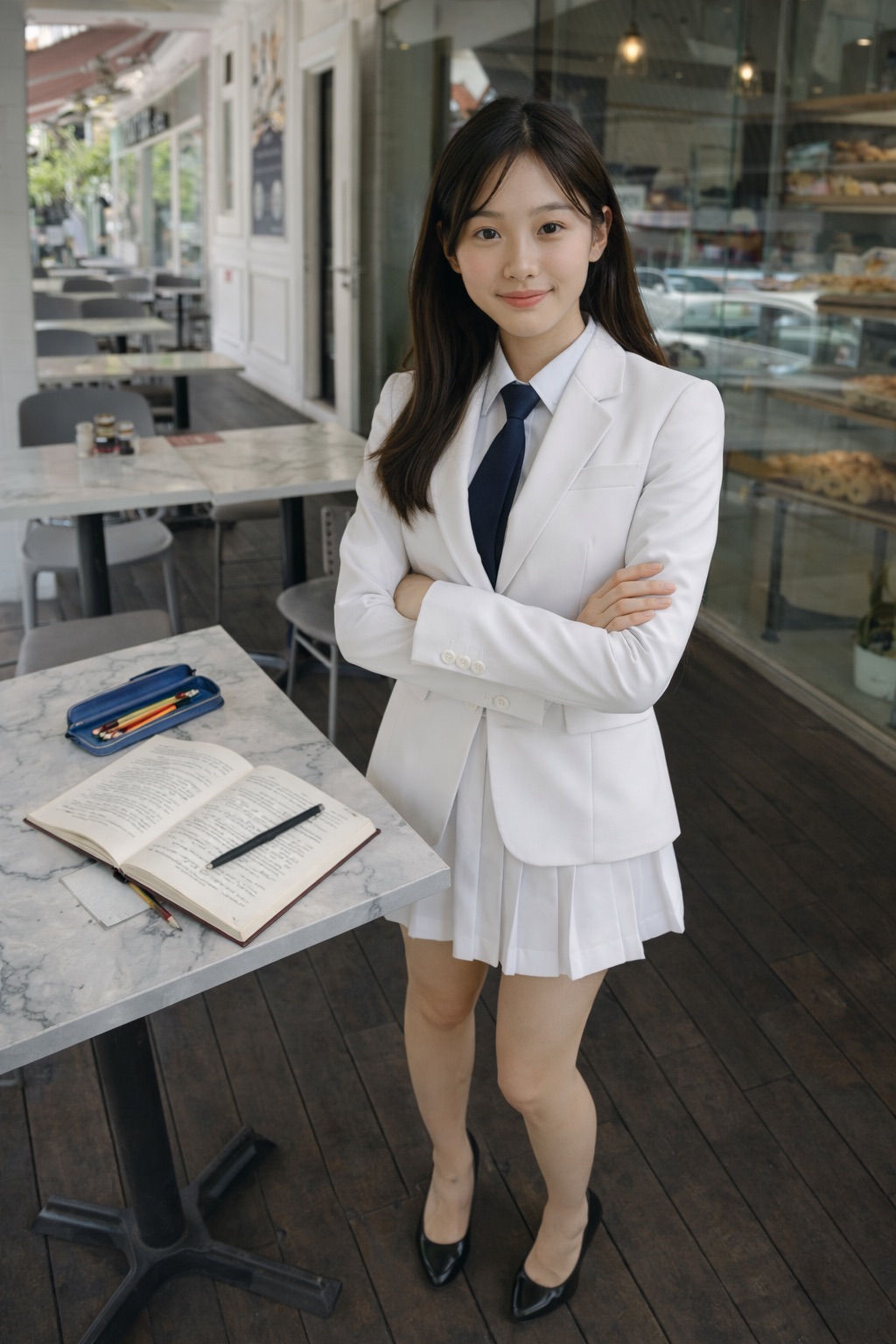
“Li Ling, you did wonderfully in your PSLE mocks—those end-of-year exams showed real progress in math,” Patricia said warmly, squeezing her daughter’s hand. “But secondary school introduces A-Math in Sec 3, and it’s a big leap from primary basics. Topics like trigonometry, calculus, and algebra can be tough. We need to think ahead to give you the edge for O-Levels and beyond.” For insights on transitioning smoothly, Patricia added, “Have a look at this guide on transitioning from PSLE to secondary math.”
Li Ling nodded, still catching her breath from the PSLE intensity. “Mom, I’m excited for secondary, but A-Math sounds scary. I hear it’s abstract, with things like differentiation and integration. How do I even start preparing? I want to do well—not just for grades, but to open doors for university, maybe in engineering or business.”
Linda, sipping her tea, leaned in with a knowing smile. She had navigated similar paths with her kids. “Oh, Li Ling, that’s the right mindset! A-Math isn’t just about exams; it’s about building problem-solving and critical thinking skills that last a lifetime. In Bukit Timah, with schools like Hwa Chong Institution and Nanyang Girls’ High nearby, the competition is fierce, but the right support can turn challenges into strengths. I recommend starting with specialized tuition in small groups—specifically 3-pax classes. They’re perfect for personalized attention without the overwhelm of larger centers.” Drawing from reliable sources, Linda suggested, “The Ministry of Education (MOE) emphasizes building strong foundations for subjects like A-Math to prepare for future careers.”
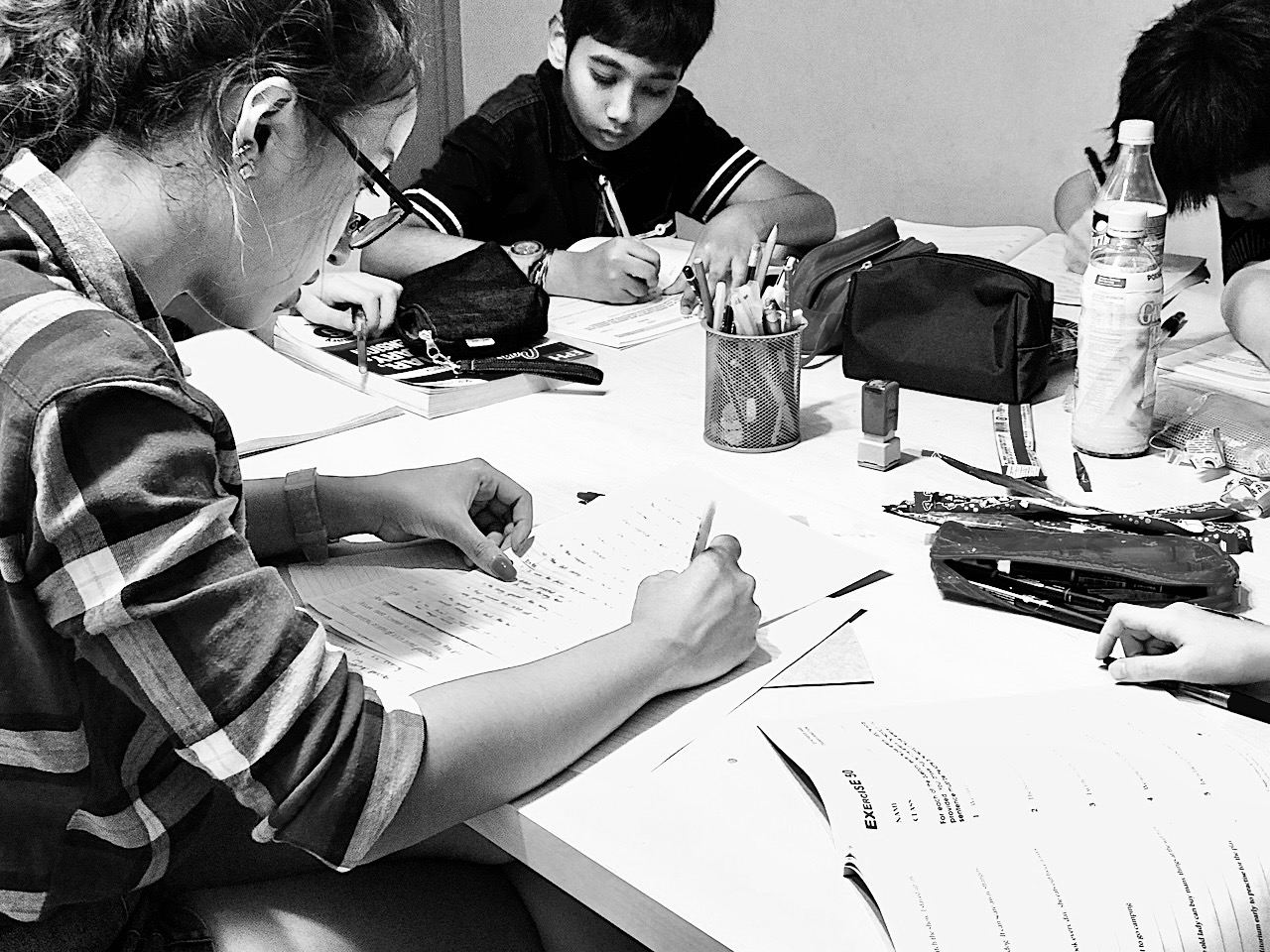
Patricia agreed enthusiastically. “Linda’s spot on. I’ve been researching Bukit Timah Additional Mathematics tuition with 3-pax small groups. The tutors there focus on IP, IB, G2, and G3 curricula, starting with basics like algebra and indices, then moving to advanced topics. It’s all about step-by-step teaching, so you understand the ‘why’ behind the math, not just rote learning. Plus, the small group size—max three students—means rapid feedback and collaborative discussions, which make learning 20 times more effective.” For more on group dynamics, she pointed out, “Check this guide to best small-group math tuition in Bukit Timah.”
Li Ling’s eyes widened. “Only three students? That sounds great—I could ask questions without feeling shy. And collaboration? Like discussing trigonometry or calculus problems with peers? That might help me see patterns and solve faster.”
“Exactly,” Linda replied. “In these sessions, tutors use past-year exam papers for timed drills, aligning with SEAB’s O-Level syllabuses. They emphasize exam strategies, like showing your thinking process for partial marks, and help avoid repeated errors through personalized feedback. It’s not just about A1 grades; it’s fostering resilience and equity in learning. My niece went from borderline passes to an A1 in O-Levels after joining similar classes. As one parent shared, ‘The structured approach helped my son go from borderline passes in Sec 3 to an A1 in O-Levels. The tutor’s patience and step-by-step teaching really made the difference.’” For success stories, Linda added, “Read about turning fail to distinction in A-Math.”
Patricia chimed in, “And the location is a bonus—right in Bukit Timah, near MRT stations like Sixth Avenue. No long commutes means more energy for studies and CCAs. These tutors have years of experience, offering trial lessons and consultations to match your needs. Li Ling, enrolling early will build your confidence for secondary math, opening paths to JC, Poly, or even scholarships.”
Li Ling pondered, then smiled. “Mom, Aunt Linda, I see it now. To do the best in life, I need to invest in skills like analytical thinking from A-Math. Small-group tuition sounds like the way to start strong post-PSLE—personalized, effective, and fun with peers.”
Linda nodded approvingly. “You’re wise beyond your years, Li Ling. Remember, consistency and the right guidance lead to long-term success. Start with foundations, practice relentlessly, and embrace challenges—that’s the key to excelling in math and life.” For comprehensive advice, she recommended, “Parents, dive into this complete guide to secondary math.”
As the afternoon sun dipped, the trio felt empowered. Patricia decided to book a consultation for the 3-pax A-Math tuition, knowing it was a step toward Li Ling’s brightest future. For full details on this program, explore Bukit Timah Additional Mathematics Tuition | 3 pax Small Groups Tutor. Additional resources include strategies from research insights on math success.
Frequently Asked Questions (FAQ)
Q1: Is A-Math really necessary for students who already take E-Math?
A: Yes. A-Math is required for many JC, Poly, and University courses, especially in science, engineering, business, and computing. Securing a strong grade in A-Math opens more academic pathways.
Q2: How are your A-Math lessons in Bukit Timah structured?
A: Lessons begin with a review of key concepts, followed by step-by-step problem solving, and end with past-paper drills. Students also receive personalised feedback.
Q3: Do you offer one-to-one A-Math tuition in Bukit Timah?
A: Yes. While our small group classes (max 3 students) are popular, we also provide one-to-one sessions for students who need customised pacing.
Q4: How soon can my child see improvements?
A: Most students show noticeable progress within 8–12 weeks of consistent lessons and practice.
Q5: Do you provide trial lessons?
A: We provide consultations to assess student needs. Trial lessons are available depending on class size limits (3 per group).
Call to Action
📍 Located in Bukit Timah, our A-Math tutor programme helps students master the subject with confidence.
💡 Don’t let A-Math hold your child back — let us guide them step by step to excellence.
👉 Contact us today to schedule a consultation and secure a place in our Bukit Timah A-Math tuition programme.
How Bukit Timah Additional Mathematics Tuition’s 3-Pax Small Groups Tutor Can Help
Bukit Timah Additional Mathematics Tuition offers comprehensive advanced A-Math tuition for IP, IB, G2, and G3 students through small-group 3-pax tutorials designed for top scores. As a leading provider of small group Add Math tuition in Bukit Timah for IB, IP, G2, and G3 Math, this service focuses on building advanced mathematical skills in algebra, geometry, trigonometry, calculus, and more. Conveniently located in the prestigious Bukit Timah area of Singapore, it caters to secondary students aiming for excellence in rigorous curricula like the Integrated Programme (IP), International Baccalaureate (IB), and Singapore’s G2/G3 syllabuses. Whether tackling complex functions, statistical applications, or proof-based problems, these intimate sessions provide targeted strategies to achieve outstanding results.
Benefits of 3-Pax Small Group Tuition in Additional Mathematics
Small group tuition in a 3-pax format offers an optimal blend of personalized instruction and collaborative dynamics, making it highly effective for advanced mathematics. This approach allows tutors to tailor lessons to individual needs while encouraging peer interaction, which is particularly beneficial for challenging topics in IP, IB, G2, and G3 Math. Research highlights the advantages of this model in enhancing student performance and equity in education.
- Targeted Instruction for Diverse Ability Levels: In small groups of three, tutors can deliver tailored support that addresses specific learning gaps, leading to significant improvements across all ability levels in mathematics. This is especially useful for advanced A-Math concepts, where lower-dosage sessions still yield strong outcomes. Students in IP and IB programs benefit from focused feedback on topics like differentiation and integration, fostering deeper conceptual understanding.
- Accelerated Learning and Cost-Effective Engagement: Small-group tutoring accelerates learning by providing more engagement and rapid feedback compared to larger classes, making it 20 times more effective than standard models for math. This format is ideal for G2/G3 students preparing for O-Levels, as it promotes efficient skill application in a collaborative setting.
- Enhanced Confidence and Problem-Solving Skills: Through hands-on practice and peer discussions, students build confidence and equity in math, applying new skills in fun, interactive ways. This is proven to boost achievement in early mathematical competencies, particularly beneficial for IB and IP curricula emphasizing inquiry and real-world applications.
- Long-Term Retention and Sustained Impact: Sustained small-group instruction not only improves immediate performance but also has lasting effects, helping students in advanced math retain knowledge and develop resilience. This model supports high-impact tutoring for secondary-level topics, ensuring top scores in exams.
Location Advantage: Proximity to Bukit Timah’s Secondary Schools
Bukit Timah Additional Mathematics Tuition’s prime location in Bukit Timah makes it easily accessible for students from nearby secondary schools, reducing travel time and allowing more focus on studies. This convenience is key for busy IP, IB, G2, and G3 students balancing school, CCAs, and tuition. The area is home to some of Singapore’s top educational institutions, ensuring a seamless fit into daily routines.
Our distinguished alumni have graduated from prestigious institutions, including
📍 Bukit Timah Area
- Anglo-Chinese School (Barker Road)
- Hwa Chong Institution (Secondary Section)
- Methodist Girls’ School (Secondary)
- National Junior College (Integrated Programme, Sec 1–4)
- Nanyang Girls’ High School
- Raffles Girls’ School (Secondary)
- Singapore Chinese Girls’ School
- St. Joseph’s Institution
📍 Holland Area
- Anglo-Chinese School (Independent)
- Fairfield Methodist School (Secondary)
- New Town Secondary School
- Queensway Secondary School
📍 Central Area
- Anglo-Chinese School (Independent) (also near Dover, but central catchment)
- Catholic High School (Secondary)
- CHIJ Secondary (Toa Payoh)
- Dunman High School (Secondary Section)
- Outram Secondary School
- School of the Arts (SOTA)
- Singapore Chinese Girls’ School (border Bukit Timah/Central)
- St. Andrew’s Secondary School
- St. Joseph’s Institution (border Bukit Timah/Central)
- Zhonghua Secondary School
With tutors often located near MRT stations like Sixth Avenue, Beauty World or King Albert Park, students from these schools can attend sessions effortlessly, optimizing their time for academic growth.
This strategic positioning in a safe, upscale neighborhood minimizes fatigue and maximizes attendance, supporting consistent progress in small group Add Math tuition for Bukit Timah IB, IP, G2, and G3 Math students.
Section of Helpful Authoritative Clickable Links
For further resources on Additional Mathematics for IP, IB, G2, and G3 curricula in Singapore, here are authoritative links from official and reputable sources. These provide syllabuses, revision tools, practice questions, and teaching guides to enhance learning:
- Singapore Ministry of Education (MOE) Express and N(A) Additional Mathematics Syllabuses – Comprehensive outlines for algebra, geometry, trigonometry, and calculus.
- Singapore Examinations and Assessment Board (SEAB) Additional Mathematics Syllabus (4049) – Official content strands for O- and N(A)-Level preparation.
- International Baccalaureate (IB) Diploma Programme Mathematics – Overview of DP math courses, including topics like statistics, probability, and calculus.
- Revision Village IB Math Resources – Question banks, solutions, and tools voted #1 for IBDP math, covering all topics.
- IB Maths Resources – Exploration ideas, video tutorials, and guides for IB students.
- Oxford University Press IB Mathematics Course Books – Concept-based, inquiry-led resources structured for the DP curriculum.
- MyMathsCloud IB Resources – Past papers, revision notes, and cheat sheets for Applications & Interpretation and Analysis & Approaches.
These links offer evidence-based support to complement small group tuition efforts. Enrolling in Bukit Timah Additional Mathematics Tuition’s 3-pax sessions could elevate your performance in IP, IB, G2, and G3 Math—locally convenient, expertly tailored, and results-driven.
Contact us here:
Related Additional Mathematics (A-Math) — Bukit Timah
- Bukit Timah A-Maths Tuition (Hub) Bukit Timah Tutor Secondary Mathematics
- A-Math Tuition Bukit Timah | Distinctions in O-Level (G2/G3, IP/IB) Bukit Timah Tutor Secondary Mathematics
- Additional Math Small Group Classes (3-Pax) Bukit Timah Tutor Secondary Mathematics
- Additional Math Tuition Bukit Timah | Best Way to Study Bukit Timah Tutor Secondary Mathematics
- Additional Mathematics Tuition | Reimagined A-Math Tutor Bukit Timah Tutor Secondary Mathematics
- Additional Mathematics Tuition (More Information)

 Bukit Timah Tutor Secondary Mathematics