
Advantages and Disadvantages of Using AI for Teaching Secondary Mathematics
As of September 16, 2025, the integration of AI in secondary mathematics education (typically for students aged 13-16) is rapidly evolving, driven by tools like large language models (LLMs), adaptive platforms, and generative AI.
Based on recent research from sources such as the Stanford AI Index, NCTM Position Statements, and surveys from RAND and Carnegie Learning, AI offers personalized, efficient teaching aids but also raises concerns about equity and depth.
Below, I outline the key advantages and disadvantages, drawing from global studies and educator insights, with clickable links to primary sources embedded in the text for further reading.
| Category | Pros (with Stats) | Cons (with Stats) |
|---|---|---|
| Personalized Learning | 82.4% of students believe AI enhances academic performance in exams, projects, and grades. AI adapts content in real-time, offering targeted feedback and mastery learning. Example: DreamBox adjusts math problems, promoting engagement and improvement. | Overreliance may diminish critical thinking (16.5% of students express concerns). AI lacks creativity and may oversimplify concepts, leading to dependency without deep understanding. |
| Academic Outcomes & Efficiency | 83.5% believe AI improves learning efficiency by saving time and optimizing comprehension. 10% improvement in exam grades for students using AI chatbots. 0.31 standard deviation improvement in assessments including English and digital skills. | 48.2% express concerns about inaccurate or imprecise AI answers, risking misunderstandings. Overemphasis on computation may undermine conceptual understanding. |
| Engagement & Accessibility | 80% agree AI enhances educational experience through quick access to resources. 275% increase in learner agency for at-risk cohorts using AI. AI provides 24/7 support and assistive tools for diverse needs. | Inequitable access exacerbates digital divide; AI may lack real-time interaction for dynamic classrooms. |
| Adoption & Market Growth | AI education market projected at $7.57 billion in 2025, growing to $112.30 billion by 2034. 86% of education organizations use generative AI, highest among industries. US students’ frequent AI use increased by 26 points year-over-year. | Privacy and security concerns (9.4% of students worried about data risks). Bias in algorithms may lead to unfair assessments. |
| Math-Specific Performance | AI excels at International Mathematical Olympiad problems Stanford AI Index. Adaptive tools like Khanmigo provide step-by-step math hints and feedback. | AI struggles with complex reasoning in math benchmarks like PlanBench. Inability to explain reasoning (black-box models). |
| Educator & Institutional Impact | Automates grading, saving time; 71% of leaders considering AI-focused roles. Reduces workload, e.g., faster lesson prep. | Loss of human interaction; AI lacks emotional intelligence and empathy. |
| Skills Development & Future Readiness | 66% of leaders won’t hire without AI literacy; AI fluency is top in-demand skill. Fosters creativity via tools like Teachable Machine. | May impair social skills and emotional development due to reduced interactions. Risks of academic dishonesty via misuse. |

Short Story on Advantage and Disadvantages of AI.
The afternoon sun filtered through the lush canopy of Bukit Timah’s verdant hills, casting a golden glow over the quaint terrace of The English Teahouse, a hidden gem nestled amid the upscale residences and nature reserves of Singapore’s prestigious district. Eleanor, a poised woman in her forties with a career in finance, sat across from her 15-year-old daughter, Sophia, who was fidgeting with her teacup. The table was adorned with delicate scones, finger sandwiches, and a tiered stand of pastel macarons—the perfect setting for their monthly high tea ritual. But today, the air was tinged with concern; Sophia’s recent Secondary 3 math report card had arrived, and it wasn’t the A1 they had hoped for.
“Sophia, darling, you’ve been quiet all afternoon,” Eleanor said, pouring a fresh cup of Earl Grey. “Is it the math again? You know, trigonometry isn’t the end of the world. Remember how I struggled with it back in my O-Level days?”
Sophia sighed, pushing a strand of hair behind her ear. “Mom, it’s not just trig. The whole Secondary Math syllabus feels overwhelming—coordinate geometry, quadratic equations, and now they’re throwing in probability for the O-Levels next year. I study, but it doesn’t stick. My tutor says I need more practice, but who has time with all the CCAs?”
Eleanor nodded sympathetically, her eyes lighting up with an idea. “That’s exactly why I researched some options. Have you heard of Bukit Timah Tutor? Their website, bukittimahtutor.com, specializes in local math coaching right here in Bukit Timah.
They offer small 3-pax group sessions for E-Math and A-Math, focusing on evidence-based methods like spaced practice and interleaving to build strong foundations. According to their site, 87.5% of students improve from B/C to A/A1 grades, and 94.7% transition smoothly from Sec 2 E-Math to Sec 3 A-Math. It’s all about personalized attention in tiny groups—no massive classes.”
Sophia’s eyebrows raised in curiosity as she nibbled on a cucumber sandwich. “That sounds promising, but does it involve any tech? Like AI? I’ve heard classmates using apps for math help.”
Eleanor smiled, pulling out her phone. “Actually, bukittimahtutor.com doesn’t explicitly mention AI integration—it’s more traditional coaching with free resources and an open-education pledge.
But we could combine it with AI tools for extra boost. I looked into international sites too. For example, Khanmigo from Khan Academy is an AI-powered tutor that provides personalized math guidance and saves teachers time on prep. Then there’s Thinkster Math, which blends AI with human coaching for secondary-level problems.
Squirrel AI is another adaptive system great for gifted or struggling students, using AI to tailor lessons. And MATHia from Carnegie Learning helps build mastery through cognitive science-backed AI. Sites like Photomath let you scan problems for instant solutions, while Symbolab offers step-by-step breakdowns. These global platforms make math accessible anytime, complementing local tutors like Bukit Timah.”
Sophia leaned in, intrigued. “Okay, but what are the advantages and disadvantages of using AI for math? I don’t want it to make things worse.”
“Smart question,” Eleanor replied, her voice warm. “Let’s break it down. On the advantages side, AI provides personalized learning by analyzing your strengths and weaknesses—tools like Khanmigo adapt in real-time, leading to better comprehension and efficiency.
It saves time for both students and teachers; for instance, AI can automate lesson planning and grading, cutting down prep by significant margins. Plus, it enhances engagement with 24/7 access and inclusive features, making math more fun and accessible for diverse needs, like special education students. Research shows AI can improve outcomes, with adaptive assessments and real-world applications fostering creativity and future skills.
But there are disadvantages too. AI can sometimes give inaccurate answers or ‘hallucinate’ facts, leading to misunderstandings in complex math topics. Overreliance might reduce critical thinking and creativity, as students could just copy solutions without grasping concepts.
There’s also the digital divide— not everyone has access to devices or internet, exacerbating inequalities. Privacy concerns arise from data collection, and AI lacks the human empathy teachers provide, potentially impairing social skills. Plus, many educators aren’t trained on AI, limiting its effective use.”
Sophia pondered, sipping her tea. “So, how do we go about it without the downsides?”
Eleanor scrolled through her notes. “Start simple: Assess your weak spots with a diagnostic quiz from bukittimahtutor.com or Khanmigo. Choose tools like Grok for explanations or Photomath for practice. Set a 20-30 minute daily routine—concept first, then problems. Integrate with tutoring sessions for feedback, track progress with quizzes, and always verify AI answers manually to stay ethical and balanced.”
Sophia grinned, her frustration easing. “Mom, this might work. Let’s sign up for Bukit Timah Tutor and try AI tonight.”
Eleanor clinked her teacup against Sophia’s. “Absolutely, love. High tea and high hopes—here’s to acing math the smart way.”
As the sun dipped lower over Bukit Timah’s greenery, the duo savored their treats, their conversation shifting to excitement. With bukittimahtutor.com‘s proven coaching and international AI innovators like Squirrel AI and Thinkster Math, Sophia felt equipped to tackle her challenges, weighing AI’s pros and cons wisely.
Contact us for our latest schedule
Advantages and Disadvantages
Advantages
AI enhances secondary math teaching by addressing diverse student needs, saving time, and fostering deeper engagement, particularly in topics like algebra, trigonometry, and probability.
- Personalized Learning and Adaptive Instruction: AI tools analyze student data in real-time to tailor content, providing customized practice and feedback. For instance, Khanmigo adjusts difficulty levels for secondary math topics, leading to a 10% improvement in exam grades and 0.31 standard deviation gains in assessments. This is especially useful for differentiated scaffolding, where AI generates tiered problems to support struggling students without oversimplifying for advanced ones, as noted in Stanford HAI research.
- Time-Saving for Teachers and Lesson Planning: 21% of math teachers use AI for instructional planning, reducing workload by automating tasks like generating word problems or quizzes. Tools like Eduaide and MagicSchool create O-Level-style questions, with 18% more teachers finding AI helpful in 2025 than in 2024, particularly for math. This frees educators for higher-level interactions, boosting efficiency by 83.5%.
- Enhanced Engagement and Accessibility: AI provides 24/7 tutoring and immersive experiences, such as Photomath for scanning problems or Symbolab for step-by-step solutions, increasing learner agency by 275% in at-risk groups. 80% of educators agree AI improves access to resources, fostering creativity and real-world applications like contextualized trigonometry problems.
- Improved Outcomes and Skill Development: AI excels at generating rich tasks, with 82.4% of students reporting better performance in exams. Platforms like GeoGebra integrate AI for visualizations, preparing students for future AI literacy—66% of leaders prioritize this skill. The AI education market is projected to grow from $7.57 billion in 2025 to $112.30 billion by 2034, reflecting widespread adoption.
- Support for Diverse Needs: AI offers adaptive assessments and inclusive tools, such as handwriting recognition in MyScript Calculator, benefiting secondary students with varying abilities and promoting equity.
Disadvantages
Despite its benefits, AI in secondary math teaching poses risks related to accuracy, equity, and pedagogical depth.
- Inaccuracy and Lack of Reliability: 48.2% of users worry about imprecise answers, as AI can “hallucinate” or provide biased responses if trained on flawed data. For math, LLMs struggle with complex reasoning (e.g., in benchmarks like PlanBench) and visuals like diagrams, limiting their use in geometry or graphing.
- Overreliance and Reduced Critical Thinking: 16.5% of students fear dependency, as AI may oversimplify concepts, undermining deep understanding and creativity. In secondary math, this could impair problem-solving skills, with concerns that tools like ChatGPT lead to misuse for cheating.
- Equity and Digital Divide Issues: Inequitable access exacerbates gaps; not all students have devices or reliable internet, widening the divide. Biased algorithms may unfairly grade based on race or gender, perpetuating inequalities.
- Lack of Human Elements and Training: AI lacks emotional intelligence and empathy, reducing social interactions essential for secondary education. 68% of math teachers lack professional development on AI, leading to low adoption (21% usage) and hesitation.
- Privacy, Security, and Ethical Concerns: 9.4% express data privacy worries, as AI collects sensitive student information. In math teaching, this includes risks of misinformation or biased content, as highlighted in U.S. Department of Education reports.
Overall, while AI’s market growth and 86% adoption in education organizations signal promise, balanced implementation with human oversight is crucial for secondary math. For more, explore EdWeek’s AI series or ResearchGate studies.
Effectiveness of AI in Teaching and Learning for Students: Key Statistics (2025)
As of September 16, 2025, AI is transforming education by enhancing personalization, engagement, and outcomes for students. Below, I’ve compiled key statistics from recent reports and surveys, focusing on effectiveness in teaching and learning. These draw from global data, with a emphasis on student impacts. I’ve included clickable links to primary sources for further reading, and citations where applicable.
Adoption and Usage Rates
- Globally, 86% of students use AI for studies, with 92% of university students incorporating AI tools—up from 66% in 2024.DemandSage Report This reflects a rapid growth in adoption, as 88% of students now use generative AI for assessments, a jump from 53% the previous year.
- In the US, student use of AI “often” for school purposes increased by 26 points year-over-year, while the percentage who have never used AI dropped by 20 points. Microsoft 2025 AI in Education Report
- 54% of students use AI on a daily or weekly basis, and students on average employ 2.1 AI tools for their courses.DemandSage Report
- 65% of students agree that AI tools are essential for academic success, with 51% using them for brainstorming and 53% for gathering information.Harvard GSE Insights
- 93% of students are familiar with AI tools for school purposes at least once or twice.Microsoft AI in Education Study
Performance and Outcome Improvements
- Students using AI tools like Microsoft 365 Copilot Chat saw a 265% boost in self-learning and a 15% increase in passing rates.Microsoft Copilot Study
- At Macquarie University (as of March 2025), students using an AI-powered chatbot improved exam results by up to 10% compared to peers without access.Microsoft News
- In a World Bank trial in Nigeria, AI use led to a 0.31 standard deviation improvement on assessments covering English, AI knowledge, and digital skills for secondary students.Microsoft 2025 Report
- Brisbane Catholic Education reported a 275% increase in learner agency for at-risk student cohorts using AI tools.Microsoft 2025 Report
- At Indiana University’s Kelley School of Business, students with AI assistance improved performance by 10% and reduced task time by 40%.Microsoft 2025 Report
- Personalized learning via AI can improve student outcomes by up to 30%.McKinsey Research
- 40% of students report that AI-generated content helps achieve good grades in subjects.Hepi AI Survey 2025
Engagement and Accessibility Impacts
- The top perceived benefit of AI for students is increasing engagement, as reported by educators.Carnegie Learning 2025 Report
- 33% of education leaders use AI for accessibility tools, helping students participate more fully.Microsoft 2025 Report
- Over 75% of neurodivergent participants in a study reported that AI improved work quality, boosted inclusion, and made tasks more accessible (e.g., 80% for written communication, 90% for understanding meetings).EY and Microsoft Study
- 77% of teachers use AI to automate grading and personalize learning, saving up to 30% of their time, which indirectly benefits student learning.TeachBetter AI Report
Broader Trends and Growth
- The global EdTech market, fueled by AI, is projected to reach $404 billion by 2025, with a 16.3% CAGR—more than 2.5x growth from 2019.Enrollify Report
- 73.6% of students and researchers use AI in education, with 51% for literature reviews.Zendy Blog
- 71% of teachers believe AI tools are essential for student success in college and work.World Economic Forum
- By 2030, AI is expected to change 70% of job skills, highlighting its role in preparing students.LinkedIn Report
These stats indicate AI’s growing effectiveness, particularly in personalization and performance boosts, but challenges like training gaps (e.g., 45% of educators lack AI training) persist. Microsoft 2025 Report For more, explore the U.S. Department of Education AI Report.
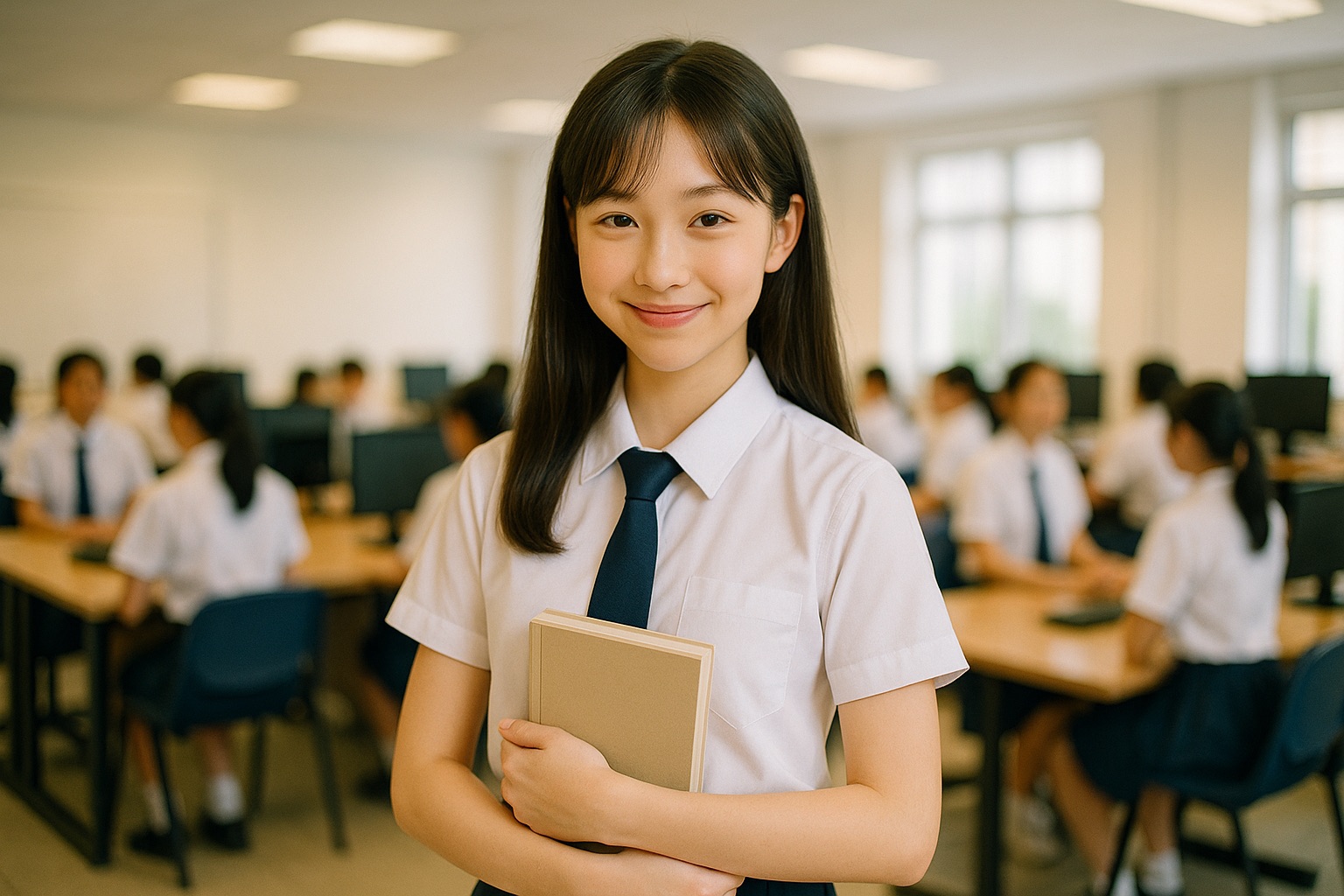
 Bukit Timah Tutor Secondary Mathematics