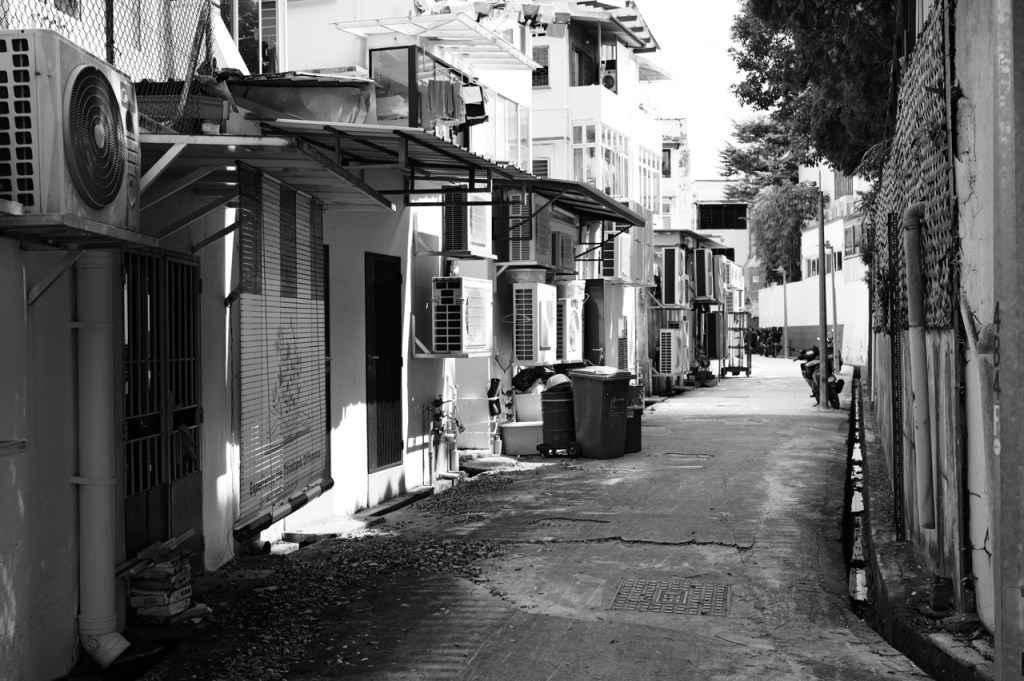
Leica Q3 43mm | Bukit Timah Tutor shoots Binjai Park
#LeicaQ3-43mmMonochrome #Binjai #BukitTimahTutor #SingaporeMonochrome
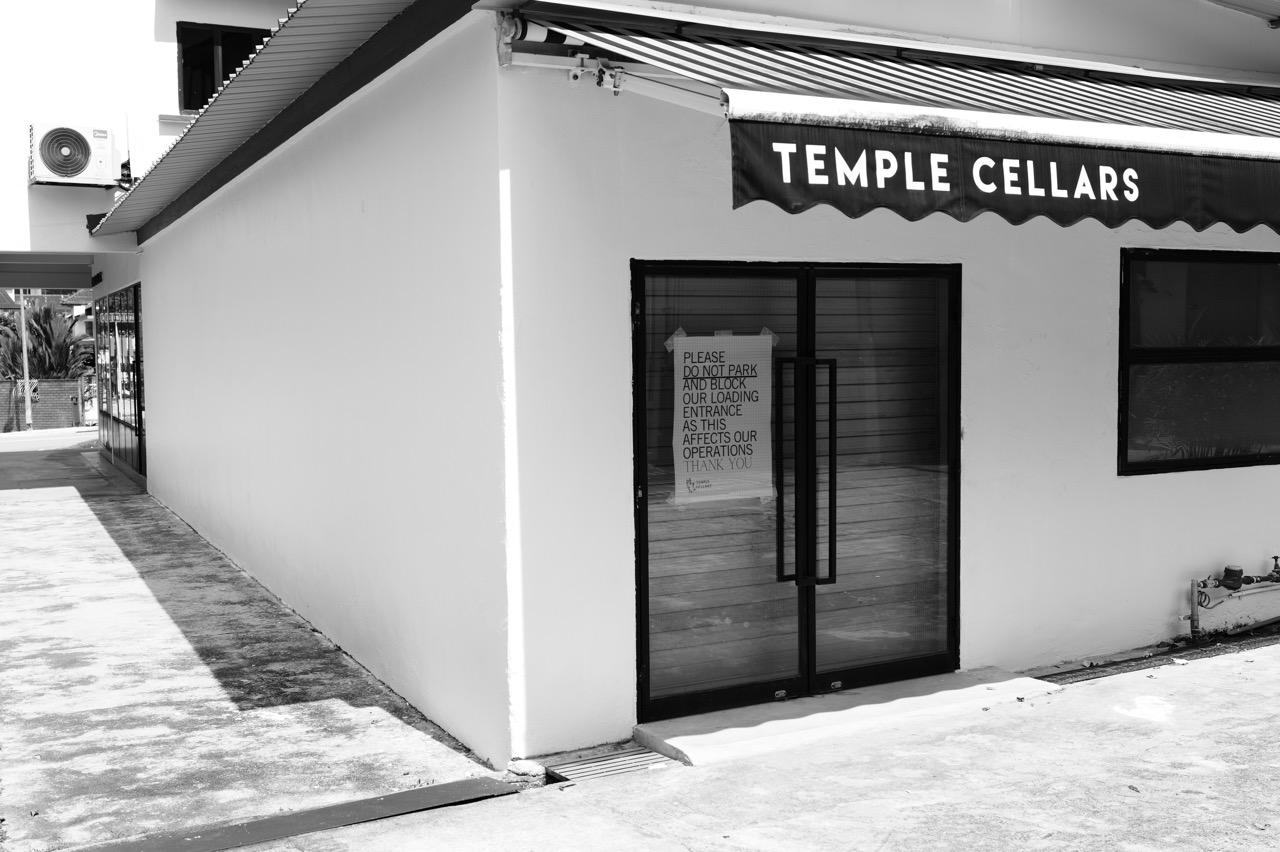
There’s a sweet spot in everyday Singapore scenes where light, geometry, and a little patience turn the familiar into something quietly unforgettable. On a bright Bukit Timah afternoon, I walked Binjai Park, Bukit Timah, Singapore with a Leica Q3, framing at roughly a 43mm field-of-view. That slight tele pull—tighter than a classic 35, gentler than a 50—let me compress layers of trees, fences, shadows, and sleepy residential lines into tidy, story-ready rectangles.
All photos are jpeg straight out of camera.
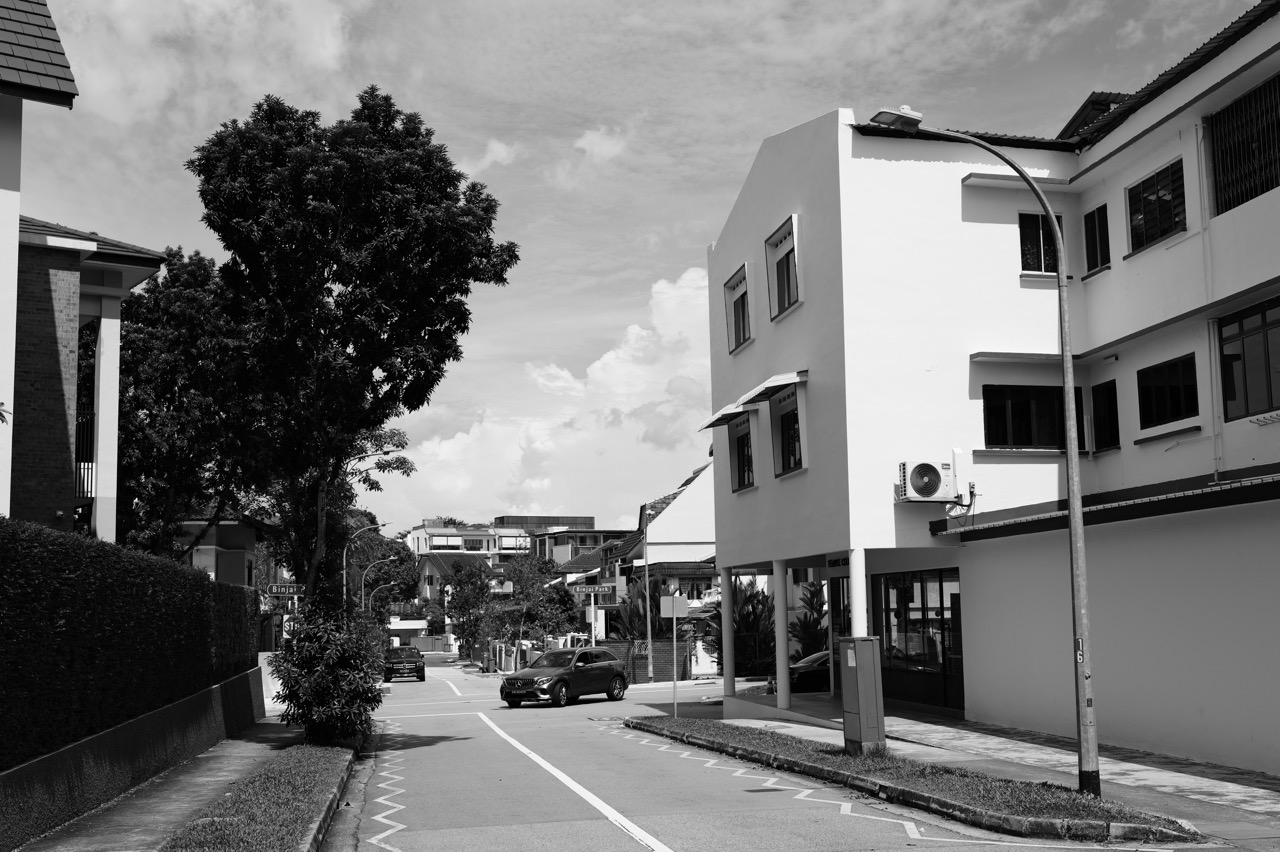
Why 43mm here?
Binjai Park’s streets are narrow and leafy. The ~43mm view trims away clutter without flattening depth, giving faces, signage, and textures a little breathing room. You can step back, keep verticals honest, and still hold onto intimacy. It’s a focal feel that rewards micro-movements: one pace forward, two paces back, chin tilt, then click.
Midday light, not a deal-breaker
Shooting in the day means hard light, crisp edges, and reflective whites from painted walls and pavements. Instead of fighting it, I leaned into high-contrast silhouettes and let the Q3’s dynamic range hold skies while preserving shadow detail in hedges and under eaves. The payoff: punchy frames with a clean, modern mood.
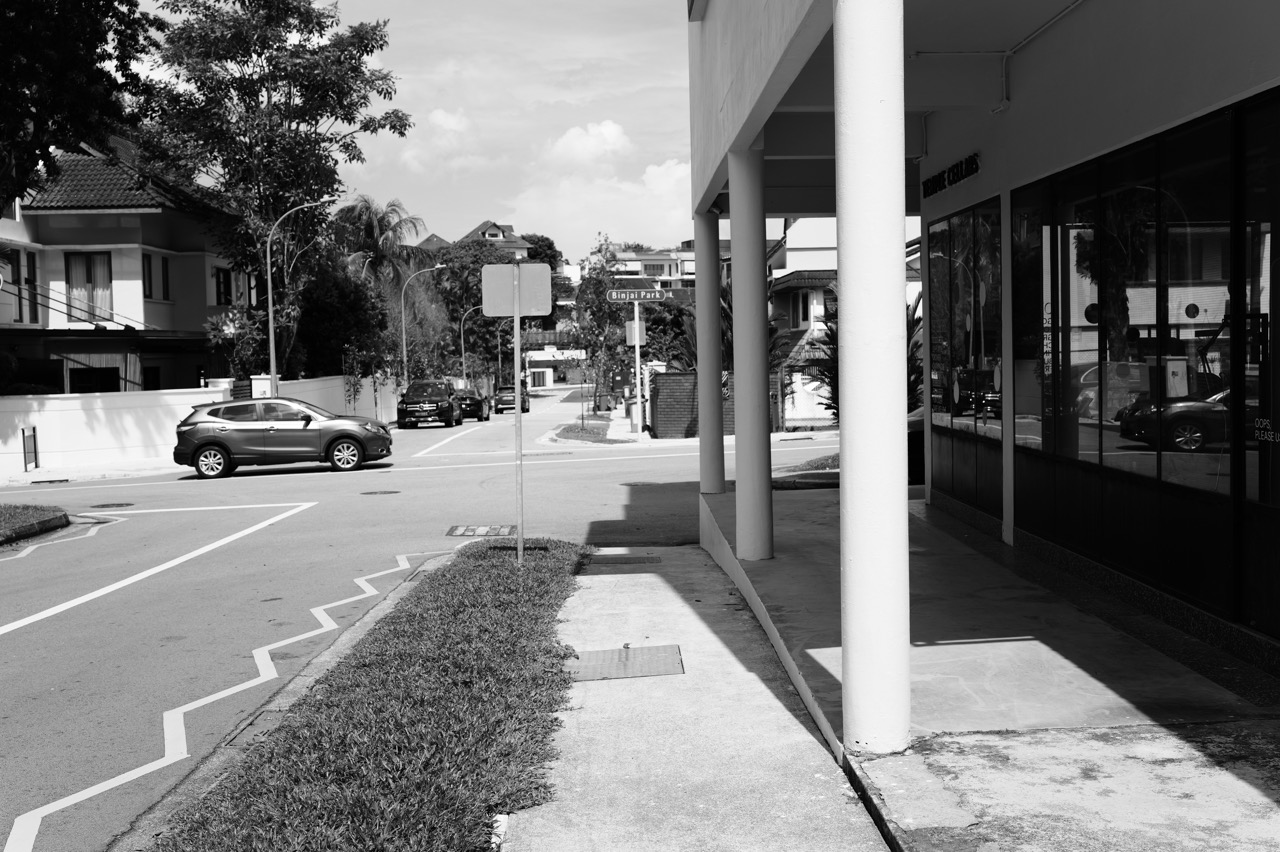
Handling the Q3 in bright Singapore daylight
- Metering: I rode exposure compensation constantly (±⅓ to ±⅔) to keep highlights honest. The Q3’s live view histogram makes this quick.
- Shutter & ISO: With sun overhead, 1/500–1/2000s at base ISO keeps everything tack-sharp, even when a lorry sneaks through the corner of your frame.
- White balance: Daylight WB keeps monochrome true; for deep greens under canopy turning into beautiful greys that makes me smile, a manual Kelvin nudge warmer can stop foliage from going cyan.
- Focus: For static subjects, single-point AF is precise. For fleeting moments (joggers, pets), pre-focus on a mark and wait for the subject to enter.
Monochrome and texture
Midday is a test of restraint. I kept the monochrome modest and leaned on micro-contrast to let plaster, leaves, and metal speak. Greens stayed natural gradient; whites stayed white. The goal: photographs that feel like standing there, eyes half-squinted, hearing cicadas and a distant leaf blower.
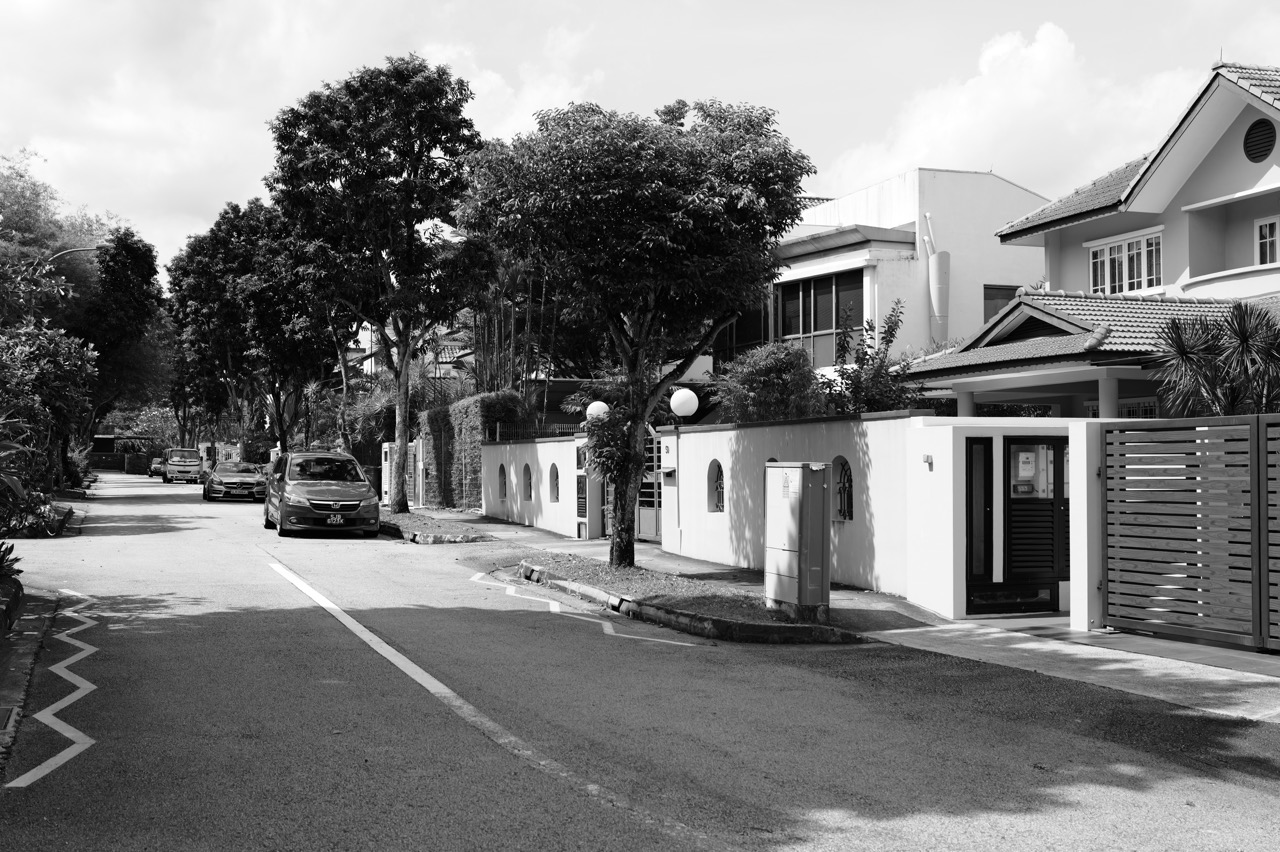
Composing for calm
- Edges first: Before pressing the shutter, I scan the frame edges for stragglers—a wheel, a bin, or a stray decal. The 43mm field helps clean this up.
- One anchor, one counterpoint: A sign, a number, a branch tip; then a softer shape to balance it.
- Micro-parallax dance: Half-steps change the relationship of posts and hedges dramatically; 10–15 cm can make or break the geometry.
A tutor’s take: photography as practice for thinking
At Bukit Timah Tutor, we teach students to observe, simplify, and sequence—just like building a frame in the field. In math, you isolate variables; on the street, you isolate subjects. In writing, you choose the telling detail; in a photograph, you choose the telling light. The discipline of waiting for the right shadow, of nudging perspective by a palm’s breadth, mirrors the discipline of problem-solving: slow down, look again, decide with intention.
Post-walk workflow (quick and clean)
- Cull fast: First pass on gut feel—does it say what I felt?
- Base corrections: Straighten lines, set white/black points, tame highlights.
- Local touches: Dodge faces/numbers a hair, burn hotspots on pavement.
- Export pairs: One color, one B&W if the geometry sings.
Overview & location of Binjai Park, Singapore
“Binjai Park” is a landed residential enclave in the Bukit Timah / Dunearn Road area (District 21), Singapore. (PropertyGuru) It’s not a public “park” in the typical sense (i.e. open green space under NParks), but a name for a private landed estate made up mostly of Good Class Bungalows (GCBs) and luxury houses. (PropertyGuru)
It lies off Dunearn Road, adjacent to the Swiss Club’s grounds, and is relatively close to King Albert Park MRT station. (Singapore Property Walkabouts)
Some characteristics:
- The estate is freehold and largely composed of landed houses, with a mix of sizes. (PropertyGuru)
- There are shops (F&B, clinics, etc.) at the street‐front, with private walk-up apartments above. (Singapore Property Walkabouts)
- The name “Binjai” is derived from a native tree species (the binjai tree), which was more common in older times, giving the area an evocative, semi-natural resonance. (Singapore Luxury Homes)
Historical notes & development
Although not every detail is well documented, several historically and architecturally significant facts emerge:
- Early plots & first houses
One of the earliest houses in the area is 35 Binjai Park, built in the 1950s, on a large plot of land (≈ 20,977 sq ft). (The Peak Magazine)
Another notable house is 32 Binjai Park, designed in 1973 by architect Lee (Lee & Associates, presumably) — a modernist house that’s been recognized for retaining many of its original design features (open layout, timber beams, strong indoor-outdoor connection, generous garden) even today. (BiblioAsia)
That house also preserves a tall Binjai tree listed as a heritage tree by the National Parks Board. (BiblioAsia) - Landed housing estate consolidation
Over time, the area crystallized into a GCB / luxury landed estate with strict land use. Property listings indicate that the development was conceived to host “around a hundred good class bungalows.” (PropertyGuru) - Modern redevelopment & sustainable design
Some newer houses within Binjai Park have been built with sustainability in mind. For example, a particular GCB in Binjai Park was awarded Green Mark Platinum (an environmental/sustainability certification in Singapore) upon its completion in 2011. (designshop.com.sg) - Ownership / land title roots
There was a property that had its freehold plot title approved on 1 June 1956 within Binjai Park. (Yahoo Finance Singapore) - Streetscape & commercial front
Historical photos (such as from 1995) show that at the corner of the estate near Dunearn Road, there existed shophouses (3-storey mixed use) and detached houses opposite them. (NLB)
So, the evolution is a mix of old colonial / mid-20th century landed houses, remnant nature and trees, gradual infill with more modern luxury homes, and the preservation of some architectural heritage.
What’s there today / what you’ll see
Walking through Binjai Park, here’s what you can expect:
Residential & architecture
- Good Class Bungalows (GCBs)
The dominant housing typology. These are large, prestige bungalow houses, usually sitting on generous lots. (PropertyGuru) - Older modernist houses with heritage value
As mentioned, 32 Binjai Park is one example, retaining its 1973 design and natural elements (garden, native tree). (BiblioAsia) - Mixed shops + walk-up apartments along frontage
On the main road edges of the estate (near Dunearn / Binjai Park street), you’ll find a row of shops (F&B, small clinics) with private walk-up apartments above. (Singapore Property Walkabouts)
A petrol kiosk (Caltex) is also present in that street frontage stretch. (Singapore Property Walkabouts) - Remnant natural elements & landscaping
Some plots maintain mature trees, overgrown lawns, gardens allowed to breathe. The presence of heritage trees (like the binjai) adds to the semi-wild ambiance. (BiblioAsia)
Amenities & commercial spots
- Restaurants / F&B
- LINO @ Binjai: An Italian restaurant located at 7 Binjai Park. (Singapore Property Walkabouts)
- Ivins Peranakan is another known F&B option in the vicinity. (PropertyGuru)
- Clinics / services
The row of shops includes clinics, family medical services, local services. (Singapore Property Walkabouts) - Shophouse frontage (mixed use)
The frontage along Dunearn / entrance roads includes shophouses (some with apartments above). (NLB) - Proximity to nature & green buffer
The estate borders or is near to Bukit Timah Nature Reserve / green belt zones. (PropertyGuru) - Accessibility / nearby nodes
Binjai Park is well-situated for amenities: close to top schools, clubs, shopping, and major roads. (PropertyGuru)
Its location offers a balance: tucked away and private, but not far from urban convenience. (Singapore Luxury Homes)
Significance & identity
- Prestige & exclusivity
As a GCB enclave, Binjai Park is considered one of Singapore’s more exclusive landed estates. Property values in the area regularly command very high prices, reflecting the prestige and scarcity of large landed plots. (Singapore Luxury Homes) - Blending architecture & nature
Some houses try to maintain a respectful relationship with nature — open layouts, mature trees, generous gardens. The retention of heritage trees (like the binjai) is a nod to the area’s name and to Singapore’s native ecology. (BiblioAsia) - Landed heritage amidst infill pressure
Within Singapore’s strong demand for land, Binjai Park is a kind of “island of landed calm.” It represents both continuity with mid-century architecture and the pressures of redevelopment. The existence of older houses (e.g. 32 Binjai Park) still in largely original state is remarkable in this context. (BiblioAsia)
Closing frame
Binjai Park rewards anyone willing to stand in the sun and see past it. With a ~43mm view on the Leica Q3, the estate becomes a study in line and light—clean, quiet, and unmistakably Singapore. Five photos, one short walk, and a reminder I share with every student: the world gets clearer when you learn where to stand.
 Bukit Timah Tutor Secondary Mathematics